

Fires of the Old World X — The Neckless Hunger
At the edge of evening, where the road ran low through tamarind shade and the last heat held in the stones, the brothers came upon a place the birds would not cross.
The smell reached them first: leaves gone sour in still water, something rank beneath, and the dry bitterness of old ash. Then the air changed. It grew cooler without mercy. Their feet sank a little in the black earth, and the hush there was not the hush of sleep or prayer. It was the hush of things that had drawn back.
Rama lifted the lamp they had carried since noon, its flame small and steady. Lakshmana walked beside him with one hand near the bowstring. Somewhere beyond the trunks, something dragged itself once across the ground and stopped.
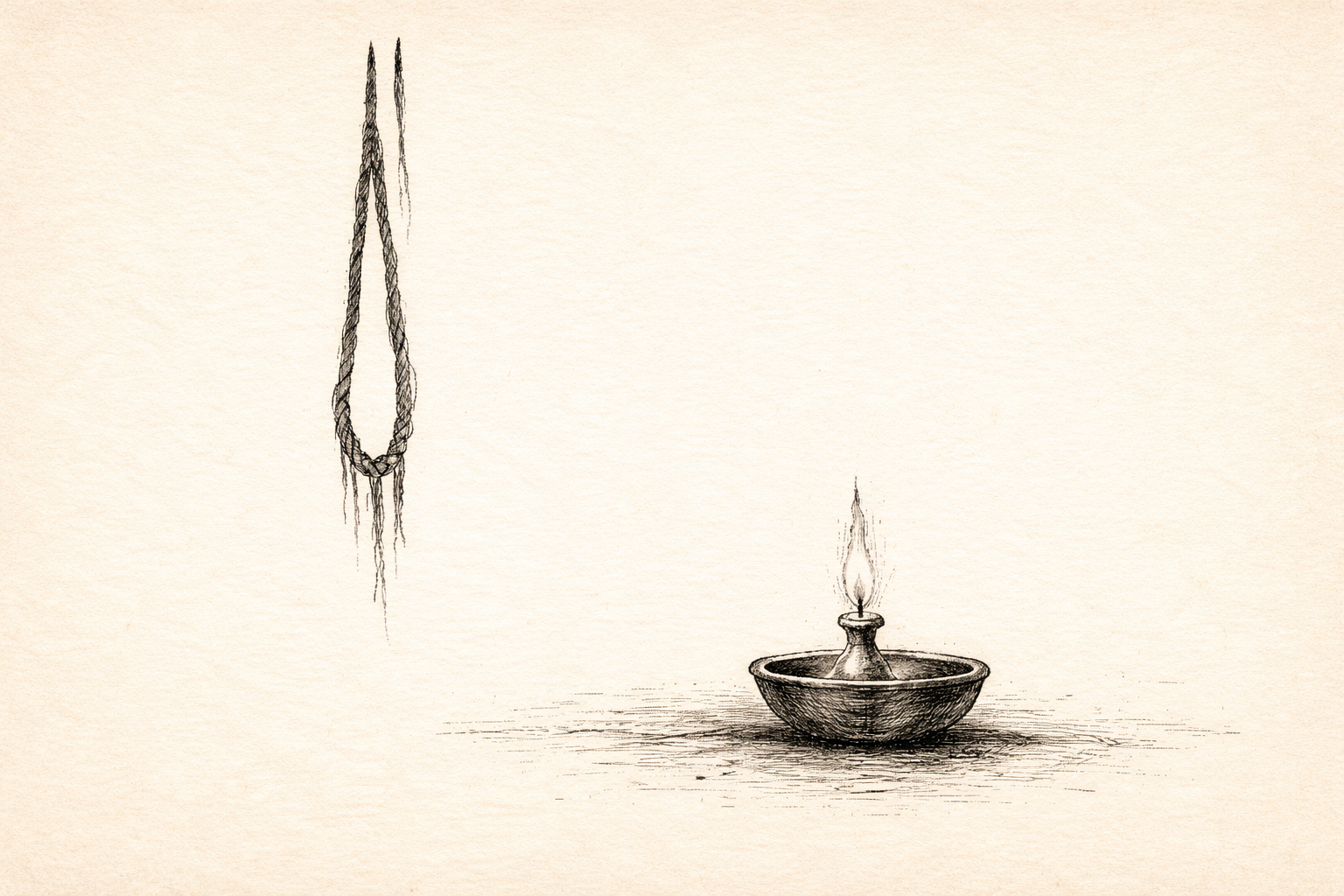
The trees there had learned a crooked patience. Roots broke from the soil like old fingers. From a low branch hung a measuring cord, snapped and weather-blackened, moving slightly though no wind touched it.
Then the cry came.
Not beast. Not bird. A voice, thick with hunger, yet shaped by speech.
“Who walks,” it said, “with light in his hand?”
Rama raised the lamp.
In its poor circle they saw first the arms.
They came out of the dark too long for any living frame, vast and rope-veined, one hand crushing bark from a trunk, the other groping low over the ground. Then the rest of it gathered: a hulking body sunk in mud, chest heaving, shoulders driven inward as if by some old blow that had never ended.
And where the head should have been, there was none.
An eye stared from the middle of the chest.
Below it a mouth split the belly, wide and wet, the teeth set in a ring.
Lakshmana drew breath through his teeth.
The thing laughed once.
“Two men,” it said. “Travel-worn. One steady. One quick to anger. I can smell both.”
Its searching hand swept across the clearing and closed on a stone as large as a jar. The fingers tightened. The stone broke. Rama saw then how it fed. It did not need to pursue. It only reached.
Lakshmana set an arrow to the string.
“Brother.”
“I see it.”
The eye narrowed against the lamp.
“You have looked and not run,” the creature said. “That is rare.”
Its left arm moved.
It struck across the clearing and wrapped Lakshmana round the waist.
His bow fell. His heels cut through the mud. In the same breath the other arm came for Rama.
Rama dropped the lamp, drew, and cut.
Steel met flesh. The arm recoiled, blood shaking from it in black ropes. Lakshmana twisted in the grip, found the knife at his belt, and drove it into the wrist that held him. The hand clenched once, then loosened. Rama was already there. A second stroke fell.
The severed hand hit the ground still clutching air.
Lakshmana dropped to one knee, rolled clear, snatched up his bow, and sprang back.
The creature bellowed.
The clearing shook with it. Birds burst from far trees though none had perched nearby. The lamp lay on its side but still burned, throwing a torn light across the churned mud, the cut stump, Lakshmana’s face streaked dark.
The other arm came again, wounded but not slow. Lakshmana shot once into the elbow joint. The arrow vanished to the feathers. Rama stepped inside the sweep and brought his blade down with both hands.
Bone gave.
The second arm fell beside the first.
Then there was breath. Nothing else.
The vast body heaved in the centre of the clearing, bleeding into the roots. The chest-eye rolled once and steadied. The mouth in the belly opened. What came from it was no longer rage.
It was relief.
Lakshmana did not lower the bow.
“End it,” he said.
The mouth moved.
“Yes,” it said. “That is what I have asked for.”
Lakshmana glanced at Rama. “Do not listen. Hungry things know how to plead.”
Rama watched the ruined body in the mud. Hunger was still there. Pain was there. But something older than both had come through them.
The eye fixed on him.
“Kill me properly,” it said, “and I will guide you.”
Lakshmana’s bow lifted again. “It bargains.”
“Yes,” said Rama.
“Then leave it to die.”
The mouth worked once before speech came.
“I was not born like this.”
Rama stooped, righted the lamp, and set it on a root. The small flame steadied. He stepped nearer.
“What were you called?” he asked.
The eye closed.
For a moment there was no answer. Then the voice came again, lower now.
“Kabandha is what remains. Not what was given.”
Lakshmana said, “Then speak what was given.”
“A name kept too long in ruin rots.” The creature drew breath. “Burn this body. Free what was bound in it. Then I will speak as one who remembers.”
The blood ran more slowly now. The strength had gone out of it with the arms. It could kill no more.
Rama looked at the snapped cord in the tree. At the old ash under the leaves. At the lamp making a frail gold space in that forsaken ground.
Then he sheathed his sword.
Lakshmana stared at him. “Brother.”
“If there is deceit,” Rama said, “fire will finish it.”
The eye did not move.
No threat came. No promise beyond the one already spoken.
So the brothers worked.
Lakshmana gathered fallen wood from the higher ground beyond the mud. Rama cut what branches he could and laid them broad and low. The light was going. Night-water and blood had begun to mingle in the smell of the clearing. Once Lakshmana slipped on a wet root and caught himself with one hand. When he rose, his palm was black. He wiped it on the grass and went on.
They dragged the severed arms first, each one heavy as sodden timber. Then, by strain and leverage and the creature’s failing shifts beneath its own weight, they moved the trunk onto the pyre. Mud tore under it. Roots snapped. The effort burned in shoulder and thigh and lower back. Their breathing roughened. They rested once. Then again. Then finished it.
At last the body lay on the wood.
Kabandha spoke once more.
“There is a woman you seek.”
Both brothers stilled.
The eye remained on Rama.
“I smelled loss on you before I smelled blood. South of here the road bends toward alliance.”
Lakshmana said, “How do you know that?”
“One who lies long enough in filth hears what passes over the earth.”
Rama said, “Who are you?”
The answer came slowly, as if each word had to be found among broken things.
“One who trusted beauty. One who laughed at suffering. One who was broken and fed into hunger. I called it injustice until hunger made me plain.”
Rama knelt beside the pyre and set fire beneath the wood.
Smoke rose at once, bitter and white. Then the flames found the dry bark, then the twigs, then the heartwood. They climbed without haste.
Kabandha groaned once when the fire reached him.
Then the sound changed.
The monstrous bulk did not vanish. It yielded. The fire moved through it with a patience more terrible than speed. What had been crushed found height again. What had fed only on reaching was given back its own form.
Lakshmana stepped back.
Rama remained where he was, the heat on his face.
Within the burning, a straighter shape stood clear.
“I was Danu’s son once,” he said. “Beautiful enough to trust beauty. Strong enough to mock what suffered. I was broken for that. Then I was given a body fit for appetite, and left inside it until I learned.”
The pyre cracked. Sparks rose through the branches.
Rama bowed his head.
The freed one lifted a hand and pointed south.
“Go to Rishyamuka. You will find Sugriva there. Do not ask him first for help. Ask him what he has lost.”
“And the woman?” Rama asked.
“She lives,” he said. “Your grief has not outrun her breath. But the road to her has gone into bond, promise, and war. You could not walk there carrying only your own name.”
The brightness thinned.
Then it was gone.
Only the fire remained.
The brothers stayed until the wood settled and the body became ember, ash, and white fragments that gave way at a touch. Night had gathered fully by then. The stars had begun between the branches. Far off, a jackal called.
Lakshmana took the snapped measuring cord from the branch and turned it once in his hand.
“Shall I cast it in?”
Rama held out his palm. Lakshmana gave it to him. Rama laid it on the coals. It curled, brightened, and was gone.
Then Lakshmana lifted the lamp.
Its oil was nearly spent. The flame was smaller now, but still upright.
They took the southern path.
The ground beyond the clearing rose and hardened. Yet the body kept its account. After a while Lakshmana’s stride shortened for several steps, and he put a hand once to the bruise beneath his ribs where the arm had closed on him. Rama felt the drag in his own shoulders from the work of fire. They walked through it. Breath found its measure again. The night air cooled the skin.
Behind them the last smoke entered the trees and thinned among the leaves.
Ahead, the road widened just enough for lamplight.
No stench waited there. No cry. Only dust, bark, the faint sweetness of flowers opening unseen in the dark, and the small gold circle moving before them as they went.
—
—
Receive the next work
Subscribe free to receive new work from the Lucas Varro Library by email.
More from the Library


See Also
A concise and impartial dictionary of absence, promises, quarrels, ordinary objects, and the troublesome instability of words.

The City of Service
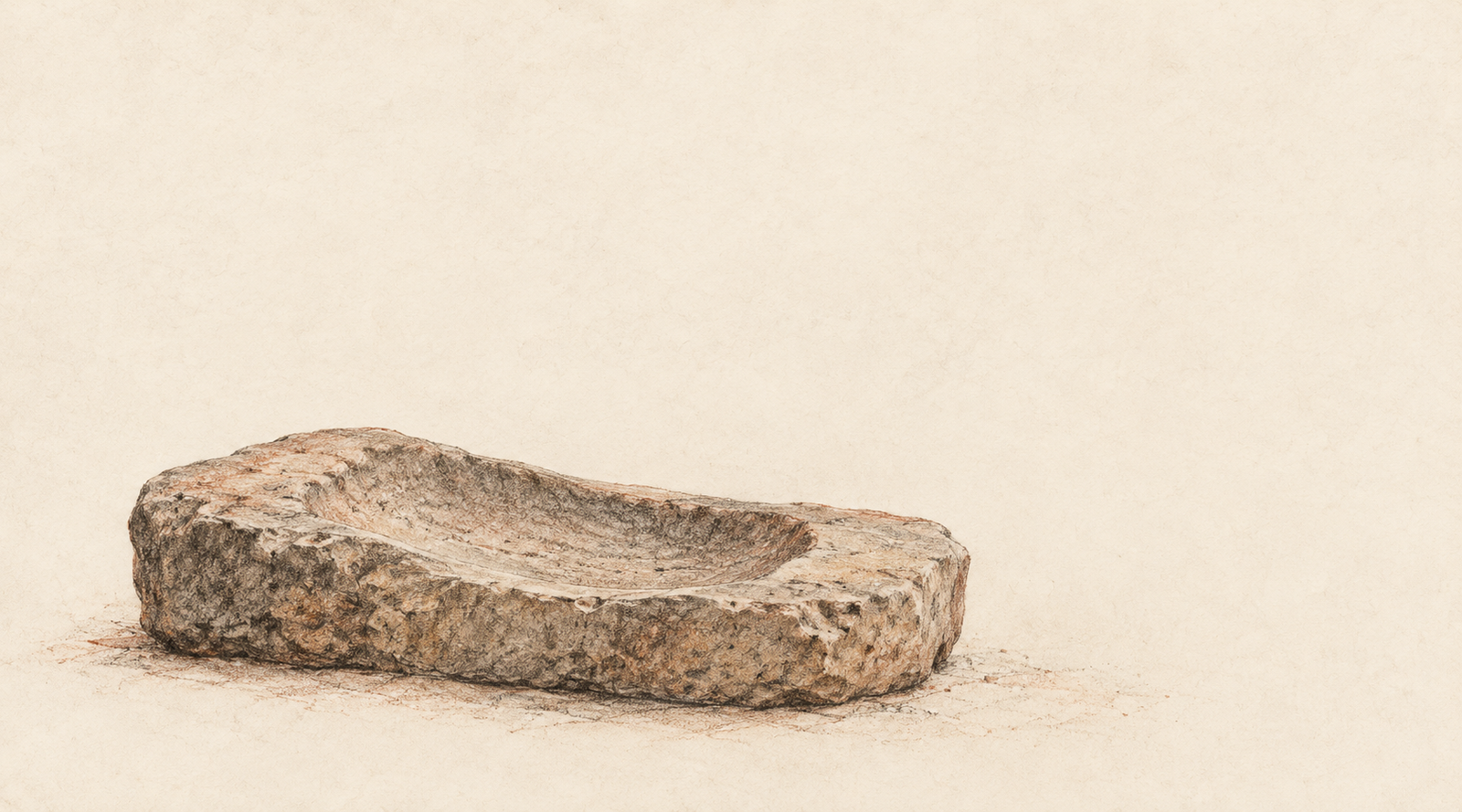
The temple we inherit is a building from which almost all necessity has been removed. Nothing must be brought for it to continue being what we call a temple. The sanctuary asks nothing of us. Stone is good at this kind of independence.
A living temple was otherwise.
Water had to come in. So did grain, cloth, oil, aromatic substances, fuel. The things required for worship arrived because someone carried them across a threshold.

Houses of Wood, Light, and Smoke
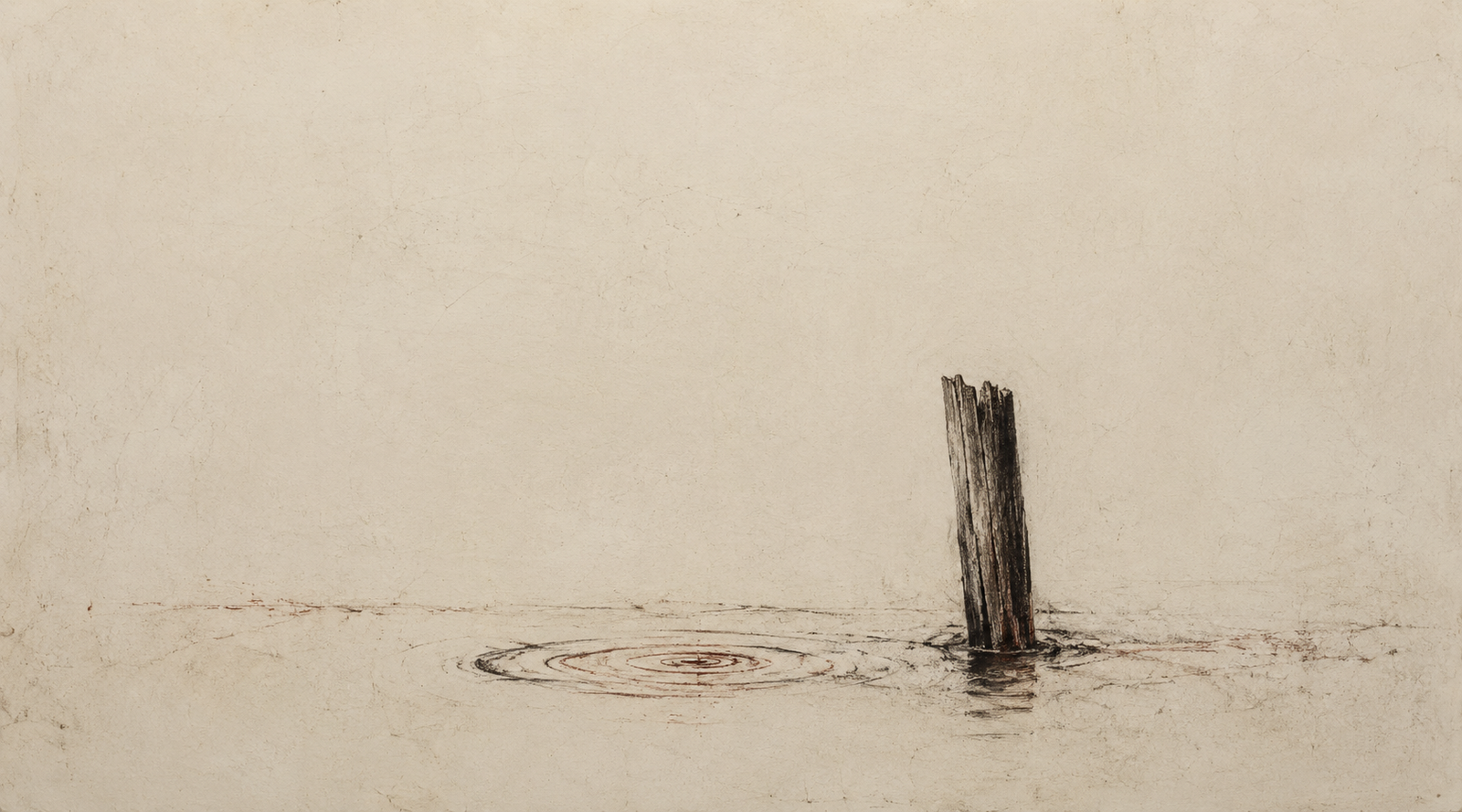
Some of Angkor’s most intimate ruins do not rise above the ground at all. They are postholes, low mounds, hearths and ponds: durable traces of a domestic city built largely from things that decay. To restore that city is to see Angkor not only as stone, but as wood, smoke, water, repair, and people living within calling distance.