
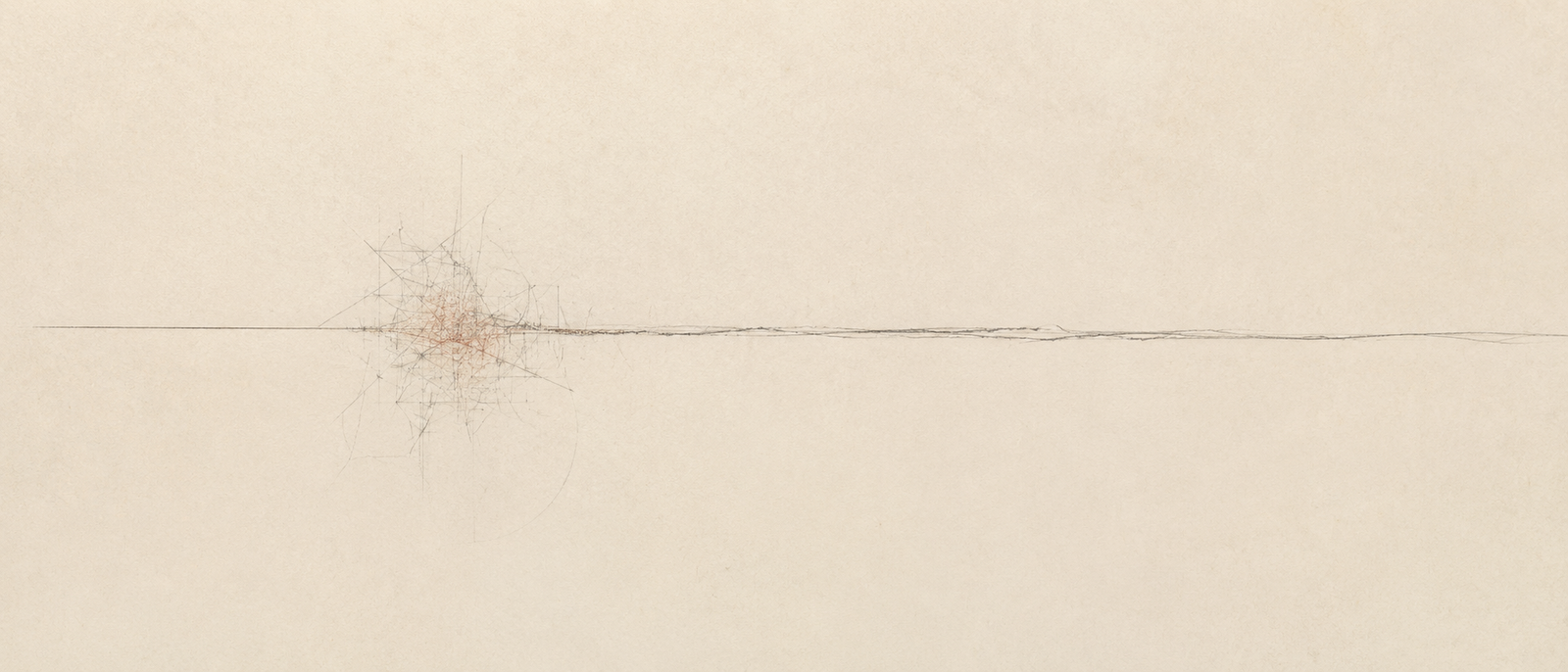

The Beauty Time Is Allowed to Make
On wabi-sabi, visible history, and the modern demand to appear untouched.
The paper did not disappear beneath the drawing.
I had made it from kozo, the long inner fibre of the paper mulberry, using methods I learned while travelling in Japan. Held towards the light, the sheet revealed its making. Fibres crossed and gathered. Some areas were denser than others. Its surface possessed neither the smoothness nor the obedient uniformity of industrial paper.
When red chalk passed across it, the line changed. The fibres caught the pigment, interrupted it, held it more deeply in one place and released it in another. A stroke could not simply impose itself. The paper answered.
Such variation can appear to be a defect: an obstruction between the artist’s intention and the finished mark. Yet the paper was not an imperfect version of a smoother sheet. It asked for another kind of drawing.
We have become accustomed to surfaces that do not answer.
We prefer the object without evidence of making, the room from which every sign of habitation has been removed, the face on which time has left no persuasive mark. A finished work should conceal revision. A confident person should show no trace of uncertainty or previous error. Even suffering is expected to arrive cleanly shaped, the wound already converted into instruction.
What we call perfection is often something stranger than excellence. It is the removal of history.
The seam vanishes. The repair becomes undetectable. The altered thing is restored until it resembles something to which nothing has happened.
What modern writing commonly joins under the name wabi-sabi grew from two related Japanese sensibilities whose histories overlap and resist any perfectly clean division. But one distinction remains useful here.
Sabi draws our attention towards qualities disclosed through age, use and material change: the softened edge, the quiet lustre of handling, the surface upon which time has become visible. Time may diminish as readily as it deepens, and damage carries no automatic claim to beauty. Yet some objects acquire their character slowly, through weather, touch, care and repeated use.
Wabi turns towards a different sufficiency: a freedom from the demand that value must announce itself through splendour, abundance or display. Its simplicity is not deprivation made picturesque. It is the cultivated ability to recognise enough.
One belongs to the surface time has altered.
The other belongs to the attention capable of receiving it.
These sensibilities found one of their most exact expressions in the Japanese way of tea. The modest bowl and restrained tearoom existed within a practice of preparation, cleanliness, selection and judgement. Apparent roughness did not signify relaxed standards. It had been seen, chosen and placed with care.
The rough bowl did not enter the tearoom because standards had been abandoned. It entered because attention had become more exact.
This is what the familiar translation of wabi-sabi as “the beauty of imperfection” fails to preserve. The phrase is comforting, and its comfort is part of its weakness. It permits negligence to be renamed authenticity and treats incompletion as though it no longer needed to be distinguished from incompetence.
A badly made bowl is not transformed by a philosophy. Dust, abandonment and careless workmanship do not acquire depth merely by being given more flattering names.
Far from releasing us from judgement, wabi-sabi makes judgement more exact. It asks us to recognise the difference between the crude and the unforced, the neglected and the weathered, the abandoned work and the form that knows when enough has been done. No rule can make those distinctions on our behalf. Attention must be trained until it becomes capable of seeing them.
The difficulty becomes greater when we turn from objects to human life.
We rightly repair what can be repaired. We practise until our work improves. We treat illness, apologise for harm, correct what was poorly made and resist damage that need not occur. There is no wisdom in leaving a roof open to rain merely because weathering may one day possess aesthetic interest.
The problem begins when care becomes indistinguishable from erasure.
An ageing hand may need both hands to lift a cup that one hand once carried without thought. Care may steady the cup, move it nearer, or wait without impatience. Erasure begins when the tremor itself becomes an embarrassment—when our ease with the person depends upon pretending it is not there.
A repair may strengthen a thing without pretending it was never broken. Revision may improve a work without making its first uncertainty shameful. Age may alter a face without invalidating the life that formed it. Healing need not restore a person to an imaginary earlier state in order to be real.
We do not merely fear being wounded. We fear looking like someone to whom life has happened.
The fear appears in the years we omit when telling the story of our lives, in the certainty added retrospectively to difficult decisions, in the apology made for a body’s ordinary alteration. We polish our histories until the labour disappears. We present maturity as though it should leave us finished rather than marked.
Because we demand this seamlessness from ourselves, we begin demanding it from others. We become impatient with grief that has not acquired a useful shape, with an ageing parent whose needs expose dependence, with a relationship that cannot be made innocent of its difficult years. We say that we accept imperfection, though often what we accept is only imperfection already made attractive.
Some wounds should close. Some histories should no longer be allowed to govern the future. Nothing in wabi or sabi requires us to beautify suffering, excuse harm or remain faithful to what has damaged us.
Yet survival need not be proved by becoming indistinguishable from the unwounded.
A life may be repaired without being returned to untouchedness. It may contain regret without becoming only regret. It may bear the consequences of error while continuing beyond them. Wholeness is not the absence of marks. It begins when those marks no longer prevent a life from belonging to itself.
This is why wabi-sabi offers more than a taste for muted rooms and weathered ceramics. It questions the standards by which only the new, the seamless and the conspicuously perfected are permitted to appear complete.
The question is not whether standards should be abandoned, but what they are for.
A standard that makes the work more truthful is a form of care. One that requires every trace of labour to vanish may serve only appearance. Repair should serve the object’s continued life. Once it cannot tolerate any evidence of the break, it is preserving an illusion instead.
The perfected surface offers the fantasy of release from time. Living things have no such release. They acquire form through use, alteration, resistance and response.
The kozo fibres remained beneath the finished drawing. They still interrupted the chalk; the drawing’s particular life depended upon that resistance. Pigment gathered against the grain and thinned where the surface released it.
The work succeeded when attention became responsive to what was already there.
The page did not have to become smooth enough for the drawing.
The drawing had to learn the page.
—
For paid subscribers, I have added a Workroom note on the making of this essay: the paper that became its method, the distinctions that grew too clean, and the sentence that had to change before the moral pressure stood in the right place.
—
Receive the next work
Subscribe free to receive new work from the Lucas Varro Library by email.
More from the Library

See Also
A concise and impartial dictionary of absence, promises, quarrels, ordinary objects, and the troublesome instability of words.
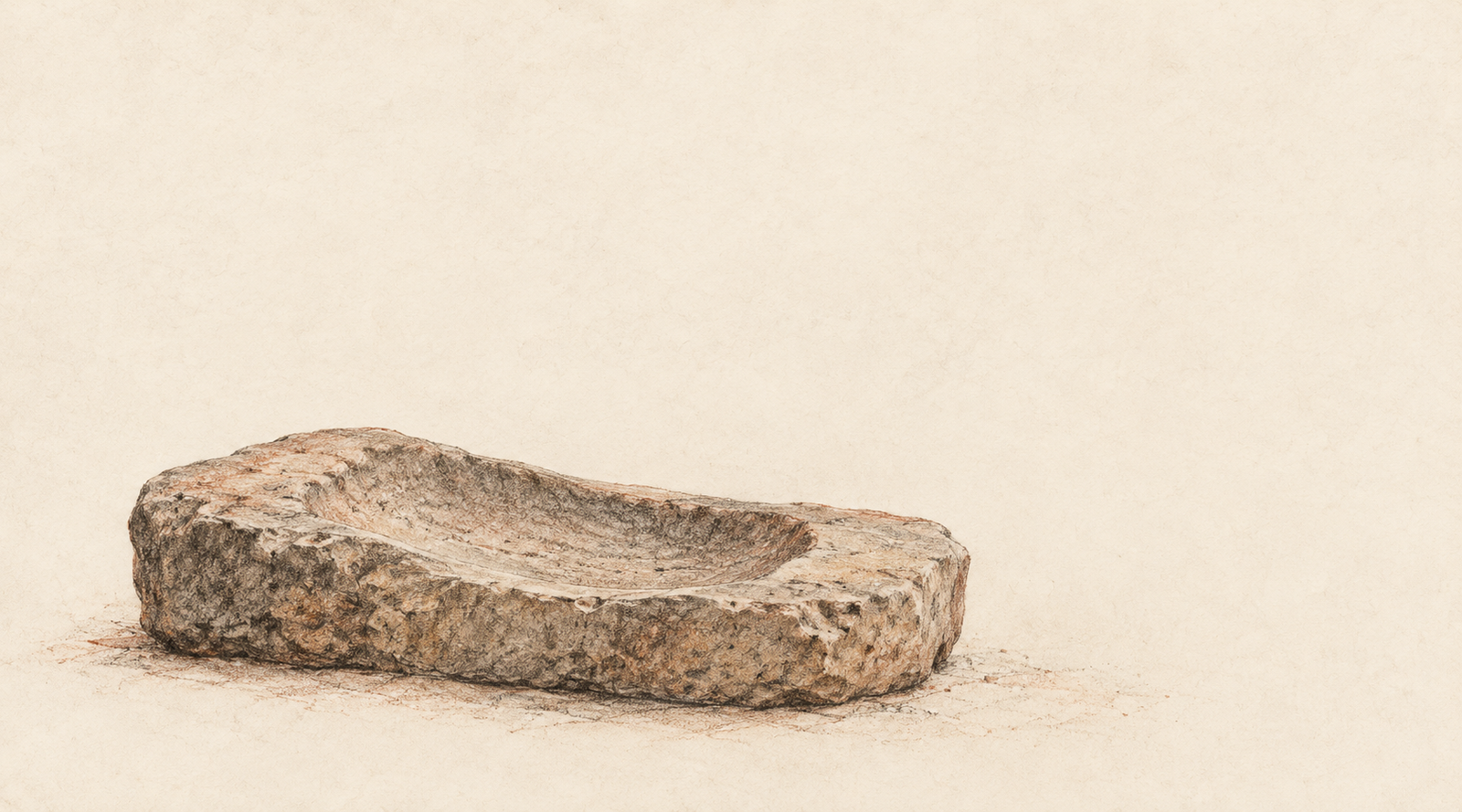

The City of Service
The temple we inherit is a building from which almost all necessity has been removed. Nothing must be brought for it to continue being what we call a temple. The sanctuary asks nothing of us. Stone is good at this kind of independence.
A living temple was otherwise.
Water had to come in. So did grain, cloth, oil, aromatic substances, fuel. The things required for worship arrived because someone carried them across a threshold.
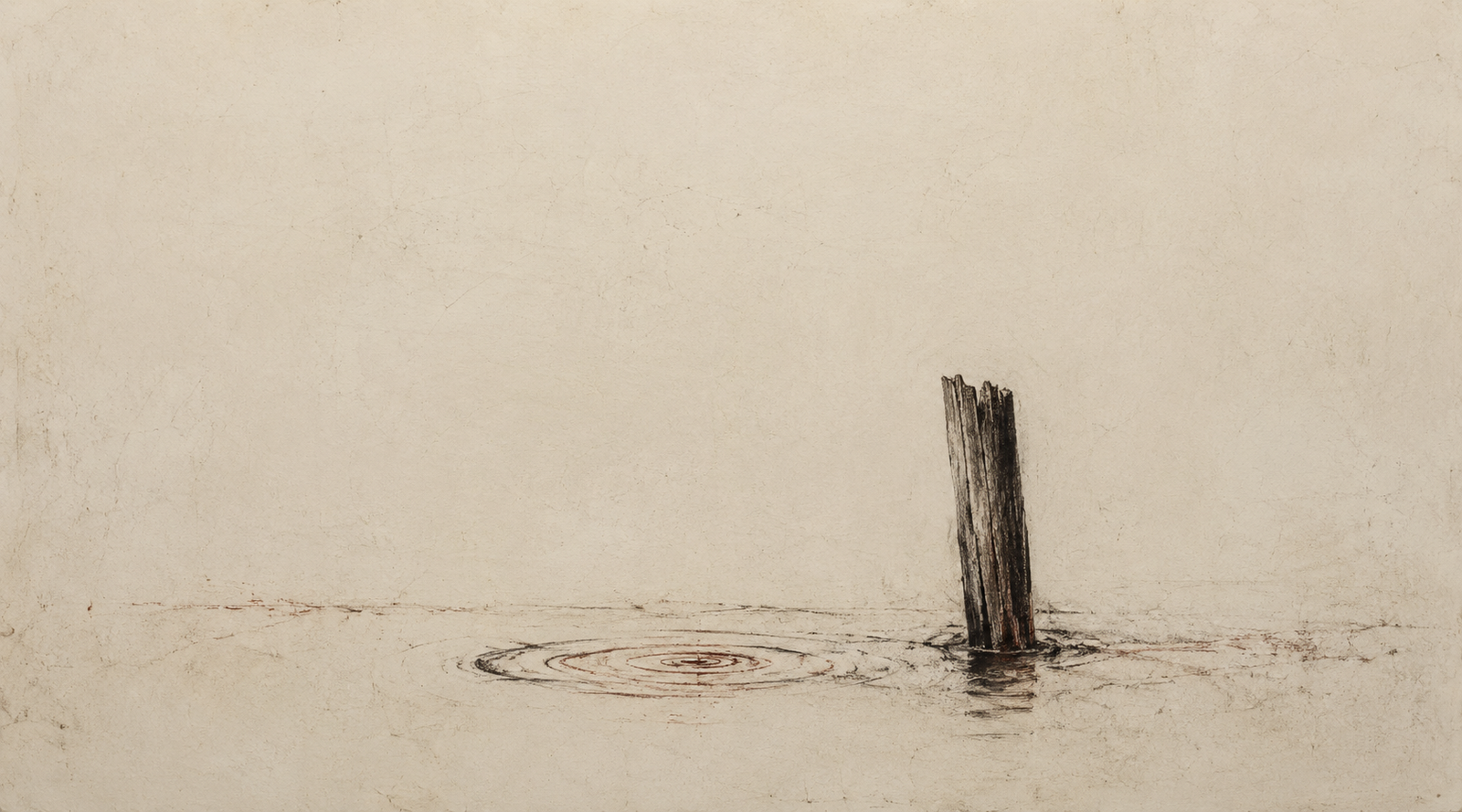

Houses of Wood, Light, and Smoke
Some of Angkor’s most intimate ruins do not rise above the ground at all. They are postholes, low mounds, hearths and ponds: durable traces of a domestic city built largely from things that decay. To restore that city is to see Angkor not only as stone, but as wood, smoke, water, repair, and people living within calling distance.