

What Cannot Be Finished
On maintenance, fidelity, and the life that must be tended
The hinge has begun to complain again.
Not loudly. Just enough that when the door opens in the early morning, before the kettle has boiled and before the room has properly entered the day, the sound is there: a thin, ungenerous note of friction, metal reminding metal that use leaves its mark. It would be easy to ignore for another week. Easier still to resent. But eventually the small bottle is found, the drop of oil placed where it needs to go, the door opened and closed once, then again, until the complaint softens back into silence.
Nothing has been achieved, exactly.
Nothing has been built. Nothing has advanced. A hinge has been tended. By tomorrow there will be some other small disorder asking for its turn: dust gathering where the light falls, cloth fraying at the seam, water marks returning to the sink, a plant leaning too far towards the window, the old impatience returning in thought, the old misalignment returning in speech.
Much of life takes this form.
Not breakthrough, but re-attention.
Not completion, but return.
Not mastery, but upkeep.
We imagine otherwise. We imagine that the serious life will look more finished than this. One day the room will remain in order. The body will become reliable. Character will settle into its best shape and stay there. Love will have learned enough not to require such frequent repair. The mind will at last stand clear of its old confusions. What is good will become secure through being fully won.
But most of what matters does not become secure in that way. It remains within reach only by being taken up again.
A cup is washed and used again. A floor is swept and gathers dust again. Bread is bought, eaten, bought again. A conversation is resumed after strain. A promise is remembered in the hour when it would be easier to forget it. A practice of attention is resumed by someone who lost it yesterday and will lose it again tomorrow. Even sorrow does not move cleanly onward. It shifts, recedes, returns under new weather, asks to be carried in a different way.
There is a humility in this recurrence that pride finds difficult to forgive.
We are drawn to finished things because they seem to stand beyond embarrassment. They do not show too much of the hand. They do not confess how often they had to be corrected, steadied, salvaged, brought back from drift. The finished thing appears to have arrived under its own power. We are tempted to want the same composure for ourselves. Not simply order, but exemption. Not simply form, but freedom from the labour of maintaining form.
And yet the lives we actually inhabit are not monuments. They are things kept in being.
That distinction goes deeper than it first appears. A monument asks to be admired. A living thing asks to be tended. One can walk away from the monument and leave it to weather on its own terms. But a friendship, a craft, a conscience, a household, a body, a marriage, a discipline of thought — these do not remain true by being established once. They remain true, where they do remain true, by repeated acts of noticing, correction, renewal, restraint, patience.
A person returns to the same failing and tries to speak more gently.
A person folds the cloth and lays it back in its place.
A person replaces the torn seam rather than throwing the garment aside.
A person clears the table at evening though it will be cluttered again tomorrow.
A person begins again in the one unfinished self available.
There is nothing glamorous in this. That is one reason it is so often mis-seen. We are practised at recognising value where it announces itself through scale, speed, or spectacle. We are less practised at recognising the quiet dignity of maintenance. Yet maintenance is one of the chief ways reality tells the truth about us.
It tells us that we are not sovereign.
It tells us that we do not secure life once and for all.
It tells us that dependence is not an accident but a condition.
It tells us that recurrence is not always failure.
It tells us that much of what is worth loving must be loved in time.
This is why the dream of mastery is finally so misleading. Mastery promises a finished state. It flatters us with the image of the self that has risen above upkeep, above vulnerability, above the need to return. It turns repetition into humiliation. It makes maintenance look like what remains for lesser beings once the true work has been done.
But perhaps maintenance is the true work.
Not because nothing higher exists, but because higher things themselves survive only through forms of care that have to be repeated. Love cannot be finished. Attention cannot be finished. Character cannot be finished. Grief cannot be finished. Understanding cannot be finished. None of these belong to the order of things one completes. They belong to the order of things one serves.
To see this clearly is to feel some old hardness begin to loosen.
One begins to understand why polish can be so seductive. Polish appears invulnerable. It hides dependence. It does not show recurrence. What is worn, by contrast, confesses its history. The mark of the hand. The strain of use. The small indignities of time. A repaired thing goes further still: it shows not only that damage occurred, but that someone refused disposal. Someone judged the thing still worthy of keeping.
That judgement has moral force.
A mended bowl is not moving because damage is beautiful in itself. It is moving because the wound has been folded into continued existence. The object no longer pretends to have escaped time. It bears time openly. Something similar is true of persons, though in harder ways. What has been weathered, admitted, re-aligned, and not abandoned often carries a depth unavailable to what has merely remained smooth.
Not splendour, but fidelity.
That phrase belongs not to the heroic hour but to the repeated one. To checking the fever in the night. To wiping the counter. To oiling the hinge before it seizes. To speaking again after withdrawal. To correcting the small lie before it hardens into character. To setting bread on the table once more. Such acts rarely enter theories of greatness. Yet without them greatness becomes theatrical, because nothing substantial remains beneath it.
Once that is seen, the rest becomes less grand and more exact. The question is no longer how to rise above recurrence, but how to inhabit it well.
The wiser path is quieter. It begins by relinquishing the wish to be finished.
That relinquishment is not defeat. It is accuracy.
The good life was never going to become a sealed chamber beyond dust, fatigue, misunderstanding, temptation, grief, or repair. The self was never going to become a completed object, set beyond revision. We do not honour life by pretending otherwise. We honour it by learning how to care for what repeatedly falls out of true.
There is even something comic in this, and something tender. We are the keepers of perishable things. We inhabit bodies that need sleep, rooms that gather dust, affections that need renewal, thoughts that go crooked, tools that blunt, habits that lapse, promises that must be remembered because memory itself is porous. It would be easy to speak of all this only as limitation. But limitation is not the whole truth. These same conditions make possible forms of patience, mercy, local agency, and devotion that fantasies of invulnerability never teach.
For devotion belongs to what must be done again.
The lamp is lit into evening. The hinge no longer complains. The cup is washed and placed back on the shelf. Tomorrow the shelf will gather dust. Tomorrow the cup will be used again. Tomorrow some small misalignment of room or soul will ask for its quiet correction. This is not a flaw in the design. It is the design, or as much of it as we are permitted to know.
What cannot be finished need not therefore be despaired of.
It may be exactly what deserves our most faithful care.
—
Receive the next work
Subscribe free to receive new work from the Lucas Varro Library by email.
More from the Library

See Also
A concise and impartial dictionary of absence, promises, quarrels, ordinary objects, and the troublesome instability of words.

The City of Service
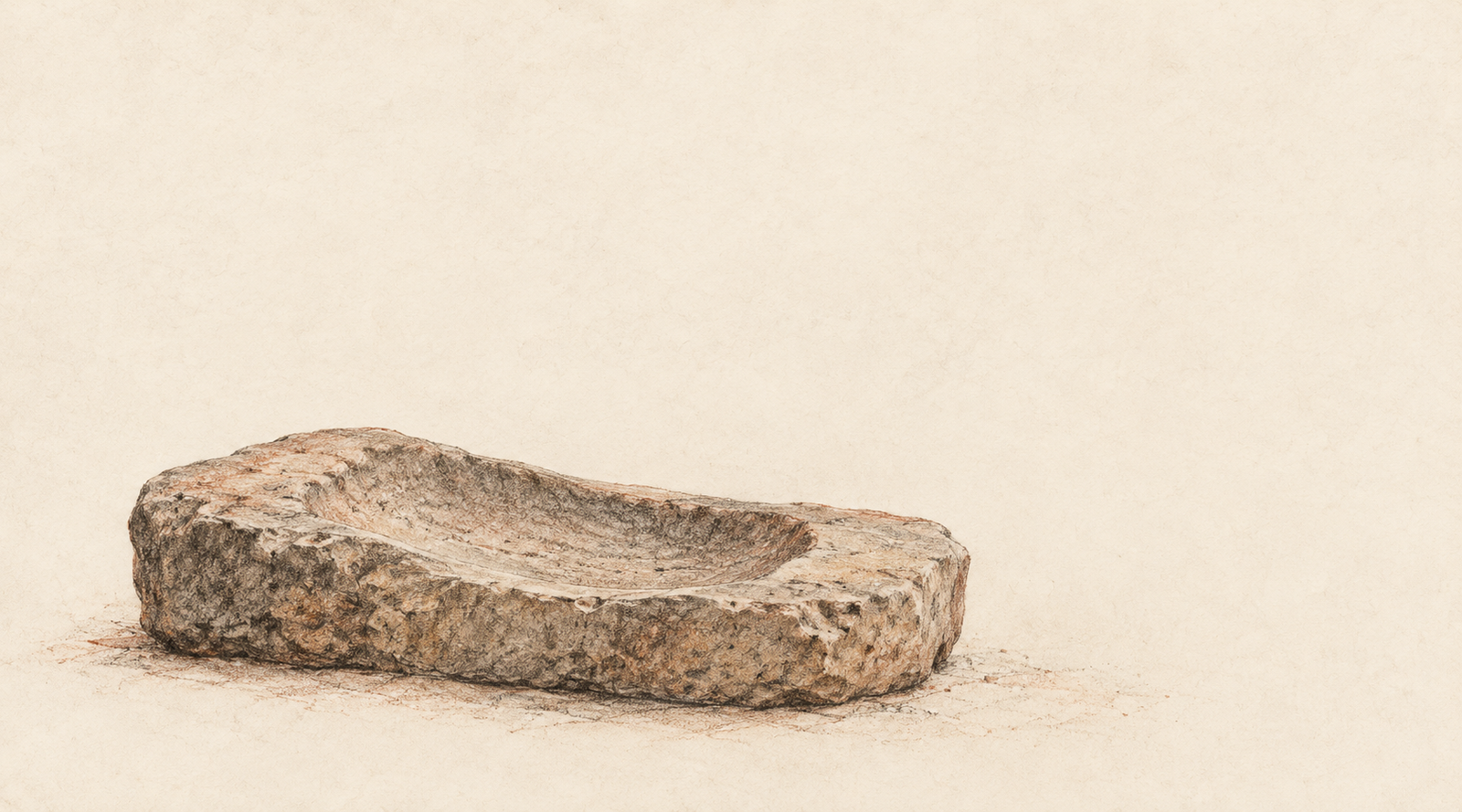
The temple we inherit is a building from which almost all necessity has been removed. Nothing must be brought for it to continue being what we call a temple. The sanctuary asks nothing of us. Stone is good at this kind of independence.
A living temple was otherwise.
Water had to come in. So did grain, cloth, oil, aromatic substances, fuel. The things required for worship arrived because someone carried them across a threshold.

Houses of Wood, Light, and Smoke
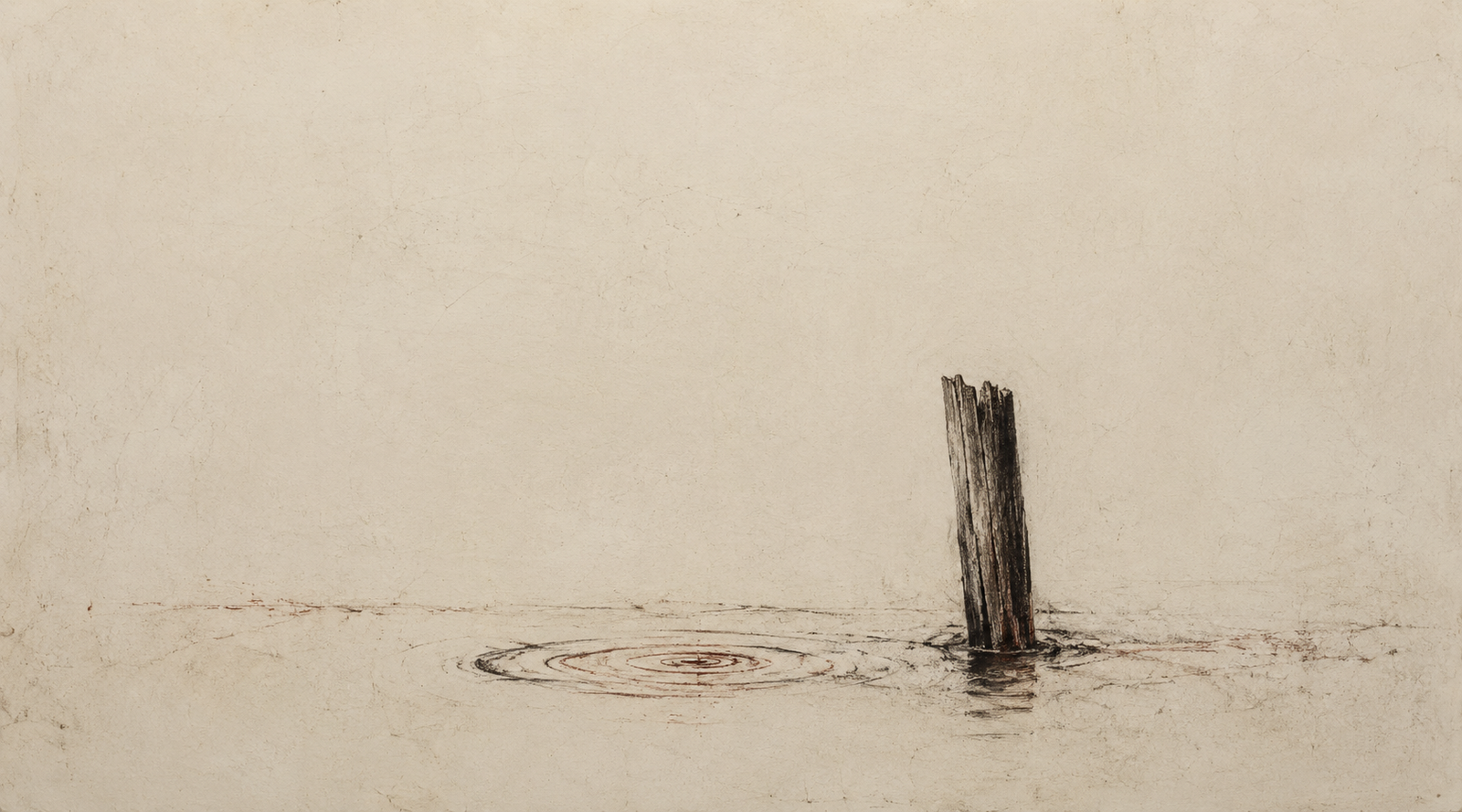
Some of Angkor’s most intimate ruins do not rise above the ground at all. They are postholes, low mounds, hearths and ponds: durable traces of a domestic city built largely from things that decay. To restore that city is to see Angkor not only as stone, but as wood, smoke, water, repair, and people living within calling distance.