
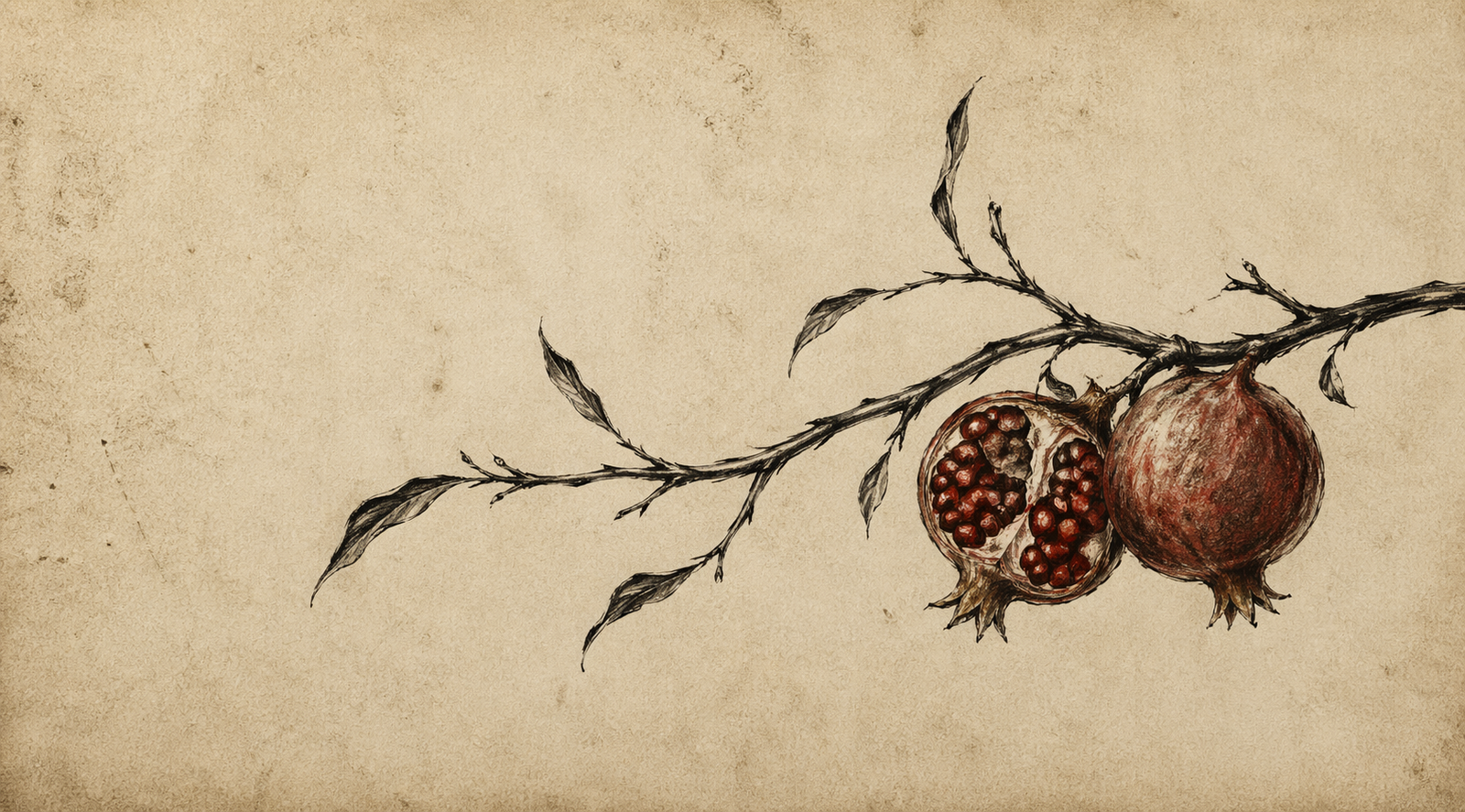

Demeter and Persephone — The First Winter
On abduction, famine, divided return, and the wound that entered the year
Persephone was gathering flowers when the day broke.
It did not look, at first, like a day made for breaking. It was one of those mild mornings when the earth seems content with itself, and a girl might walk a little way from home with her hands already half full of bloom and no one think much of it. There are days that carry their danger openly, with a hard wind in them or a strangeness among the birds, and there are days — which are worse — that wear such innocence upon their face that even the wise are deceived. This was one of the latter kind.
She had gone out among the meadow grasses with the daughters of Oceanus, who were laughing not far off, though not so near as they ought to have been for what was coming. The flowers grew thick there: crocus and iris, violet and hyacinth, little white stars that children pluck in handfuls because one seems too small a thing to carry home alone. Persephone moved among them lightly, as young girls do when the world has not yet taught them that beauty sometimes stands where the ground is weakest. She bent, gathered, rose, and bent again, the hem of her robe catching seed-heads and shining pollen, her arms slowly filling with spring.
She was not yet the Queen Below. She was only a daughter then.
And if you think that is no great distinction, you have not yet learned how much of the world is built upon such small words.
For to be a daughter is to belong somewhere without question. It is to hear one’s name called across a field and know it is meant in love. It is to gather flowers because flowers are there, and because someone at home will smile to see them set in water. There is no law written against such things. No warning is given. The day itself seems to approve them.
So Persephone went a little further among the grasses than she had meant to go.
Then she saw the flower.
It stood a little apart from the rest, not taller by very much, nor brighter in any vulgar way, yet so strangely complete in its beauty that the whole meadow seemed, in that moment, arranged merely to lead the eye towards it. A narcissus, white at the edge and deepening inward to a richness almost golden, though gold was not quite the word. There are flowers that delight, and flowers that console, and flowers that make one think for a passing moment that the earth is gentler than it truly is. This flower did none of those things. It compelled.
Persephone paused with her gathered blooms against her breast and looked at it.
Perhaps she glanced back once towards her companions. Perhaps they were still laughing. Perhaps one of them lifted a hand and called something to her which the breeze took and thinned before it reached her. It would be pleasant to imagine that there was warning, some tremor in the air, some sudden darkening in the grass, but catastrophe often enters by the gate of ordinary desire. She wanted the flower. That was enough.
She stepped towards it.
The ground beneath her feet was warm with spring. She knelt. A strand of her hair slipped over her shoulder as she reached out her hand. Her fingers closed about the stem.
And the earth opened.
Not cracked, not groaned, not shuddered as it does in the lesser stories men tell to frighten children by the hearth. It opened. One moment there was ground, meadow, root, flower, day; the next there was division. The green world split like cloth torn by an unseen hand, and beneath it yawned the black strength of another kingdom altogether.
Up from that riven dark came the lord of it.
He rose in a chariot of gold that did not shine as the sun shines, but with a harder splendour, as treasure shines in caverns and beneath the sea. The horses that bore it were deathless and terrible, and the man who held the reins did not come with the haste of a thief who fears interruption. He came as one claiming what had already been granted.
Persephone cried out then. She dropped the flowers she had gathered. Crocus and violet, iris and hyacinth fell from her arms and scattered over the torn ground, and the narcissus, for which all this had been contrived, was lost among them. She stretched out her hands to the bright air above her, to the field, to the companions already too far away, to the life she had stood in only a heartbeat before. But there are thresholds across which a cry travels badly, and the world of the living had already begun to recede from her.
He seized her and lifted her into the chariot.
Then the black horses turned, and the earth closed over them.
What remained above was silence, a broken scatter of spring flowers, and a meadow that looked, after a little while, almost as it had looked before.
Almost.
That is the cruellest thing about such wounds. The world is often indecently quick to compose its face again.
Far off, the daughters of Oceanus stopped their laughter and began to call her name.
And elsewhere — though not yet, not in that first stunned instant, but soon — her mother would hear a cry carried across the bright skin of the earth and know, before knowledge had taken shape, that something in the order of the world had been torn.
Demeter heard her before any messenger came.
It was not a clear cry by then, not the sort of call a mother could follow with her feet as one follows the sound of a child in the next room or the next field. It came thinned by distance, strained through the broad bright spaces of the earth, and mixed with the ordinary sounds of morning so that another might have taken it for some wild bird’s sharp complaint, or for wind caught for a moment in stone. But a mother’s hearing is not like other hearing. It does not depend wholly upon sound.
She lifted her head.
Around her the world was still full of living things. Grain was standing in promise. The olive leaves turned their silver undersides to the light. Somewhere nearby water moved with that patient noise which belongs to streams that have always known where they are going. Nothing in the field, the grove, or the sky announced disaster. Yet she stood so suddenly still that even the hours seemed to pause with her.
Then came the second cry.
This time it was fainter still, and more terrible for that very reason, because it bore with it not only fear but distance: the dreadful widening of space between the one who called and the one who might answer. Demeter did not wait for certainty. Certainty is a luxury granted to the uninvolved. Love moves before proof.
She was already walking when the stillness in her became motion. In another moment she was no longer walking but crossing the earth with the swiftness of one for whom roads are inconveniences and boundaries beneath notice. She came to the meadow, if meadow it could still be called, and there found no daughter, only bruised ground, dropped flowers, and that silence which seems at first merely an absence of sound until one understands it is the place where a voice has been violently removed.
Demeter knelt.
She touched the stems scattered in the grass. She touched the torn earth, though it had already sealed its lips. She looked for a footprint, a fold of robe caught on thorn, some remnant so small that another eye would have passed over it. But violence does not always leave behind what tenderness most needs. The meadow gave her beauty, fragrance, sunlight, and no answer at all.
Then she rose, and her grief became movement.
For nine days she went over the earth with torches in her hands.
She did not rest. She did not take ambrosia. She did not bathe the dust from her skin. Daylight and darkness ceased to be different things to her; they were merely the changing colours of the same refusal. She went among men and women, through cities and sheepfolds, along shorelines where the sea broke itself uselessly upon rock, through valleys still green with growth and over hills where the wind had room to turn bitter. She asked each creature of earth and air whether it had seen the maiden taken. She called Persephone’s name into forests, across rivers, over ploughed land and through the high stony places where little grows but thorn and memory.
The torchlight went with her even in the day. That was what people remembered afterwards: not merely the goddess wandering, but the fire in her hands under the sun.
Mortals saw her and drew aside. Some offered prayers and some only fear, for sorrow in a god is not like sorrow in a human being. In us it breaks the voice, stoops the shoulders, and hollows the face. In them it can alter the weather. Milk turns thin. Fruit falls before ripening. Hounds refuse sleep. Horses lift their heads at nothing. The old speak more softly without knowing why. Such things had begun already, though few yet understood them.
On the tenth day Hecate came to her.
She came carrying light as well, though hers was the lesser radiance of one who walks near thresholds rather than rules them. There are powers, after all, who have long acquaintance with crossroads, doorways, moonlit paths, and those uneasy places where one condition gives way to another. Hecate was such a one, and if she had not seen the taking, she had heard the cry.
“I heard her,” she said, “but I did not see who took her.”
It was not enough, but it was not nothing, and sorrow grows greedy for even the smallest scrap that proves it has not dreamed its own wound. So the two of them went together to Helios, who sees much that others would rather leave in shadow. They came to him not as suppliants — Demeter had passed beyond the courtesies of grief by then — but as those who require speech from one who has watched.
Helios did not deny her.
It is a hard thing to tell a mother that her child is gone below the earth. Harder still to tell her that this was not done in darkness alone, nor by stealth alone, but with the knowledge and consent of powers who should have guarded what was hers. Yet Helios, who moves daily over the wide back of the world and has small use for pious evasions, spoke plainly. Hades had taken the girl. Zeus had allowed it.
There are griefs that cry out, and griefs that fall silent because they have gone too deep for sound.
Demeter stood without speaking.
Until then she had been searching against loss. Now she understood that loss had been arranged. Not by accident. Not by blindness. Not because the world had failed to guard the innocent, but because the order of the gods had made room for such theft and named it lawful. Something colder entered her then than wandering anguish. The wound did not lessen; it sharpened.
She did not go up to Olympus.
That would have been the expected thing, and expectation is often the first habit grief casts off. Instead she turned away from the bright dwellings of the gods and went among mortals, taking upon herself the shape of an old woman, worn with years and travel, with a veil drawn low and the bearing of one who has sat too long beside grief to be much startled by lesser things. In that guise she came at last to Eleusis and sat beside the Maiden Well beneath the shade of an olive tree.
There she looked like any tired stranger one might have passed on a road: a woman who had lost something long ago and perhaps lost too much even to ask. It is one of the mysteries of the world that divine sorrow can sometimes only be housed in an ordinary face.
The daughters of Celeus found her there.
They had come for water, laughing as young women will laugh with pitchers on their heads and morning still upon them, though their voices softened when they saw the veiled figure seated by the well. They asked her who she was and from where she had come, for even in times less courteous than those, it was still thought shameful to leave an old woman unaddressed at a wayside spring.
Demeter answered them as Doso, telling a tale of exile and loss with enough truth in it to make invention unnecessary. She said she had been carried away from Crete by pirates and had escaped them. She said she was wandering in search of work and shelter. She asked for neither pity nor ceremony. Only a place.
The girls took her home to their mother.
And thus grief entered the house of Eleusis not with thunder, nor with a blazing sign in heaven, but as a tired old woman asking leave to sit by the hearth.
Metaneira received her kindly.
That, too, matters in stories such as this. Much in the world is broken by force, by vanity, by appetite, by law hardened against mercy; but now and then a house still opens at the right moment, and even if it cannot mend what is greatest, it can give grief a chair, a cup, and the brief dignity of human shelter. Metaneira, seeing the old woman’s bent figure and travel-worn silence, did not keep her standing among the servants. She bade a seat be brought. She ordered food. She asked no vulgar questions.
But Doso sat apart.
She did not touch the shining wine set before her. She did not take the rich cakes prepared in honour of a guest. She lowered her gaze and kept her hands folded in her lap, as though the customs of welcome belonged to another life and another appetite. Only when one of the women of the house offered her a simpler draught — barley mixed with water and mint — did she accept it. She lifted the cup slowly, like one remembering that the living must sometimes still drink, and took it with a gravity that made the common drink seem older than hospitality and more enduring than feast.
Then the child was brought in.
Demophoon came in the arms of a nurse, wakeful and warm with that soft gravity proper to the very young, when they still seem hardly separate from the bodies that bore them. He was a beautiful child, though perhaps all children seem so for a little while to those who stand near grief, because they carry in themselves that perfect ignorance which the world has not yet corrected. His hands opened and closed in the air. His eyes, dark and untroubled, moved over the room, over the lamps, the carved timbers, the women moving to and fro, and at last over the veiled stranger seated by the hearth.
Something in Demeter altered then.
Not healed. Grief does not heal because a child enters a room. But a current moved in her that had been standing still. She held out her arms.
Metaneira, like any mother, hesitated only for the smallest instant. Yet there was such dignity in the old woman’s bearing, and something so strangely trustworthy in the steadiness of her hands, that she nodded to the nurse. Demophoon was placed in Doso’s lap.
The goddess looked down at him.
Perhaps she thought, in that first moment, not of Persephone herself, for grief rarely permits so direct a substitution, but of a deeper defiance: the ancient protest in all love which says no child should be given over, not to time, not to decay, not to the dark that waits below all households and kingdoms alike. Or perhaps she thought of nothing that can be cleanly said. Perhaps she only felt the unbearable lightness of a living child, and in that contact remembered how much of the world is entrusted to hands that cannot keep it.
From that evening onwards she became his nurse.
Demophoon thrived under her care. She fed him not on the indulgences by which anxious households try to purchase health from the future, but with a severe tenderness more exact than fear. She held him when he cried; she watched him when he slept; she passed her hands over him with a still, deliberate motion that made the servants whisper among themselves that some old blessing was being laid upon the child. There was colour in his cheeks now, and weight in his limbs, and the kind of calm that causes mothers to breathe more easily when they stand over the cradle.
But Demeter was not content with health.
To a mortal house, it might have seemed the greatest kindness merely to strengthen the child, to preserve him a little longer against fever, accident, and the thin uncertain thread of infancy. Yet Demeter’s grief had brought her beyond the scale of mortal hopes. She did not wish Demophoon merely to prosper. She wished, insofar as such a thing could be done, to remove him from the law that governs all children born beneath the sun. What had been taken from her could not be returned whole. Very well, then: perhaps another child might be spared the downward claim that waits at the root of life.
By day she anointed him with ambrosia.
By night, when the doors were shut and the servants sleeping, she carried him to the hearth.
There she held him in the living fire.
Not carelessly. Not cruelly. Not with the madness of one who has mistaken destruction for transfiguration. She did it with an exactness beyond mortal understanding, as a goldsmith judges heat, as a healer measures bitterness in a draught. The flames moved about the child without consuming him. They licked his limbs and curled around his small body while Demeter watched with that grave, unblinking concentration which belongs to acts too dangerous for prayer.
Each night a little more of mortality was meant to burn away.
And perhaps — had she been left alone long enough — he would indeed have crossed some boundary no human child had crossed before. But mortals are not fashioned to watch calmly while fire takes hold of what they love, however wise the hand that holds it there. There are sights to which instinct answers before understanding can even rise.
One night Metaneira woke.
Whether she had been troubled by a dream, or by the sudden absence of the nurse from her chamber, or by that inward maternal start which rouses the body before the mind knows why, no one could later say. She rose from her bed, crossed the darkened house, and came near the hearth.
There she saw the child.
She saw him in the fire.
What she saw was not what was happening. That is always one of the sorrows of such moments. She did not see divine art working against corruption. She did not see a grief-stricken goddess trying, in secret and with impossible tenderness, to do for another woman’s son what she could no longer do for her own daughter. She saw only flame around her child.
And she cried out.
The cry shattered the room.
Demeter turned. The fire dropped at once from its measured office into ordinary fire. The child was snatched from danger — or from transformation; that depended upon who later told the tale. Metaneira rushed forward in terror, taking Demophoon to her breast, covering him with kisses, tears, and the broken speech by which mothers try to call their children back from any brush with death, whether real or imagined.
For a moment Doso stood without moving.
Then the old shape fell from her.
The room changed before anyone had time to flee it. The bent shoulders straightened. The veil no longer concealed but framed a brightness no mortal eye could mistake for human. The darkness of travel and age burned away. Light moved from her skin and garments with the hard, living radiance of corn ripening under the sun and of flame answering to its own source. The house was suddenly too small for what it contained. The hearth, the benches, the woven hangings, the very timbers seemed mean things beside the revealed gravity of the goddess.
When Demeter spoke, her voice was no longer the worn voice of a wanderer.
“Foolish mortals,” she said — and there was rebuke in it, but grief also — “you do not know whether what comes to you bears ruin or blessing.”
Metaneira fell trembling, Demophoon clutched to her breast. Celeus was called from sleep. The household gathered in terror, some prostrate, some unable even to kneel properly because awe had taken the use of their limbs. Lamps shook in servants’ hands. Children began to weep. The room that had lately been only a house now stood on the edge of revelation.
Demeter did not destroy them.
Anger was in her, yes. She had been interrupted, mistrusted, forced back from the one impossible labour in which her grief had briefly found purpose. Yet beneath that anger remained something more severe and more fruitful. She gave command.
A temple was to be built for her at Eleusis, near the well where the daughters had first found her. There she would sit apart from the gods. There she would make known what mortals might yet learn from sorrow, though not all at once, and not cheaply. Demophoon, she said, would not now be made deathless; nevertheless he would be honoured, because he had lain in the arms of a goddess and nearly passed beyond the ordinary lot of humankind.
Then the brightness withdrew a little, enough that mortal eyes could bear it, though not enough to mistake it.
The household obeyed.
The temple rose, and with it a silence.
Men cut stone. Women carried water. Timber was hauled, set, squared, and bound. Dust whitened the hands and ankles of the labourers. The place beside the well, once only a place of drawing and resting, became a place of measured effort, where every gesture was performed under the uneasy knowledge that a goddess had stood there and spoken.
When it was finished, Demeter entered and sat within.
She did not go back to Olympus. She did not laugh among the gods, nor return at once to the fields that knew her hand. She remained in that holy place apart, wrapped not merely in sorrow but in a refusal so deep that the world itself began, little by little, to answer it. Grief in a mortal may empty a room. Grief in a goddess can empty the earth.
At first the change was slight.
Seed went into the furrows and did not answer as it ought. Men crouched in their fields and turned the soil between thumb and finger, frowning at its strange reserve. Shoots that should have risen cleanly after rain came up thin, yellowed, or not at all. The orchards held their blossoms too long, as though uncertain whether to commit themselves to fruit. Ewes gave less milk. Bread came out of ovens smaller and denser than before. People blamed weather, timing, pests, poor luck — all the ordinary names by which human beings try to keep terror manageable.
But the change deepened.
The plough no longer seemed to draw promise from the earth, only effort. Granaries began to echo. In the markets, women who had once chosen among baskets of grain and fruit now weighed every handful. Men grew short-voiced at table and counted children without meaning to. In poorer houses the first thing to go was abundance, then variety, then satisfaction, and at last the pretence that this was a passing hardship. The body learns quickly what the mind would rather postpone.
Still Demeter sat apart.
There is a kind of refusal that is merely resentment, and another kind that becomes judgment. Hers was the latter. She had sought, wandered, suffered, discovered the betrayal laid beneath the surface of things, and no smooth word from heaven had yet answered her. The gods had arranged a marriage and called it order. Very well. Let them see what order costs when the mother of grain withdraws her assent.
The earth hardened under the sun.
Where green should have thickened, there was pallor. Where heavy heads of grain should have bowed, there was stalk and emptiness. Dust began to follow the feet of those who crossed the fields, not the soft dark crumble of living soil, but the thin, tired dust that rises from ground no longer sure why it should nourish anyone at all. Rivers still moved. Winds still passed. The sun still rose with the same impartial splendour. Yet under all this the old contract between life and growth had faltered.
And because men do not only eat but also offer, the famine rose from earth to heaven.
Altars received less. The first fruits did not come. The savour of sacrifice thinned. Smoke that should have climbed in gratitude and dependence no longer rose in its accustomed measure. Gods who had not yet troubled themselves over one mother’s grief began at last to notice the narrowing of their honours. That, too, is part of the structure of the world: pity often comes late, but threatened order moves quickly.
On Olympus they spoke of necessity.
There is no godly word more suspect.
Some urged persuasion, some delay, some a dignified handling of the matter, as though grief were a petition to be processed and not a force already remaking the world below them. But Zeus, who had once allowed what should never have been allowed except under the cold language of power, now saw more clearly what his consent had bought. If humankind perished, the earth would go barren not only of grain but of prayer, sacrifice, and remembrance.
So he sent Hermes.
That was wise, if anything in this business may be called wise. Hermes was not solemn enough to mistake form for substance, nor vain enough to imagine that smooth speech could undo what had been done. He was a goer-between by nature: at home on roads, at thresholds, in uneasy bargains, and in those errands where the thing asked cannot be wholly granted but must nevertheless be attempted. He knew the ways below.
Down he went to the Underworld.
There Hades sat among the dead in his hard splendour, and beside him Persephone.
She was no longer the girl who had stooped among spring flowers. Time below had not stripped her of recognisable grace, nor made her monstrous, but threshold crossings alter those who survive them. She had seen what lies beneath the roots of the living world. She had sat in the house from which no mortal guest returns unchanged. She had learned, in some measure, the stillness and authority of that place. Even if she had longed without ceasing for her mother and the upper air, she could not now be merely the maiden in the meadow. The dark had entered her knowledge.
Hermes delivered the command.
Hades heard it, and because even he could not hold what the upper world now demanded without risking greater fracture, he consented to let her go. Consent, however, is a treacherous word among gods, for it often means yielding only what cannot be kept entire. Before Persephone departed, he placed in her hand the pomegranate.
It was small enough to seem almost negligible. That is the way with many irrevocable things.
Red as fresh blood where the skin had opened. Bright as garnet in lamplight. Weightless, almost, in the palm. Fruit of marriage, fruit of the under-earth, fruit divided into chambers like hidden rooms. Whether he offered it with tenderness, cunning, custom, or command is not a question the world has ever answered cleanly. What matters is simpler and darker. She ate.
A seed, and then another.
Perhaps only one. Perhaps several. The number changes, as numbers do when stories pass from one inheritance into another. But one is enough. One is always enough when the thing taken into the body belongs to a place from which bodies do not leave cleanly.
Then Persephone mounted the chariot and rose.
There are returns that feel like resurrection, and returns that feel like verdict. This one was both less and more than either. She came back towards the upper world, towards light, towards the mother who had searched the earth with torches and emptied the fields for want of her. Yet within her was already the tasted proof that going back would not mean going free.
Above, Demeter waited.
And the earth waited with her, dry-rooted and listening.
She saw her before she touched her.
That is how such moments often come: first not as embrace, nor speech, nor certainty, but as the mere fact of a form returning to sight from which the heart had long ago despaired of any ordinary recovery. Across the bright air Demeter knew her daughter’s shape. She knew the turn of the head, the fall of the hair, the line of the body that had once moved through fields as naturally as wind through grain. But knowledge came braided now with something else, something harder to name: the instant understanding that the lost one returning was not identical with the lost one taken.
Still she went to her.
There are recognitions too deep for hesitation. Demeter crossed the space between them and gathered Persephone to her with both arms, as though all the months of wandering, all the unanswered cries, all the torchlit miles over the face of the earth had been moving towards the right to do this one simple thing. She held her as mothers hold children who have been found after danger: not delicately, not ceremonially, but with the fierce pressure of one who cannot yet trust the world not to take again what it has once stolen.
And Persephone clung to her.
For a little while no god spoke. No messenger intruded. No bargain was named. There was only the meeting of them: mother and daughter, upper world and lower, love and its returned object standing at last in one place.
Then Demeter drew back enough to look into her daughter’s face.
She saw the beloved features, yes — the mouth she knew, the eyes she had searched for in every shadow, the living colour restored to cheek and brow. Yet she saw also what had entered there from below. Persephone’s beauty had not been diminished, but deepened into something no longer wholly spring-like. There was a stillness in her now, and knowledge, and that slight unmeasurable distance which comes into the face of anyone who has passed somewhere others cannot follow and returned carrying its mark within. She was no longer only Kore, the maiden gathering flowers.
Then Demeter asked the question.
It was not a question put with accusation. It was asked with the terrible precision of one who knows that the whole future may hinge upon a single answer.
“Child,” she said, “tell me truly. Did you eat or drink anything while you were below?”
No one who has ever waited for a life-changing answer will fail to hear the silence that followed.
Persephone lowered her eyes.
If she had lied — if such a lie could have availed — perhaps for one instant the upper world might have seemed to hold its breath in hope. But there are thresholds that cannot be tricked by speech, and bonds carried in the body do not yield to denial. She told the truth. Hades had given her the pomegranate. She had taken the seed into her mouth. She had eaten.
The world altered again.
Demeter did not cry out at once. The wound was too exact for that. Her arms tightened slightly around Persephone, not to reproach her, but as though love might still, by pressure alone, resist the consequence now unfolding from that small confession. All the search, all the refusal, all the hunger laid upon the earth had brought her to this: not restoration, but division clarified.
For the seed was no mere fruit of passing appetite. It was bond. It was belonging enacted through the body. It was the sign that Persephone had not merely visited the realm below, nor passed through it untouched like a messenger or a god with errands of his own, but had taken something of that place into herself. Whatever tenderness or cunning or force had accompanied the offering, the law now stood.
Zeus spoke then, because kings and fathers often find their voices most readily once the wound is irreversible.
The arrangement was made plain. Persephone could not remain wholly above. Since she had eaten of the food of the dead, she must spend part of the year with Hades below the earth and part with her mother beneath the sun. The measure of that division would be argued in later tellings, but the deeper truth mattered more than the count. Time itself was to be broken. The year would no longer run unsevered from blossom to harvest, from harvest to sowing, from sowing to blossom again in one seamless covenant of trust. It would now bear absence inside it.
Demeter listened.
What could she do? Refuse again, and the earth would fail entirely. Accept, and the wound would be written into the order of things. She had brought the gods to answer, but even victory had come in the shape their order prefers: not justice, but settlement; not healing, but managed recurrence.
Yet Demeter, though she could not make the world innocent again, could still make it answer to the truth of her loss. So she yielded as far as life required and no farther. When Persephone was with her, the earth would bear. Grain would rise. Trees would flower. Lambs would stand in the fields beside their mothers. Bread would be broken without counting. But when Persephone descended again, Demeter would not pretend. She would let the world feel the separation.
Thus the seasons were given their wound.
Spring was no longer simply growth. It became return. Summer was not merely ripening, but abundance lived under threat of future loss. Autumn carried in it not only harvest, but the knowledge of diminishing light. And winter — winter was not first cold, nor snow, nor barren branch. Winter was the time when a mother’s arms had been emptied and the earth remembered it.
So the fields grew again.
The first green broke through the dark soil with a tenderness almost painful to behold. Men went back to their ploughs. Women returned bread to their tables. Children who had grown quiet with hunger laughed once more in courtyards and among doorways. Smoke rose from altars in proper measure. The gods received honour again, though perhaps a little less trust. In Eleusis, memory settled into rite, and grief into mystery. Mortals learned that what had happened among the gods was not distant from their own condition, but a vast and holy version of it: that loss comes, that return may be partial, that bread itself depends upon a mercy never wholly secured.
And Persephone moved between worlds.
Above, she was daughter, though never again only daughter. Below, she was queen, though perhaps the name felt strange at first upon her, like a garment heavy at the shoulders and colder than one’s own skin. She belonged in two directions at once, and therefore wholly in neither.
As for Demeter, she kept the world alive, but not innocent.
That is a greater labour than many know.
And when, in the turning year, the first frost silvered the fields and the leaves loosened their hold and fell, and the stored grain mattered more than the green blade, and mothers drew their children indoors a little earlier against the dark, the old tale remained in the air beneath all explanation: the tale of the first winter, when the earth learned that what is loved may return and still not be restored, and that life itself must henceforth make room for absence if it is to continue at all.
So it has been ever since.
—
Receive the next work
Subscribe free to receive new work from the The Hospitable Dark Library by email.
More from the Library
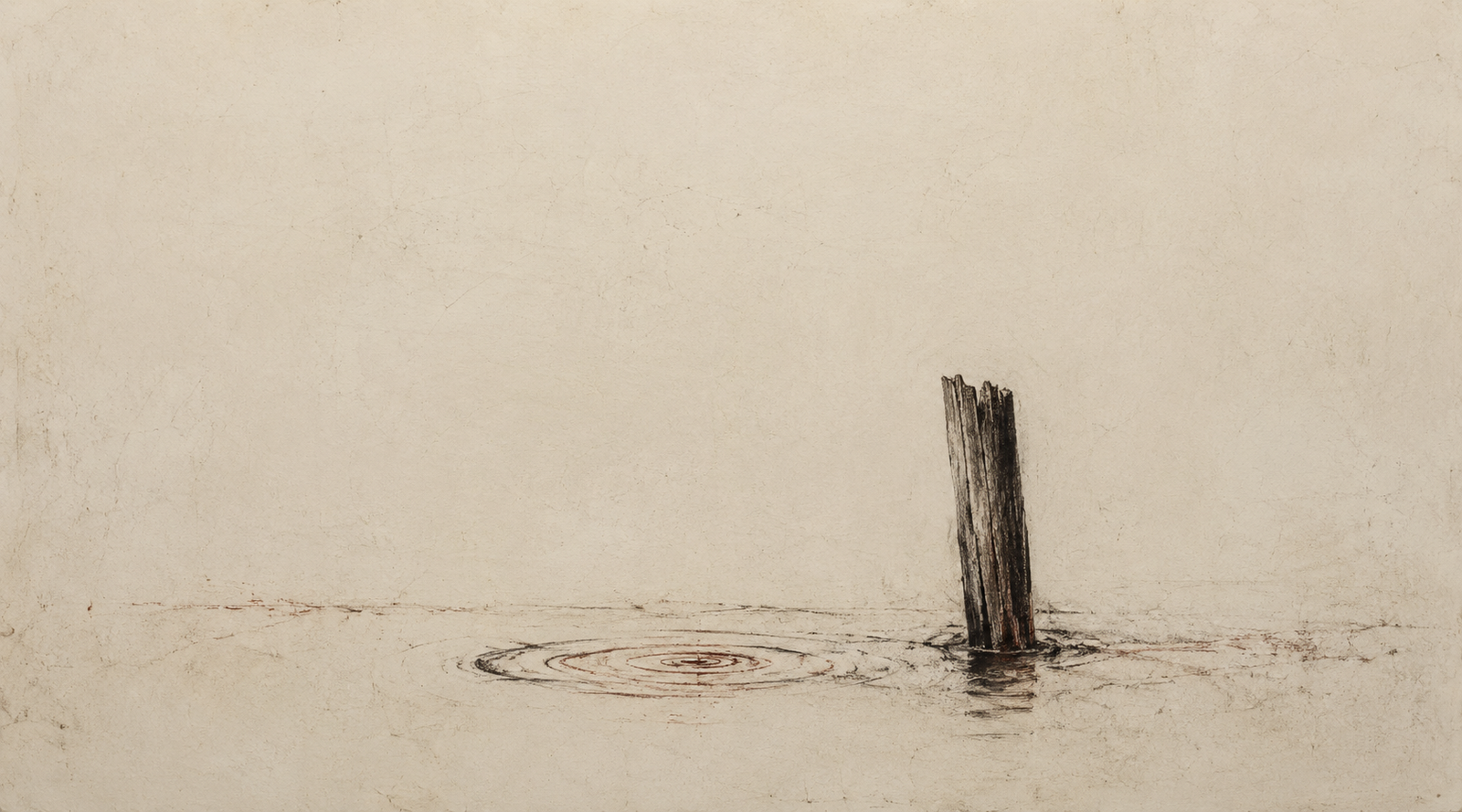

Houses of Wood, Light, and Smoke
Some of Angkor’s most intimate ruins do not rise above the ground at all. They are postholes, low mounds, hearths and ponds: durable traces of a domestic city built largely from things that decay. To restore that city is to see Angkor not only as stone, but as wood, smoke, water, repair, and people living within calling distance.
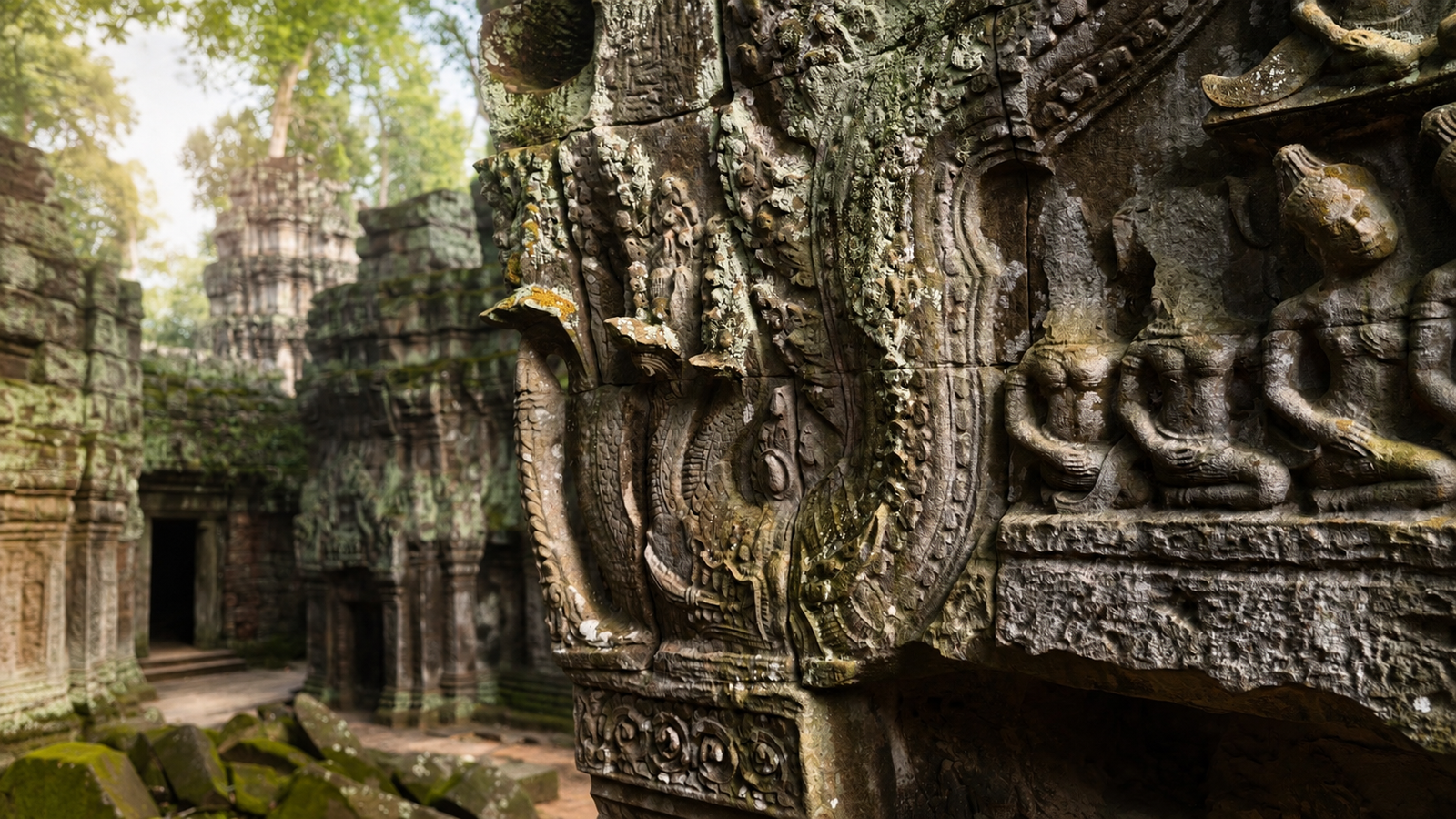

What Stone Brings Forth
I had mistaken a gift for something being expelled.
Beneath the nāga's mouth, a stone garland descended bead by bead. Nearby, a makara opened its jaws and another form emerged. Looking closer, the whole temple began to change: serpent became ornament, ornament became architecture, architecture became foliage.
The forest did not introduce this language.
It answered it.
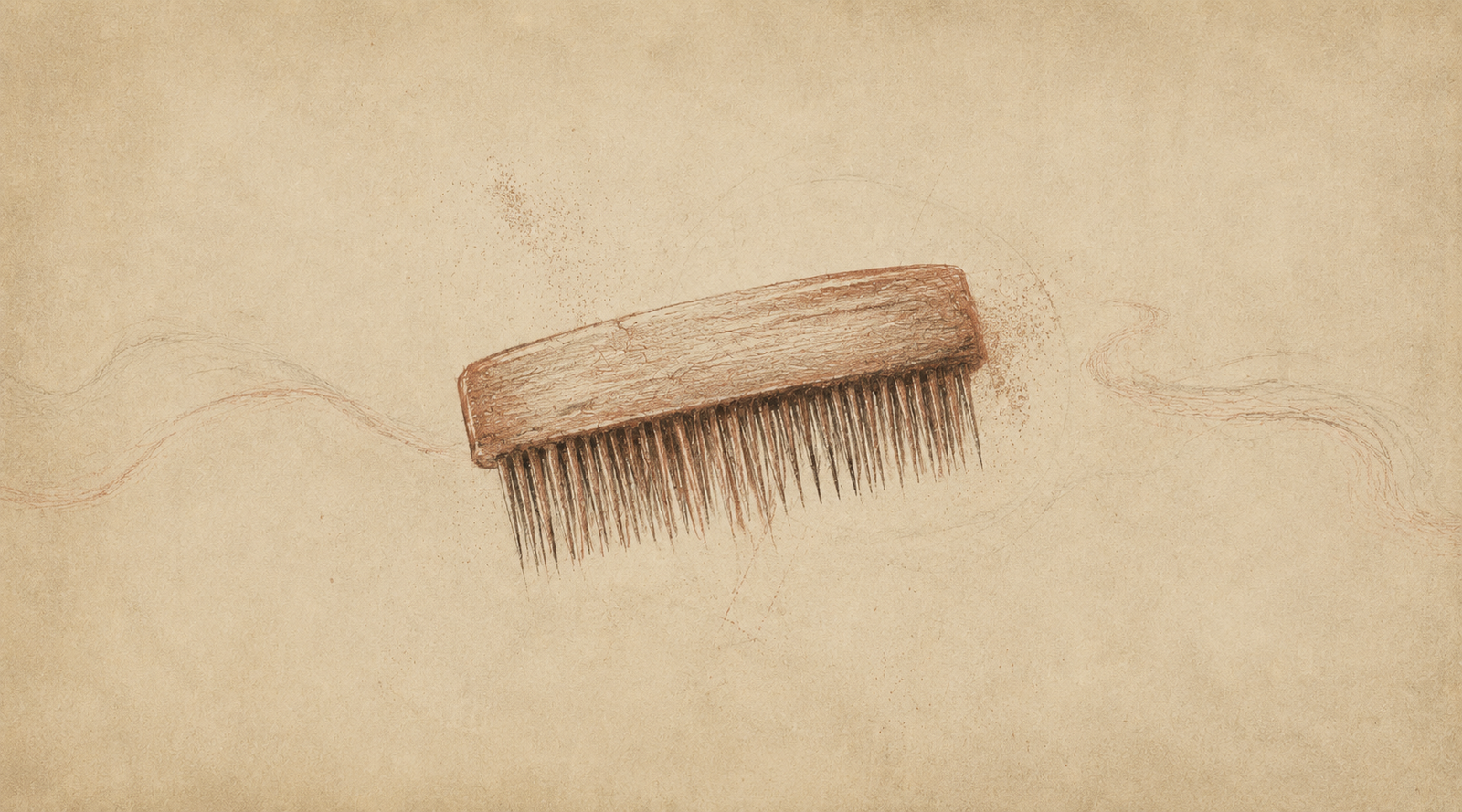

The Eighth Daughter
Seven daughters have already been taken by Yamata-no-Orochi when Susanoo reaches the River Hi. Only Kushinada-hime remains. The Eighth Daughter retells the Kojiki episode through a family’s waiting, a girl transformed into a comb, and the patient preparation for the serpent’s return.