
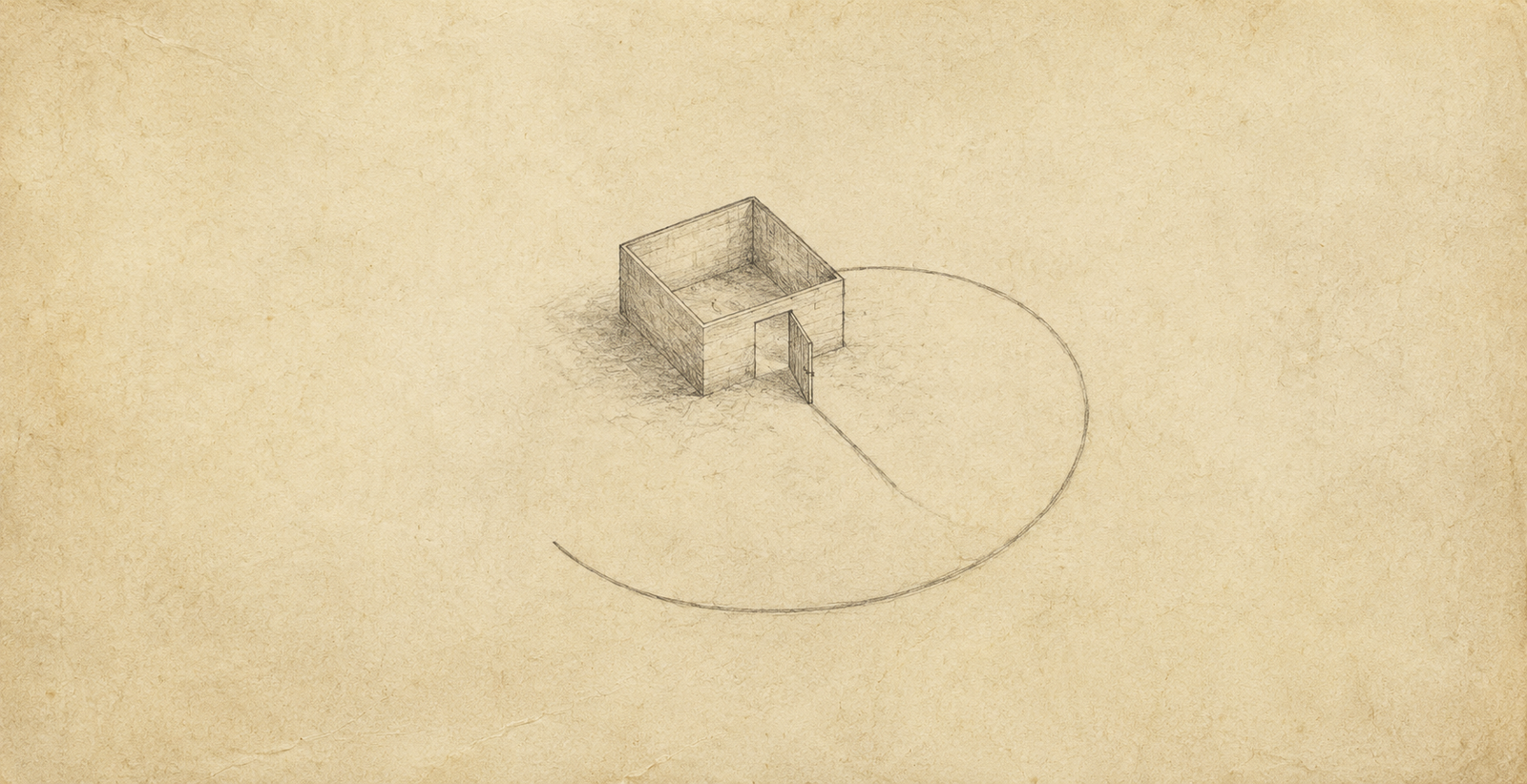

The Hut We Carry With Us
On Kamo no Chomei, refuge, withdrawal, and the danger of becoming attached to the very life that saved us.
There comes a point when escape begins to look like wisdom.
Not improvement. Not productivity. Not the disciplined rearrangement of a life that has already become too loud. Escape. A door closed. A phone left untouched. A room made bare. A morning defended from the world’s first claim upon the mind. The fantasy is not heroic. It is almost embarrassingly small: to be unavailable for a while, to belong to no urgent machinery, to hear one’s own thought before it has been interrupted, harvested, corrected, or sold back as opinion.
At such moments, withdrawal does not feel like cowardice. It feels like sanity.
One understands the longing for a smaller life. The unclaimed desk. The path no one knows. The house beyond the reach of performance. The silence after the last notification has died. Modern life has become gifted at entering the soul before the soul has consented to open. It brings its weather indoors: crisis, urgency, rivalry, spectacle, outrage, admiration, collapse. A person begins to feel that he is not living in the world so much as being continually summoned by it.
So he imagines a hut.
Kamo no Chomei did more than imagine one. In thirteenth-century Japan, after fire, storm, famine, earthquake, political disorder, disappointed hopes, and the quiet collapse of the life he had expected to inherit, he withdrew. The world had shown itself to be unstable. Houses burned. Cities changed. Rank failed. People disappeared. What seemed secure was not secure. What seemed lasting was already passing.
Chomei saw what most people recognise only briefly, then hurry to forget: that human life is built upon moving water. The house, the title, the office, the arrangement of rooms, the honoured place, the people we assume will remain near us — all of it borrows the appearance of permanence from the slowness of its disappearance. Disaster is not an exception to the order of things. It is the order of things made visible too quickly for our illusions to keep pace.
So he left.
He built a small hut and made a life inside reduction. Few possessions. Few obligations. Silence. Seasons. A dwelling light enough, in one sense, to be moved; a life small enough not to require continual defence. He discovered what many overburdened people suspect but rarely test: that there is a happiness available only after one stops maintaining a life too large for the soul. The hut was not merely smaller than the world he had left. It was more truthful. It demanded less lying.
This should not be dismissed. There are times when retreat is necessary. Some rooms must be left. Some conversations must be ended. Some ambitions must be allowed to die before they teach the face to harden. Some institutions cannot be served without injury to conscience. Some forms of belonging cost too much. To remain available to every demand is not generosity. It is often the slow dissolution of inward life.
The person who withdraws may be protecting the last honest thing in himself.
But Chomei’s hut did not save him from Chomei.
This is the severity of his witness. He left rank, property, expectation, and the elaborate anxieties of public life. He abandoned much that human beings ordinarily defend. Yet in the stillness of the hut he discovered a quieter difficulty. He loved the place. He loved its plainness, its distance, its freedom from humiliation and danger. He took pleasure in being apart. He became, almost despite himself, someone who had escaped.
And escape, too, can become a possession.
The world is not only the place we leave. It is also the pattern by which we cling.
That is the harder truth. We imagine attachment as a bond to obvious things: wealth, admiration, comfort, status, control, reputation. We rarely suspect it in the cleaner forms of life. Yet the self can fasten itself to simplicity as fiercely as to luxury. It can cling to solitude as tightly as to applause. It can turn discipline into pride, silence into identity, refusal into superiority, and the quiet life into a private kingdom.
A hut can be a shelter. It can also become a throne.
The danger is not that we seek refuge. The danger is that refuge becomes the condition under which we agree to be whole. I can be peaceful if no one interrupts me. I can be honest if I remain outside the system. I can be myself if the room stays quiet, the routine holds, the inbox remains empty, the city stays distant, the world does not ask too much. Such sentences may begin as acts of self-knowledge. They may name real limits. They may preserve the mind from forms of violence too subtle to be called violence.
But they can also become terms of captivity.
The form changes. The dependence remains.
A person deletes his account and becomes attached to being unreachable. He leaves an institution and becomes attached to his purity outside it. He simplifies his possessions and becomes proud of needing little. He builds a disciplined morning and begins to fear the day that disrupts it. He protects his solitude so absolutely that love itself starts to look like intrusion. He refuses the world’s values, then quietly builds a self-image from the refusal.
None of this means the withdrawal was false. It means the work was incomplete.
The first freedom is often external. One must get out from under what is crushing attention. One must create a space in which thought can return, in which the nervous system can stop mistaking stimulation for reality, in which conscience can speak without being drowned by the vocabulary of usefulness. The hut matters. The room matters. The walk matters. The morning without noise matters. We should not sneer at the conditions that make sanity possible.
But the second freedom is more difficult. It begins when the conditions that saved us no longer become the things we must protect at any cost.
This is where much modern praise of simplicity becomes too shallow. It understands clutter, but not possession. It understands overstimulation, but not dependence. It understands the need to leave, but not the subtler necessity of becoming someone who can lose even the life that restored him. Without that second freedom, minimalism becomes another aesthetic of control. Solitude becomes another form of self-importance. The quiet life becomes not an opening in the soul, but a wall around it.
There is a difference between using a refuge and worshipping it.
A refuge gives something back. It restores proportion. It lets the mind settle, the body breathe, the conscience hear itself again. It teaches the soul that not everything urgent is important, not everything public is real, not everything praised is worthy, not everything lost is a disaster. A true refuge prepares us to return more honestly to life.
An attachment to refuge does the opposite. It makes return feel like contamination. It teaches us to measure freedom by the absence of demand. It makes ordinary human interruption feel like a threat. It turns peace into a possession and the world into an enemy. Eventually, the person who fled noise becomes governed by the fear of noise. The person who fled status becomes governed by the status of having no status. The person who fled society becomes unable to meet another person without silently protecting the myth of his own escape.
This is the final cunning of attachment: it does not care whether the object is crude or noble. It only requires that the self say, I cannot be well without this.
The hut, then, is not merely a place in the hills. It is any arrangement of life we begin to mistake for freedom itself. It may be a studio, a marriage, a doctrine, a routine, a spiritual practice, a political refusal, a cultivated austerity, a private mythology of being unlike others. It may even be a wound. Some people do not know who they are without the thing they survived. The hut can be built from silence, but it can also be built from grievance, intelligence, taste, discipline, disappointment, or moral seriousness.
Whatever it is made of, we know it has become dangerous when we cannot leave it without panic.
The question is not whether one should live in the world or outside it. That question is too crude. Some lives require withdrawal. Some souls are saved by distance. Some work can only be done in silence. Some forms of social participation are so corrosive that leaving them is not escape but obedience to truth.
The question is whether the place of refuge remains open to life.
Can one keep the quiet without despising those who live in noise? Can one practise simplicity without becoming proud of reduction? Can one leave a system without needing the system to remain beneath contempt? Can one protect solitude without making love audition at the door? Can one build the hut, inhabit it gratefully, and still know that the hut is not the soul?
This is a severe freedom. It asks more of us than escape does.
Escape may require only a door. Freedom requires a loosened hand. It requires the willingness to receive a form of life without turning that form into an idol. It requires the humility to admit that the self can corrupt even its medicines. What saved us yesterday may possess us tomorrow if we begin to treat it as the source of our being.
Perhaps this is why Chomei’s witness remains so piercing. He does not offer the hut as a solution. He offers it as a revelation. He shows that the world can be abandoned outwardly while still being carried inwardly. He shows that loss may clarify impermanence, but clarity does not automatically free the heart. He shows that even the man who has almost nothing may still have one last possession: the life in which he has almost nothing.
The task, then, is not to despise the hut. We may need it. We may need the small room, the quiet morning, the simplified life, the distance from the crowd, the refusal of false belonging. We may need fewer things around us so that fewer things can speak over the soul. We may need to leave before we can learn how to stay.
But we must not ask the hut to become our innocence.
A refuge is holy only while it remains a servant of life. The moment it becomes the condition of our peace, it begins to harden. The moment we cannot imagine being faithful, clear, or whole without it, we have begun to build the world again in miniature.
The free person may enter the hut. He may love its quiet. He may be grateful for its shelter. He may let it teach him what the city could not teach.
But he must be able, when the time comes, to open the door.
—
Receive the next work
Subscribe free to receive new work from the Lucas Varro Library by email.
More from the Library

See Also
A concise and impartial dictionary of absence, promises, quarrels, ordinary objects, and the troublesome instability of words.
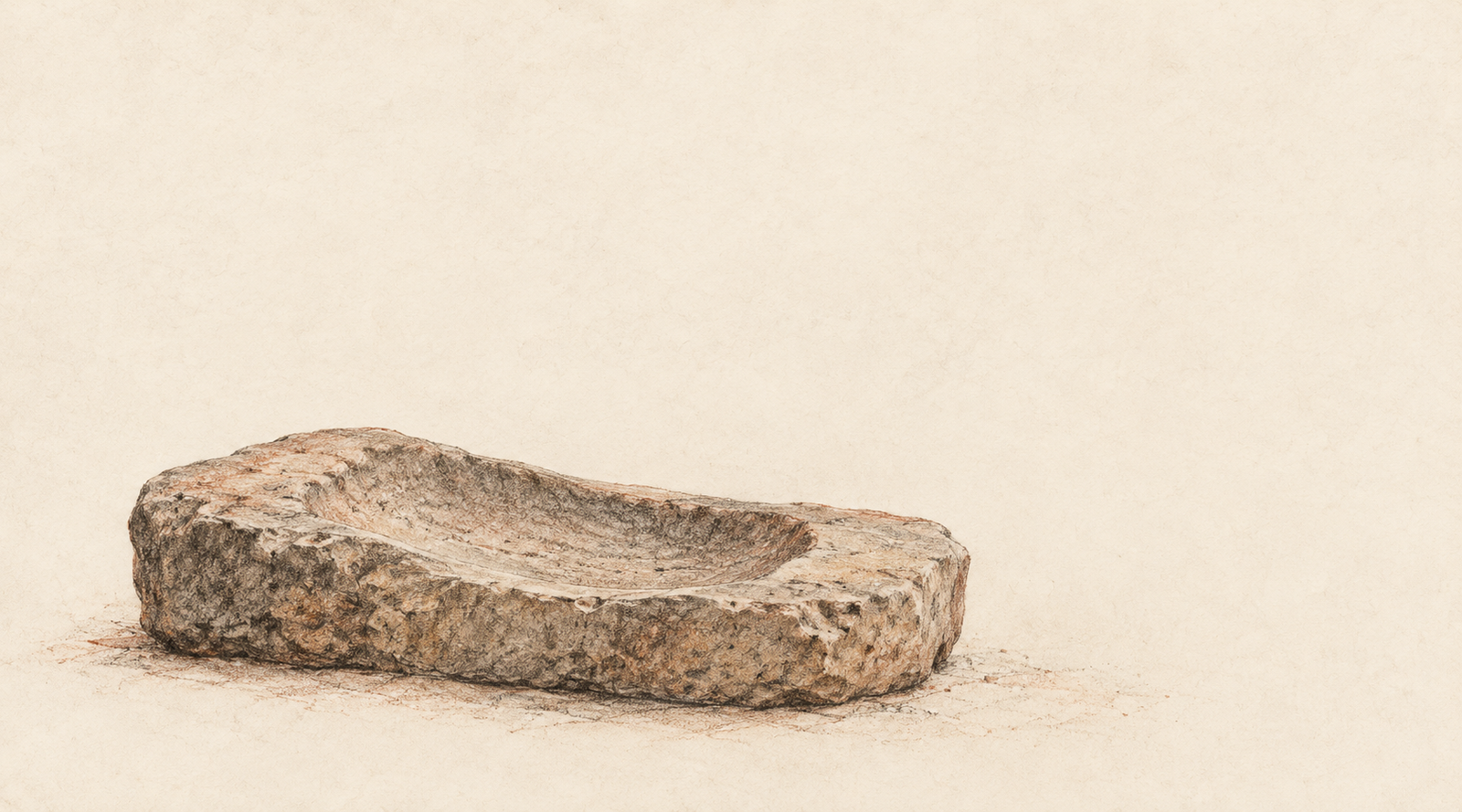

The City of Service
The temple we inherit is a building from which almost all necessity has been removed. Nothing must be brought for it to continue being what we call a temple. The sanctuary asks nothing of us. Stone is good at this kind of independence.
A living temple was otherwise.
Water had to come in. So did grain, cloth, oil, aromatic substances, fuel. The things required for worship arrived because someone carried them across a threshold.
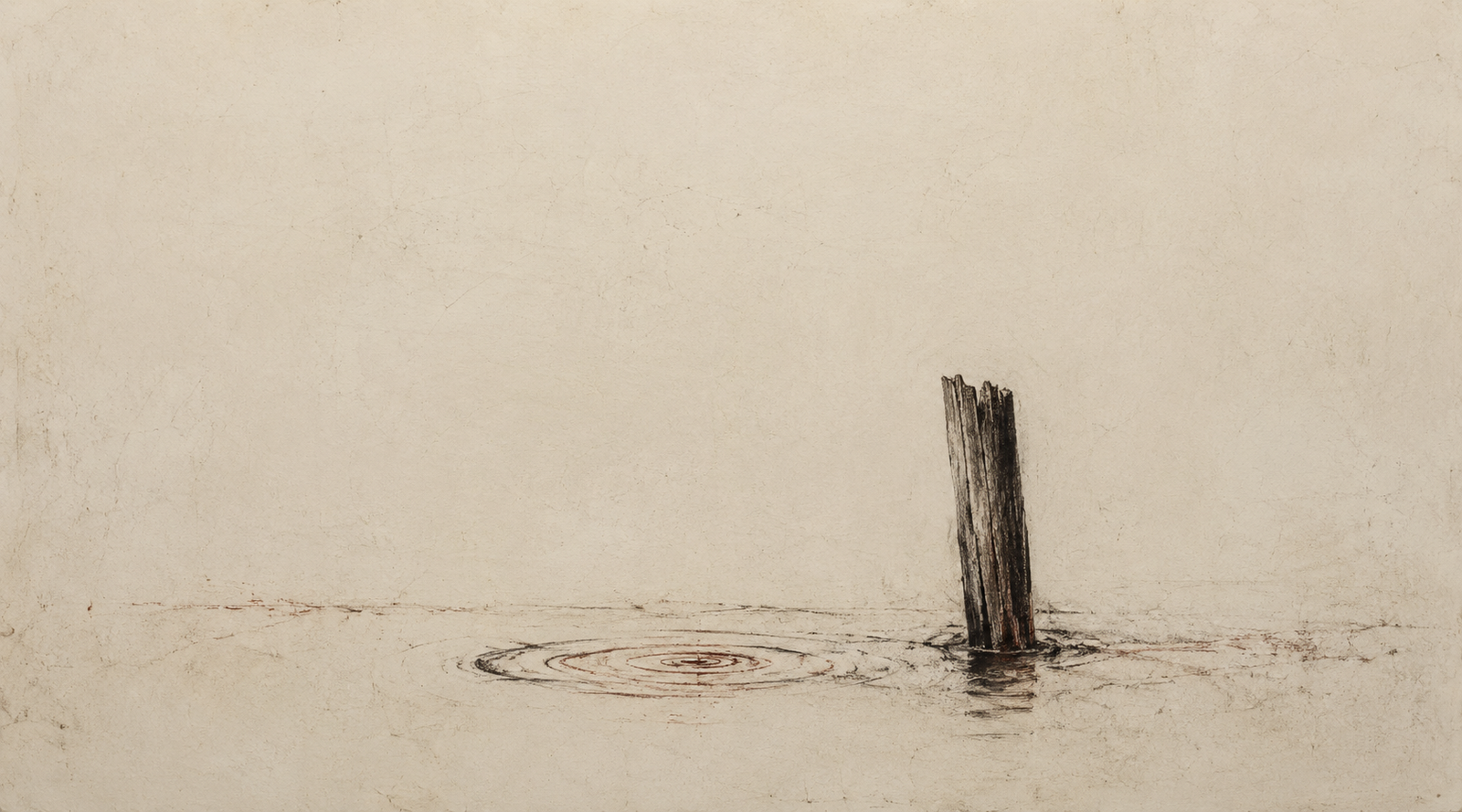

Houses of Wood, Light, and Smoke
Some of Angkor’s most intimate ruins do not rise above the ground at all. They are postholes, low mounds, hearths and ponds: durable traces of a domestic city built largely from things that decay. To restore that city is to see Angkor not only as stone, but as wood, smoke, water, repair, and people living within calling distance.