

The Courage to Stand Alone
On solitude, conscience, and the difficult freedom of thinking for oneself
It has never been easier to speak, and rarely more difficult to know whether one is speaking from oneself.
We live in a world crowded with voices. Opinion arrives before reflection. Judgement is rehearsed in public before it has been tested in private. Every event seems to demand not only attention, but allegiance; not only response, but visible placement. One learns quickly what may be said, what must be signalled, what silence will be taken to mean.
The modern crowd does not always gather in the street. More often, it waits in the hand.
It waits in the glow of the screen, in the instant verdict, in the small punishments of disapproval, in the fear of hesitating when others have already chosen a side. It waits in professional language, fashionable certainty, moral performance, ideological shorthand, and the quiet dread of exclusion. We are told, endlessly, to express ourselves. Yet much of what passes for expression is repetition with a personal accent.
The difficulty is not simply that people are pressured into silence. It is that they are pressured into speech before thought has had time to become honest.
To stand alone, then, is not merely to disagree. Disagreement can be fashionable. Dissent can become a costume. There are people who oppose the crowd only because opposition gives them the sensation of importance. There are people who mistake hostility for independence, stubbornness for strength, impulse for authenticity. A person may reject one tribe only to be captured by another. He may leave the crowd in one direction and find, a little further on, a smaller crowd congratulating him for doing so.
The courage to stand alone is quieter than this. Harder. Less theatrical.
It is the capacity to remain faithful to what one has honestly seen, even when that sight costs comfort. It is the refusal to outsource conscience to approval. It is the discipline of pausing where others rush, questioning where others repeat, and remaining inwardly awake when belonging asks for sleep.
This is difficult because belonging is not a weakness. It is one of the deepest human needs. We are not born as isolated minds, sufficient unto ourselves. We come into being through dependence, language, affection, imitation, instruction. We learn the world by trusting others before we know how to judge for ourselves. To belong is not childish. It is human.
The danger is not that we belong.
The danger is that we begin to need belonging more than truth.
That danger rarely announces itself as cowardice. It enters through small concessions. A sentence left unspoken. A doubt pushed aside. A judgement adopted because everyone admirable seems to hold it. A phrase repeated so often that it begins to feel like thought. A reluctance to ask the next question because the answer might disturb the peace.
Most people do not betray themselves all at once. They become strangers to themselves gradually, by learning which parts of their perception must be edited before they are allowed into company.
This surrender often arrives wearing virtuous clothes. The pressure to conform may present itself as sensitivity, loyalty, justice, compassion, maturity, or realism. Sometimes these words name real obligations. Sometimes they are sincere. But they can also become disguises for fear. A person may tell himself he is being kind when he is only avoiding conflict. He may tell himself he is being reasonable when he is only repeating the mood of his circle. He may tell himself he is loyal when he is only afraid of standing outside the warmth of the room.
To think for oneself is not to assume that one is right. That is another evasion. The independent mind is not the mind that refuses all influence. It is the mind that refuses unconscious possession.
Genuine independence requires listening. It requires patience. It requires the humility to be corrected, the honesty to revise oneself, and the strength to admit uncertainty without immediately seeking refuge in another ready-made conviction. The independent person is not immune to error. He is simply unwilling to let error become comfortable because it is shared.
This is why standing alone must not be confused with isolation.
Isolation hardens. Solitude clarifies.
Isolation turns away from others because they threaten the ego. Solitude steps back from others so that conscience may be heard. Isolation says, “I need no one.” Solitude says, “I must become quiet enough to know what I truly think before I return.” Isolation is often wounded pride. Solitude is discipline.
Modern life makes such solitude difficult. Even private life is now crowded. One may sit alone in a room and still be surrounded by voices, arguments, images, demands, comparisons, accusations, performances. The mind is rarely permitted to settle. It is kept in motion, not by thought, but by stimulus. Outrage arrives before understanding. Anxiety arrives before judgement. The self becomes reactive, then mistakes reaction for conviction.
Solitude is where that machinery begins to slow.
It is where the borrowed phrase loses some of its power. It is where the applause one secretly wanted becomes visible. It is where fear can be named without immediately being obeyed. It is where a person discovers which of his beliefs survive silence.
Solitude is where the self stops rehearsing for an audience.
This does not require withdrawal from the world in any grand or dramatic sense. It may begin simply: by not responding at once; by reading before judging; by allowing a question to remain open; by refusing to turn every uncertainty into a declaration; by asking, privately and without performance, “Do I know this? Do I believe this? Or have I merely learned that people like me are supposed to say it?”
Such questions are uncomfortable because they strip away the borrowed dignity of belonging. They expose how much of the self may have been assembled from approval, habit, fear, resentment, and imitation.
But they also make freedom possible.
Freedom is not the ability to say anything. It is the ability to tell the truth about what governs us.
Many people imagine independence as liberation from constraint. In reality, it is a deeper submission: not to the crowd, not to impulse, not to fashion, but to truth as one is able to discern it. This submission requires discipline because truth rarely flatters us completely. It corrects our tribe as well as our enemies. It exposes the vanity hidden in our principles. It asks us to surrender conclusions that once gave us identity. It may demand that we disappoint people whose approval we cherish.
This is where courage enters.
The courage to stand alone is not usually spectacular. It is not the courage of banners, speeches, and grand renunciations. More often it appears as restraint. A refusal to laugh. A refusal to join in contempt. A refusal to simplify what is complex. A refusal to pretend certainty. A refusal to condemn before understanding. A refusal to surrender one’s judgement merely because silence has become socially expensive.
Most acts of independence do not look heroic. They look like hesitation, silence, patience, or the lonely decision not to say what everyone expects.
There is a particular loneliness in this. Anyone who has tried to think honestly knows it. It is the loneliness of being unable to return fully to borrowed conviction, but not yet having arrived at a settled view of one’s own. It is the loneliness of being between languages: no longer fluent in the slogans of belonging, not yet articulate in the slower speech of conscience.
This middle place is easily misunderstood. To others, it may look like weakness, arrogance, betrayal, confusion, or coldness. People who have settled themselves inside collective certainty often find hesitation intolerable. They want placement. They want declaration. They want to know where one stands because ambiguity threatens the emotional order of the group.
But a serious life cannot be built on the need to be quickly understood.
There are times when one must accept being misread. Not because misunderstanding is noble in itself, but because clarity sometimes takes longer than the crowd is willing to allow. The person who wishes to live truthfully must endure seasons in which his inward life is not easily legible to others. He must resist the temptation to purchase acceptance by premature speech.
This is not a licence for cowardice. There are moments when silence becomes complicity, when truth must be spoken despite fear. But there are also moments when speech becomes theatre, when the demand for immediate declaration serves not truth but social sorting.
Wisdom lies partly in discerning the difference.
To stand alone is therefore not to make solitude an idol. Human beings are formed, corrected, and deepened in relation. We need friendship. We need conversation. We need the friction of other minds. We need those who love us enough to challenge our evasions. A life without belonging becomes brittle. A mind without correction becomes vain.
But belonging is only worthy of us when it does not require the surrender of conscience.
The highest forms of community do not erase solitude. They honour it. They are made of people who can return to one another with something true, not merely something approved. Such community does not demand constant agreement. It permits seriousness. It allows thought to unfold. It does not punish every hesitation as betrayal or every question as violence. It understands that loyalty without truth becomes servitude.
The aim, then, is not to become a solitary figure standing forever apart from others in proud distinction. That is another fantasy of the ego. The aim is to become capable of truthful relation.
One must learn to stand alone so that one may stand with others cleanly.
A person who cannot endure solitude will eventually ask belonging to do the work of conscience. He will confuse agreement with peace, approval with truth, and company with meaning. He will speak in the language of his age and mistake fluency for wisdom. He may even be praised for having the correct opinions at the correct time.
But somewhere beneath the praise, something essential will have gone quiet.
The one who has learned to stand alone returns differently. He can listen without dissolving. He can love without obedience. He can disagree without hatred. He can belong without being possessed. He no longer needs every room to confirm him, every voice to approve him, every silence to be filled with explanation.
This is not easy freedom. It is costly, disciplined, and often without applause. But it is the beginning of an honest life.
To stand alone is not to leave the world.
It is to return to it with a soul that has not been handed over.
—
Receive the next work
Subscribe free to receive new work from the Lucas Varro Library by email.
More from the Library

See Also
A concise and impartial dictionary of absence, promises, quarrels, ordinary objects, and the troublesome instability of words.

The City of Service
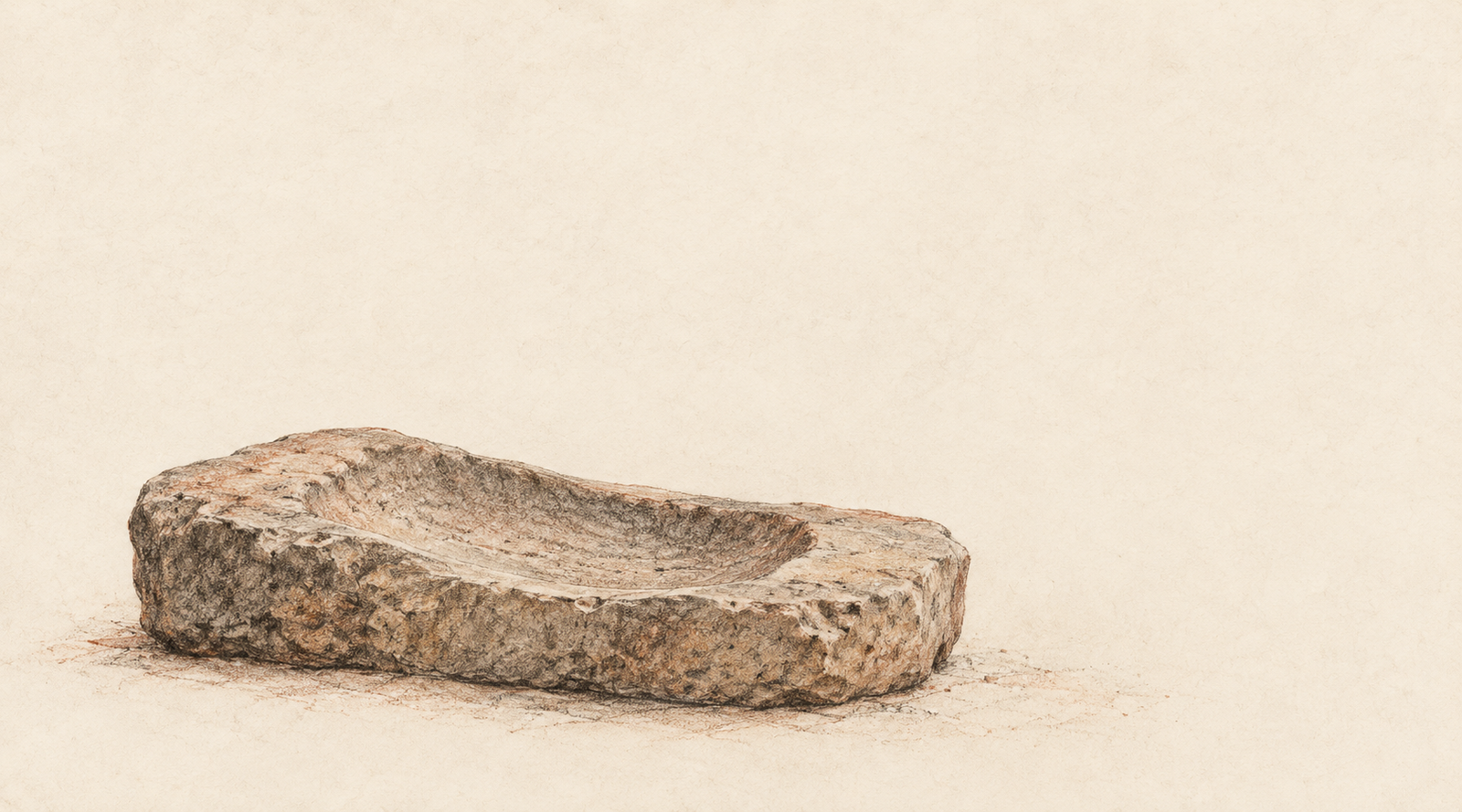
The temple we inherit is a building from which almost all necessity has been removed. Nothing must be brought for it to continue being what we call a temple. The sanctuary asks nothing of us. Stone is good at this kind of independence.
A living temple was otherwise.
Water had to come in. So did grain, cloth, oil, aromatic substances, fuel. The things required for worship arrived because someone carried them across a threshold.

Houses of Wood, Light, and Smoke
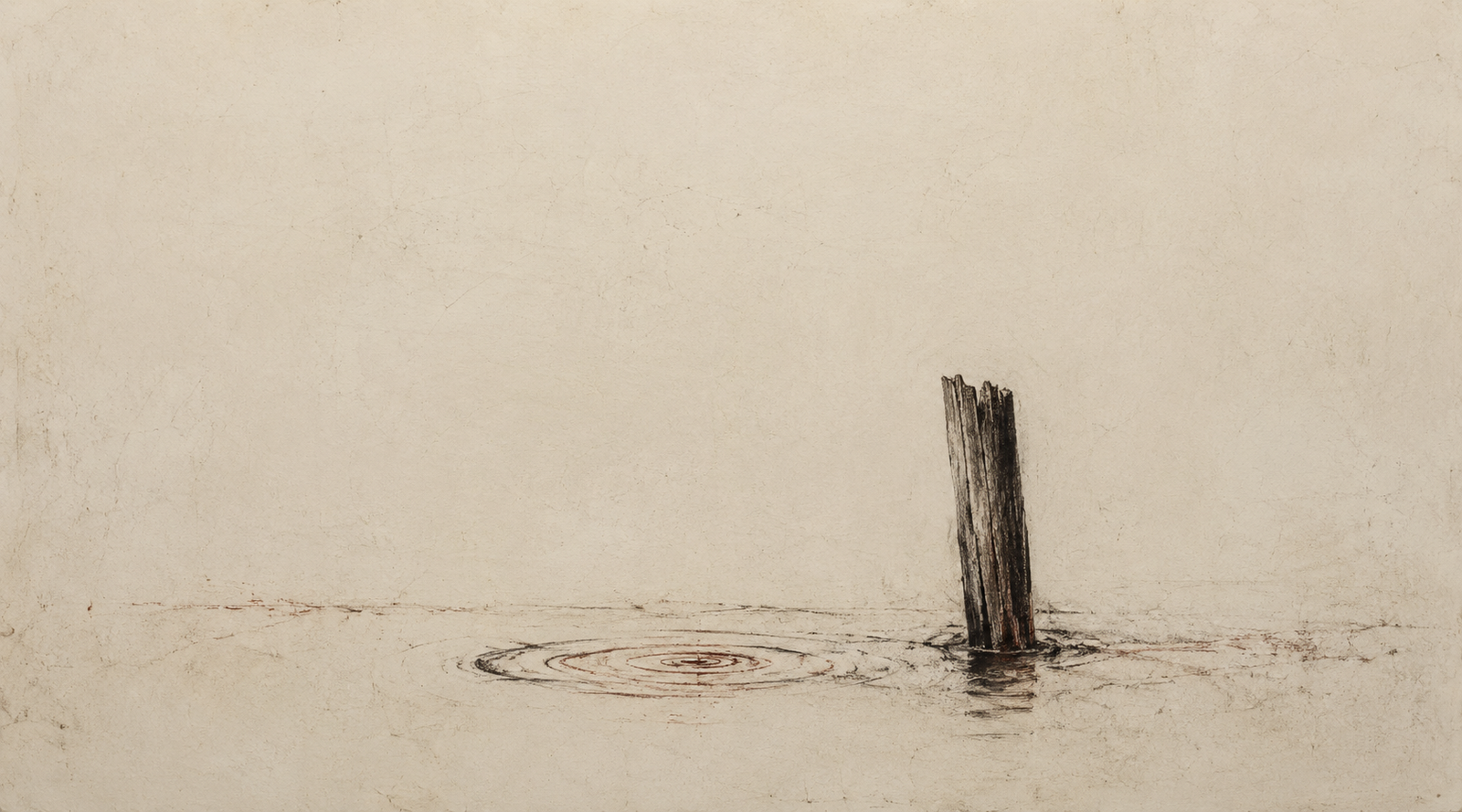
Some of Angkor’s most intimate ruins do not rise above the ground at all. They are postholes, low mounds, hearths and ponds: durable traces of a domestic city built largely from things that decay. To restore that city is to see Angkor not only as stone, but as wood, smoke, water, repair, and people living within calling distance.