
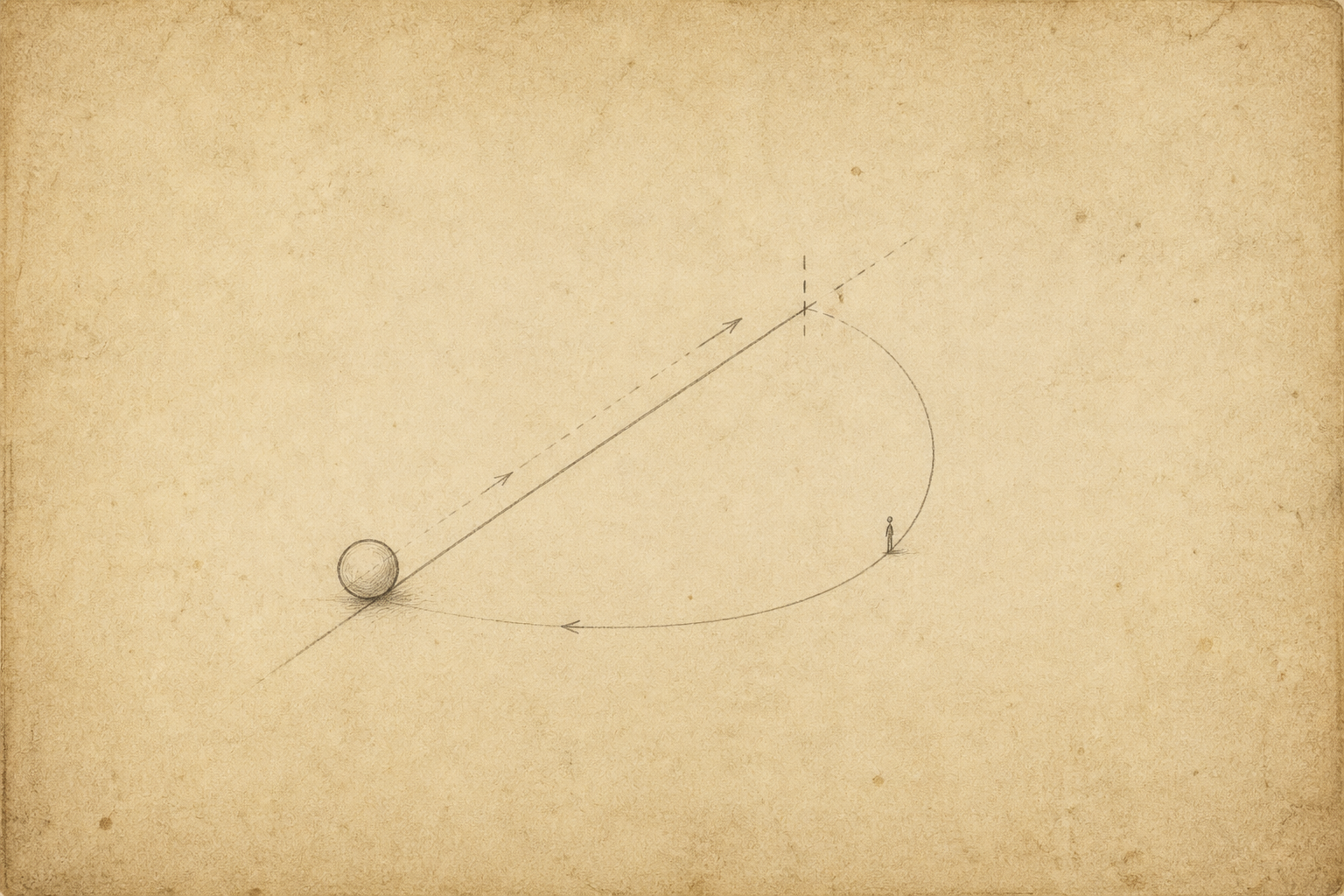

One Must Imagine Sisyphus Present
Camus, acceptance, and the strange freedom of meeting the impossible task without abandoning the soul.
There are sentences that escape their books.
They pass from philosophy into common speech, from the page into conversation, from argument into meme. They become so familiar that they almost lose their strangeness. Albert Camus’s famous final line from The Myth of Sisyphus is one of them:
“One must imagine Sisyphus happy.”
It is a troubling sentence.
Not because it is obscure, but because it appears too clear. A man is condemned by the gods to roll a stone up a hill. Each time he nears the summit, the stone rolls back down. He descends. He begins again. The labour has no completion, no reward, no hidden usefulness. It is punishment in the form of repetition.
And Camus asks us to imagine him happy.
One feels, at first, the severity of the demand. Why happy? Why this word, of all words, placed at the end of such a myth? Why should the eternal return of failure produce anything like joy? Is Sisyphus wise? Deluded? Defiant? Has Camus discovered something profound, or merely given despair a noble posture?
The difficulty matters because Sisyphus is not only a figure from Greek myth. He has become one of the secret images of modern life.
We know the stone.
We know the hill.
We know the task that returns just after being finished. The room cleaned and dust gathering again. The bills paid and waiting again. The body tended and ageing still. The inbox cleared and refilling. The work completed and replaced by more work. The sorrow understood, then returning under another name. Even success has its boulder: the achievement that becomes expectation, the solved problem that opens into a larger one, the summit that reveals another ascent.
We live among smaller stones. Beneath them all lies the larger one: mortality itself. Whatever we build, love, learn, repair, gather, defend, name, or understand is touched by impermanence. The stone rolls back. Not always dramatically. Often quietly. Often on an ordinary morning.
Camus knew this ordinary terror. He wrote in a century in which many inherited consolations had weakened. Religious certainty had fractured for many; political promises had darkened; progress had shown its machines and its ruins. Human beings still longed for meaning, order, justice, explanation. But the world did not answer in the language they desired.
For Camus, the absurd is born in that collision.
Not human longing alone.
Not cosmic silence alone.
The absurd is the wound between them.
We ask why.
The world does not reply.
We ask again.
The stone waits.
This is why Sisyphus becomes, for Camus, the essential image. His punishment is not merely labour. It is conscious futility. He knows the stone will fall. He knows the hill will not keep what he gives it. He cannot console himself with the belief that one final effort will succeed, that one day the rock will remain at the summit, that the gods will relent, that the task will ripen into victory.
His lucidity is part of the punishment.
And yet, in Camus’s reading, it is also the beginning of his freedom.
The gods possess the hill. They possess the stone. They possess the structure of repetition. But they do not wholly possess Sisyphus’s inward consent. If he sees clearly, if he refuses false consolation, if he does not invent a hidden reward and does not collapse into despair, then something in him remains unconquered.
His punishment continues.
But it no longer interprets him completely.
That is the severe beauty of Camus’s thought. He does not rescue Sisyphus by changing the myth. He does not soften the hill, lighten the stone, or smuggle in heaven through the back door. He asks whether a human being can stand without guarantee. Whether one can live without final explanation. Whether one can look directly at the unfinished, unjustified nature of existence and still not surrender the whole self to bitterness.
Still, the word happy remains difficult.
Perhaps it should.
If happiness means pleasure, Sisyphus is not happy. If happiness means ordinary contentment, he is not happy. If happiness means liking one’s circumstances, he is not happy. To imagine him smiling eternally at his punishment would be obscene. It would turn the myth into bad advice: endure everything cheerfully; pretend the stone is light; call pain a lesson too quickly.
That is not wisdom. It is decoration.
The deeper possibility is that Camus’s sentence does not ask us to imagine Sisyphus pleased. It asks us to imagine him no longer waiting for pleasure before he consents to exist.
He is not waiting for the stone to stay.
He is not waiting for the gods to explain themselves.
He is not waiting for the universe to become morally satisfying before he attends to the breath moving through his body.
This is not happiness as mood.
It is acceptance as strength.
Acceptance is often misunderstood. We think it means approval, surrender, passivity, resignation. But true acceptance is not the claim that what has happened is good. It is the end of wasting one’s life arguing with the fact that it has happened. It is the mind ceasing to say, again and again, This should not be real, and beginning to ask a harder question:
Since this is real, how shall I live within it?
That question is not despairing. It is the first honest gate of practice.
There is the thing itself, and then there is our resistance to the thing itself. There is grief, and then there is rage that grief should be part of love. There is work, and then there is humiliation that work must be repeated. There is ageing, and then there is resentment that the body has not remained obedient. There is uncertainty, and then there is panic that certainty has not been granted.
Acceptance does not remove the first pain.
But it may release us from the second.
It may let the stone be stone.
It may let the hill be hill.
Then the field of experience changes. The task may remain. The wound may remain. The unanswered question may remain. But the self is no longer arranged entirely around refusal. Energy returns. Perception clears. The world, even in its difficulty, becomes visible again.
This is where the ancient image meets a very modern form of wisdom. Much contemporary therapeutic practice recognises that suffering deepens when we become fused with our thoughts. A person does not merely think, This is pointless. The thought becomes identity: I am pointless. The mind does not merely register pain. It becomes a closed room in which pain speaks with the voice of the whole world.
But there is a subtle freedom in learning to notice thought as thought.
Not, I am meaningless.
But, I am having the thought that this is meaningless.
Not, I cannot bear this.
But, I am noticing the fear that I cannot bear this.
The words may seem small. Almost too small. But a small space opens inside them. There is the thought, and there is the awareness of the thought. There is the feeling, and there is the one who notices the feeling. There is the stone, and there is the person placing his hands upon the stone.
The hill remains.
But the soul is no longer only the hill.
For Sisyphus, such a shift would not release him from punishment. It would not make the gods merciful. It would not give the labour a final purpose. But it might return to him the one thing the punishment cannot fully regulate: the quality of his attention.
He may attend with hatred.
He may attend with numbness.
He may attend with precision.
He may attend with curiosity.
He may attend to the grain of the stone, the slope of the path, the rhythm of breath, the changing light, the strange fact that even punishment takes place inside a world. He may notice the small creatures in the dust and choose not to crush them. He may learn the weight so intimately that each ascent becomes less frantic, more exact. He may discover that the descent, too, is part of his life — not merely the interval before labour resumes, but a place where sky, silence, body, and awareness still exist.
This is not the conquest of absurdity.
It is the recovery of presence within it.
And perhaps this is the truer sentence:
One must imagine Sisyphus present.
Present does not mean pleased. It does not mean optimistic. It does not mean reconciled in any shallow way to suffering or injustice. Presence means he has not abandoned his own life simply because life has failed to justify itself.
He is there.
With the stone.
With the hill.
With the breath.
With the knowledge that the summit will not keep what he brings.
And still, he is there.
The Living Way begins in such places. Not where life has become pure, meaningful, healed, or complete, but where one stops postponing one’s humanity until reality becomes easier to bless. We do not need to solve existence before we can practise tenderness. We do not need final metaphysics before we can choose honesty. We do not need certainty before we can make something beautiful. We do not need the stone to vanish before we can place our hands upon it with dignity.
This is not a denial of our hunger for meaning. That hunger is not foolish. It is part of our nobility. Human beings are wounded by meaninglessness because we are meaning-seeking creatures. We want our love to matter beyond its disappearance. We want our labour gathered into more than dust. We want justice to be more than a temporary human arrangement. We want the dead not merely remembered, but received.
Camus does not satisfy that hunger.
Perhaps no philosophy fully can.
But he does something necessary: he prevents us from cheapening the hunger. He refuses easy answers. He clears the ground of false consolation. He leaves us with the bare fact of a human being before an unyielding condition. Then he asks what kind of freedom may still be possible there.
The answer may not be happiness.
The answer may be fidelity.
Fidelity to the next step.
Fidelity to the chosen value.
Fidelity to the work, though the work is unfinished.
Fidelity to compassion, though the world is not arranged compassionately.
Fidelity to wonder, though wonder does not explain everything.
Fidelity to beauty, though beauty passes.
Fidelity to being awake inside the only life presently given.
This is why the question Am I happy? can become a trap. It turns life into a verdict on one’s inner weather. It makes feeling the judge of being. Some days the answer will be yes. Many days it will be no. Most days, if we are honest, the answer will be mixed beyond usefulness.
But presence asks something different.
Am I here?
Can I see clearly?
What is being asked of me now?
What value can I serve in this condition?
What can be done with love, or steadiness, or restraint, or courage, within the small circle of the possible?
These questions do not abolish suffering. They do not make the stone lighter. But they return us to participation. They remind us that even when we cannot choose the whole shape of our lives, we may still choose the manner of our inhabiting.
The boulder may be illness. It may be grief. It may be duty. It may be creative work that never becomes what we hoped. It may be money, loneliness, family, the body, the past, the unanswered longing that returns each evening. It may be the simple daily labour of remaining gentle in a hard world.
We need not pretend the burden is good.
We need not call ourselves happy.
But we can ask what quality of attention we bring to the burden. We can ask whether we are pushing the stone while absent from our own hands. We can ask whether bitterness has become our only interpretation. We can ask whether, somewhere between rebellion and resignation, there is a quieter strength: the strength to meet reality without letting it make us less true.
The stone rolls down.
Yes.
But the descent is also part of the path.
There is a moment, perhaps, after the fall and before the next ascent. A pause in which the punishment has not ended, but has not yet resumed. Sisyphus walks down the hill. The air touches his face. His hands are empty. The sky has not answered him. The gods have not forgiven him. The stone waits below, enormous and mute.
Nothing has been solved.
Yet he is awake.
Perhaps that is enough for the next step.
Perhaps that is the living way: not the denial of suffering, not the conquest of the absurd, not the manufacture of happiness, but the quiet art of consenting to reality without abandoning the soul’s chosen values.
One must imagine Sisyphus present.
One must imagine him attentive.
One must imagine him no longer begging the stone to become something other than stone.
One must imagine him, if only for a breath, not imagining at all.
Simply seeing.
Simply breathing.
Simply placing his hands, once more, upon the world.
—
Receive the next work
Subscribe free to receive new work from the Lucas Varro Library by email.
More from the Library

See Also
A concise and impartial dictionary of absence, promises, quarrels, ordinary objects, and the troublesome instability of words.
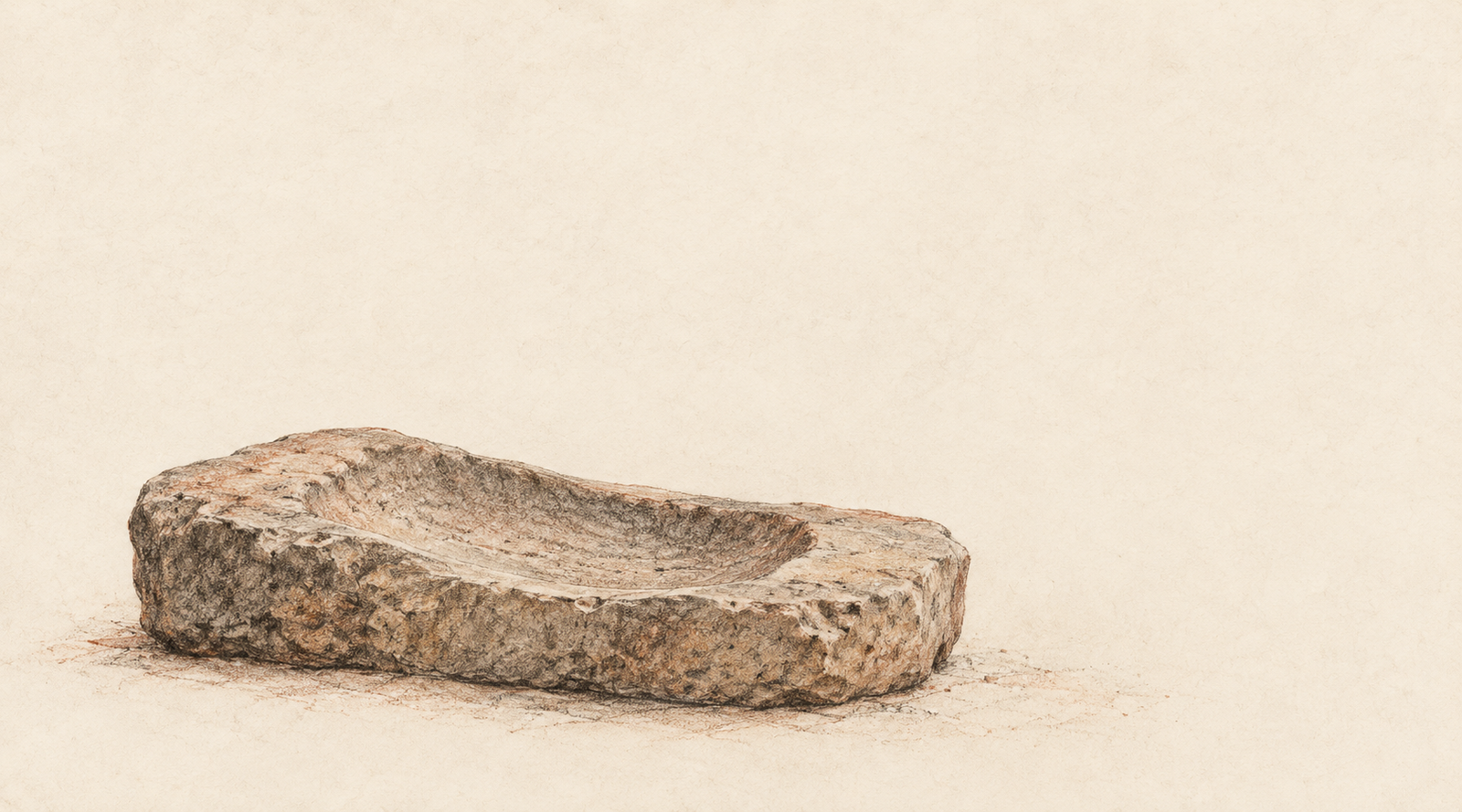

The City of Service
The temple we inherit is a building from which almost all necessity has been removed. Nothing must be brought for it to continue being what we call a temple. The sanctuary asks nothing of us. Stone is good at this kind of independence.
A living temple was otherwise.
Water had to come in. So did grain, cloth, oil, aromatic substances, fuel. The things required for worship arrived because someone carried them across a threshold.
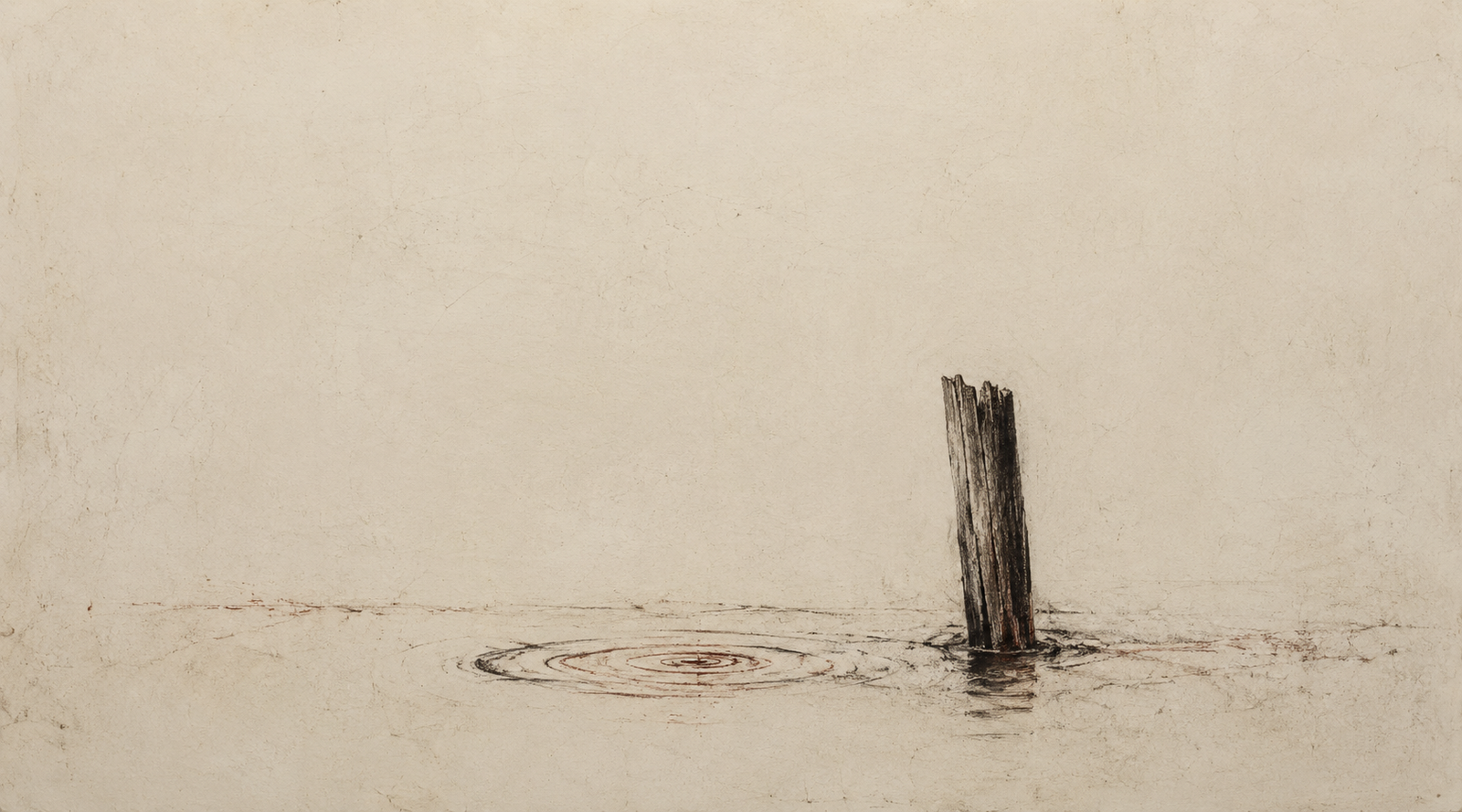

Houses of Wood, Light, and Smoke
Some of Angkor’s most intimate ruins do not rise above the ground at all. They are postholes, low mounds, hearths and ponds: durable traces of a domestic city built largely from things that decay. To restore that city is to see Angkor not only as stone, but as wood, smoke, water, repair, and people living within calling distance.