

The Consolation of Not Being Separate
On belonging to reality without needing the world to make us an exception.
There are moments when the world refuses to become personal.
The rain falls on the day you needed sun. The illness does not pause because someone is loved. The sea does not soften because a child is afraid. A door closes. A body fails. A letter does not arrive. The thing prayed against happens anyway.
In such moments, one of the deepest human assumptions is exposed: that somewhere behind the visible order of things there must be an attention turned especially toward us, ready to intervene if only the need is great enough, the love pure enough, the plea sufficiently sincere.
When that intervention does not come, it can feel as if the world has abandoned us.
But perhaps what has failed is not the world’s care.
Perhaps what has failed is our idea of care.
We often imagine belonging as being singled out. To be loved, we think, is to be exempted. To matter is to have the laws of things bend a little around our grief. We do not only want comfort. We want evidence that our lives are known from above, that the structure of reality has noticed our particular fear and made room for it.
This desire is not foolish. It is human. A child learns love first as response: the face bending near, the hand arriving, the cry answered. Before we understand anything about stars or weather or mortality, we understand being held. So it is natural that, later, when the vastness of life opens before us, we look for the same gesture in the universe. We want the heavens to bend down like a parent over the cradle.
But the heavens do not bend.
The stars burn according to laws older than longing. The body lives by processes we did not invent and cannot command. Breath depends on trees, oceans, pressure, chemistry, time. Food comes from soil and labour and death. Thought itself is not an isolated flame but the result of language, inheritance, memory, nerve, history, accident, hunger, weather, touch.
Nothing in us stands alone.
Even the private sentence forming now in the mind is crowded with the whole world.
This is the reversal the self resists.
The world is not arranged around us. But neither are we outside it.
The first recognition can feel like desolation. The second can become a kind of peace.
Much of human suffering is intensified by the belief that we are separate beings negotiating with reality from the outside. We imagine the self as a small, defended chamber set against everything else: my life, my body, my mind, my future, my loss. The rest of existence then becomes threat, resource, audience, obstacle, or judge. We try to secure ourselves against the very conditions that make us possible.
So we ask life to confirm our separateness by protecting it. We ask the world to prove that we matter by interrupting itself on our behalf.
But a different kind of reverence begins when this demand loosens.
To belong to reality is not to be spared by it. The leaf belongs to the tree and still falls. The bird belongs to the air and still tires. The body belongs to the earth and still returns to it. Belonging is not exemption from law. Belonging is participation in the same vast order that carries everything else.
This is difficult because the ego prefers a smaller consolation. It would rather be specially rescued than universally included. It would rather be chosen than dissolved. It would rather have a private guarantee than an impersonal truth. Yet the private guarantee is always fragile, because life will eventually contradict it. The impersonal truth, if we can bear it, is larger than comfort.
You are not a stranger in the universe.
The calcium in the bone, the iron in the blood, the oxygen passing through the lungs, the light entering the eye: none of these began with you. They have travelled through forms, fires, bodies, seas, plants, animals, ancestors, distances beyond imagining. For a little while, they have taken this shape. They have become a person able to love, fear, remember, suffer, bless, and look up.
Then they will move on.
This does not make the person meaningless. It makes the person miraculous without making the person central.
There is a humility here that is not humiliation. We are not the masters of reality, but neither are we intruders. We are not the purpose toward which everything has secretly been moving, but neither are we accidental in the shallow sense. We are one of the forms the world has taken. A brief concentration of its matter, memory, hunger, tenderness, and attention.
Even consciousness may be less like a possession than a window briefly opened. The world, in us, becomes aware of itself. The same reality that appears as stone, water, root, wing, cloud, and flame appears also as grief, thought, music, remorse, mercy.
Mind is not an escape from nature.
It is one of nature’s intensities.
This changes the meaning of attention.
To attend to the world is not to look at something foreign. It is to recognise kinship. The tree outside the window is not merely scenery. The breath is not merely mechanical. The body is not a vehicle carrying the “real” self through an inferior material world. The body is the world at this point, under this name, with these memories, this face, this finite chance to respond.
Once this is understood, prayer itself may change.
It may cease to be the attempt to persuade reality to become partial. It may become the act of standing truthfully within reality. Not bargaining. Not demanding exemption. Not asking the stars to rearrange themselves around one frightened life. But consenting, however slowly, to belong to what is larger than fear.
Such consent is not passivity. It does not prevent medicine, protest, labour, protection, grief, or repair. To accept that the world follows law is not to become indifferent to suffering. On the contrary, it may make compassion more urgent. If no supernatural hand is going to interrupt cruelty for us, then the hand that arrives must often be human. If no hidden exemption is guaranteed, then mercy must be practised here, between bodies, inside time.
The impersonal world does not absolve us of responsibility.
It removes the fantasy that responsibility belongs elsewhere.
This is why the recognition of unity must never become decorative spirituality. It is not enough to say that all things are connected and then continue living as if only the self were real. Connection is not a mood. It is a discipline of perception. It asks something of the way we eat, speak, consume, forgive, build, mourn, and treat the vulnerable. To know that nothing stands alone is to lose the innocence of private consequence.
Every act enters the whole.
A cruelty does not end where it is committed. A kindness does not remain only in the hand that offers it. A refusal to see becomes part of the blindness of the world. A clear act of attention becomes part of its sight.
The consolation, then, is not that everything will be well in the way we once demanded. The beloved will still die. The body will still obey conditions deeper than preference. Storms will still form. The unjust will sometimes prosper. The good will sometimes suffer without explanation. No serious vision of life should pretend otherwise.
The consolation is quieter and more severe.
Nothing that happens to us happens outside reality. Nothing we are is separate from the order that holds stars, dust, rivers, insects, bread, language, and the face of the one we love. We do not have to become larger than the world in order to matter. We do not have to be exempt from the whole in order to belong to it.
Perhaps peace begins when we stop asking the universe to prove our importance by making us an exception.
Perhaps it begins when we can stand beneath the night sky without needing it to answer in our language.
The stars do not speak to us as a person speaks.
But we are not beneath them as strangers.
We are the dark made briefly able to behold the light.
—
Receive the next work
Subscribe free to receive new work from the Lucas Varro Library by email.
More from the Library

See Also
A concise and impartial dictionary of absence, promises, quarrels, ordinary objects, and the troublesome instability of words.

The City of Service
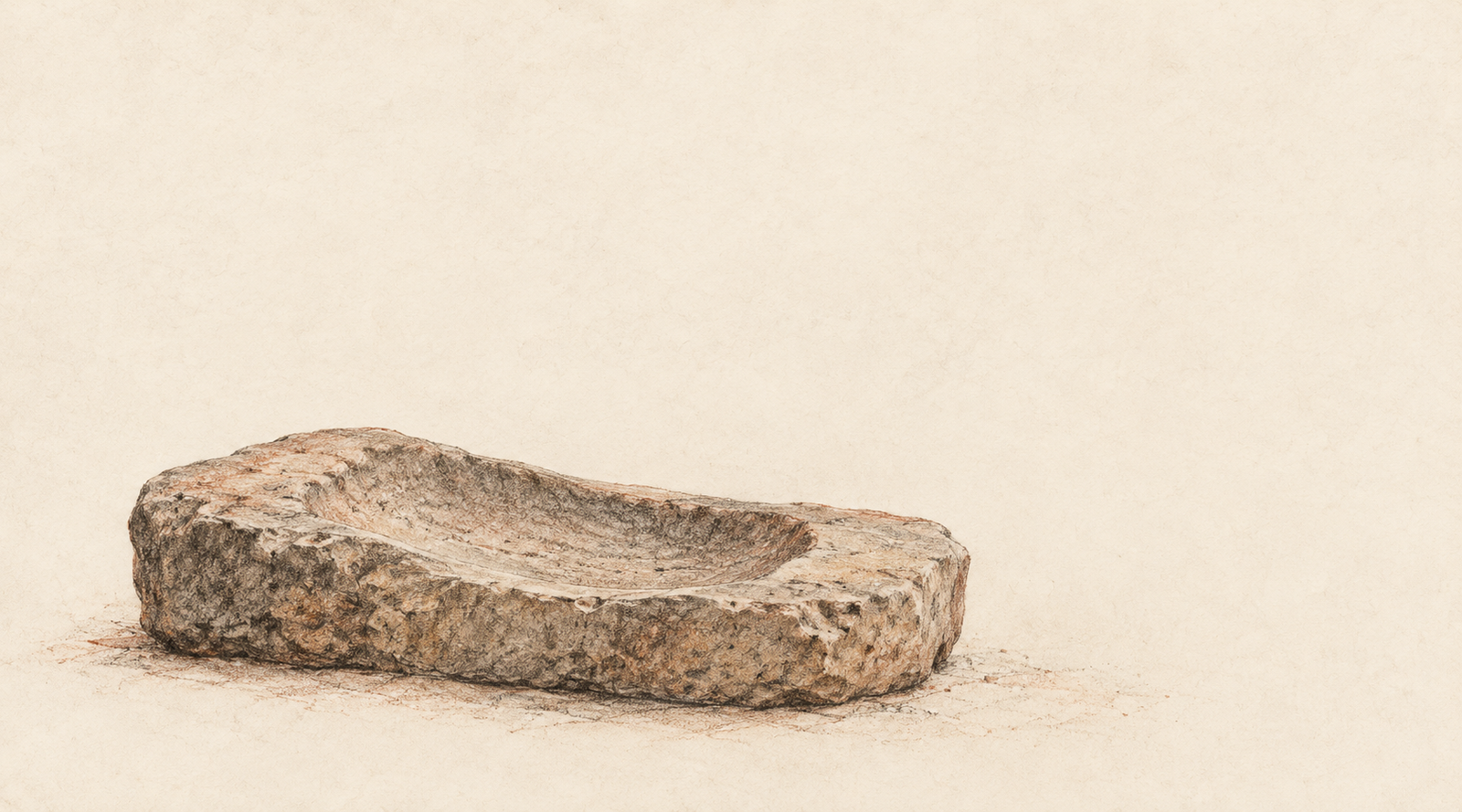
The temple we inherit is a building from which almost all necessity has been removed. Nothing must be brought for it to continue being what we call a temple. The sanctuary asks nothing of us. Stone is good at this kind of independence.
A living temple was otherwise.
Water had to come in. So did grain, cloth, oil, aromatic substances, fuel. The things required for worship arrived because someone carried them across a threshold.

Houses of Wood, Light, and Smoke
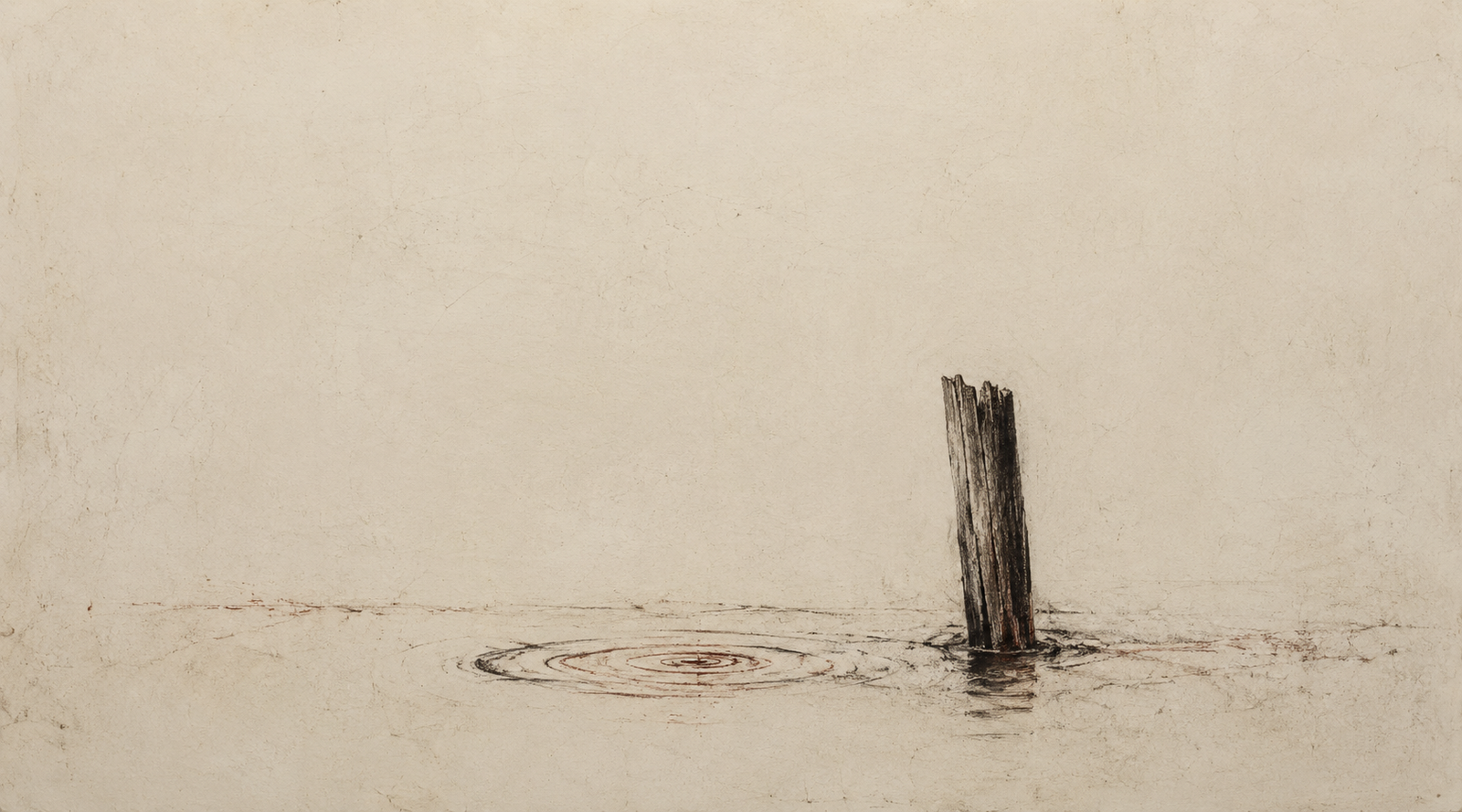
Some of Angkor’s most intimate ruins do not rise above the ground at all. They are postholes, low mounds, hearths and ponds: durable traces of a domestic city built largely from things that decay. To restore that city is to see Angkor not only as stone, but as wood, smoke, water, repair, and people living within calling distance.