

The Beautiful Foolishness of Things
On tenderness, repair, and creaturely form
The kettle is old enough now that no one would call it elegant. Its handle has darkened where hands have lifted it a thousand times. Its metal has lost the brightness of the new and entered another register: a rubbed, inward sheen, as though time had not merely passed over it but settled there. When the water begins to stir, it does not announce itself at once. There is first a waiting. Then a tremor. Then that low, gathering sound which is never only sound, but atmosphere: a room becoming attentive, an hour drawing itself together.
Nothing important, by the standards of the age, is happening here.
A kettle warms. Water nears its singing point. Someone pauses long enough to hear it. From the standpoint of utility, it is almost laughable: this care, this lingering, this disproportion between the slightness of the thing and the seriousness of the attention given to it. And yet there are moments when one suspects that the slightness is not a failure of scale but a correction of it; that the little thing has not become too important, but that everything else has become swollen through false measure.
What polished things conceal, worn things confess. The mark of the hand. The strain of use. The small indignities of time. A repaired thing goes further still. It does not hide the fact that it has had a life. It has been dropped, perhaps; struck; chipped; mended because someone could not bear to lose it. The repair, if it is honest, does not erase the wound. It folds the wound into the object’s continued existence.
That is why such things often feel closer to us than flawless ones. Not because damage is beautiful. Not because ruin is charming. But because the repaired thing no longer pretends to have escaped time. It bears its history openly. Someone has judged it still worthy of keeping.
There is tenderness in that judgement.
The world is full of these survivals. A table rubbed pale where elbows rested through years of meals and silences. A gate leaning slightly out of true, but still opening. A sleeve invisibly darned. A stone stair hollowed in the middle where feet went up and down long after the names of the dead were forgotten. These are not failed forms. They are forms in which life has remained. Not splendour, but fidelity.
That word belongs to humble things. To mending what could be replaced. To preparing a place though no grand occasion dignifies the effort. To continuing to care for what cannot repay one in prestige. Fidelity does not dazzle. It appears in kitchens, doorways, shrines, hospital rooms, and the tired middle hours of ordinary days. Much of what is most human depends upon it.
The language of imperfection is too easy for this. It slips too quickly into style. The reality is sterner, and more beautiful. Things are provisional, asymmetrical, overburdened with time, dependent upon care, and touched by a slight absurdity that cannot be removed without also removing their tenderness. The world does not only decay. It improvises.
And what improvises cannot remain immaculate.
A meal is made from what is at hand. A room is warmed by meagre means. A love is carried through fatigue, misunderstanding, illness, disappointment. A ritual continues though the setting is poor and the heart not always equal to its longing. None of this has the authority of the perfected image. It has another authority: that of the real.
Perhaps this is why hardness so often gathers around the dream of perfection. What shows dependence, age, awkwardness, visible wear, unfinishedness, becomes difficult to bear. One begins to prefer polish because polish appears invulnerable. But the opposite of perfectionism is not carelessness. It is tenderness.
Carelessness turns away. Tenderness attends. It does not require the cup to be whole before it may be held. It does not require the body to be young before it may be honoured. It does not require the hour to be grand before it may be received.
This tenderness does not lie about cost. Some losses are irreparable. Some wounds do not deepen anything. But much of finite life has an exposed, makeshift texture, and much of what deserves reverence appears there: not in completion, but in the effort to continue.
A kettle sings. A bowl remains in use after being mended. An old hand folds a cloth, waters a plant, lights a candle, sets bread on the table. None of these actions defeats death. None resolves the sorrow built into time. Yet each one, in its smallness, refuses despair more persuasively than grand declarations.
There is still something here to be cared for.
The old kettle sings. Evening gathers around the table. Nothing is solved. Nothing is redeemed. And still, something like peace enters the room. Not because the world has ceased to be tragic, but because, for a moment, one has ceased demanding that it be otherwise before it may be held.
—
Receive the next work
Subscribe free to receive new work from the Lucas Varro Library by email.
More from the Library

See Also
A concise and impartial dictionary of absence, promises, quarrels, ordinary objects, and the troublesome instability of words.

The City of Service
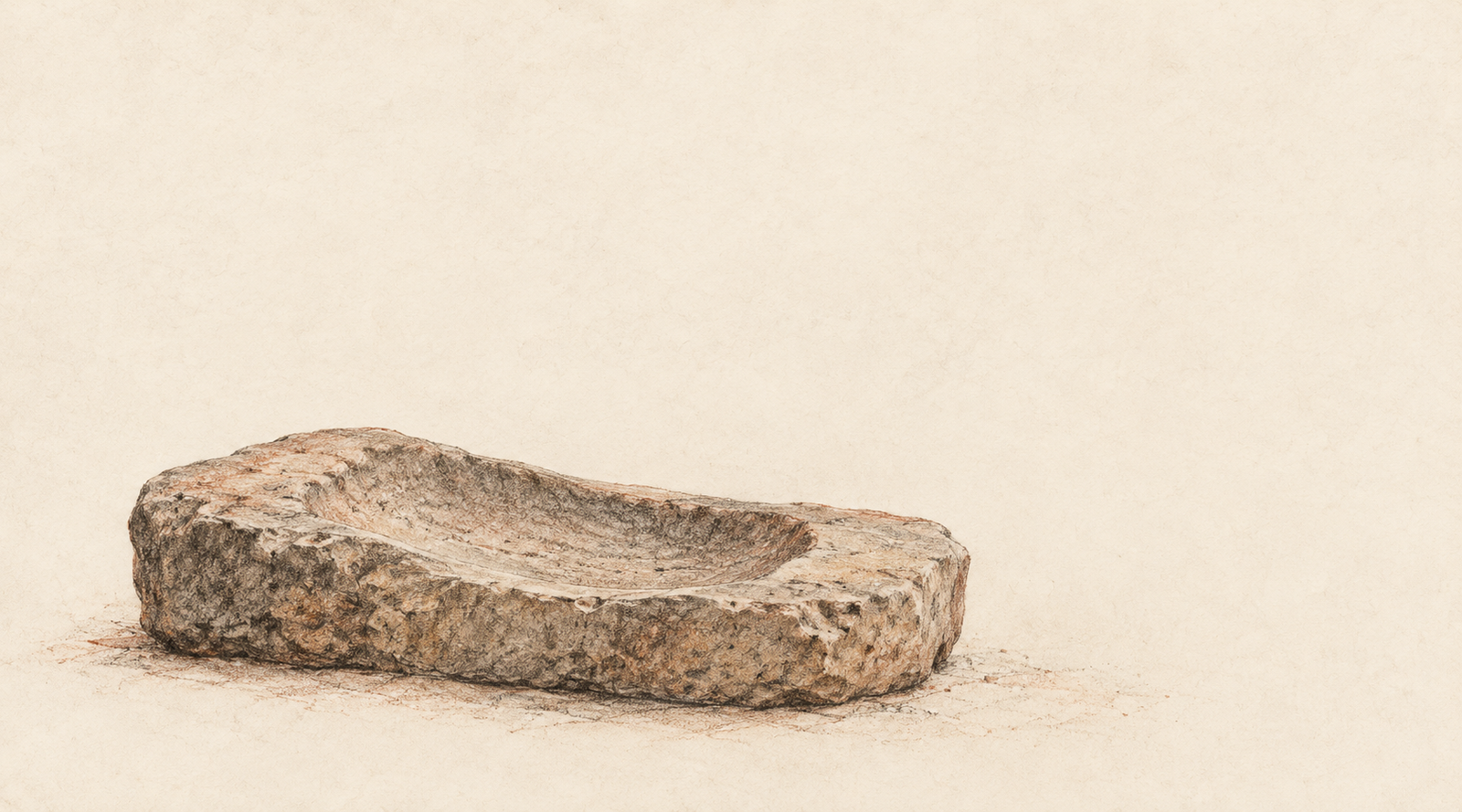
The temple we inherit is a building from which almost all necessity has been removed. Nothing must be brought for it to continue being what we call a temple. The sanctuary asks nothing of us. Stone is good at this kind of independence.
A living temple was otherwise.
Water had to come in. So did grain, cloth, oil, aromatic substances, fuel. The things required for worship arrived because someone carried them across a threshold.

Houses of Wood, Light, and Smoke
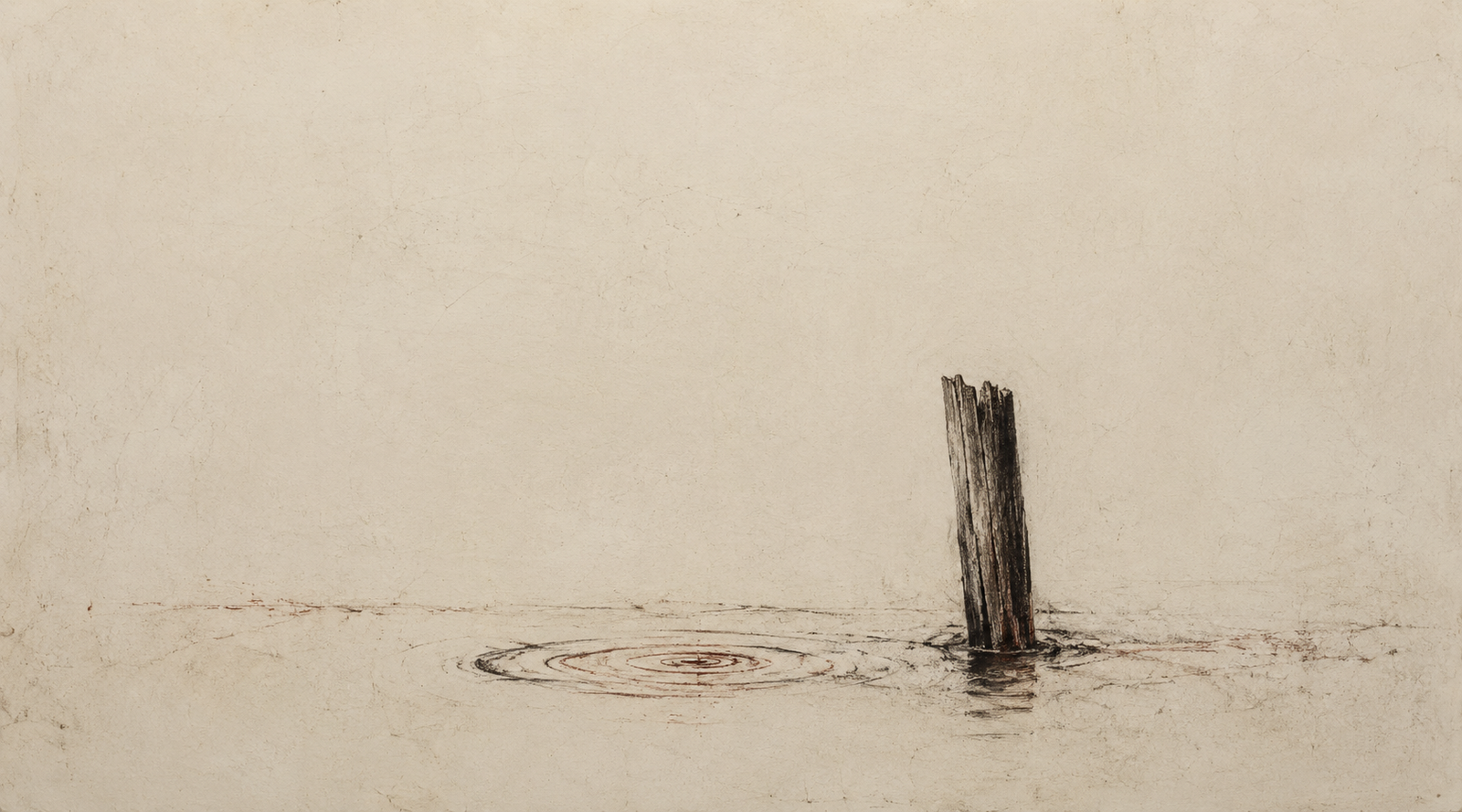
Some of Angkor’s most intimate ruins do not rise above the ground at all. They are postholes, low mounds, hearths and ponds: durable traces of a domestic city built largely from things that decay. To restore that city is to see Angkor not only as stone, but as wood, smoke, water, repair, and people living within calling distance.