
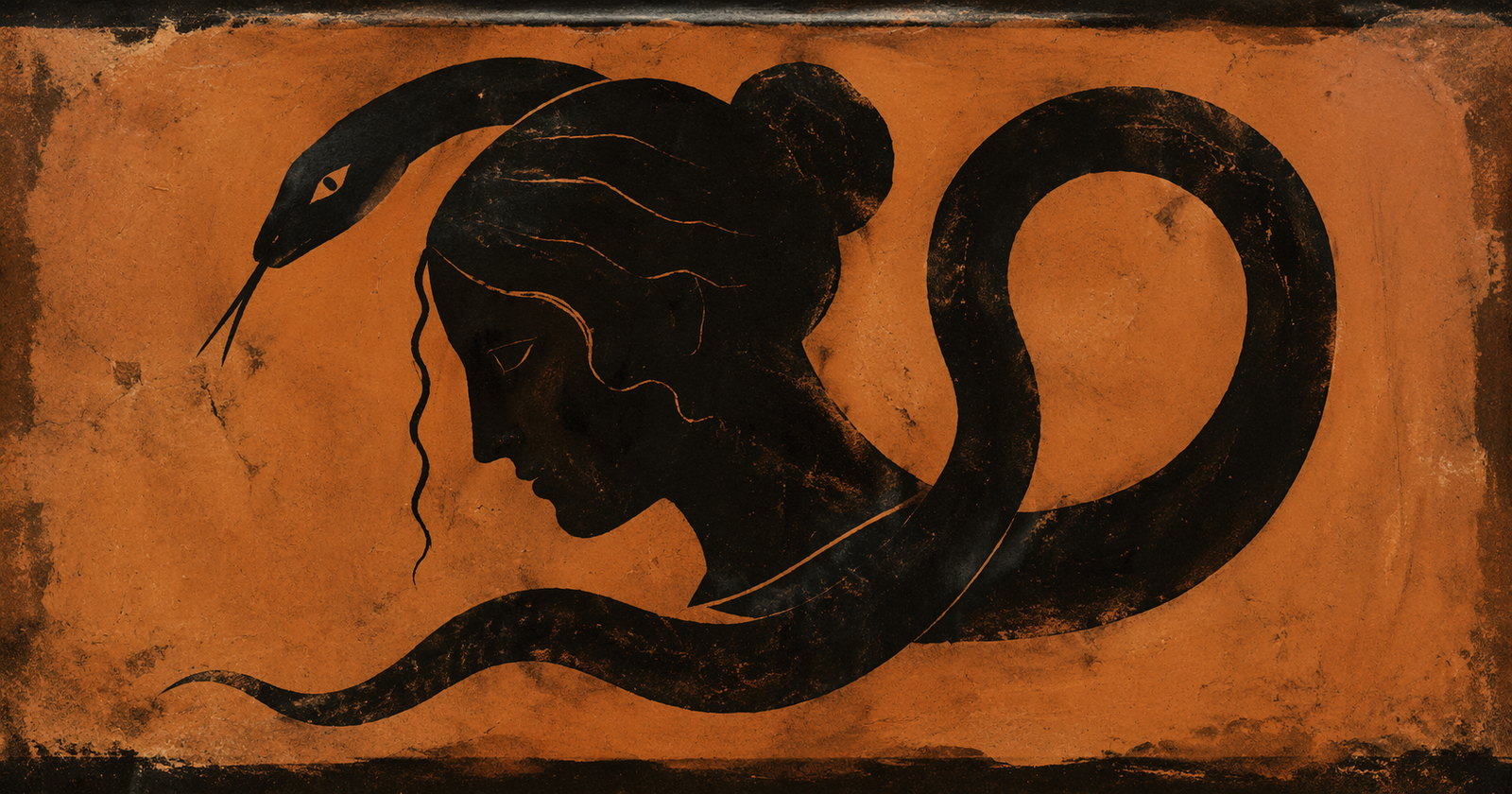

Prometheus — The Fire Under Penalty
On theft, sequence, and immortal sentence
Before men had fire, night was not an interval but a dominion.
Darkness did not fall and lift. It took hold. It entered the hollows where they slept, the seams of hide, the mouths of caves, the joints of the hand. Rain came into their shelters and stayed there. Wind found them through stone. They ate what yielded. They tore at roots, cracked what bone they could, crouched where rock broke weather, and waited for dawn not because dawn promised anything, but because it lessened what night had imposed.
They were not yet the thing they would later call themselves.
A beast is fitted to the terms of its life. It comes into the world already armed with the measure by which it will endure it: fur, claw, speed, burrow, fang, wing, instinct, concealment. Men had the hand that could become many tools and no means yet to teach it. They had the mouth that could gather breath for speech and no craft by which speech might harden into dwelling, custom, city, law. They had memory enough to fear the return of cold and no mastery by which to answer it. When lightning struck and a tree burned on a far ridge, they watched the brightness as one watches something belonging to another order. When the trunk at last collapsed into black wood and pale ash, they were left with what they had always had before: the old exposure, the old dark, the old incompletion.
Prometheus saw this, and did not find it noble.
He did not look upon men and discover in their lack some rough dignity with which poets later comforted themselves. He found them unfinished. That was worse. Need can be borne. Incompletion is an affront when the means of completion exists elsewhere under guard.
He was not the strongest among the deathless powers, nor did he trust strength much. Strength announces itself too early and mistakes its own pressure for permanence. What endures longer is sequence: the order by which one act enters another, by which power ripens into decree, by which an arrangement hardens and begins to call itself law. Prometheus saw by sequence. Where others saw an event, he saw its continuation. Where others praised force, he watched the shape force would take once it had seated itself.
It was by such sight that Zeus had risen.
Men remembered later only the throne, the thunder, the settled hierarchy of heaven, but not long before the thing had still been in dispute. Zeus had not won because he was strongest. He had won because the old order had become legible at the point of its weakness, and because cunning had served where force alone would have broken itself. Prometheus had known that before Zeus knew it. He had understood that the future belongs not always to the greater blow, but to the better reading of where blows lead. It was not affection that joined him once to Zeus, but recognition.
That was why he recognised the danger sooner.
For once power has installed itself, it begins to forget the intelligence by which it came there. It calls victory justice. It calls arrangement necessity. It calls its own preferences order. Then what was once strategy becomes sovereignty, and sovereignty, if unopposed, begins to mistake withholding for right.
The first sign of this had appeared not in the theft of fire, but at the table.
At Mekone the ox was divided.
The body lay open under daylight, red within, pale where bone showed through, the bright fat lifted aside, the whole grammar of killing exposed: what can be kept, what must be yielded, what can be disguised, what can be named. Men stood near and learned, though they did not yet know they were learning, that life would proceed by portions. Nothing entire would remain in their hands. The world would be lived through division, allotment, sacrifice, claim.
Prometheus touched the carcass and saw at once that the division mattered beyond the meal. If the terms of exchange were fixed wrongly here, there would be no later correction gentle enough to matter. Once a hierarchy learns its own appetite, it seldom relaxes.
So he made two offerings.
In one place he laid the useful flesh and hid it under what did not call to desire. In the other he heaped the white bones and wrapped them in shining fat until loss appeared splendid. He made display contend with substance. He made appearance stand where judgement ought to stand. Then he invited Zeus to choose.
Whether Zeus chose in ignorance or in knowledge, later men never settled, because they could not bear the truth that governs such moments: both are true enough for the living. Power may be deceived. Power may also see the deceit and accept it only to punish more deeply later. Zeus laid hand to the bright fraud. The bones were his.
From that choice came the order of sacrifice: smoke and fat for the gods, flesh retained below for men. But from that same choice came memory in Zeus, and memory in a ruler is unlike memory in the afflicted. Men remember through wound and weather. Zeus remembered through reprisal.
He hid fire.
Not from heaven. Not from his own halls. Not from the forge where metal softened and yielded. Not from the deathless who used brightness as naturally as speech. He hid it where hiding mattered: from the hands that needed it. He withdrew not merely a flame, but access. No ember would hold. No brand would survive the night. Dry grass took spark and lost it. Charcoal cooled into uselessness. Wood blackened and went dead. The force by which matter is altered remained above mortal reach.
Then human incompletion showed itself fully.
They tore raw flesh with their teeth and were sickened by it. Clay crumbled back into wetness. Ore slept inside stone. Darkness returned each evening whole. Cold entered the fingers first, then the wrists, then the body’s slower inward places. Infants learned early that warmth belonged to bodies and bodies failed. Men watched storm-light break the ridge and vanish, and knew by then what it meant to desire something without even possessing the method by which to desire it properly.
Prometheus did not yet act. He watched.
A child found a coal after lightning had opened a tree. He cupped it in bark as though sheltering a wounded creature and ran with it down the slope toward the hollow where his kin were waiting. By the time he arrived he held only dust and a dark smear along the palm.
A woman gathered reeds, bent above them, breathed until her throat tightened and her eyes watered. The stems gave back only bitterness and a small thread of smoke that mocked her and was gone.
Men struck stone against stone until their wrists shook. One hard star leapt once between them and vanished into air that could not keep it.
Prometheus watched them fail once more, and this time he did not read the failure as misery.
He read it as duration.
The child arriving with ash in his hand: not a child only, but the measure of a species permitted accident and denied continuity. The woman bent over reeds that would not take: not a woman only, but the form of a life held just short of transformation. This was not a temporary deprivation that season might alter. It was absence beginning to repeat itself. Left untouched, it would harden into order. Men would not merely lack fire; they would inherit the lack as if it were native to them.
That was the offence.
He did not think: they suffer, therefore I must pity them. Pity is a weak instrument and rarely survives power. He thought: this refusal is already teaching the world how to continue.
Then he understood the more difficult thing. To refrain would also be an act. To leave the boundary standing because it had been drawn from above was still to serve in its enforcement. There are moments when obedience is not neutral but causal.
After that the matter was settled, though nothing had yet been done.
Not because he had weighed one pain against another and chosen the lesser. That is how smaller minds imagine decision: as balance. This was not balance. This was sequence. If fire remained where it was, one future would continue. If it crossed, another would begin. The suffering in either case was not equal, only differently placed.
So he cut the fennel stalk.
He chose it with the exactness of one preparing a vessel for a single use from which no later correction will be possible. Hollow enough within. Green enough without. Common enough to pass among common things. A carrying-case for consequence.
Then he went where the deathless used flame without thought because they had forgotten what it meant to lack it.
In the precincts of Hephaestus, fire was not visitation or accident but custody. Matter went in one way and came out another. Ore surrendered its sleeping metal. Bronze ran bright. Heat entered what was stubborn and instructed it to yield. In the company of Athena, craft moved from thought into exact handwork. Fire there was not terror. It was method.
Prometheus waited at the edge of that abundance.
That waiting was the true crossing.
Not the hand descending. Not the coal entering the pith. Those were motions only. The crossing lay in the interval before them, when forethought had already run beyond the act and returned bearing its full burden. He saw the chain entire without needing to name it. The ember hidden. The descent. Human hands gathered round first light. Smoke rising where none had been permitted. Zeus’s recognition. The fastening on stone. The recurrence of the bird. The long continuation below. All of it stood present before the thing was done.
He did not steel himself against what would follow. Steeling belongs to those who still imagine the future as separate. He had already incorporated it. The pain ahead was not an argument against the act, but part of the act’s anatomy.
So when he bent at last, he bent not in hope of escaping consequence, nor in defiance for the pleasure of defiance, but because the sequence had already declared itself and he had entered it.
He received the live coal into the stalk.
For an instant nothing changed. The halls remained bright. No cry rose. No god turned. The small red life hidden inside the green hollow was still only a carried thing.
Yet the world had already divided.
He carried fire downward.
Not to a king. Not to a priest. Not to a single favoured house. He brought it where the unfinished creature endured. He knelt on bare ground, opened the fennel, and tipped the hidden ember into a bed of dry fibre. Smoke first. Then the thin animal tongue. Then the steadier taking. Men drew back before they leaned in. Light moved over their faces and made them strange to themselves. What had belonged only to lightning and the gods now remained where hand and breath could tend it.
The first gift was not mastery.
It was one night less absolute.
After that came the longer alteration. Flesh held over flame changed and no longer fought the body so fiercely. Clay hardened and remembered shape after rain. Ash concealed life beneath seeming death. Men learned that wood has kinds, that some burns quickly and some with patience, that dry grass takes too fast, that green branches offend, that embers must be banked and fed. They learned to keep coals alive beneath grey powder through the dark hours. They learned to carry fire from house to house. They learned that heat could split stone, harden points, blacken timber, cure hides, open ore, seal vessels, raise smoke visible at distance. Night, once unbroken dominion, became a thing against which a ring might be drawn.
From there tool followed tool, not by miracle but by the new passage now held in mortal custody. Matter had become answerable. Stone was sharpened with intention. Clay kept grain from damp and vermin. Timber charred and bit deeper into earth. Metal, once hidden dumbly inside rock, sweated and emerged. The cooked meal lengthened life enough for memory to accumulate. The hearth gathered faces into one place long enough for speech to settle and recur. What men possessed now was not comfort only, but method.
And because they possessed method, penalty began.
Zeus saw the smoke.
Not one column only, but the thing it meant: the relation between need and answer altered without his sanction. Warmth where none had been permitted. Transformation in the hands of the dying kind. A species once held at the threshold now stepping across it by means not granted from above.
He sent for Prometheus.
Prometheus came.
There are refusals that change nothing because consequence has already advanced past the point where refusal matters. He did not conceal himself. There is no concealment after a gift of that order. What had been taken was already below, already multiplying, already entering custom and use. The summons was not a question of escape, but of confirmation.
Zeus did not ask why.
Reasons belong to disputes among near equals. What stood before him was not a penitent servant but an intelligence that had presumed to alter distribution.
“You have not stolen heat,” Zeus said. “You have stolen interval.”
Prometheus did not answer at once.
“For beasts,” said Zeus, “need and season suffice. For gods, possession suffices. But you have given the dying kind the means to stand between need and its answer. You have lengthened their reach beyond allotment.”
“I have given them passage,” said Prometheus.
Then Zeus regarded him with the final attention rulers reserve for those who have read the same situation more deeply than themselves and acted without permission from that deeper reading.
“That is what I said.”
He named the earlier insult at sacrifice. He named the present theft. He named the swelling presumption of mortals, who would now mistake unauthorised passage for right. He did not raise his voice. Sentence has no need of storm when it is already law.
Prometheus said little because little remained to say. He did not deny the act. Denial is for those who wish to be separated from what they have done. He did not plead for men, because pleading would have assumed that their incompletion was still open to deliberation. It was not. The act had closed that interval for ever.
Then the punishment was made.
Hephaestus came with the metal. Strength came. Violence came. They went to the far place where stone rises naked into a sky that gives no shelter. Caucasus: ridge after ridge, the exposed height where weather has no obstacle and the world below seems near enough to see and too distant to touch.
Prometheus knew the place before he reached it.
Not because he had stood there before, but because forethought had already taken him there while he waited beside the divine flame. Nothing in the mountain surprised him. Not the bleakness. Not the barren air. Not the useless vastness of the drop below. This too had already entered the sequence at the moment of theft.
They bound him to the rock.
Metal entered stone. Metal closed on wrist, on ankle, across the body where turn, recoil, and covering are denied. There are punishments that injure, and there are punishments that convert the body into site. This was the second kind. Prometheus was not merely wounded. He was installed in suffering.
Day there did not comfort. Light exposed without warming enough. Night did not relieve. Cold moved in unhindered from the high places and entered the metal first. Rain stayed in the fastenings. Wind scoured the skin. Below, far below, men were learning to shelter embers beneath ash and wake them at dawn. Above them, the giver of fire had no hand free to warm himself.
Then came the eagle.
It descended through the clean height with the certainty of something not enraged but appointed. Prometheus saw its shadow move across the stone before the talons found purchase. He did not start. Startlement belongs to those who still meet the future as arrival. The beak entered where it had always been going to enter. Ribs yielded. Flesh opened. The liver, red seat of renewal, was torn and consumed.
Pain there was beyond measure, but not beyond sequence.
When the bird rose at last and the mountain kept the blood, what had been taken began slowly, implacably, to return. By morning the body had resumed enough of itself for punishment to remain possible. That was the design. A wound that ends is a wound. A wound arranged to recur becomes law.
The eagle returned.
Thus the punishment answered the gift exactly. Prometheus had carried to men a force by which matter may be altered and used again. Zeus made of Prometheus a body from which food might be taken, renewed, and taken again. The giver of transformation was himself transformed into provision for sentence.
Below, men did not cease.
This is part of the severity of the myth: gifts, once given, leave the giver behind. Hearths multiplied. Kilns burned. Pots hardened. Fields were scorched clear. Metal yielded under hammer. The dead received pyres instead of cold burial alone. Children were born into a world where light could be summoned after dusk. They grew not knowing the full dark from which their kind had come. The theft entered custom. The miracle became use.
Prometheus saw this not all at once, but in signs.
A line of smoke rising from some valley settlement and holding straight in still air. The faint sheen of furnace-light where before no light could have remained. A glow at evening too regular to belong to storm or chance. None of these surprised him either. They were confirmations only. The future he had entered while still unbending beside the godly flame was now unfolding below with mortal slowness.
He did not mistake that unfolding for innocence.
Men would not keep fire clean, because no species keeps power clean. The same heat that softened bronze would harden the spearhead. The same hearth that gathered kin would one day see houses burned by other hands. But such knowledge did not unmake the act. Fire had not been given to perfect men. It had been taken for unfinished ones. There is a difference. What matters in the beginning of a thing is not purity, but passage.
So the eagle came, and came again.
Dawn whitened the stone. Chain answered light with its own hard glint. Wind moved over the heights. The bird descended. Flesh opened. Night returned. The body renewed. Below, embers were stirred from ash. Bread baked. Ore ran. Timber charred. Speech lengthened beside the hearth. The species once held naked before dark had crossed its threshold and would not cross back.
But it had crossed under penalty.
That was the law established between the deathless and the dying, between gift and order, between forethought and rule: that what is withheld may be taken, that what is taken may indeed alter the world, and that the taking does not abolish the power it defies but inscribes its cost into flesh.
Prometheus hung in that cost.
Not astonished. Not vindicated. Bound.
And below him the fire went on.
—
—
Receive the next work
Subscribe free to receive new work from the House of Cadmus Library by email.
More from the Library

See Also
A concise and impartial dictionary of absence, promises, quarrels, ordinary objects, and the troublesome instability of words.
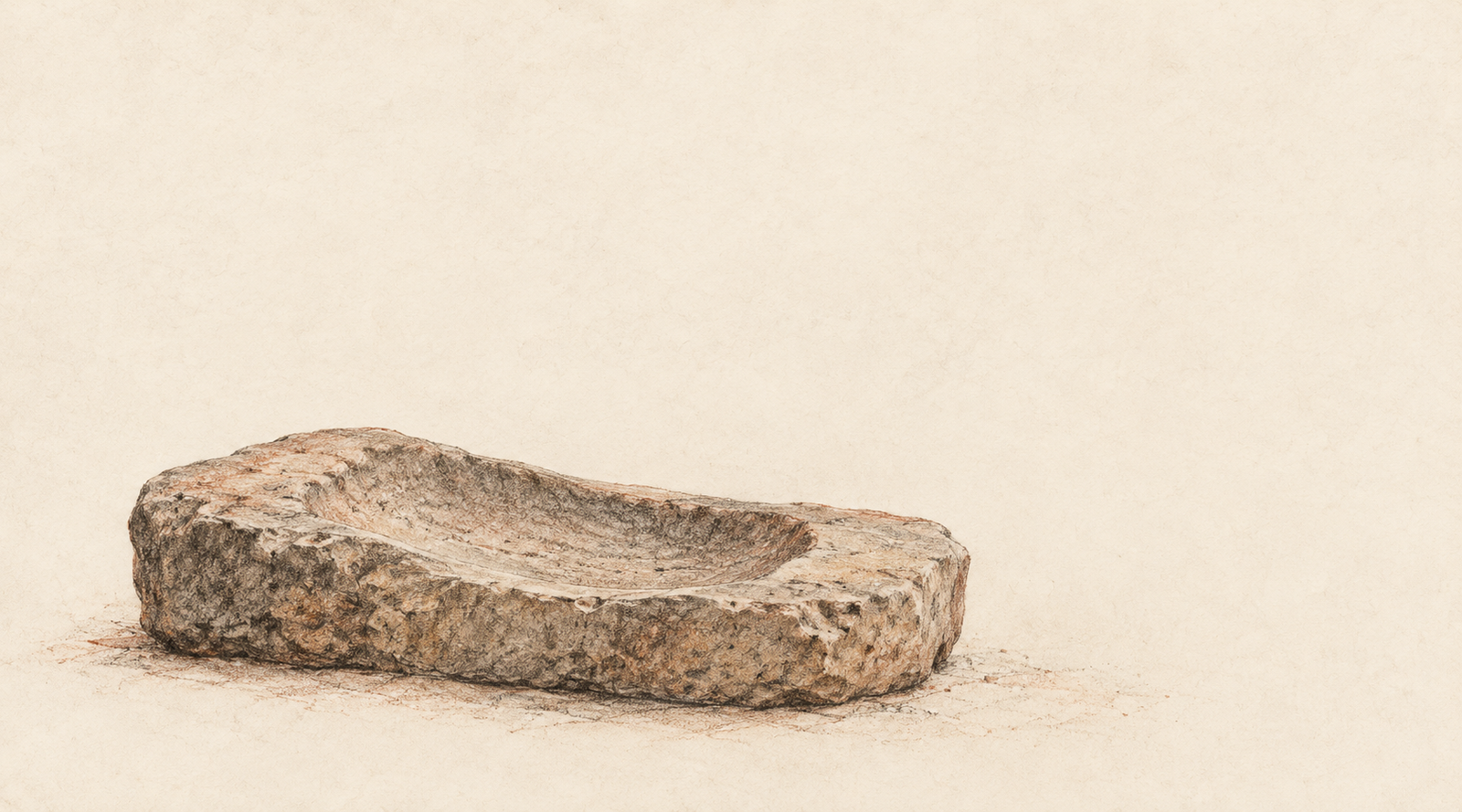

The City of Service
The temple we inherit is a building from which almost all necessity has been removed. Nothing must be brought for it to continue being what we call a temple. The sanctuary asks nothing of us. Stone is good at this kind of independence.
A living temple was otherwise.
Water had to come in. So did grain, cloth, oil, aromatic substances, fuel. The things required for worship arrived because someone carried them across a threshold.
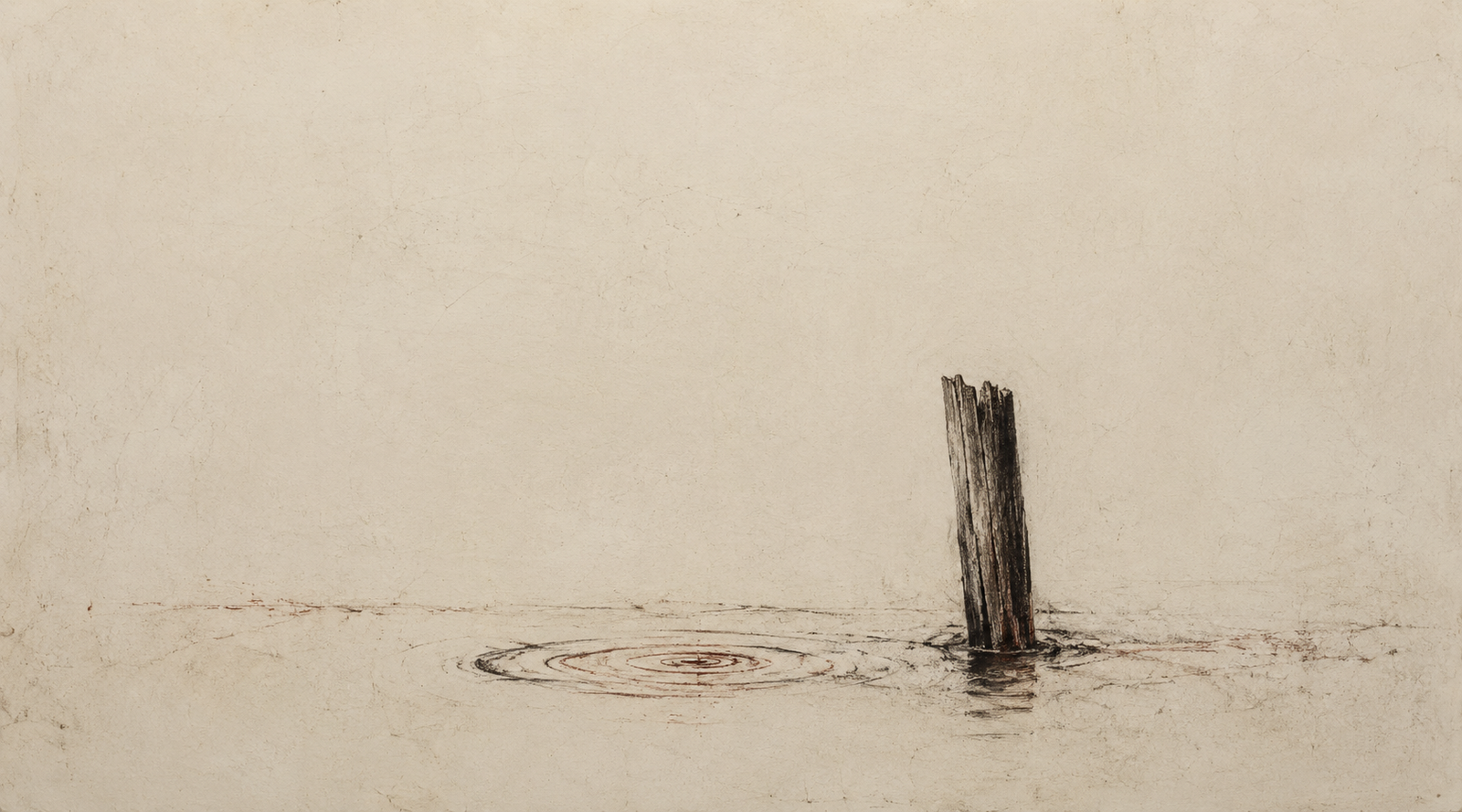

Houses of Wood, Light, and Smoke
Some of Angkor’s most intimate ruins do not rise above the ground at all. They are postholes, low mounds, hearths and ponds: durable traces of a domestic city built largely from things that decay. To restore that city is to see Angkor not only as stone, but as wood, smoke, water, repair, and people living within calling distance.