

What the Hand Knows
There are days when everything seems to require more force: the sentence, the decision, the conversation, sleep itself. Nothing moves as it should, and so we lean harder upon it. We repeat the argument more clearly. We revise what has already lost its life. We remain awake trying to make ourselves sleep. We call this persistence because the alternative would be to admit that effort has ceased to be intelligence.
A message written late at night shows the change clearly. The first version says what needs to be said. The second tries to prevent misunderstanding. By the fifth, every possible objection has been answered in advance, and the message no longer speaks to another person. It has become a small enclosure built against uncertainty — not a way of reaching someone, but a way of controlling what they are allowed to feel in return.
Effort is one of the virtues by which we measure ourselves. To try harder is almost always assumed to be admirable. The person who persists is serious; the person who relinquishes control is suspected of weakness. Even when our actions are failing, the strain itself can feel like evidence that we care.
But there is a point at which effort no longer serves the thing being done. It begins instead to serve our need for the thing to happen in a particular way.
A conversation may need courage, patience and honesty. Yet there comes a moment when another explanation will not create understanding. A piece of work may require long discipline, but further revision can begin to erase what made it alive. A plan may deserve loyalty, but continuing to obey it after circumstances have changed is not necessarily strength. Sometimes it is merely our unwillingness to be corrected by reality.
Force begins when we stop listening.
It is not always dramatic. Often it appears as the small tightening by which we insist that the world conform to the account we have already made of it. We have named the situation, decided what it means, and chosen the outcome that will prove us right. From then on, we are no longer responding to what is present. We are struggling with whatever refuses our description.
The mind rarely loosens first. Before it admits that a situation has already spoken, the hand tightens around the plan.
The opening of the Tao Te Ching warns that the Tao that can be named is not the enduring Tao. This is sometimes treated as a statement about a distant mystery beyond ordinary life. But its pressure may be much closer. The name is not the thing because the thing continues to live, move and change after the mind has decided that it understands.
We call something failure, and cease to notice what it has released us from. We call something discipline, and overlook the fear beneath it. We call something surrender, when it may be the first honest response we have made. Names are necessary, but they become dangerous when they relieve us of the obligation to keep seeing.
The Taoist term wu wei is often translated as ‘non-action’. Taken literally, it can sound like withdrawal: a philosophy of standing aside while life proceeds without us. Yet the deeper meaning is not the refusal to act. It is the refusal to add unnecessary force to action.
Wu wei is action without coercion. It does not begin by asking how reality can be compelled to obey. It asks what the situation already permits, what its structure requires, and where movement is possible without distortion.
This is not laziness. Non-forcing asks us to remain with the difficulty of attention.
In the Zhuangzi, Cook Ding is asked about the extraordinary ease with which he cuts apart an ox. An ordinary butcher meets flesh and bone as obstacles, hacking and striking until the knife grows blunt. Cook Ding no longer sees the animal as a solid mass that must be overcome. Years of practice have taught him to perceive the spaces within it: the openings between joints, the intervals through which the blade may pass without collision.
He does not defeat the ox. He follows its structure.
The apparent ease of his movement is therefore not the innocence of a beginner. It is the achievement of someone who has looked long enough for force to become unnecessary. His hand, eye and blade no longer operate as separate things. Skill has passed beyond display. He does not need to attack the material in order to prove his mastery over it.
Perhaps the opposite of forcing is not surrender, but attention.
Force begins by deciding what the situation must become. Attention begins by asking what is already here.
That question changes the nature of action. Resistance becomes information. The difficult paragraph may not require stronger language; it may not belong. The argument may not need to be won; it may have reached the limit of what argument can accomplish. The exhaustion may not be an enemy to overcome but a fact the body has been trying to communicate. The closed path may not be a test of commitment. It may simply be closed.
None of this means that resistance always tells us to stop. Some difficulties must be endured precisely because they matter. A promise may need to be kept through fatigue. An injustice may need to be opposed despite danger. A craft may require years of repetition before any ease appears. The person who treats every obstacle as evidence of misalignment will merely give spiritual language to avoidance.
Attention does not always counsel softness. Sometimes it reveals that the necessary action is refusal, confrontation or departure. Non-forcing cannot be identified by how gentle an action appears from the outside. A clear no may contain less violence than a reluctant yes sustained for years. Leaving may be more truthful than continuing. Persistence may be the unforced act when the situation genuinely asks us to remain.
The distinction lies not in whether action is difficult, but in what creates the difficulty.
There is the difficulty inherent in the task: the weight that must be carried, the skill that must be acquired, the truth that must be spoken. And there is the additional difficulty produced by our demand that the task confirm something about us — that we are competent, admirable, indispensable, correct or in control.
The first may be unavoidable. The second is often the friction we bring with us.
Athletes, musicians and craftspeople sometimes describe a state in which the observing self grows quiet. Deliberation stills, time changes character, and the next movement no longer needs to be issued as an instruction. Modern psychology calls this flow, and Cook Ding would recognise something in it.
The resemblance has a limit: flow names a condition within activity; wu wei asks the wider question of what relationship we have to the action, the outcome and the self that wants to possess them.
A person may enter flow while pursuing something foolish. Absorption does not guarantee wisdom. We may become magnificently efficient at serving an ambition that has never been examined.
The Taoist challenge is not merely to lose oneself in action. It is to notice how often the self has been obstructing the action by demanding that it lead somewhere flattering.
This is why non-forcing cannot simply be adopted as another method. The moment we turn it into a technique for effortless success, the old compulsion returns wearing quieter clothes. We begin forcing ourselves to relax, judging our lack of flow, trying to become the kind of person who moves gracefully through every circumstance. We become fiercely attached to appearing unattached.
There are conditions that will not become graceful. Grief cannot always be navigated skilfully. Illness does not necessarily reveal a hidden path. Some labour remains labour. Some confusion must be lived before it can be understood. Non-forcing does not promise that life will yield to us more easily. It asks whether we can stop adding our refusal to the difficulty already there.
Water is often used as the Taoist image of this strength. Its significance is not merely that softness eventually wears away stone. Water does not carry one form and insist upon it wherever it goes. It remains wholly itself while answering the shape of what it meets.
To live without forcing may mean something similar: meeting the moment’s actual contour without surrendering what is essential, acting decisively when action is required, and remaining still when movement would only be the theatre of control. Passivity and compliance can be failures of attention. Rigidity can be one too.
The work remains. The decision remains. The difficult conversation may still need to occur. What changes is the grip.
The hand does not abandon the knot. It loosens enough to feel where the knot can open.
From the Workroom
In the companion Author’s Note, I write about how an essay on non-forcing tightened into its own rhetorical grip — and the sentence-level choices that allowed it to loosen.
—
Receive the next work
Subscribe free to receive new work from the Lucas Varro Library by email.
More from the Library

See Also
A concise and impartial dictionary of absence, promises, quarrels, ordinary objects, and the troublesome instability of words.

The City of Service
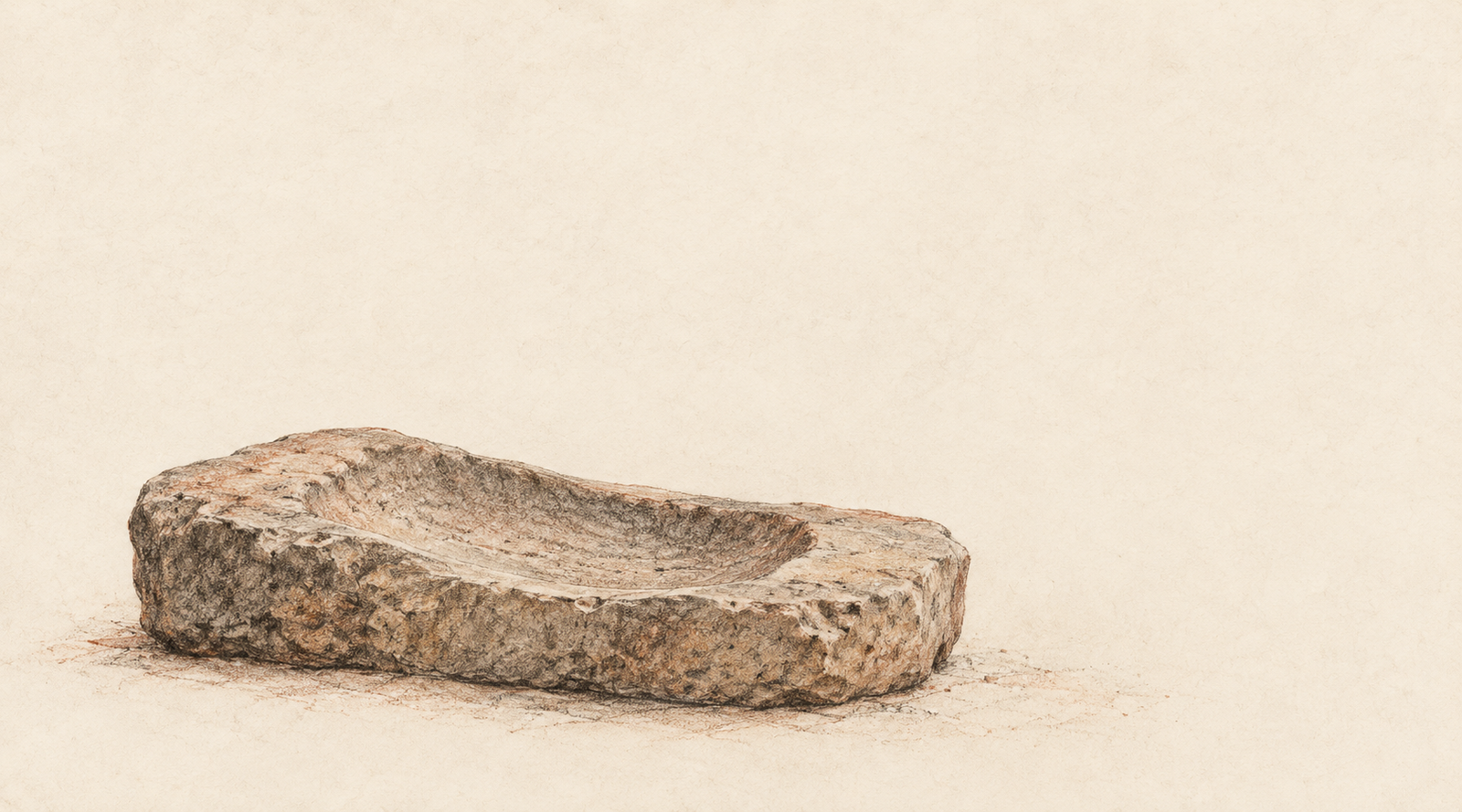
The temple we inherit is a building from which almost all necessity has been removed. Nothing must be brought for it to continue being what we call a temple. The sanctuary asks nothing of us. Stone is good at this kind of independence.
A living temple was otherwise.
Water had to come in. So did grain, cloth, oil, aromatic substances, fuel. The things required for worship arrived because someone carried them across a threshold.

Houses of Wood, Light, and Smoke
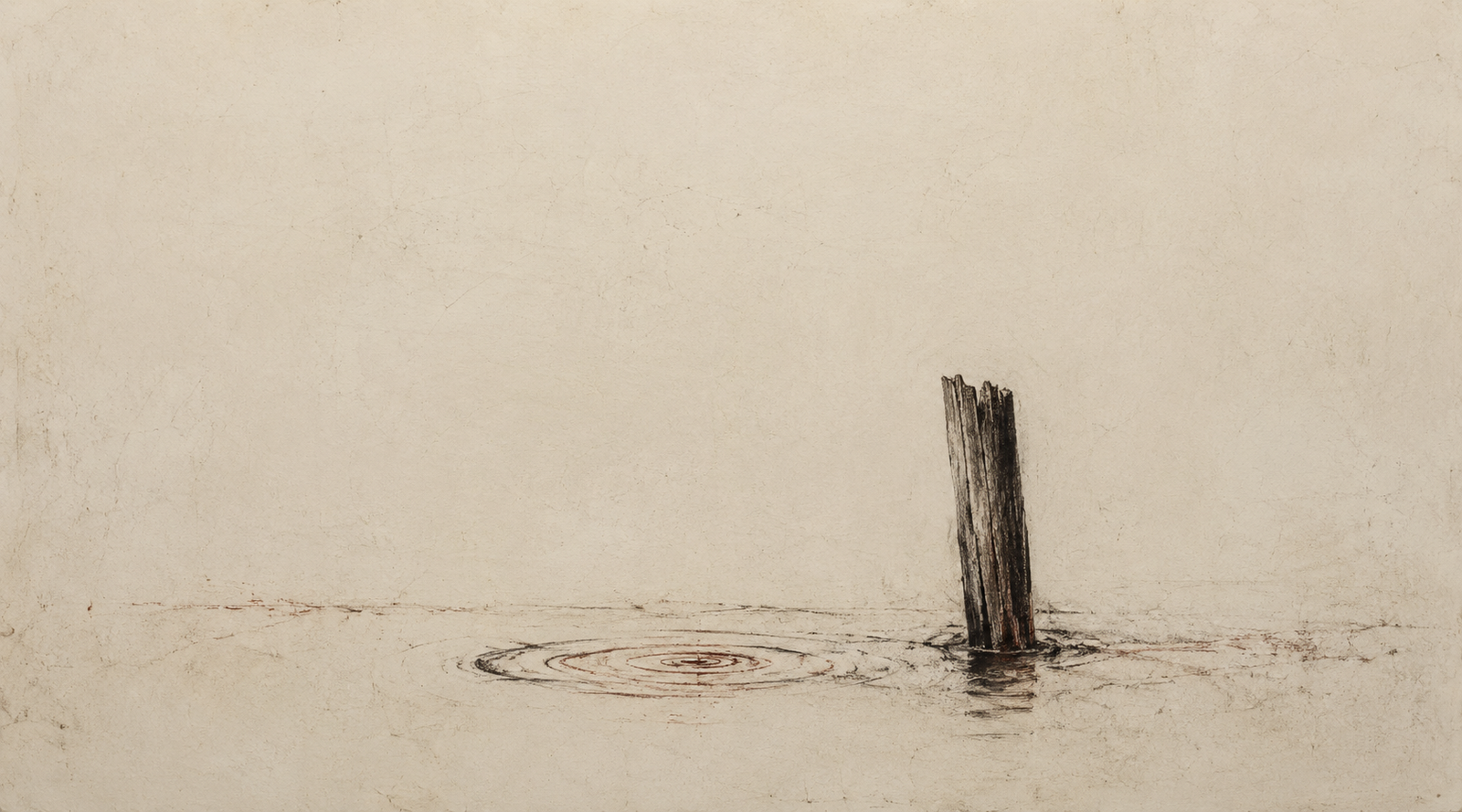
Some of Angkor’s most intimate ruins do not rise above the ground at all. They are postholes, low mounds, hearths and ponds: durable traces of a domestic city built largely from things that decay. To restore that city is to see Angkor not only as stone, but as wood, smoke, water, repair, and people living within calling distance.