

The Story Is Not Finished Yet
On fortune, misfortune, and the discipline of refusing to give the present a final name.
We are very quick to name what has happened to us.
A door closes, and we call it loss. A door opens, and we call it blessing. Someone leaves, and we call it abandonment. Someone praises us, and we call it proof. Money arrives, and the future seems merciful. Money disappears, and the future becomes a judge.
But the event has not finished becoming what it is.
Only our feeling has arrived early.
This is one of the oldest mistakes human beings make. We do not merely suffer what happens. We interpret it immediately. We place it under a verdict. We ask life to declare itself before it has had time to unfold. We stand in the first weather of an event — shock, relief, shame, delight, fear — and mistake that weather for the whole climate of reality.
There is an old story about a farmer who lived near the border of his country. He was not wealthy, but he had a horse, and the horse was strong. In a place where work depended on animals and distances were long, this was no small thing. The horse was not a luxury. It was labour, transport, strength, and security. It was part of the household’s future.
One morning, the horse was gone.
The neighbours came, as neighbours always come when life has given them something to name.
“What terrible luck,” they said. “Your horse has run away.”
The farmer looked at the empty place where the horse had been. He did not pretend that nothing had happened. He did not smile wisely at his own loss. He did not turn deprivation into poetry. He knew what a horse meant. He knew what work would now become. He knew what absence costs when the household has already been arranged around what is missing.
But he did not give the absence a final name.
“We do not yet know what this is,” he said.
The neighbours thought him strange. It is hard to tolerate someone who refuses the emotional consensus of the village. Grief expects company. Excitement expects confirmation. Fear expects agreement. Even pity, which often believes itself gentle, can become irritated when its verdict is not accepted.
Days passed.
Then the horse returned.
It did not return alone. It came back from the open country with other horses following it, wild and strong, as if the first loss had gone out into the world and gathered abundance behind itself. The empty place was no longer empty. The household now had more than it had lost.
The neighbours came again.
“What wonderful luck,” they said. “Your horse has returned, and now you have many horses.”
The farmer looked at the animals standing in the yard. He saw the strength of them. He saw the possible labour, the possible wealth, the possible future. He did not deny the gift. He did not refuse to be grateful. He did not pretend that gain and loss were the same thing.
But he did not give the gain a final name.
“We do not yet know what this is,” he said.
Soon after, the farmer’s son tried to ride one of the wild horses. The animal threw him. The young man fell badly and broke his leg.
Again the neighbours came.
“What terrible luck,” they said. “Your son is injured. He cannot work. He may never walk as he did before.”
The farmer looked at his son lying in pain. There was nothing abstract about it now. This was not a proverb. This was not a philosophical exercise. It was the body of his child. A household can endure the loss of an animal, but the suffering of a child enters the room differently. It does not remain outside the heart. It rearranges the air.
Still, the farmer did not allow pain to become prophecy.
“We do not yet know what this is,” he said.
Not long after, soldiers arrived in the village. War had come near. The young men were taken for the army. Sons who had stood strong in the morning were gone by evening. The road that left the village carried them away.
But the farmer’s son, with his broken leg, was left behind.
The neighbours came again, quieter this time. They had less confidence in their words. They had seen the horse vanish, return, injure, spare. They had watched fortune change its clothing too many times.
“What wonderful luck,” they said, but their voices had begun to doubt themselves.
The farmer did not rejoice over the sorrow of other houses. He did not pretend that his son’s pain had been simple blessing. He did not make the injury good because one consequence had been merciful. He knew better than that. The broken leg was still a broken leg. The war was still a war. The spared son was still spared inside a village full of absence.
So he said again, perhaps more gently than before:
“We do not yet know what this is.”
The farmer’s wisdom is often misunderstood. It is easy to turn him into an emblem of cheerful uncertainty, as if the lesson were simply that bad things may become good things, and therefore one should not be troubled. But that is too shallow. It leaves the human heart out of the story. It makes wisdom sound like a refusal to feel.
The farmer is not wise because he is untouched.
He is wise because he does not let the first feeling become the final truth.
There is a great difference between feeling fully and judging finally. A person may grieve without declaring that life has ended. A person may rejoice without declaring that life has been secured. A person may be frightened without treating fear as prophecy. A person may be relieved without making relief into proof that all is well.
Most of us do not live this way. We are verdict-making creatures. We want the meaning of an event almost before the event itself has settled. The email arrives, the message is unanswered, the opportunity appears, the plan collapses, the diagnosis is spoken, the invitation is withdrawn, the praise is given, the money is lost, the person says yes, the person says no — and immediately the mind begins its work.
This is disaster.
This is rescue.
This is humiliation.
This is destiny.
This proves I was right.
This proves I am finished.
Some of these first readings may contain truth. The farmer is not asking us to become vague. He is not asking us to call cruelty kindness, illness blessing, abandonment freedom, or harm instruction. There are real losses. There are real gifts. There are wounds that do not need to be renamed in order to be endured.
But there is a quieter arrogance hidden in the speed of our judgement. We assume that because we know what something feels like now, we know what it is. We assume that because one consequence is visible, the whole pattern has declared itself. We mistake immediacy for knowledge.
Life is not made of isolated events. It is woven. One thread crosses another, disappears, returns, knots, loosens, darkens, brightens. What we call failure may become the discipline that saves us from a more elegant ruin. What we call success may become the door through which vanity enters. What we call delay may preserve us from arriving too early. What we call rejection may return us to the path we had abandoned. What we call loss may hollow out a space in which something truer can be received.
And sometimes not.
That must be said without haste. Not every sorrow becomes a visible blessing. Not every wound reveals a hidden mercy. Not every lost horse returns with others following behind it. Some losses remain losses. Some absences do not disclose a secret generosity. Some suffering must be honoured as suffering, not recruited afterwards into a comforting design.
A serious philosophy of life must not console by falsifying the world. It must not tell the grieving person that grief is secretly good. It must not force providence into every fracture. It must not insult suffering by using the future as decoration.
The wisdom of the story is not optimism.
It is humility before unfolding.
It is the discipline of leaving reality larger than one’s present interpretation of it. It is the refusal to trap life inside the vocabulary of one hour. It is the recognition that our minds, under pressure, crave certainty more than truth. A verdict gives the illusion of control. If I can name this as ruin, at least I know where I stand. If I can name this as blessing, at least I can rest for a moment. But life does not become more obedient because we have named it quickly.
The farmer does not possess secret knowledge. He is not seeing the whole pattern while the villagers see only fragments. That would make him merely superior. His wisdom is more demanding than foresight. He does not know either. He simply knows that he does not know.
This is a difficult knowledge to live by.
It does not remove action. The farmer must still mend the fence, feed the horses, care for his son, meet the soldiers at the door, and live among neighbours who keep arriving with conclusions. He must still respond to what is in front of him. Equanimity is not passivity. It is not sitting motionless while life burns or blooms. It is action without premature imprisonment of the meaning.
One can do the necessary thing without pretending to understand the whole.
One can tend the wound without deciding what the wound will become.
One can receive the gift without handing one’s soul over to the gift.
One can lose something and still refuse to let loss become the name of everything.
This is perhaps where the parable comes nearest to ordinary life. We may not have horses running from the edge of the village, but we have our own messengers of fortune and misfortune. A child struggles. A career changes shape. A friendship cools. A project fails. A move proves difficult. A door opens that we had not expected. A door closes that we had been leaning against. The mind rushes forward to protect itself by naming the event.
But the story is not finished yet.
This does not mean that the story will become pleasant. It means that it is still alive. It is still entering relation with other things. It is still passing through time, through character, through consequence, through choices not yet made. Even the meaning of what has already happened may change as we change around it.
Many years later, what seemed like humiliation may be remembered as release.
Many years later, what seemed like triumph may be remembered as the beginning of captivity.
Many years later, what seemed like interruption may be seen as protection.
Many years later, what seemed like protection may be seen as fear wearing a kind face.
We are almost always too early with our verdicts.
This is why the farmer’s answer matters. It gives the soul a small space in which not to be ruled by the first interpretation. It does not abolish grief. It does not cancel joy. It does not ask us to become stone. It asks only that we stop turning every feeling into a prophecy and every event into a final judgement.
This restraint is not softness. It requires more courage than quick despair and more discipline than quick hope. Despair can be a kind of certainty. Hope, too, can become a kind of certainty. Both may close the world too soon.
To live in this way is to meet life without constantly dragging it into court. It is to let the present be real without forcing it to be ultimate. It is to say, when fortune arrives, yes, this has come. It is to say, when misfortune arrives, yes, this too has come. It is to act, care, repair, grieve, rejoice, choose, and continue — while leaving enough silence around the event for time to speak.
The neighbours will always come. They live outside us, and they live within us. They arrive with their ready-made names, their fear, their pity, their excitement, their certainty. They want life sorted quickly into blessing and disaster, success and failure, lucky and unlucky, saved and ruined.
But if we are willing to learn, the farmer waits beside the empty gate, beside the returned horses, beside the injured son, beside the road where the soldiers pass.
He does not explain the whole of life.
He simply refuses to close it too soon.
The story is not finished yet.
—
For paid subscribers, I have added a Workroom note on the making of this essay: the question that began it, the false consolation it resisted, and the turn that finally made it clear.
—
Receive the next work
Subscribe free to receive new work from the Lucas Varro Library by email.
More from the Library

See Also
A concise and impartial dictionary of absence, promises, quarrels, ordinary objects, and the troublesome instability of words.

The City of Service
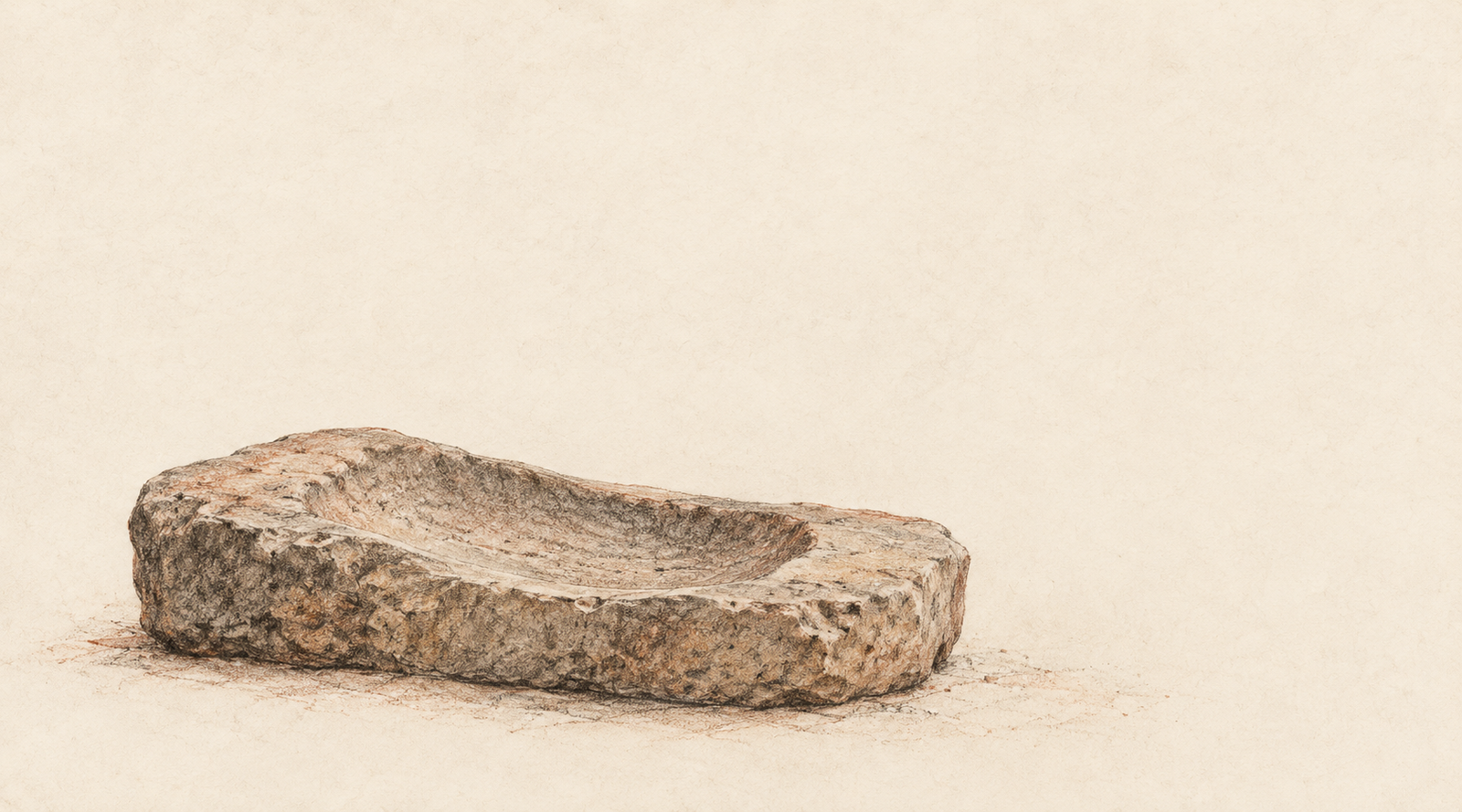
The temple we inherit is a building from which almost all necessity has been removed. Nothing must be brought for it to continue being what we call a temple. The sanctuary asks nothing of us. Stone is good at this kind of independence.
A living temple was otherwise.
Water had to come in. So did grain, cloth, oil, aromatic substances, fuel. The things required for worship arrived because someone carried them across a threshold.

Houses of Wood, Light, and Smoke
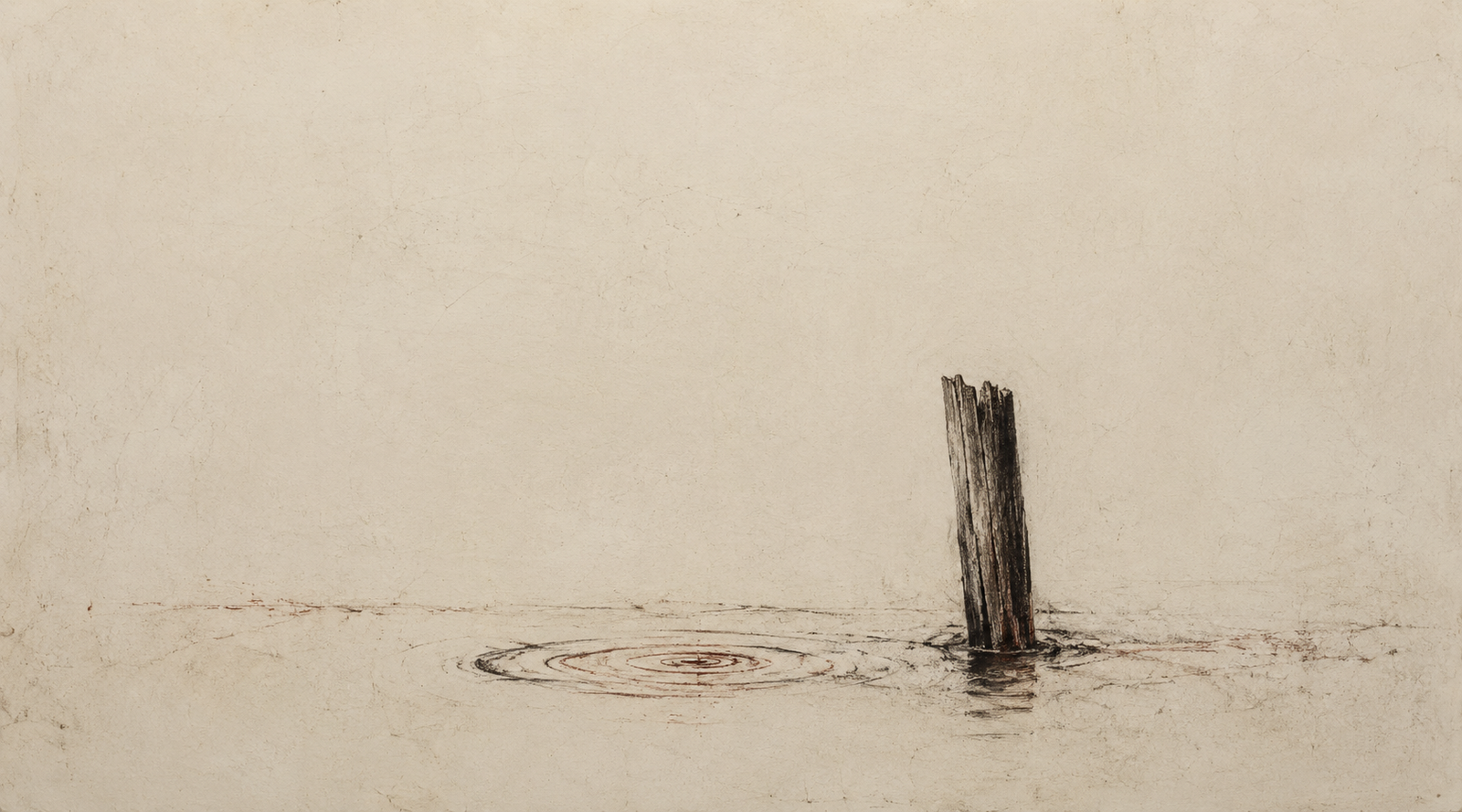
Some of Angkor’s most intimate ruins do not rise above the ground at all. They are postholes, low mounds, hearths and ponds: durable traces of a domestic city built largely from things that decay. To restore that city is to see Angkor not only as stone, but as wood, smoke, water, repair, and people living within calling distance.