

The Stranger Is Where Inheritance Is Weighed
On faith, empire, and the moral test of what we inherit.
Before belief becomes an argument, it is usually a sound in the house.
A child does not begin as a philosopher choosing between metaphysical systems. A child begins in arms, in rooms, in voices, in repeated gestures. A prayer before food. A hymn half-understood. A grandmother’s hand moving through beads. A festival morning. A forbidden word. A lamp lit for the dead. A silence before a coffin. A story told so often that the world beneath it begins to feel obvious.
This is not a defect in human beings. It is one of the ways a human being becomes human.
No one is born from nowhere. We receive language before we can question it. We receive names for good and evil before we can examine them. We receive the shape of reverence from faces, rooms, seasons, ceremonies, prohibitions, songs, griefs, and gestures older than our own understanding. Long before we know what a doctrine is, we know where the adults lower their voices. We know what may not be mocked. We know which stories are told with warmth, which names are spoken with fear, which dead are still present in the house.
Inheritance forms the world before we call it inheritance.
That is why it is so powerful. It does not arrive first as an idea. It arrives as belonging. It gives the young a place to stand, a vocabulary for sorrow, a pattern for gratitude, an answer to death, a way of burying the beloved, a rhythm by which fear can be carried. It tells us that we are not the first to suffer, not the first to love, not the first to fail, not the first to need forgiveness. It places our small life inside a larger order of memory.
There is mercy in that.
There is also danger.
Because the same inheritance that steadies us can begin to flatter us. The same story that gives us a place can become a throne. The same gratitude that rightly honours the dead can harden into contempt for the living. A person may begin by saying, “This formed me,” and end by meaning, “Therefore I stand higher than you.”
That is where the soul begins to lose something.
The loss is not always obvious. It may not look like hatred. It may speak politely. It may praise tradition, order, sacrifice, law, beauty, restraint, civilisation, moral architecture, and inherited wisdom. Much of what it says may be true. Civilisations are shaped by sacred stories. Religions are not merely opinions about invisible things. They become ways of arranging the visible world. They shape households, laws, calendars, ceremonies, duties, imaginations, inward prohibitions, and the names people give to guilt, mercy, purity, shame, courage, and forgiveness.
It is not foolish to ask what kind of inheritance helps human beings live well.
What kind of sacred story teaches restraint rather than violence? What kind of metaphysical imagination makes dignity harder to violate? What kind of tradition helps a civilisation remember that the weak are not disposable? What kind of discipline teaches desire that it is not sovereign? What kind of vision of the person can survive wealth, fear, power, appetite, and death?
These are serious questions.
The danger begins when the question becomes a boast.
My tradition shaped my civilisation.
My civilisation became powerful.
Therefore my tradition has been vindicated.
Therefore my God stands above your God.
Therefore my inheritance is closer to truth than yours.
Therefore I may look upon you, however courteously, from a higher spiritual balcony.
This is the old poison. It is not faith. It is not reverence. It is not gratitude. It is inheritance converted into superiority.
No god is proven by empire.
No truth is vindicated by victory. No civilisation’s success is evidence of its metaphysical innocence. No human being becomes higher because they inherited a stronger army, a louder canon, a richer institution, a more widely exported language, a larger market, or a sacred story carried farther by conquest, money, printing presses, ships, courts, schools, missionaries, or law.
Success proves capacity.
It does not prove righteousness.
It certainly does not prove God.
If worldly success were evidence of divine truth, every empire would become a sacrament. Conquest would become theology. Wealth would become holiness. Survival would become innocence. The winners of history would be invited to regard their victories as metaphysical verdicts, and the wounded would be asked to accept their wounds as evidence that heaven preferred someone else.
Something in the human soul becomes ugly when it learns to enjoy that thought.
It is possible to defend one’s inheritance without becoming cruel. It is possible to love a tradition without needing other traditions to be lower. It is possible to believe deeply without making disbelief or difference into a sign of lesser humanity. But this requires discipline, because belonging has its own intoxications. It is sweet to feel that one’s people were not merely one people among others, but the chosen bearers of truth. It is sweet to imagine that history itself has confirmed what birth first handed us. It is sweet to stand among ruins, libraries, cathedrals, temples, universities, laws, poems, armies, victories, and institutions and mistake scale for sanctity.
The soul enjoys being flattered in sacred language.
That is why the danger must be named.
The target is not faith.
The target is the moment faith stops kneeling before mystery and begins standing over other human beings.
A tradition may be meaningful without being metaphysically proven. A civilisation may be powerful without being morally superior. A religion may contain wisdom without owning wisdom. These distinctions are not intellectual refinements for calm rooms. They are moral necessities. Without them, gratitude becomes arrogance. Reverence becomes propaganda. Memory becomes a throne.
A Christian can make this mistake. A Muslim can make it. A Hindu can make it. A Buddhist can make it. A Jew, a secularist, a nationalist, a revolutionary, an imperial nostalgist, an intellectual class, a university, a political movement, a wounded people, a victorious people, a frightened people, a sophisticated people — all can make it. No tribe is innocent of the temptation. Every people is capable of turning its story into a throne.
The answer to religious supremacy is not another supremacy with different symbols. It is not secular supremacy. It is not civilisational revenge. It is not the smugness of those who believe they have outgrown every form of sacred delusion except their own. A humanist is not purified by disbelief. A rationalist does not think from nowhere. A modern person is not exempt from inheritance simply because the inheritance now speaks in the language of rights, progress, science, autonomy, or reason.
No one gets to read only the favourite pages of their own tradition.
The strength of humanism, at its best, is not purity. It is the willingness to be corrected. It is the refusal to place even one’s own inheritance beyond scrutiny. It does not get to point at universities, medical advances, human rights declarations, democratic language, or technological power and say, “Behold, history has proved us.” That would be the same error in secular dress.
The moral task is not to defend the tribe.
The moral task is to tell the truth.
That truth must sometimes judge. To see the human being clearly is not to declare every custom harmless, every law defensible, every practice beyond criticism. Some inherited systems protect abusers. Some silence women. Some punish dissent. Some humiliate minorities. Some crush children. Some sanctify violence. Some teach the wounded to call their wounds virtue. Mercy does not require the conscience to become vague.
But there is a difference between judgement and contempt.
Judgement asks what is being done to persons. Contempt decides what kind of persons they are. Judgement remains answerable to suffering. Contempt feeds on distance. Judgement can say, “This harms human beings and must be resisted.” Contempt whispers, “These human beings are lower than us.”
That whisper is where moral seriousness begins to rot.
The difficult discipline is to criticise without dehumanising, to resist cruelty without inventing a lesser species of human being, to name harm without turning the harmed or the harmful into an excuse for inherited superiority. The serious question is not forbidden. The triumphalist answer is.
Most people inherit their gods. Most people also inherit their first doubts, their first loyalties, their first permissions, their first silences, their first idea of what a decent person sounds like. This should make us careful. Not faithless. Not rootless. Not ashamed of loving what formed us. Careful.
If you had been born elsewhere, would your certainty have changed names?
If your mother had sung different hymns, would another metaphysics now feel obvious?
If your dead had been buried under different prayers, would you still speak so confidently about which civilisation God has favoured?
This is not an argument against belief.
It is an argument against arrogance.
A person may believe deeply. But a decent person must remember the contingency of their own inheritance. The fact that a belief feels sacred from the inside does not prove that those outside it are spiritually inferior. It proves that belonging is powerful enough to feel like the structure of reality.
The serious believer should understand this better than anyone. Humility should not be an ornament of faith. It should be one of its tests.
The deepest question, then, is not whether a civilisation can defend its inheritance. Most can. The question is what that inheritance has taught it to see when a stranger stands before it.
That is where everything turns.
The true test of an inheritance is not what it allows us to say about our ancestors. It is what it allows us to recognise in those who are not ours. If my tradition makes me more reverent toward my own dead but less attentive to another mother’s grief, it has begun to fail me. If my civilisation gives me beautiful language for dignity while teaching me to doubt the dignity of those outside its story, the language has become ornamental. If my faith enlarges my belonging but shrinks my perception of the stranger, then something in me has mistaken heat for light.
The stranger is where inheritance is weighed.
Not in ceremonies. Not in manifestos. Not in proud accounts of what our people built. But in the moment another human being appears without the protections of our affection: praying differently, speaking differently, grieving differently, eating differently, remembering different dead, carrying different wounds, shaped by different songs.
Can I still see them?
Not tolerate them as an idea. Not approve of everything they believe. Not surrender judgement. But see them. See that their pain is not scenery around my own life. See that their children are not less luminous because they learned different sacred names. See that their dead are real to them, as mine are real to me. See that their prayers, even if I do not believe in them, may have held a life upright through griefs I have never had to carry.
That seeing is not sentimental. It does not abolish criticism. It does not require us to pretend that every belief is harmless or every practice defensible. It does not ask the conscience to become vague. It asks only that criticism begin after recognition, not before it. It asks that judgement remain bound to the equal reality of the person judged.
No sacred claim may excuse contempt for the human.
A religious person may say that human dignity is grounded in God. A secular humanist may say that it is grounded in conscious life, shared vulnerability, suffering, reciprocity, flourishing, and the equal reality of other minds. These accounts differ. The metaphysical argument between them is real. It should not be pretended away.
But both should be able to see the person before them.
The person before me is not an object.
Their suffering matters.
Their humiliation is not made holy because my tradition explains it.
Their dignity is not waiting for my theology to confirm it.
Moral truth begins where another person’s suffering becomes real to me, not because my tribe authorises it, but because reality itself has broken through the walls of belonging.
That is demanding. It requires the surrender of many pleasures: the pleasure of feeling chosen, the pleasure of inherited certainty, the pleasure of believing that history has already judged in one’s favour, the pleasure of looking at another civilisation’s wounds without remembering one’s own.
Any religion that needs contempt in order to feel true has confessed its own weakness.
Any civilisation that mistakes conquest, wealth, reach, or survival for divine endorsement has not found God.
It has found a mirror.
And the mirror is dangerous because it flatters the viewer while calling the flattery sacred.
The moral life begins when the mirror breaks.
It begins when inherited certainty is forced to stand before the equal humanity of the stranger. It begins when we stop asking whether our civilisation proves our God and start asking whether our conduct proves our humanity.
That is the harder question.
Do we tell the truth when truth costs us belonging?
Do we defend the dignity of those outside our tribe?
Do we refuse cruelty when cruelty is popular?
Do we examine our own inheritance without hatred and without worship?
Do we have the courage to receive wisdom from traditions not our own?
Do we love the good more than we love being right?
A person may answer these questions as a Christian, Muslim, Jew, Hindu, Buddhist, Jain, Sikh, humanist, atheist, agnostic, or seeker. The answers will not be identical. They need not be. But wherever a person answers them honestly, something recognisably human is being defended.
That is where I place my trust.
Not in the boast of civilisation. Not in the pride of inherited gods. Not in the claim that power reveals truth. Not even in a humanism too vain to question its own inheritance. I place my trust in the fragile, stubborn, unfinished human capacity to widen sympathy, correct cruelty, seek reality, honour suffering, revise certainty, and refuse the lie that anyone is less human because they were born under a different sacred sky.
There is no upper balcony.
There are only human beings under different inherited skies, trying to live before death comes: burying their dead, feeding their children, fearing the dark, making beauty, telling stories, building churches, mosques, temples, stupas, shrines, libraries, hospitals, schools, kitchens, laws, poems, and small tables where someone frightened may sit and be fed.
The sacred names differ.
The human need is shared.
No god worth worshipping needs our contempt to defend him.
And no truth worth serving asks us to become less human in its name.
—
For paid subscribers, I have added a Workroom note on the making of this essay: how it began as an argument, why that was not enough, and how one sentence moved the whole piece toward the stranger.
—
Receive the next work
Subscribe free to receive new work from the Lucas Varro Library by email.
More from the Library

See Also
A concise and impartial dictionary of absence, promises, quarrels, ordinary objects, and the troublesome instability of words.

The City of Service
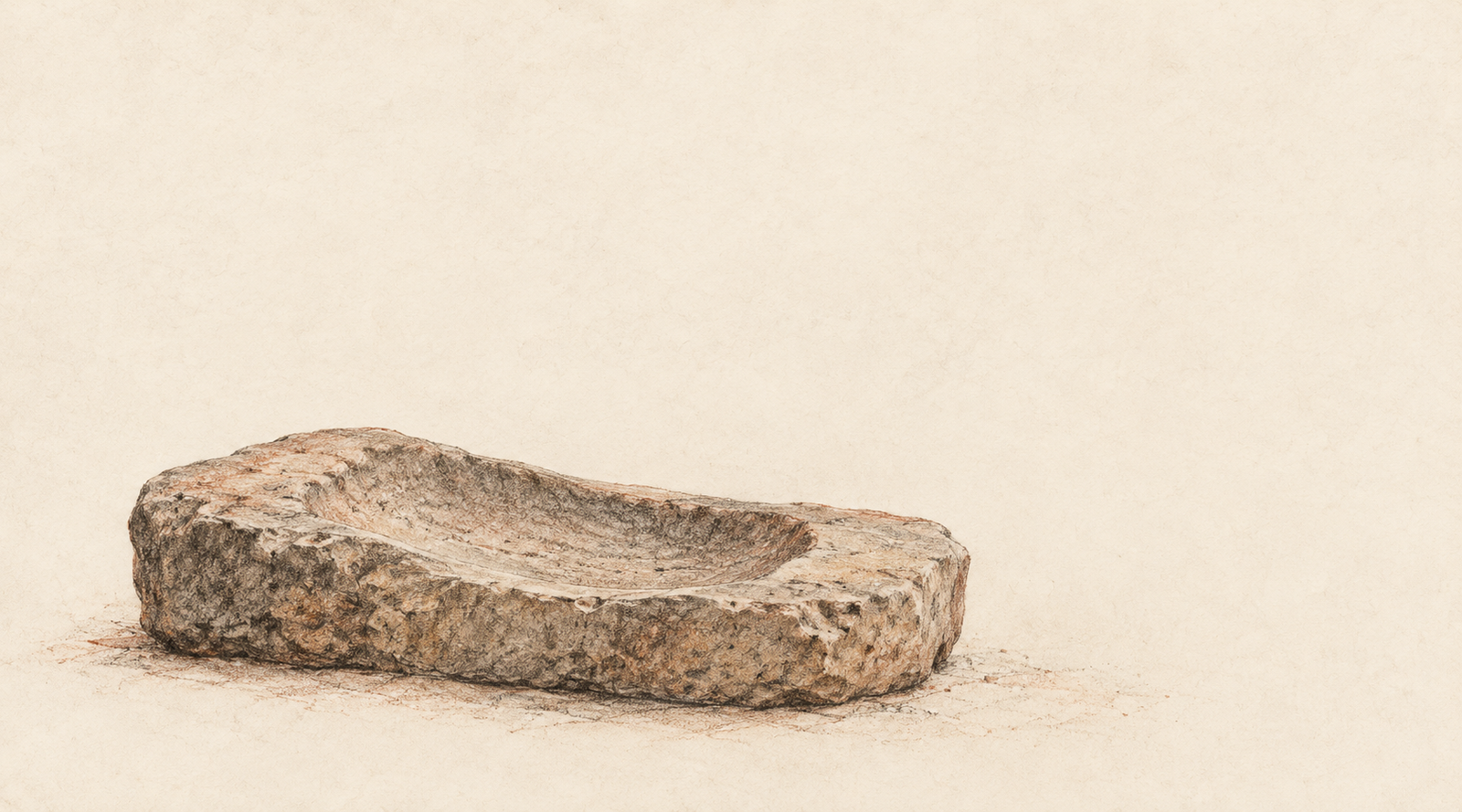
The temple we inherit is a building from which almost all necessity has been removed. Nothing must be brought for it to continue being what we call a temple. The sanctuary asks nothing of us. Stone is good at this kind of independence.
A living temple was otherwise.
Water had to come in. So did grain, cloth, oil, aromatic substances, fuel. The things required for worship arrived because someone carried them across a threshold.

Houses of Wood, Light, and Smoke
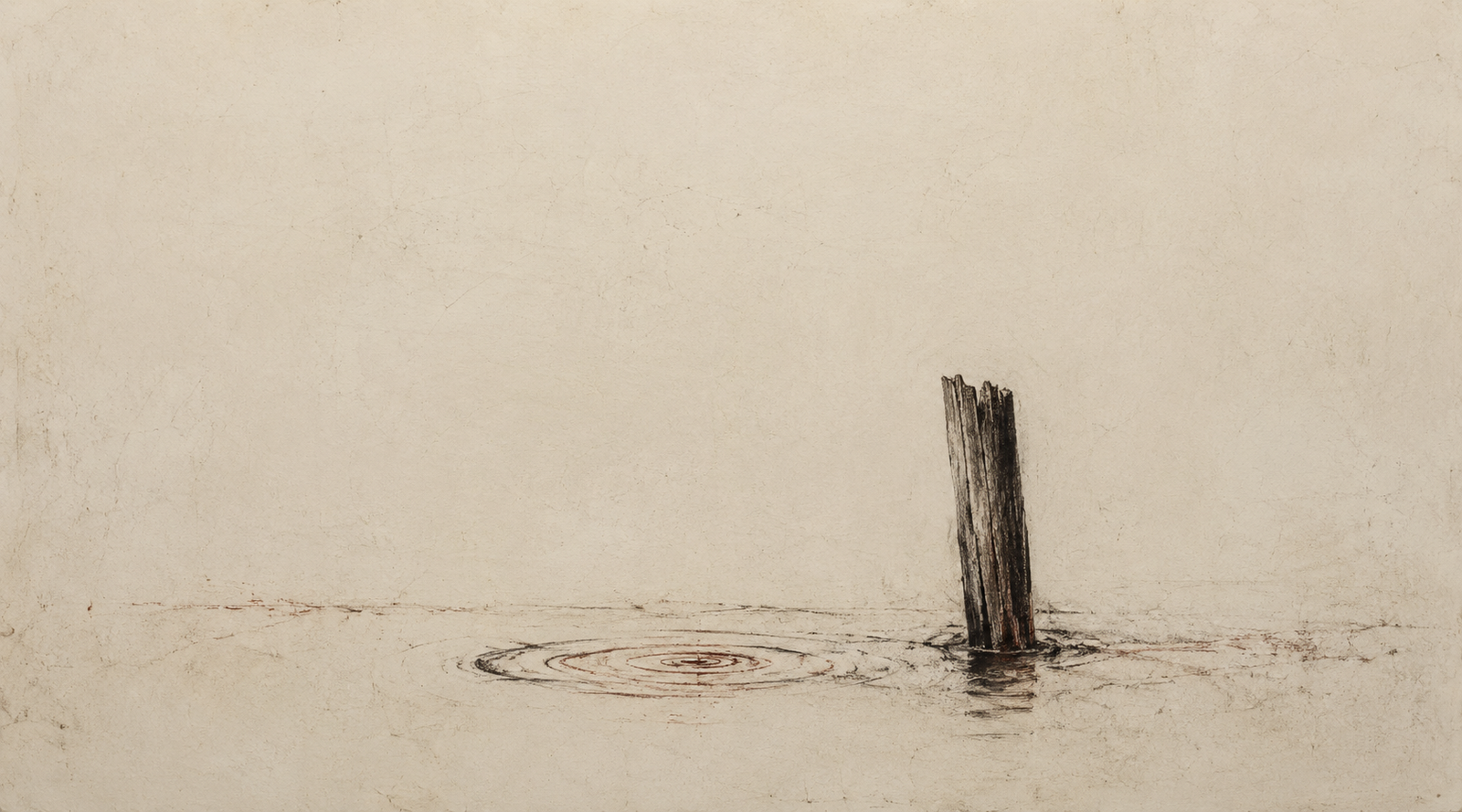
Some of Angkor’s most intimate ruins do not rise above the ground at all. They are postholes, low mounds, hearths and ponds: durable traces of a domestic city built largely from things that decay. To restore that city is to see Angkor not only as stone, but as wood, smoke, water, repair, and people living within calling distance.