

When Favour Is Mistaken for Right
On Bellerophon
This essay accompanies Bellerophon — The Bridle and the Fall, a House Tale from The Hospitable Dark.
—
What makes Bellerophon difficult is that he was not wrong to think he had been helped.
The help was real. That is the trouble. Pegasus was not an illusion. The bridle was not a trick. The Chimera was not a small danger later enlarged by song. Bellerophon received aid, rose by it, and did what no ordinary strength could have done.
The myth becomes dangerous after that.
It asks what happens when real favour is misread as permanent right.
This is why Bellerophon is a subtler figure than the usual moral of pride can hold. The old shorthand is easy: a man flew too high, tried to reach Olympus, and was cast down. But that version makes the tale smaller than it is. It treats the fall as if it were the whole meaning. It makes the story into a warning against ambition, as though Bellerophon’s first error were simply wanting too much.
The older pressure is more exact.
Bellerophon’s tragedy is not that he was never favoured by the gods. He was. Athena helps him. Pegasus bears him. The bridle works. The Chimera dies. The impossible task becomes possible. He is not a fraud exposed by the fall. He is a man whose greatness was real and whose interpretation of that greatness became false.
That is the more frightening thing.
False greatness is easier to understand. It collapses when tested. Bellerophon’s greatness does not collapse in that way. He is brave. He learns quickly. He faces the monster. He survives what was intended to kill him. He does not merely pretend to be lifted.
He is lifted.
The danger lies in what he lets that lifting mean.
Greek myth is full of mortals assisted by gods. The gods may sponsor, rescue, desire, punish, deceive, instruct, or use a human being without ever making that human being divine. Their attention is real, but it is not simple. A god’s favour may be blessing, trap, test, advantage, burden, or some mixture of all five. To be noticed by the divine world is not necessarily to be loved safely. It is certainly not to become equal to what has noticed you.
This is one of the great disciplines of myth: it preserves the distinction between contact and identity.
A mortal may touch the divine without becoming divine. A mortal may be carried upward without belonging above. A mortal may receive an instrument from the gods without becoming the source of its power.
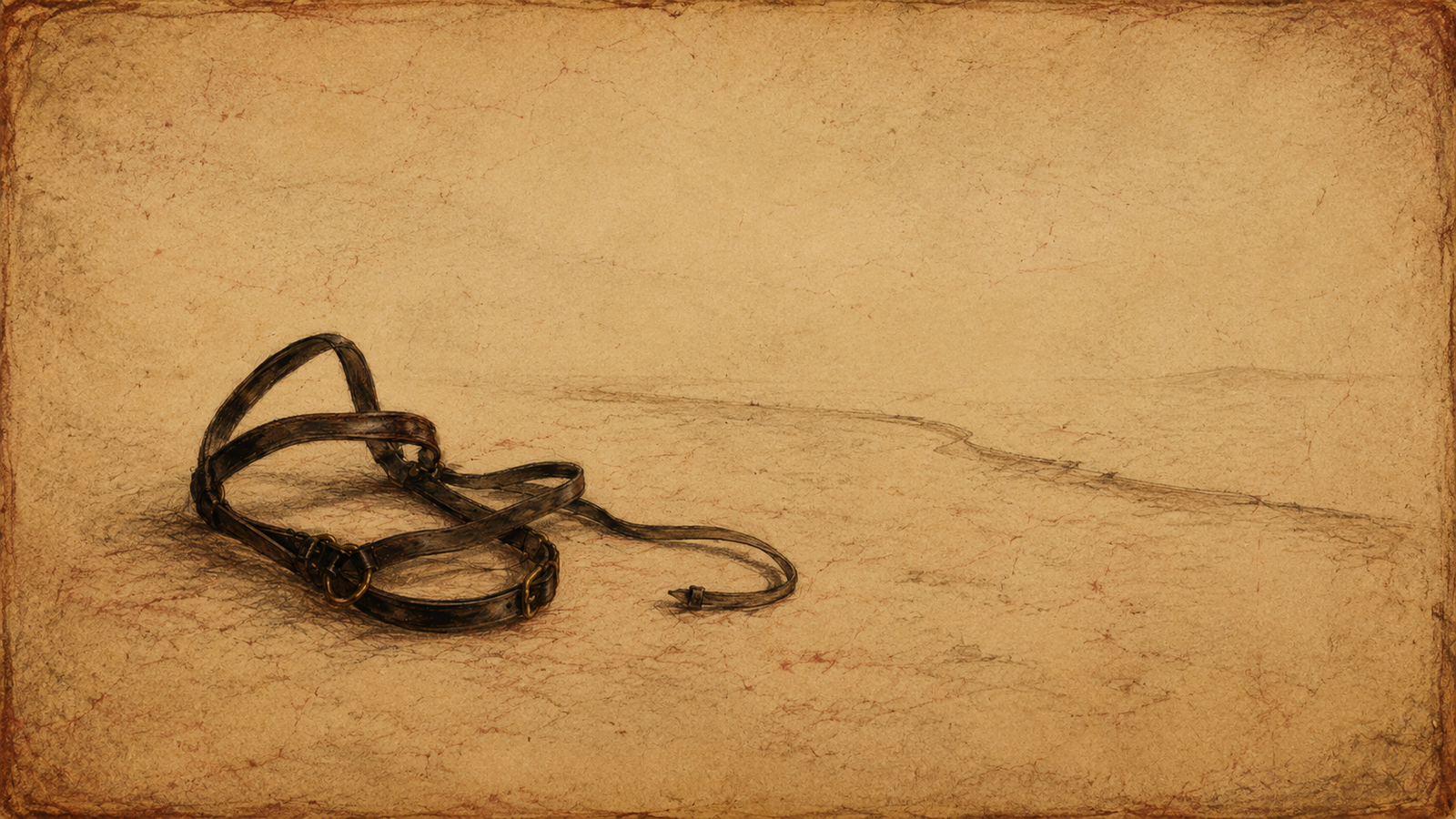
The bridle is therefore the perfect object in the Bellerophon myth.
At first glance, it looks like control. A bridle belongs to the human world of hand, leather, metal, training, pressure, and command. It is practical. It is made to be used. It sits in the palm. It answers to fingers. It gives the rider something to hold.
But in this story the bridle also exposes dependence.
Bellerophon does not make it. He receives it. The power it permits is not generated by him. It comes through him for a time, under conditions he does not set. The bridle allows him to ride, but it also reminds him that he could not have ridden by himself.
That is what he must remember.
Pegasus can be ridden, but not owned. The bridle allows relation, not possession. It lets a mortal enter an agreement with a creature beyond ordinary mastery. The moment Bellerophon forgets that distinction, the gift begins to change its meaning in his hands.
Favour is given.
Right is claimed.
That is the movement to watch.
When something is given, gratitude remains possible. The receiver remembers contingency. He knows that the gift arrived from beyond his own making. He may use it bravely. He may honour it. He may even become great through it. But he remains answerable to the fact that the gift was not self-originating.
Right behaves differently. Right hardens. It does not remember arrival. It defends itself as possession. Once favour has been mistaken for right, the soul begins rewriting its own history. What was received becomes proof. What was help becomes rank. What was contingent begins to feel inevitable.
The ascent toward Olympus is only the visible consequence of a mistake already made.
Olympus, in Greek imagination, is not merely a high place. It is the dwelling of the gods. To approach it physically is not the same as being admitted to it. A mountain can be climbed; divine company cannot be seized by altitude. Bellerophon’s error is to treat height as if it were access.
Height can be achieved.
Admission must be granted.
A man may rise because a horse bears him. He may rise because a goddess has helped him. He may rise because courage, skill, luck, and favour have met in one astonishing career. But none of that abolishes the boundary between mortal and god. It may even make the boundary more dangerous, because success has brought him close enough to misread proximity as belonging.
The myth does not say that rising is evil. It does not say that victory is false. It does not say that greatness must be punished simply because it is greatness.
Bellerophon should fight the Chimera. He should receive help. He should ride Pegasus. He should do the impossible thing appointed to him, because the impossible thing has become his path through danger. The tale does not despise his height.
It asks whether he can remember what height is.
This is where Bellerophon differs from Icarus.
Icarus is a child of warning and delight. His flight is brief, beautiful, disobedient, and doomed almost as soon as it begins. His error belongs to youth: the intoxication of a new capacity before the discipline to govern it has arrived.
Bellerophon is not that.
Bellerophon’s tragedy is slower. It belongs to success after success, to honour accumulated, to the soul’s gradual revision of its own dependence. He is not merely carried away by first flight. He becomes accustomed to being above. He learns to feel the ground as a diminishment.
The question, then, is not whether he should have refused the height. It is how a man remains truthful after being lifted.
What would right reception have required?
Not smallness. Not refusal of the gift. Not pretending that Pegasus had not carried him or that the Chimera had not fallen beneath him. Gratitude, in a myth like this, is not self-belittlement after glory. It is the discipline of remembering origin after power has become familiar. It is the difficult art of using what has been given without rewriting the gift as proof that it was always owed.
Gratitude is truthfulness kept alive inside success.
That is why his loneliness matters.
The myth does not end most truthfully at the moment of falling. Falls are dramatic, and drama often tempts us to think we have reached the meaning. But Bellerophon’s deeper punishment is not simply being cast down from the sky. It is being unable to inhabit the earth afterward.
Some ancient tellings remember him as wandering alone, hated by the gods, avoiding the paths of men. That image is severe because it refuses spectacle. The man who rode Pegasus does not simply return to ordinary life chastened and wiser. He becomes estranged from the human scale he once exceeded. The ground remains, but he no longer knows how to belong to it.
To wander after height is not only to be punished.
It is to live among things that continue to be themselves. Roads remain roads. Fields remain fields. Horses graze behind low walls. Other men lift cups, mend harness, cross thresholds, and sleep beneath roofs without feeling that the roof has insulted them. The ordinary world goes on offering its old measures, and Bellerophon can no longer receive them without comparison.
That is the hidden cost of mistaking favour for right.
A man who has treated help as proof may lose the ability to receive anything simply. He cannot go back to the first gratitude without also remembering the later claim. He cannot see height innocently. He cannot see the ground without shame. Even mercy, if it came, would have to pass through the wound of having been wrong about himself.
That is why Bellerophon is not only a myth about pride. It is a myth about memory.
He must remember the bridle as gift. He must remember Pegasus as other. He must remember the Chimera as danger, not as theatre for his greatness. He must remember that being helped does not mean being owed, and that being lifted does not mean being admitted.
When memory fails, favour curdles into entitlement.
The pattern remains recognisable because human beings still do this. We turn what arrived through gift, help, timing, protection, or mercy into a story about what we must always have deserved. We call it identity. We call it destiny. We call it simply who we are.
The old stories are suspicious of every self-description that forgets what was given.
Bellerophon’s mistake is not that he honours the gift too much. It is that he stops honouring it as gift. The bridle remains in his hand, but its meaning has changed. It no longer tells him, You were helped. It tells him, You belong above.
The same object becomes dangerous because the receiver has altered the story it is allowed to tell.
That is why the smallness of the bridle matters more than the splendour of the horse.
Pegasus carries the wonder.
The bridle carries the law.
It says that divine favour may enter the human hand, but the hand must remain human. It says that control is not ownership, and use is not possession. It says that the thing by which one rises can also become the thing through which one forgets how rising was made possible.
The tragedy of Bellerophon is not that he flew.
The tragedy is that, having been lifted, he forgot how to receive height as a gift.
A man who mistakes favour for right does not merely risk a fall. He risks losing the ground as well.
That is why the old stories leave him wandering.
Pegasus was not false.
The bridle was not false.
Only the claim was false.
—
For paid subscribers, I have added a Workroom note on the making of this essay: why pride was too small a word, how the bridle became a law of interpretation, and how the piece finally found truthfulness after height.
—
Receive the next work
Subscribe free to receive new work from the The Hospitable Dark Library by email.
More from the Library

See Also
A concise and impartial dictionary of absence, promises, quarrels, ordinary objects, and the troublesome instability of words.

The City of Service
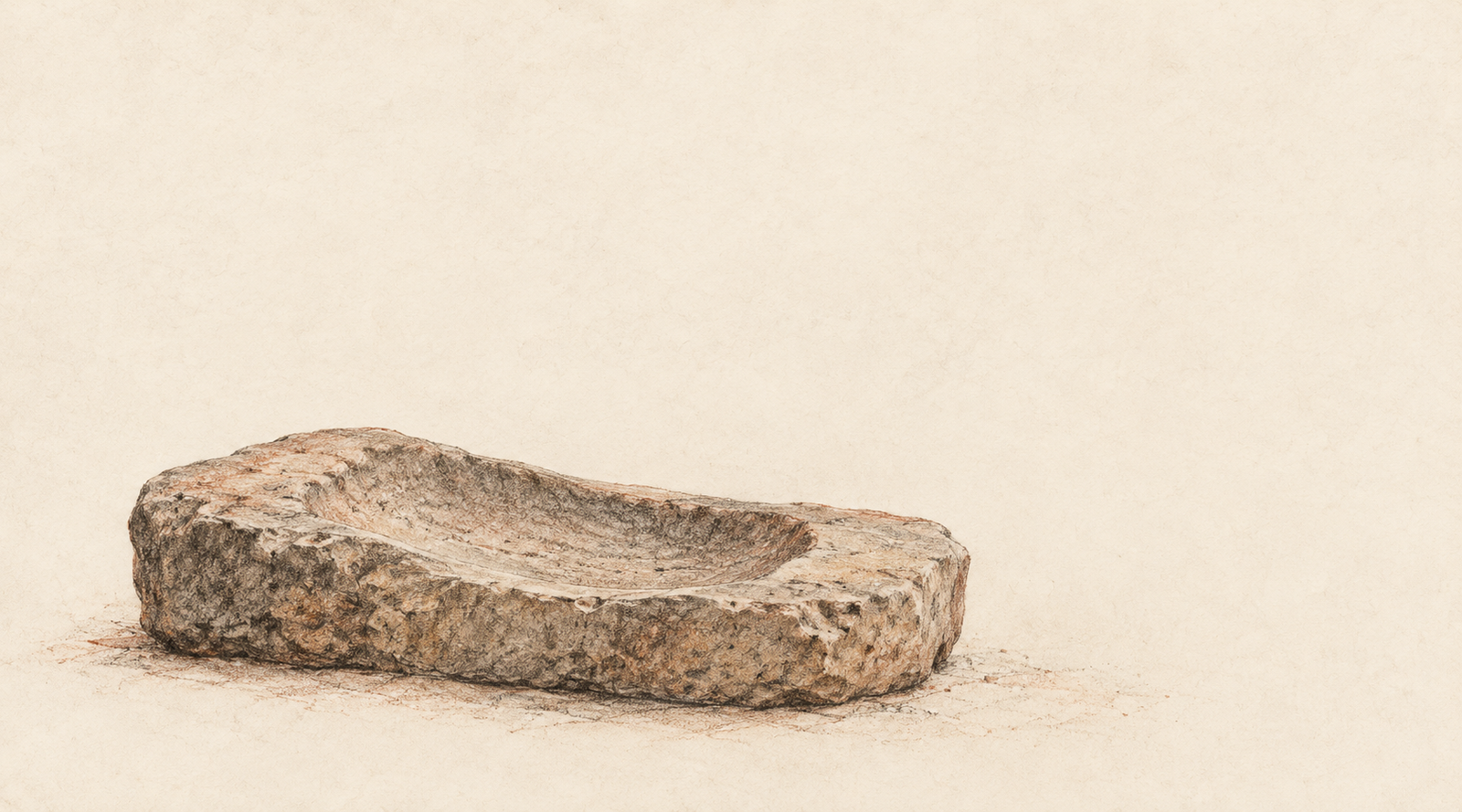
The temple we inherit is a building from which almost all necessity has been removed. Nothing must be brought for it to continue being what we call a temple. The sanctuary asks nothing of us. Stone is good at this kind of independence.
A living temple was otherwise.
Water had to come in. So did grain, cloth, oil, aromatic substances, fuel. The things required for worship arrived because someone carried them across a threshold.

Houses of Wood, Light, and Smoke
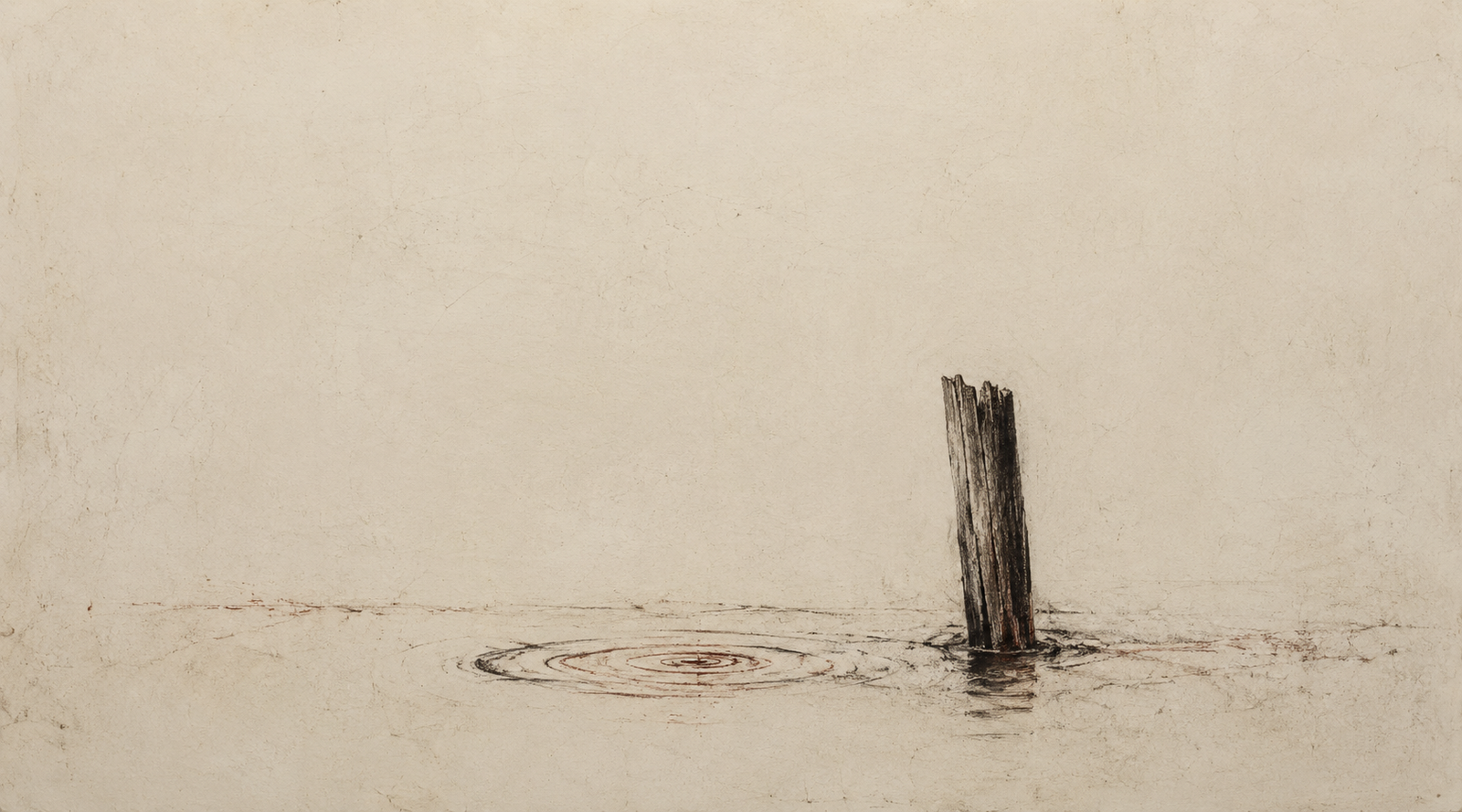
Some of Angkor’s most intimate ruins do not rise above the ground at all. They are postholes, low mounds, hearths and ponds: durable traces of a domestic city built largely from things that decay. To restore that city is to see Angkor not only as stone, but as wood, smoke, water, repair, and people living within calling distance.