

The File
A person becomes easier to process once they become a file.
The file begins with a name, but it does not keep the person whole.
It keeps the spelling. It keeps the date of birth. It keeps the address, if the address has not changed too many times, or if the person still has one, or if the form has provided enough space for the truth to fit inside the box.
It keeps the reference number.
That number is useful. It allows the person to be found without being met. It allows one office to speak to another office as if the life itself had been transferred. It allows a decision to move across rooms, systems, departments, inboxes, appeal windows, and review panels without the body having to appear.
The person has already appeared.
They appeared as data.
This is the first mercy the institution offers. It will not require the full burden of your presence. It will accept your file instead.
At first, this seems reasonable. No system can encounter every life in its fullness. No office can hold the whole human weather of every applicant, patient, claimant, worker, tenant, refugee, client, parent, child. A file is necessary. It gathers what would otherwise scatter. It preserves facts. It allows memory to survive turnover. It gives continuity to the process.
But every tool carries a temptation.
The temptation of the file is that it begins as a servant and becomes a substitute.
The file does not merely record reality. It teaches reality how to present itself. It tells the person which parts of suffering are legible, which dates matter, which losses count, which forms of need require proof, which sentences may be believed, which silences will be treated as absence.
A person may be hungry. The file asks for evidence.
A person may be afraid. The file asks whether the correct box has been ticked.
A person may be ill, exhausted, bereaved, unable to speak cleanly about what has happened. The file asks for supporting documentation.
This is not always cruelty. That is what makes it durable.
No one needs to hate the person. No one needs to sneer. No one needs to enjoy the reduction. The room can remain calm. The email can remain polite. The officer can be kind in tone and still require distress to arrive in acceptable form.
The injury happens elsewhere.
It happens in the gap between the person and the record.
Once there is a file, the institution can say it has considered the case.
That phrase matters.
It does not say the institution has encountered the person. It does not say the life was understood. It says the case was considered.
A case can be considered at distance.
A case can be summarised. Transferred. Closed. Reopened. Reviewed. Escalated. Deferred. Rejected. Archived.
A case can wait without anyone feeling that a person is waiting.
A case can be incomplete without anyone hearing the silence in the house where the missing document cannot be found.
The file makes the person portable.
It allows the life to travel without its weight.
This is the genius of distance. It does not deny that someone exists. It converts existence into something manageable. It gives the system a way of touching the person without being touched in return.
There is a kitchen table somewhere beneath almost every file.
On it there are letters, passwords, printed forms, screenshots, scanned documents, medical notes, payslips, tenancy agreements, bank statements, certificates, appointment reminders, evidence of address, evidence of absence, evidence of dependence, evidence of need.
Someone sits there trying to make a life coherent enough to be received.
They rename attachments. They check the size of files. They apologise for sending an extra email. They explain that the previous document was incorrect, or incomplete, or impossible to obtain. They write in a tone that has already surrendered something.
Please find attached.
I apologise for the delay.
I hope this is sufficient.
They do not write: I am frightened.
They do not write: I have no more language for this.
They do not write: I am becoming smaller each time I explain myself to someone who cannot see me.
Instead they produce evidence.
This is one of the quiet disciplines of administrative life: learning how to suffer in the correct format.
The file rewards those who can narrate themselves according to its grammar. It favours the orderly, the literate, the resourced, the calm, the advised, the already-legible. It punishes confusion, panic, shame, exhaustion, distrust, poor memory, interrupted schooling, unstable housing, grief, and all the other conditions under which people most need mercy.
The institution may insist that the rules are the same for everyone.
But sameness is not always fairness.
A threshold of proof does not fall equally upon every body. A requirement that seems neutral in the policy becomes unequal at the kitchen table. One person has a printer, a scanner, an advocate, a quiet room, a working phone, a careful memory, a folder of documents. Another has none of these, and is asked to prove their life with the very instruments their life has taken from them.
The file does not see this unless someone teaches it to see.
Left to itself, it sees only absence.
Missing document.
Insufficient evidence.
No response received.
Application incomplete.
The most dangerous sentences in a system are often the cleanest. They do not sound like judgement. They sound like maintenance. They tidy the moral scene. They make rejection appear as a consequence of order, not as an act performed upon a person.
This is how responsibility thins.
The decision is not cruel; the file is incomplete.
The person was not ignored; the process was followed.
The life was not disbelieved; the evidence threshold was not met.
Each sentence moves the human fact one step farther away. By the time harm arrives, it has passed through so many proper phrases that no single hand appears to have delivered it.
This is the administration of reality.
It is not only that the world is managed by forms. It is that, under certain conditions, the form begins to decide what the world is allowed to be. Pain must become evidence. Need must become eligibility. Fear must become risk. Desperation must become correspondence. A person must become a file before the room will admit that anything has happened.
And still, the answer cannot be to pretend that files are unnecessary.
That would be sentimentality.
Systems need memory. Decisions need records. Public life cannot be run by impulse, charm, proximity, or whoever cries most convincingly in the room. The file exists because institutions must make durable decisions across time.
The question is not whether there should be files.
The question is whether the file is allowed to become the person.
There must be a counter-word.
Not empathy, if empathy remains a feeling without discipline. Not compassion, if compassion becomes the decorative language of the same process. Not service-user-centred, not trauma-informed, not holistic, if these phrases are only placed on top of the machinery like flowers on a locked gate.
The counter-word is witness.
Witness is not softness. It is not indulgence. It is not the abandonment of standards.
Witness is the refusal to let the record exhaust the reality.
It is the disciplined act of remembering that every file is a remainder, not a whole.
A file may contain the name.
It may contain the dates.
It may contain the evidence.
It may contain the decision.
But somewhere outside its borders there remains a body at a table, assembling proof under bad light, trying to persuade a distant room that life has weight before it has been properly formatted.
The work begins there.
Not with the file.
With the person it could not hold.
—
Receive the next work
Subscribe free to receive new work from the Mytharium Library by email.
More from the Library

See Also
A concise and impartial dictionary of absence, promises, quarrels, ordinary objects, and the troublesome instability of words.

The City of Service
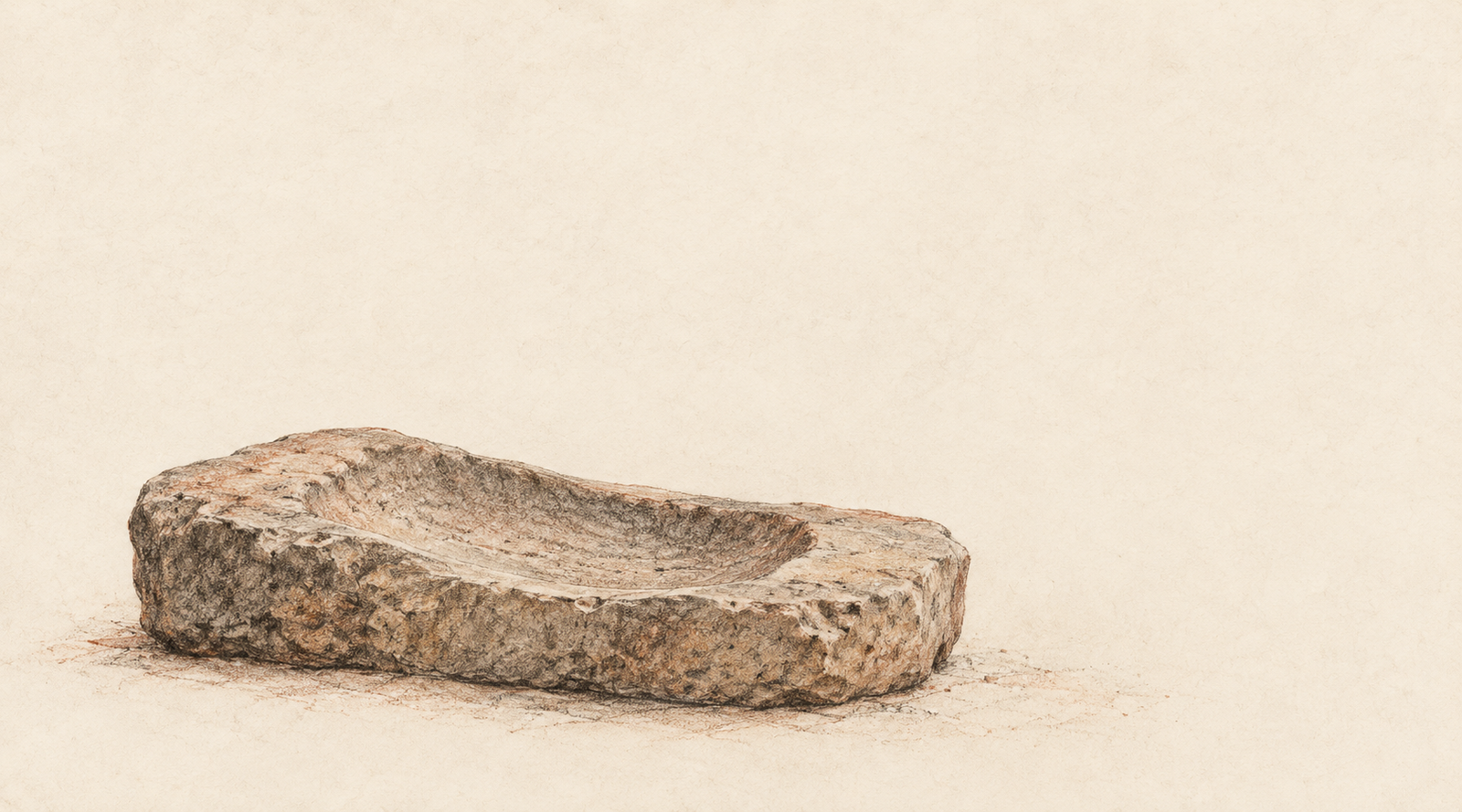
The temple we inherit is a building from which almost all necessity has been removed. Nothing must be brought for it to continue being what we call a temple. The sanctuary asks nothing of us. Stone is good at this kind of independence.
A living temple was otherwise.
Water had to come in. So did grain, cloth, oil, aromatic substances, fuel. The things required for worship arrived because someone carried them across a threshold.

Houses of Wood, Light, and Smoke
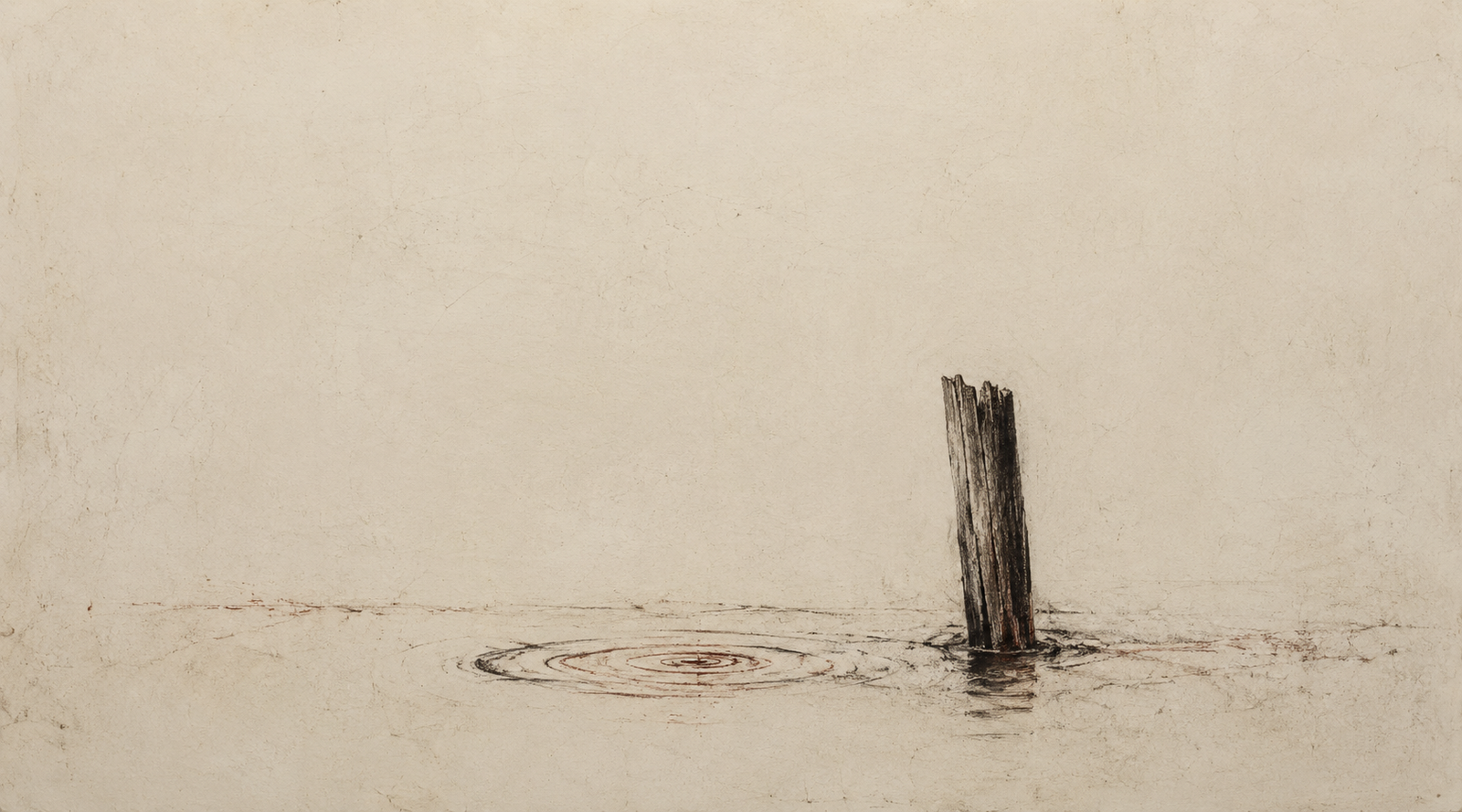
Some of Angkor’s most intimate ruins do not rise above the ground at all. They are postholes, low mounds, hearths and ponds: durable traces of a domestic city built largely from things that decay. To restore that city is to see Angkor not only as stone, but as wood, smoke, water, repair, and people living within calling distance.