
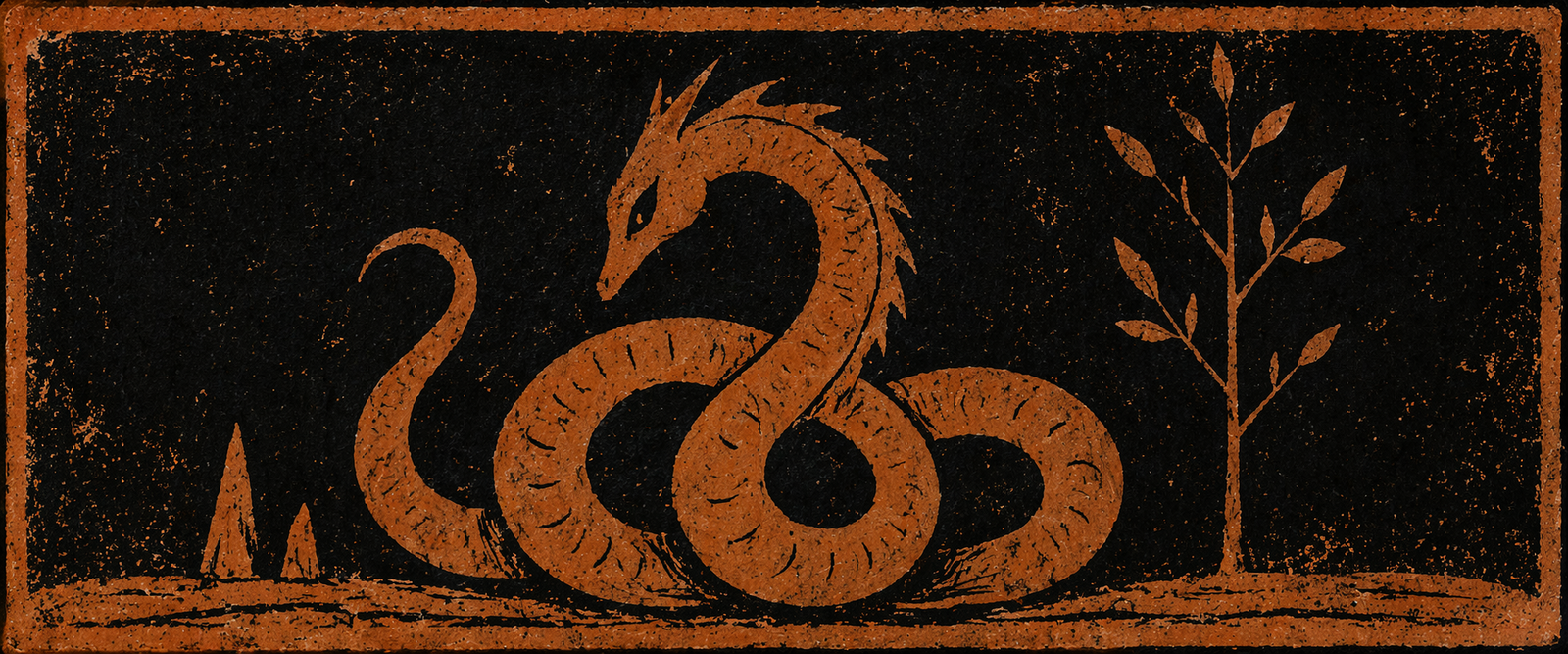

Cadmus and the Cost of Founding
On dragon’s teeth, letters, and the violence within beginnings.
Cadmus is one of the right names for a house such as this because he stands where civilisation, violence, inheritance, and recurrence become impossible to separate cleanly.
He is remembered as founder of Thebes, as the bringer of letters to Greece, as dragon-slayer, as sower of teeth. Any one of these would be enough to sustain an afterlife by itself. Together they produce something stranger: a figure whose acts of beginning cannot be parted from blood, substitution, and future curse.
This is why Cadmus matters as more than emblem.
Founding is often imagined, in later imagination, as something firm, constructive, even admirable in an uncomplicated way. A city is built. Order is established. Culture begins. Cadmus unsettles that fantasy. His story implies that founding is never innocent when it takes place on charged ground. One does not simply build. One enters prior force, kills within it, bargains within it, and plants into earth materials that carry violence forward in altered form.
The most famous image is exact enough to become law: the dragon’s teeth sown into the ground, the armed men rising, the immediate turn to mutual slaughter, the surviving remnant becoming the beginning of civic order. Nothing could state the problem of foundation more clearly. The city does not emerge after violence as its remedy. It emerges through violence as its formal continuation. The ground has been made productive, but what it produces first is armed recurrence.
That image reaches far beyond Thebes.
It suggests that origin is not past in any simple sense. What is planted at the beginning enters the structure. The act does not vanish once walls stand. It becomes transmissible. A house inherits the pressure of its own founding conditions. Later griefs, curses, divisions, and catastrophes do not merely happen to such a line from outside. They unfold from materials already present.
Cadmus therefore belongs naturally at the head of this publication’s live formation. If the House of Cadmus is to grow in public before its later large serial motions begin, then Cadmus must name more than ancestry. He must name the pressure under which the House is built. These stories are not treated here as ornament, nor as neutral entertainment, but as charged inheritances. To enter them seriously is already to accept that beginnings leave residue, and that old narratives do not merely contain consequence: they transmit it.
Cadmus is also a figure of mediation. He brings letters. That matters, and not only because writing itself belongs to the work done here. Letters are often treated as instruments of preservation, order, and continuity. In Cadmus they arrive within a story already marked by displacement, search, killing, commanded labour, and unstable aftermath. Writing, too, enters history under pressure. It does not stand outside violence as a clean corrective. It records, founds, transmits, hardens, and survives. It may preserve glory, but it also preserves injury.
So Cadmus stands at a difficult crossing: between wandering and settlement, beast and city, oral memory and letter, act and recurrence. He is not reducible to one moral. He is not simply heroic founder, nor merely doomed ancestor. He is a figure through whom myth asks what it costs to begin anything that hopes to endure.
That question remains larger than antiquity.
Every house, literal or literary, chooses its ground badly if it believes ground can ever be clean. Every institution prefers to imagine its origin as necessity without stain. Myth rarely grants that comfort. It remembers the wound beneath the wall. It remembers the dead beneath the charter. It remembers that order may be purchased by transformed violence rather than by its disappearance.
For that reason Cadmus is not only a subject within the House. He is one of its governing intelligences.
To invoke his name is to remember that founding is never only creative. It is selective, charged, and costly. It begins by excluding, cutting, planting, binding, naming. It creates future coherence, but not without remainder. What is sown rises. What rises fights. What survives builds.
And what is built remembers.
—
Further into the House
-
The House of Cadmus — Entering the Chamber
A first orientation to the House: what kind of place this is, and what it asks of the reader. -
What These Tales Share
A brief constitutional note on the deeper conditions, pressures, and recurrences that bind these stories together. -
The Cadmean Line — Curse, Inheritance, Recurrence
On the pattern that unfolds from Cadmus into the house of Thebes: not isolated disaster, but inherited pressure. -
The Graeae — The Sharing of Sight
A threshold tale of shared insufficiency, circulation, and use without possession.
—
Receive the next work
Subscribe free to receive new work from the House of Cadmus Library by email.
More from the Library

See Also
A concise and impartial dictionary of absence, promises, quarrels, ordinary objects, and the troublesome instability of words.

The City of Service
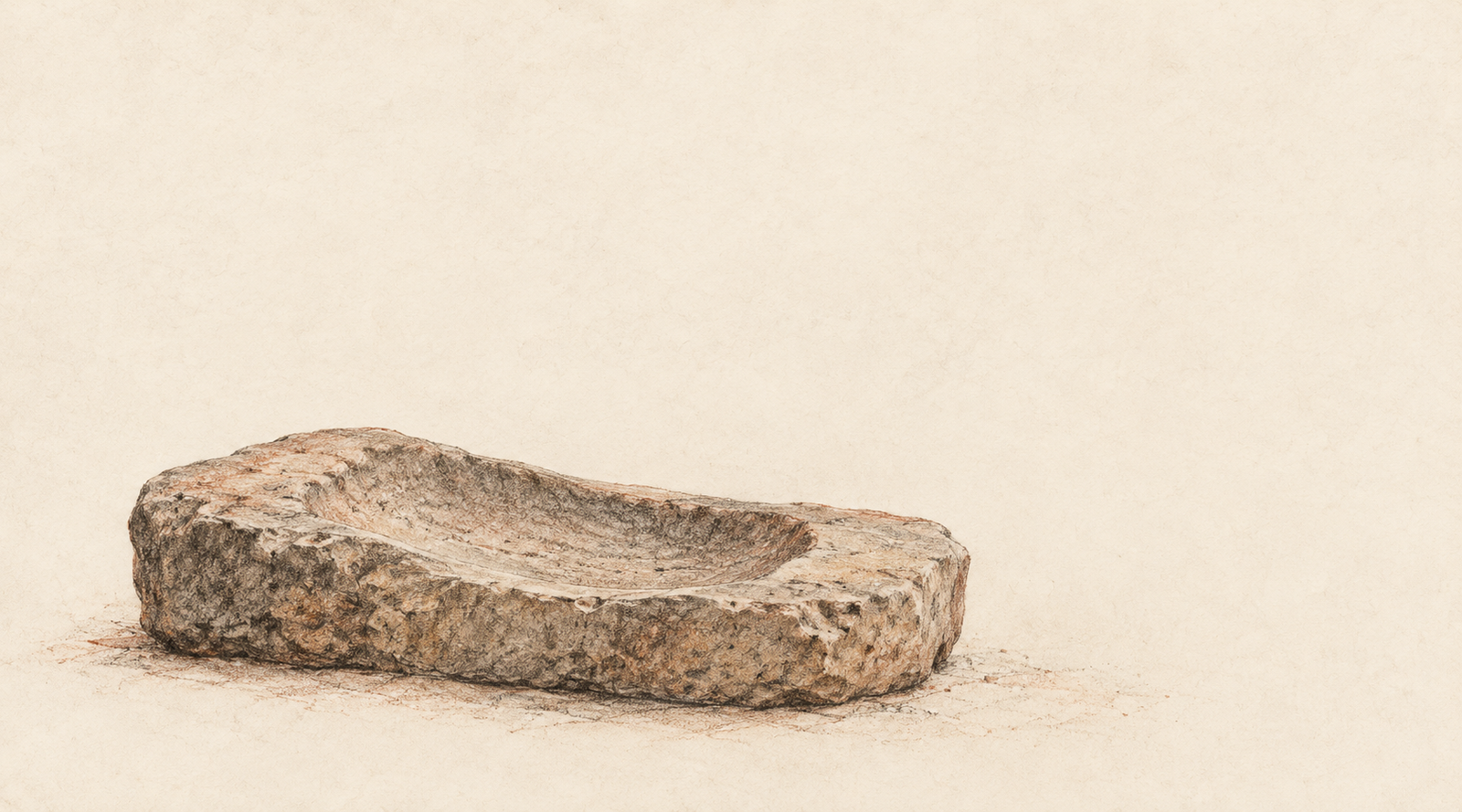
The temple we inherit is a building from which almost all necessity has been removed. Nothing must be brought for it to continue being what we call a temple. The sanctuary asks nothing of us. Stone is good at this kind of independence.
A living temple was otherwise.
Water had to come in. So did grain, cloth, oil, aromatic substances, fuel. The things required for worship arrived because someone carried them across a threshold.

Houses of Wood, Light, and Smoke
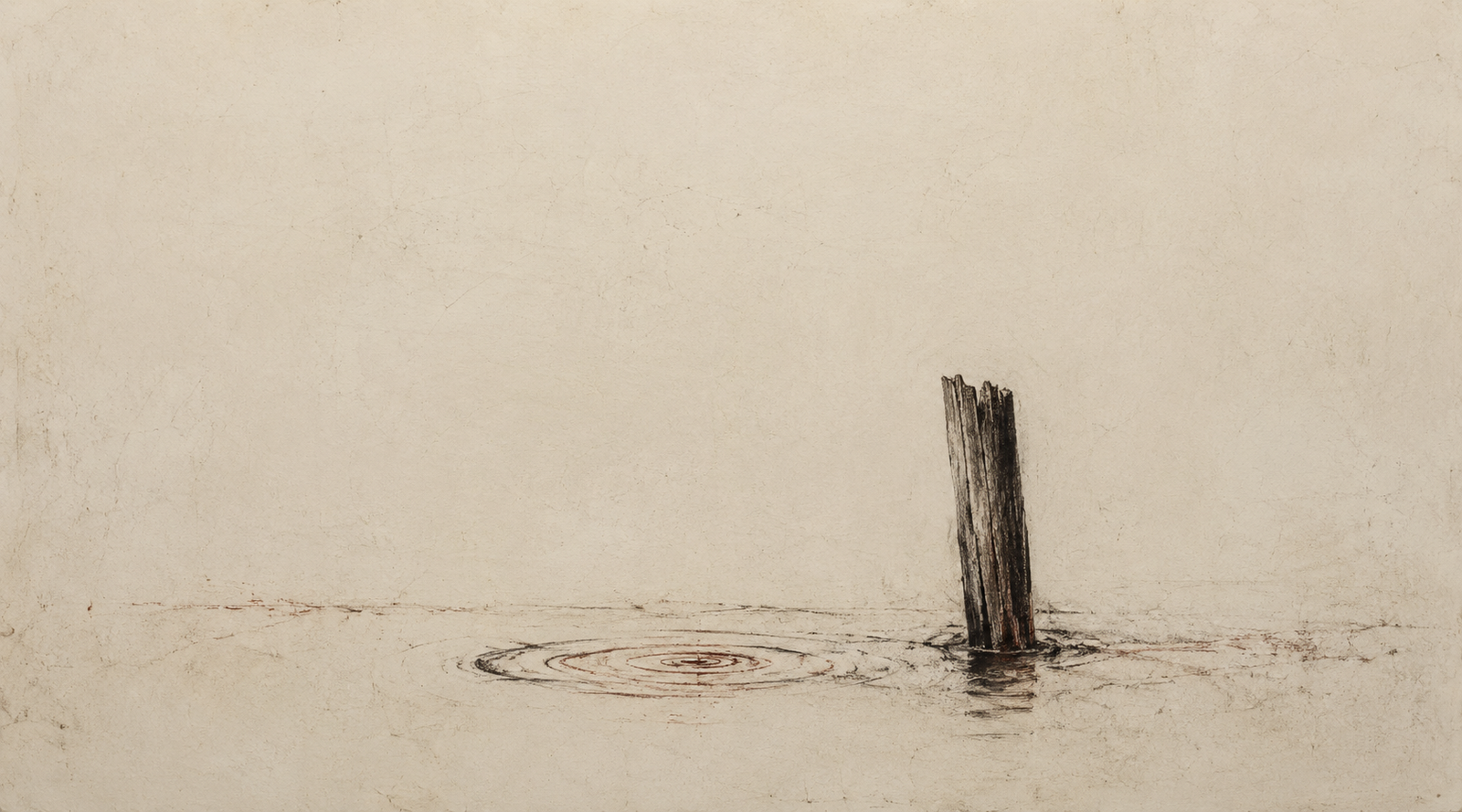
Some of Angkor’s most intimate ruins do not rise above the ground at all. They are postholes, low mounds, hearths and ponds: durable traces of a domestic city built largely from things that decay. To restore that city is to see Angkor not only as stone, but as wood, smoke, water, repair, and people living within calling distance.