
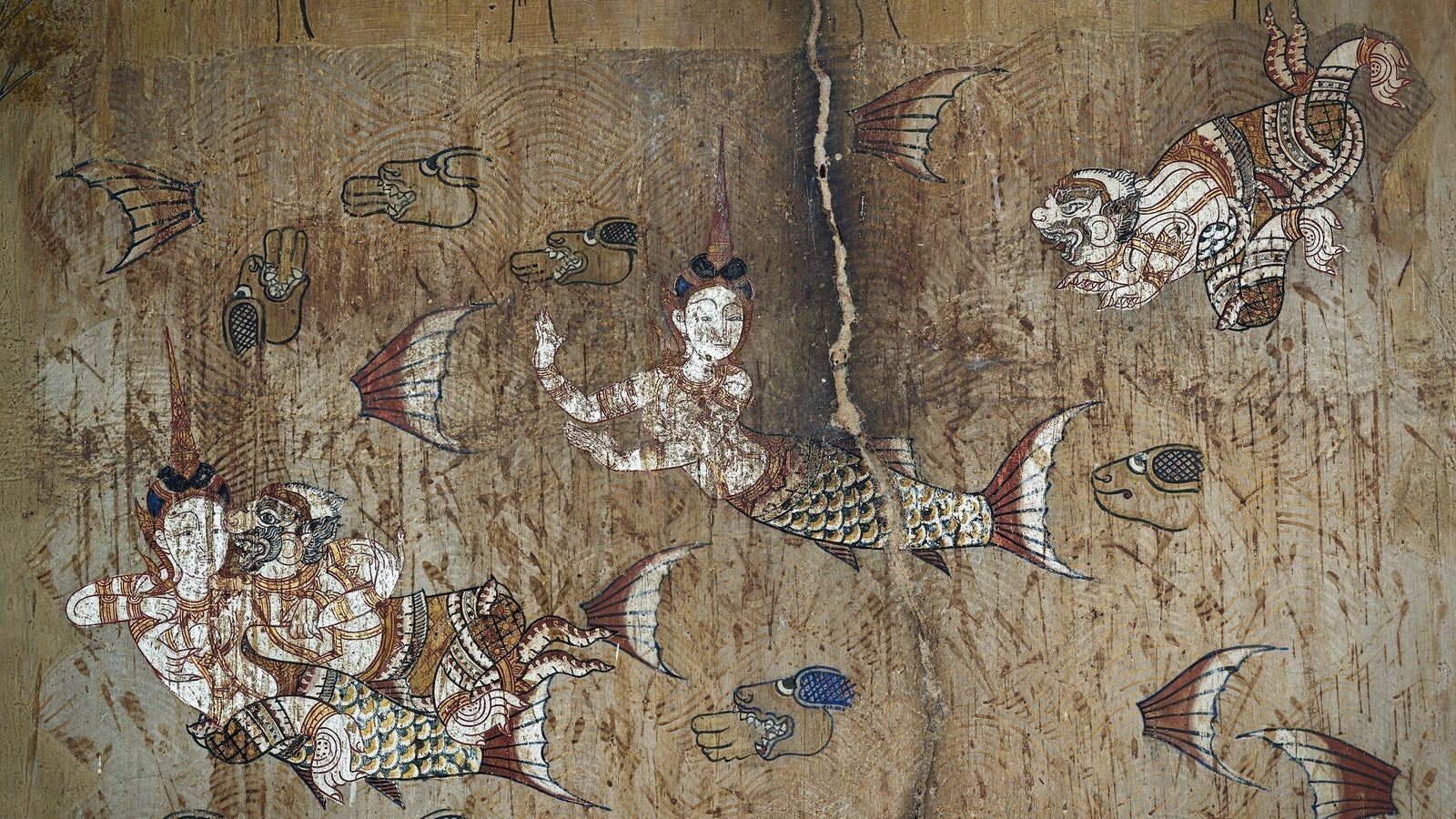

Hanuman and Sovann Maccha: Listening Beneath the Sea
There are moments when the Ramayana, as it is remembered in Cambodia, pauses its long march of vows and battles and turns, briefly, toward the sea. Not as spectacle, and not as diversion, but as a testing ground where intention must learn another language. The episode known as Hanuman courting Sovann Maccha belongs to this quieter register. It is a story that unfolds beneath the surface, where force loses its usefulness and something more attentive is required.
Wat Bo Pagoda stands well away from Angkor’s sandstone axes and royal enclosures, yet its old vihara holds a continuity of imagination that never truly left. The painted walls do not attempt to rival the stone reliefs of the twelfth century. They do something else. They receive the epic after its fall from empire and allow it to settle into moral life. Here, the Reamker is not a monument to conquest, but a patient unfolding of consequence.
In one panel, the sea interrupts the work of war. Stones thrown with certainty vanish overnight. Progress dissolves. The causeway cannot form. Hanuman enters the water not as a conqueror, but as a listener. What he encounters is not a demon host, but Sovann Maccha, a being of divided allegiance, born of Ravana’s command yet native to another element entirely. She is neither enemy nor ally in any simple sense. She is a presence shaped by duty and by tide.
The painting does not dramatise their meeting. There is no violence, no heroic contortion. Instead, bodies incline. Gestures soften. Attention replaces force. Hanuman’s strength, so effective on land, finds no purchase here. The sea teaches him restraint. What changes the course of the epic is not victory, but recognition.
This is the point at which the Khmer imagination diverges most clearly from its Sanskrit inheritance. In the Reamker, Rama is read as a bodhisattva, and the epic bends toward ethical interiority rather than triumph. Hanuman’s encounter with Sovann Maccha becomes a test not of power, but of moral tact. He does not overcome her resistance; he allows it to speak. The causeway is completed only when opposition is no longer treated as obstruction, but as relationship.
Later tellings will dwell on their union, on the strange child born of sea and wind, on transformations that follow. Wat Bo’s mural does not. It holds to the moment before resolution, when the sea still hesitates and the stones wait to be returned. In that suspension, something essential is revealed. Dharma here is not asserted. It is negotiated, quietly, through attention and care.
Standing before the wall, one feels how this story belonged to a Buddhist Cambodia learning to live without empire. The great battles are remembered, but it is this underwater pause that carries the weight of instruction. Victory that ignores the world’s textures cannot hold. Progress that does not listen will be undone. Only what learns to move with other lives can endure.

Figure 1. Hanuman Courting Sovann Maccha, Wat Bo Pagoda, Cambodia. 2023
—
Receive the next work
Subscribe free to receive new work from the Lucas Varro Library by email.
More from the Library

Houses of Wood, Light, and Smoke
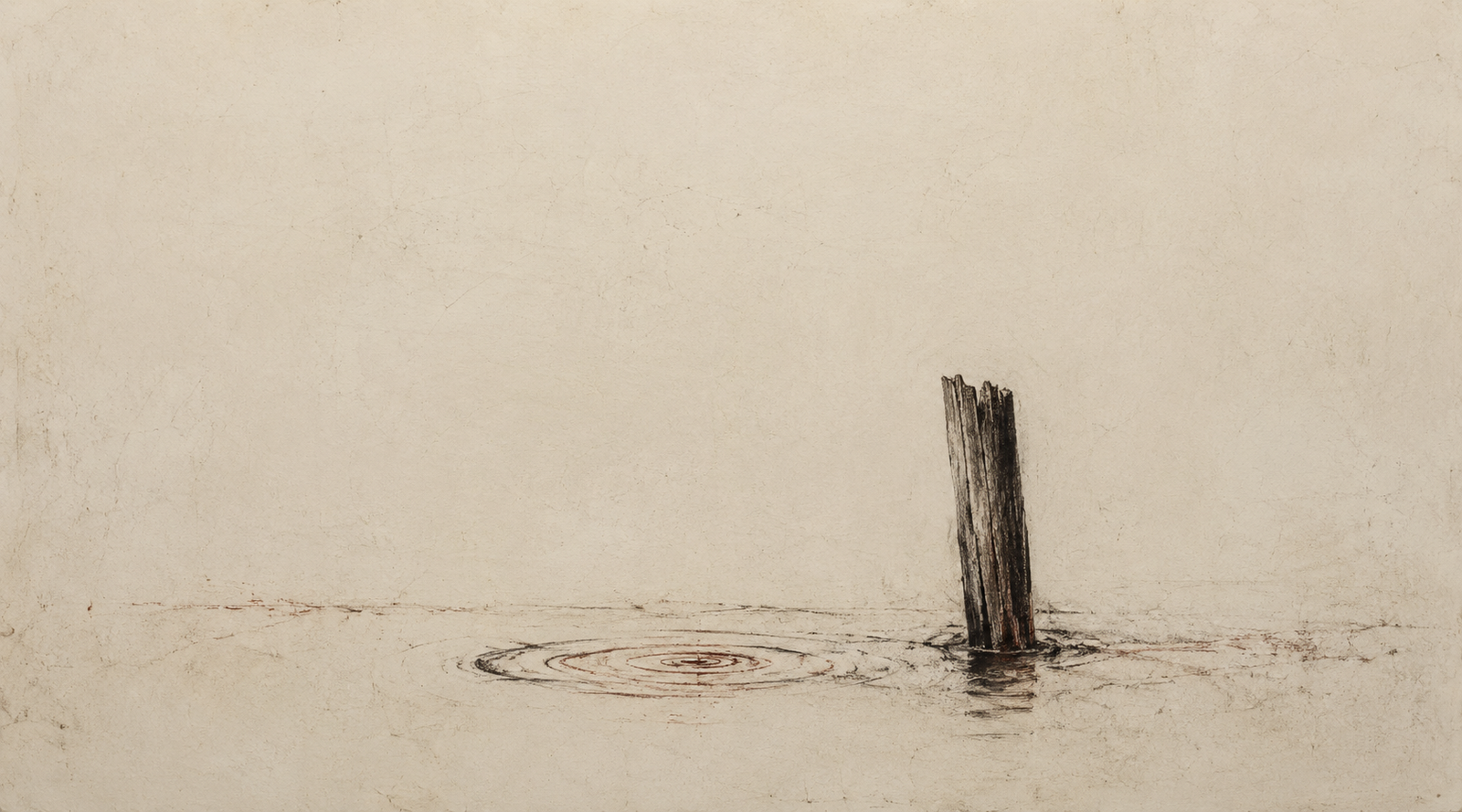
Some of Angkor’s most intimate ruins do not rise above the ground at all. They are postholes, low mounds, hearths and ponds: durable traces of a domestic city built largely from things that decay. To restore that city is to see Angkor not only as stone, but as wood, smoke, water, repair, and people living within calling distance.

What Stone Brings Forth
I had mistaken a gift for something being expelled.
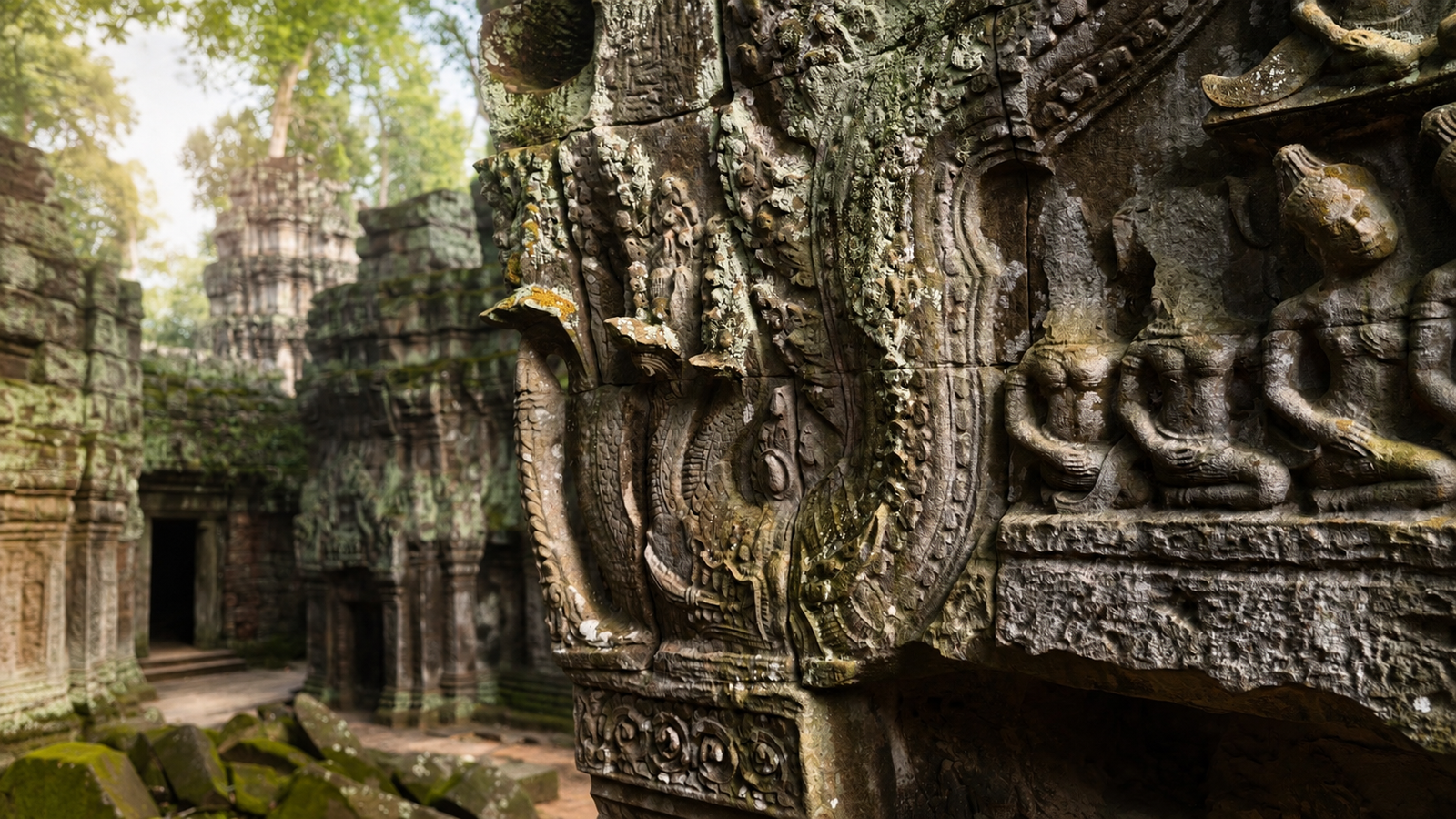
Beneath the nāga's mouth, a stone garland descended bead by bead. Nearby, a makara opened its jaws and another form emerged. Looking closer, the whole temple began to change: serpent became ornament, ornament became architecture, architecture became foliage.
The forest did not introduce this language.
It answered it.

The Eighth Daughter
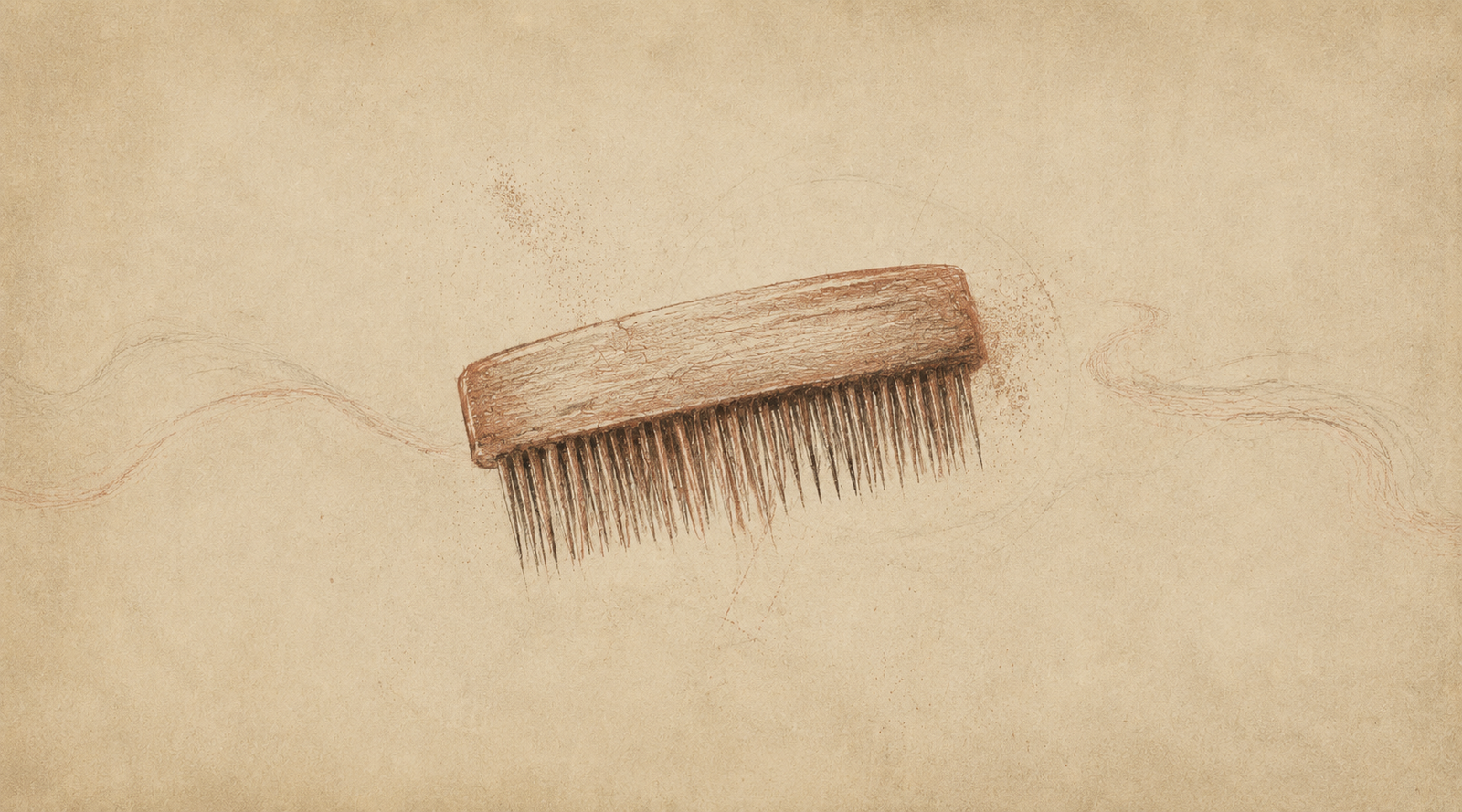
Seven daughters have already been taken by Yamata-no-Orochi when Susanoo reaches the River Hi. Only Kushinada-hime remains. The Eighth Daughter retells the Kojiki episode through a family’s waiting, a girl transformed into a comb, and the patient preparation for the serpent’s return.

$895
Wat Bo Pagoda, Cambodia. 2023
Limited Edition Archival Pigment Print
Edition
Strictly limited to 7 prints + 2 Artist’s Proofs
Edition Number
This listing is for the first numbered print from the Large Collector Edition: 1/7
Medium
Hand-toned black-and-white archival pigment print on Hahnemühle Bamboo — a museum-grade fine art paper chosen for its quiet tactility and reverent depth, echoing the spirit of the temples.
Signature & Numbering
Each print is individually signed and numbered by the artist on the border (recto)
Certificate of Authenticity
Accompanies every print
Image Size
23.5 x 33.6 inches (59.7 x 85.3 cm)
This is an exceptional, individually crafted, museum-quality archival print on fine art paper.
It is accompanied by a unique certificate of authenticity to certify and preserve the provenance of your artwork.
Other print sizes and fine art framing services are available on request.
For more information on this image, please see my Journal article Hanuman Courting Suphanamatcha.
Watching as things arrange themselves in the changing light,
the photographer with unobstructed vision sees them as they are.
Appropriate images appear without struggle,
moving with the flow of light like leaves in a stream,
to be immediately reflected in a mind unclouded by preconceived ideas.