

Inanna Goes Down Naked
Descent, power, death, and the cost of return.
The first thing Inanna loses is not her life.
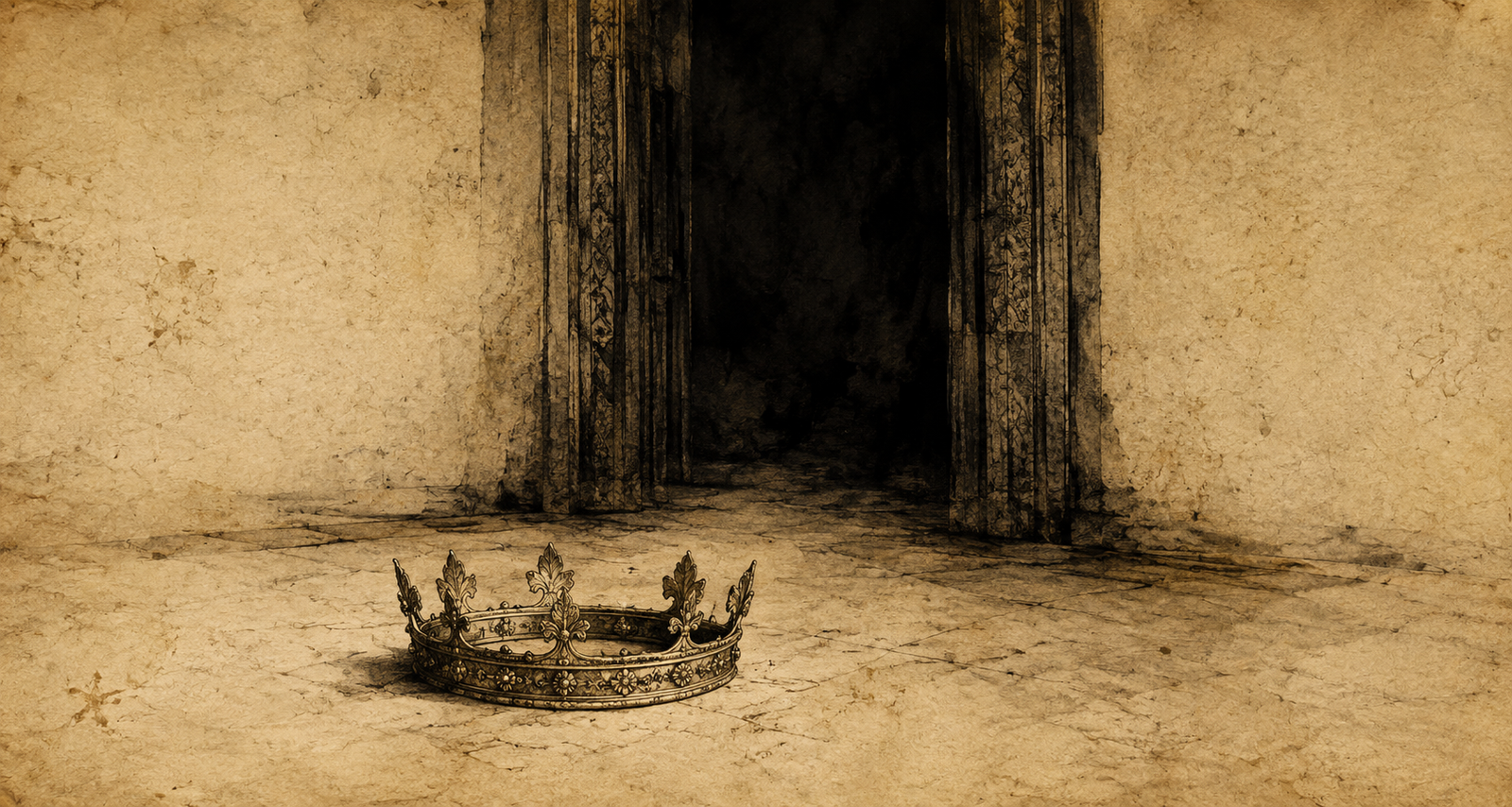
It is her crown.
Before the underworld takes her life, it takes the language by which the living world knows her. The crown must come off first. Then the beads. Then the ornaments. Then the robe. Gate by gate, the goddess who enters the realm of death is stripped of every sign that has made her visible above.
The story is one of the oldest descent narratives we possess. It comes to us from Sumer, from the deep beginning of written literature, where gods still move with a severity later ages often soften. Inanna is queen of heaven, goddess of love, war, fertility, splendour, and terrible appetite. She is not a gentle figure. She is not a symbol of inward balance or spiritual serenity. She is radiant, dangerous, wilful, alive with the powers of increase and conflict. She belongs to the bright world of desire, authority, and public force.
And yet she goes down.
The poem does not allow us to domesticate this decision. Inanna does not descend because she is summoned as a victim. She sets her heart on the “great below.” She prepares herself. She gathers the marks of sovereignty to her body: crown, beads, breastplate, ring, measuring rod, line, robe. She comes armed with identity. She comes clothed in office. She comes as one whose power is legible before she speaks.
The underworld will not argue with her.
It has gates.
At the first gate, she is stopped. The gatekeeper asks who she is. Inanna gives her name and rank, but the gate does not open simply because the great goddess has arrived. The underworld is not impressed by titles. Its law is older than status, colder than prestige. Inanna may enter, but only according to the rites of the place she has chosen to approach.
The crown is removed.
A crown is never merely an ornament. It is the visible claim that a body carries recognised authority. To remove it is to begin the dismantling of the public self. It is to say: whatever you rule above, you do not rule here by those signs.
Inanna asks why this is done.
She is told that the rites of the underworld are perfect. They must not be questioned.
That answer is terrifying because it is not cruel in any ordinary sense. It does not insult her. It does not rage. It does not negotiate. It simply states law. The underworld is not chaos beneath order. It is order of another kind: a realm where the grammar of the living world no longer applies. Beauty, office, fertility, triumph, and command may have meaning above. Below, they are taken away.
At the second gate, another sign is removed.
At the third, another.
At the fourth, another.
The poem’s repetition is ritual, not decoration. It makes the reader undergo what explanation would weaken: the slow undoing of a being who has entered with everything that confirms her place in the world. Each gate narrows her. Each removal asks the same question in a different form.
What remains of power when its signs are gone?
This is why the descent cannot be read simply as travel into darkness. It is reduction. Inanna does not pass through the gates as a heroine moving from one chamber of adventure to another. She is diminished by entry. The underworld does not offer trials so that she may prove herself worthy. It removes the grammar of worth.
We are accustomed to stories in which descent produces acquisition. The hero goes down to win treasure, rescue the beloved, recover a lost thing, or return with wisdom. Downward motion becomes a form of enlargement. One descends in order to become more.
Inanna goes down and becomes less.
Not less in dignity. Less in possession. Less in display. Less in everything that allowed the upper world to say: this is Inanna. The descent does not enlarge her by giving her new powers. It exposes her by taking old ones away.
At the bottom is Ereshkigal.
She is often treated too quickly, as if she were merely the dark sister, the jealous queen, the antagonist waiting in the underworld. But the myth is stronger if we resist that simplification. Ereshkigal is not only an enemy. She is the sovereign of the place Inanna has entered. If Inanna is the force of the upper world—desire, fertility, battle, splendour—Ereshkigal is the law beneath splendour. She is the queen of what cannot be beautified back into life.
The story gives no easy reconciliation between them. It does not make Ereshkigal secretly tender. It does not ask us to like her. It gives her throne, realm, authority, and finality. Inanna has come down into another sovereignty, and the old signs no longer protect her.
This is the deep turn of the myth: Inanna is not punished because she is powerful. She is received by a realm in which power has no familiar use.
The underworld does not ask what she commands.
It asks what can be removed.
The answer is: almost everything.
When Inanna stands before Ereshkigal, she is no longer crowned, adorned, robed, or armoured in the splendour of her office. She has passed through every gate according to the rites of the dead. The goddess of the upper world has been made vulnerable to a law she cannot outshine.
Then she dies.
The poem’s severity lies in how little ornament it needs. A great goddess comes down. Her signs are taken. She is judged. She is made still. The story does not pause to sentimentalise the moment. It does not turn death into metaphor before allowing it to be death. It lets the image stand with terrible simplicity: the one who came radiant is brought to the condition of the realm she entered.
There is wisdom in that restraint. Myths of this age know that the deepest things should not be explained too soon. They are not powerful because they are obscure. They are powerful because they refuse to become manageable. Inanna’s death is not an allegory waiting politely to be translated. It is a fact inside the mythic world, and every meaning must pass through that fact rather than around it.
Above, the world does not continue unchanged.
When Inanna is gone, something is missing. The upper world is not indifferent to her absence. Desire, fertility, and vitality falter. The story knows that descent is never merely private. When a power leaves its place, the world feels the vacancy.
Inanna has prepared for this. Before descending, she instructs her attendant Ninshubur to seek help if she does not return. This is not a small narrative convenience. It tells us that Inanna, for all her danger and pride, understands something about thresholds. She does not go below as one ignorant of peril. She makes provision. She knows that descent may become enclosure.
Help must come from outside the underworld, but not by force. The upper gods do not storm the gates. The rescue is stranger and subtler than conquest. The beings who enter the place of death do not overpower Ereshkigal. They answer her suffering. They echo her cries. They honour the condition of the one who reigns below.
This is among the most unsettling parts of the myth, because it refuses a simple moral arrangement. Ereshkigal, who has brought Inanna low, is herself in pain. The underworld is not only a prison. It is a realm of lament. Its queen is not untouched by the darkness she rules.
The rescue comes, therefore, not through heroic domination, but through answering presence. The powers sent below do not defeat grief. They accompany it. They hear it and give it back. In return, a gift is granted, and Inanna is restored.
But restoration is not return.
That distinction is the second great lesson of the story. Inanna may rise from the underworld, but she cannot simply resume the world as if nothing has happened. Descent has created debt. The law below still holds. If she returns, another must take her place.
Here the myth becomes more severe, not less.
The passage through darkness does not end in clean wholeness. The one who comes back is not blessed into safety, wounded only so that she may become wise. Inanna’s descent belongs to an older and harder imagination. It knows that some returns require exchange. It knows that the underworld does not release without remainder.
So Inanna comes back accompanied by the dead.
The goddess who descended stripped and powerless now rises with the force of the underworld behind her. She is alive, but not simply restored to innocence. She has crossed into the realm where power fails, and she has returned carrying its claim upon the living.
The question becomes: who will go in her place?
The myth does not answer softly. It moves toward Dumuzi, Inanna’s consort, who has not mourned her as she thinks he should. In some versions, he sits splendidly upon his throne while she has suffered below. The scene is sharp because it returns us to the beginning. Once again, splendour is not innocent. Once again, enthronement is placed under judgement. The one who remains adorned while the beloved has been stripped is not safe from the law of exchange.
Here the myth resists any easy purification of Inanna. She is not returned as a saint. She is not softened into compassion by suffering. Her anger is real. Her judgement is severe. The dead seize Dumuzi, and the story passes into another cycle of loss, pursuit, substitution, and seasonal rhythm.
This is why the descent must not be made too clean. The myth is not saying simply that one must let go of pride, or that suffering makes one wise, or that descent leads to empowerment. Such readings are too tidy for the poem. Inanna goes down, is stripped, dies, returns, and demands a substitute. The story is not embarrassed by her force. It does not smooth her into our preferred shape.
It gives us something older than moral tidiness.
It gives us the grammar of descent.
First, the heart set on the great below.
Then, the gate that will not open on the traveller’s terms.
Then, the stripping of every sign by which the upper world recognises identity.
Then, the sovereign darkness that refuses to be charmed.
Then, the death or undoing: the end of performance, rank, and display.
Then, the return—not as reversal, but as debt.
This pattern has never ceased to matter because it does not belong only to ancient Sumer. It belongs wherever a human being discovers that the signs by which they have been known cannot accompany them into the deepest chambers of experience. There are places where achievement cannot speak. There are losses before which beauty has no privilege. There are illnesses, griefs, failures, humiliations, and silences that do not care what title one has worn in the upper world.
The underworld is not only the place of the dead. In mythic thought, it is also the place where illusion is stripped of its costume. It is the realm where the living discover what cannot be negotiated by charm, status, brilliance, desirability, or command. That is why Inanna must go down naked. The nakedness is not erotic. It is ontological. It is the condition of a being from whom every recognised sign has been taken.
What remains?
The myth does not answer with comfort.
It does not say that beneath the crown is the true self, pure and waiting. It does not offer that consolation. Beneath the crown is another gate. Beneath the ornaments, another removal. Beneath the robe, exposure. Beneath exposure, death. Beneath death, debt. The story is too honest to pretend that stripping automatically reveals serenity.
And yet it refuses despair.
Inanna returns.
The return is compromised, costly, morally troubling, and unfinished. But it is return. The old story does not say that descent is the end. It says that descent changes the terms by which life may continue. No one comes back from the underworld merely as the person who went down. The signs may be restored. The crown may be worn again. The world above may resume its ceremonies. But the descent has taught what the signs cannot know.
This is the terror and the gift of the myth.
The crown is not destroyed.
That is part of the terror. It can be worn again. The upper world can resume its festivals, offices, adornments, and recognitions. Names can be spoken. Authority can be honoured. Beauty can be seen. Desire can return to the fields and houses of the living.
But the one who has passed below knows what the crown did not know.
At the first gate, Inanna loses the sign of sovereignty. At the last, she learns the older sovereignty of the dark: nothing returns from below exactly as it entered.
—
Receive the next work
Subscribe free to receive new work from the Mytharium Library by email.
More from the Library

See Also
A concise and impartial dictionary of absence, promises, quarrels, ordinary objects, and the troublesome instability of words.
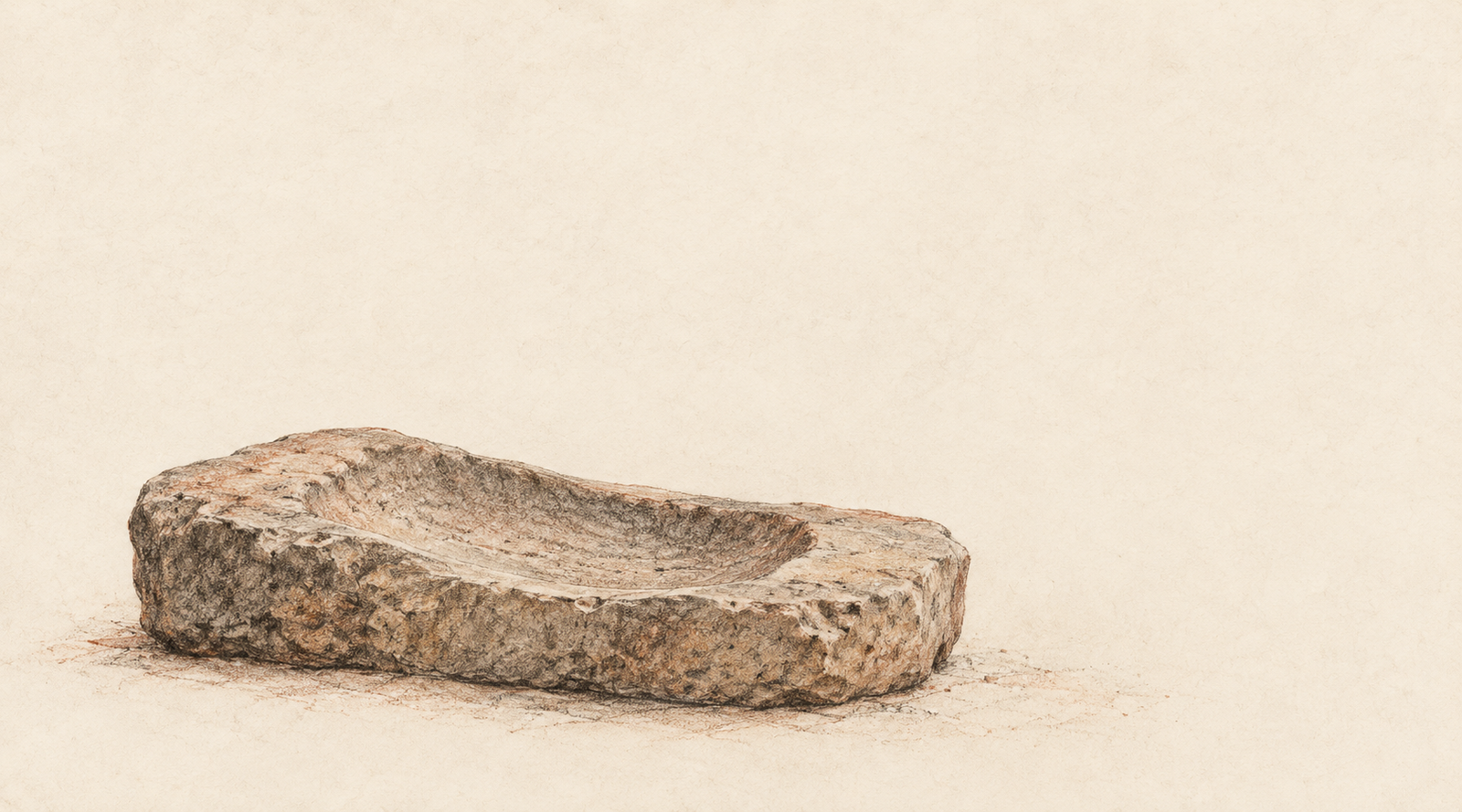

The City of Service
The temple we inherit is a building from which almost all necessity has been removed. Nothing must be brought for it to continue being what we call a temple. The sanctuary asks nothing of us. Stone is good at this kind of independence.
A living temple was otherwise.
Water had to come in. So did grain, cloth, oil, aromatic substances, fuel. The things required for worship arrived because someone carried them across a threshold.
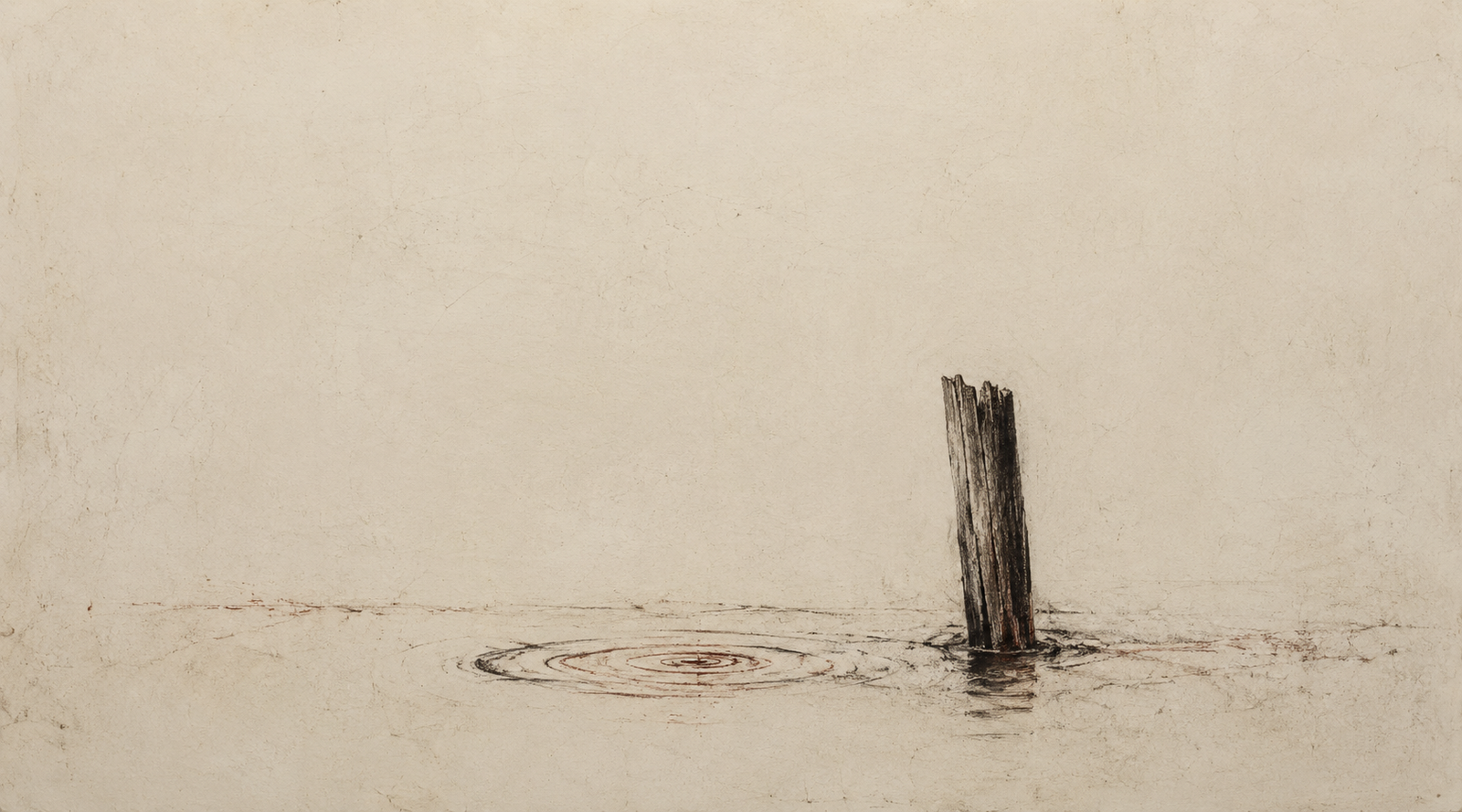

Houses of Wood, Light, and Smoke
Some of Angkor’s most intimate ruins do not rise above the ground at all. They are postholes, low mounds, hearths and ponds: durable traces of a domestic city built largely from things that decay. To restore that city is to see Angkor not only as stone, but as wood, smoke, water, repair, and people living within calling distance.