

Jayavarman III — The King Who Kept the Centre Quiet
History remembers its founders and its builders.
Between them, it often forgets the keepers.
Jayavarman III, second ruler of Angkor and son of Jayavarman II, belongs to this quieter order. His reign, stretching from 835 to 877 CE, left few inscriptions and fewer monuments that speak his name. Yet the absence itself is instructive. Angkor did not falter under him. The axis held. And in a civilisation built on alignment, that mattered more than display.
Jayavarman III inherited a kingdom still young in its coherence. His father had declared the centre—installed the Devarāja, unified a fractured land, and established the grammar of sovereignty. What remained was the more difficult labour: to live within that grammar without breaking it. Jayavarman III did not reinvent kingship. He sustained it.
The name he bore—Jayavarman, victorious armour—suggests protection rather than conquest. Victory here is not expansion, but preservation: the capacity to hold what has been newly gathered. He ruled from Hariharalaya, the early Angkorian capital at Roluos, where the kingdom’s first experiments in permanence quietly unfolded. The Devarāja cult remained installed. The priestly lineage continued unbroken. The centre did not wander.
Religiously, Jayavarman III stands apart from many of his successors. He was a committed Vaishnavite, devoted to Vishnu rather than Shiva, and his posthumous name, Vishnuloka, places him not among divine kings, but within divine order. This distinction matters. Under Jayavarman III, kingship does not inflate; it submits itself to cosmic rhythm. The Devarāja persists, but the king does not press his image into stone.
His architectural legacy is therefore subtle, almost subterranean. Inscriptions do not trumpet his works, yet traces remain. At Roluos, the early tiered trapeang—ponds arranged in measured sequence—suggest an emerging attentiveness to water as more than utility. These modest hydraulic forms would later scale into the great barays of Angkor, but here they are still intimate, experimental, learning how to listen to monsoon and dry season alike.
Some scholars propose that the laterite core of Bakong—later clad in sandstone by Indravarman I—may have begun under Jayavarman III. If so, this is telling. He did not finish the mountain, nor inscribe his triumph upon it. He prepared the body that another king would later dress. Foundations without names were his signature.
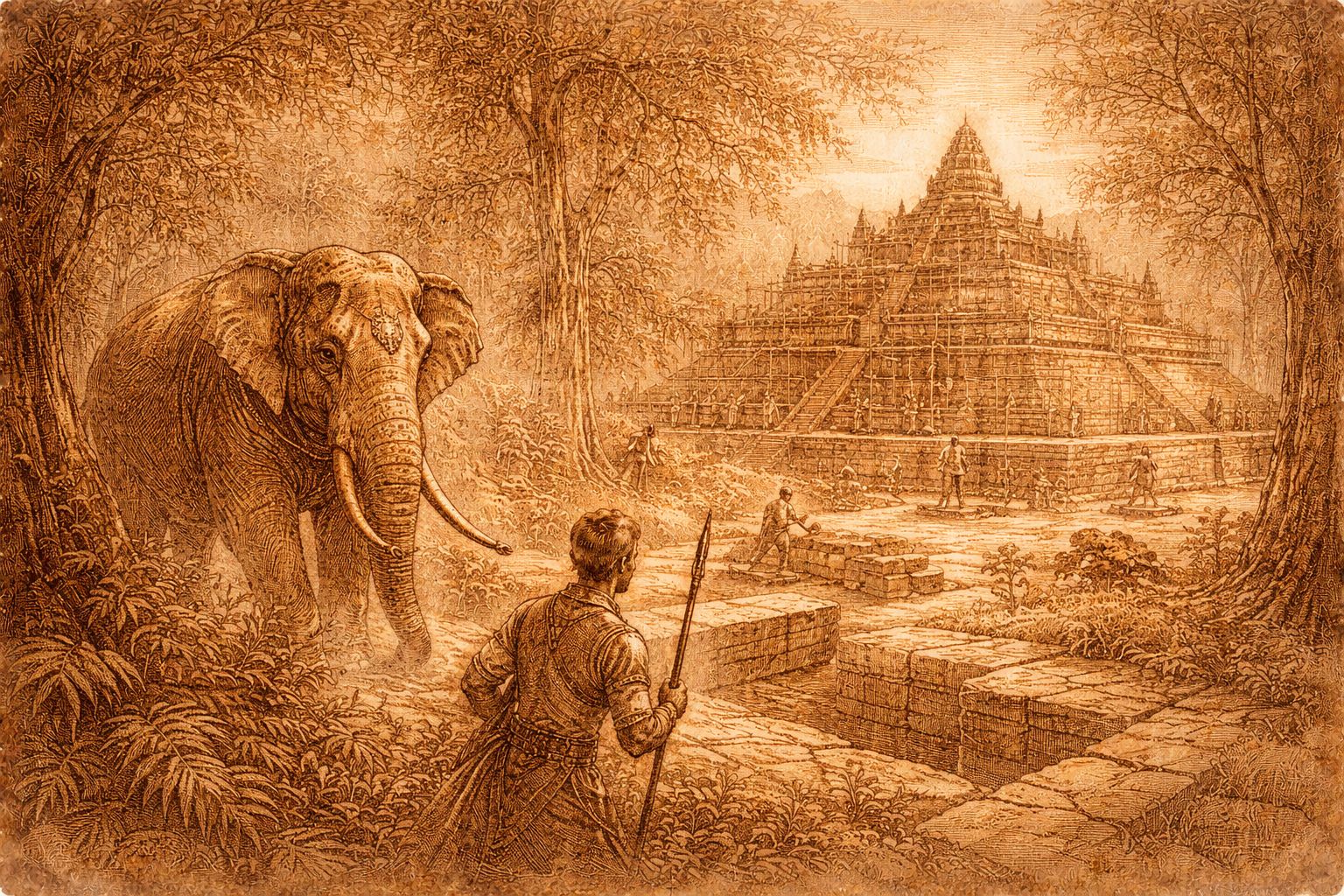
The most vivid story that survives him comes not from stone, but from the forest. An inscription at Prasat Sak recounts a failed elephant hunt: the king, unable to capture a wild elephant, receives a promise from a divinity—build a sanctuary, and the animal will be yours. The tale is revealing. Jayavarman III is remembered not as a conqueror of cities, but as a hunter, moving through untamed space, negotiating with powers older than kingship itself.
Elephant hunting was not sport alone. It was a test of sovereignty over the wild margins of the realm. That Jayavarman III died, according to tradition, while chasing a wild elephant feels less like irony than completion. His life remained bound to the threshold between order and wilderness, where control is never absolute and must be renewed each day.
Jayavarman III left no personal inscriptions. He did not carve his voice into stone. Instead, he allowed the system his father established to settle, to prove its durability. When his successor, Indravarman I, began building on an unprecedented scale—raising Bakong in sandstone and carving his authority across the land—he did so on ground that had not shifted.
Angkor required such a reign. Not every king can found an empire. Not every king should. Some must simply ensure that the centre remains quiet, the rituals correct, the water measured, and the forest held at bay.
Jayavarman III was such a king.
If Angkor endured long enough to build its mountains of stone, it was because someone first knew how to keep still.
—
Receive the next work
Subscribe free to receive new work from the Lucas Varro Library by email.
More from the Library


See Also
A concise and impartial dictionary of absence, promises, quarrels, ordinary objects, and the troublesome instability of words.

The City of Service
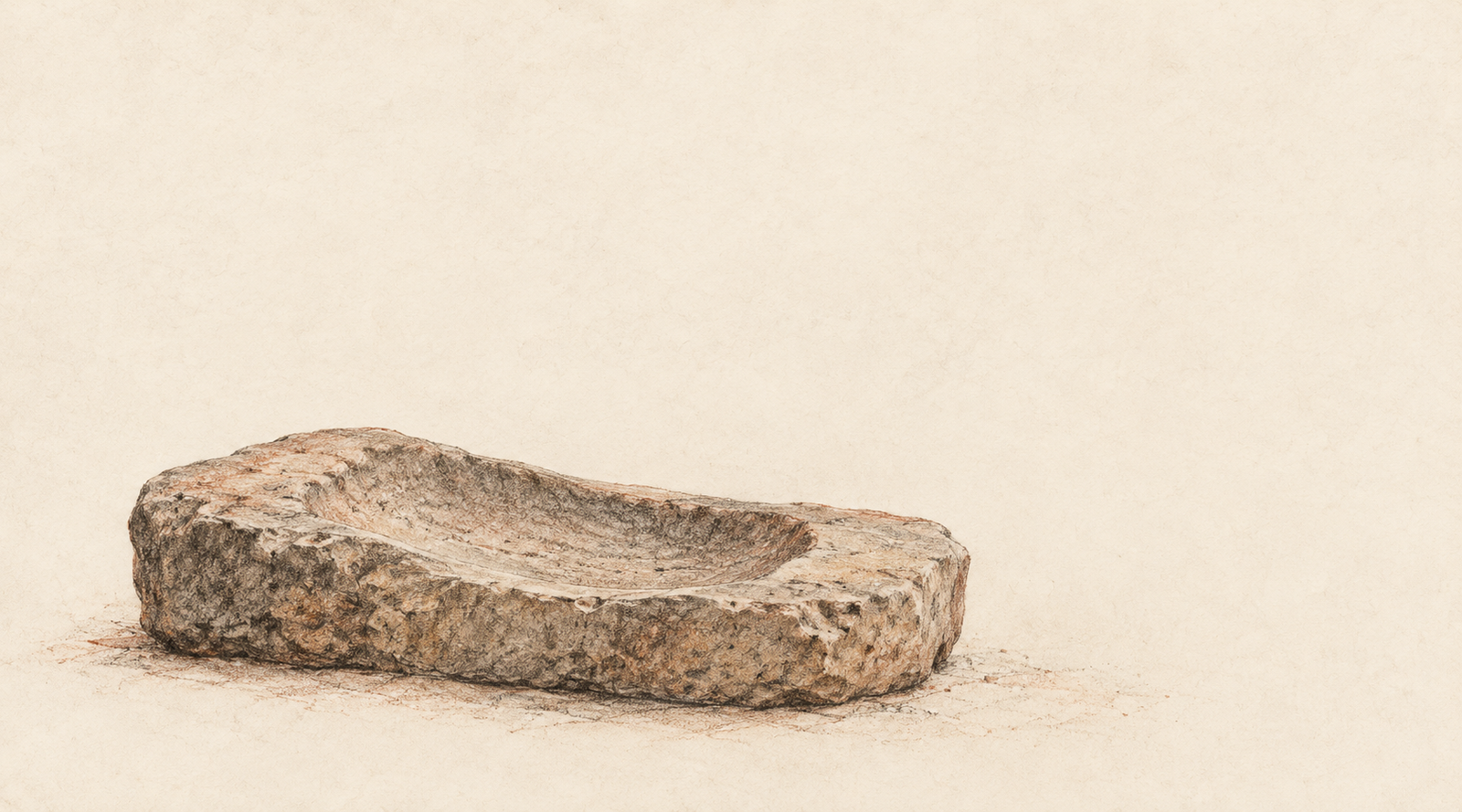
The temple we inherit is a building from which almost all necessity has been removed. Nothing must be brought for it to continue being what we call a temple. The sanctuary asks nothing of us. Stone is good at this kind of independence.
A living temple was otherwise.
Water had to come in. So did grain, cloth, oil, aromatic substances, fuel. The things required for worship arrived because someone carried them across a threshold.


Houses of Wood, Light, and Smoke
Some of Angkor’s most intimate ruins do not rise above the ground at all. They are postholes, low mounds, hearths and ponds: durable traces of a domestic city built largely from things that decay. To restore that city is to see Angkor not only as stone, but as wood, smoke, water, repair, and people living within calling distance.