
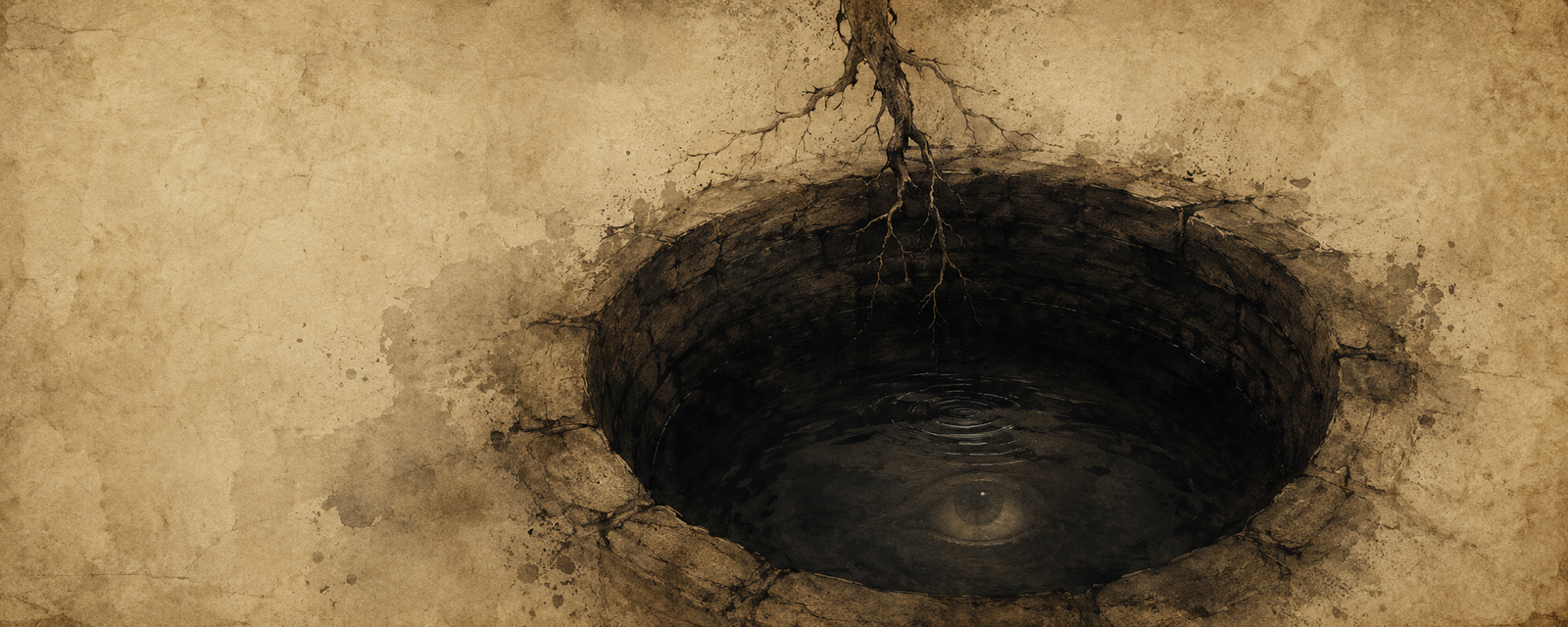

Odin at the Well
Wisdom, fate, and the eye left in the dark
The first thing wisdom costs Odin is not comfort, pride, or certainty. It is an eye. Before the god becomes the wanderer, the questioner, the one who knows too much and still cannot avert the end, he comes to the well beneath the world-tree and leaves part of his sight in the dark water. The bargain is terrible because it is exact. He does not pay with an ornament, a token, or a symbolic wound. He pays with the organ by which the world enters him.
This is one of the reasons the old myths remain dangerous. They refuse to make knowledge clean. They do not imagine wisdom as something gathered without alteration, as if the mind could take and take and remain unchanged by what it has taken. Odin does not come to Mimir’s Well as a student comes to a book. He comes as a god who knows that some things cannot be received unless something else is surrendered.
The well is not merely deep. It is deep in the older sense: rooted beneath the visible order, placed near the foundations of things. Above it rises Yggdrasil, the world-tree, that immense living axis whose roots reach into the hidden places of the cosmos. Near one root is Mimir’s Well, associated with wisdom, intelligence, and memory: the kind of knowing that does not belong to the daylight surface of the world. Mimir owns it, drinks from it, and is wise because of it. Odin wants one drink.
But the water is not free.
That detail matters. In a lesser story, wisdom would be a discovery. In a cheaper one, it would be a reward. Here it is neither. It is something restricted, something guarded by cost, something that cannot be separated from sacrifice. Odin must give one eye as a pledge for the drink. The old story is severe enough not to soften the exchange. Sight is the price of sight.
Yet even that sentence is too neat. It risks making the myth sound like an equation: one eye given, wisdom received. The force of the image lies in the fact that the pledge remains. Odin does not simply pay and leave the price behind as if it had vanished into exchange. The eye is hidden in the well. Mimir drinks from the water in which the pledge remains. The cost stays inside the source.
That is where the myth becomes more than transaction. A transaction ends when the price is paid and the object obtained. This does not end. Odin’s wisdom remains shaped by the thing he has lost. He carries knowledge forward under the sign of injury. He becomes the god who sees more because he sees less, the god whose enlarged perception begins in subtraction.
But the sacrifice does not make him innocent.
That is the mistake a softer reading would make. Odin is not a gentle sage wandering towards enlightenment. He is a dangerous god: cunning, acquisitive, restless, drawn again and again towards hidden things. He wants knowledge because knowledge is power, preparation, strategy, command. He wants to know what is coming. He wants to stand before the dark with more than courage. He wants, perhaps, to find some crack in fate before fate closes its teeth.
His hunger is not pure.
The myth knows this. It does not ask us to admire Odin as if he were free from ambition. It gives us something stranger: a god whose desire to know is mixed with dread, calculation, and greatness. He seeks wisdom not because he has renounced power, but because he understands that power without wisdom is blind. The sacrifice does not cleanse the hunger. It makes the hunger serious.
This is the darker pressure beneath the story. Odin’s wisdom is haunted by Ragnarok. He does not seek knowledge in a harmless world. He seeks it under the shadow of ending. The gods will fall. The wolf will come. The bright order of Asgard will not remain bright forever. To know this does not save him from it. That is the strange grief of Odin’s wisdom: it gives him sight, but not escape.
There is a lesser comfort in imagining that wisdom grants mastery. We would like the wise to be those who have found the hidden lever, the secret order, the final explanation. But Odin’s myth is harsher and truer. His wisdom does not abolish fate. It lets him recognise its shape. He sees the road more clearly, and the road still leads towards the wolf.
That is why the one-eyed god is not merely a figure of power. He is a figure of burdened knowledge. The missing eye is not incidental to his authority. It is the mark by which that authority becomes grave. A god with two bright, unwounded eyes might dazzle. Odin unsettles. His face tells us that he has looked for what cannot be looked at cheaply.
Memory deepens the image. Mimir’s name draws near to memory, and the well itself belongs to what is kept below the surface: not only foresight, not only intelligence, but the old depth of things retained and not allowed to pass away. Wisdom, in this myth, does not float above the world as abstraction. It gathers in a place where roots descend, where water remembers, where a god’s hidden eye remains as pledge.
The later sacrifice on the tree belongs to the same terrible grammar, though it is not the same act. There Odin hangs upon the wind-swept tree, wounded by the spear, seeking the runes. The tree-sacrifice concerns another form of knowledge: signs, speech, the hidden powers by which the world may be named and shaped. But this essay belongs to the well. Before runes, before speech, before the god seizes the secret of marks, there is an eye in water.
One sacrifice reaches upward into the ordeal of the tree. The other descends into depth. Together they reveal Odin’s terrible willingness to make his own body the price of knowing. But the well gives us the purer image. The cost is not suspended in the air. It is kept below, preserved in the water beneath the root, where memory, wisdom, and darkness gather.
The well teaches by refusing to return what it receives.
Odin may drink, but the eye remains. He may gain wisdom, but not innocence. He may see further, but only as one who has become divided. His knowledge is not the clean possession of a whole and untouched mind. It is knowledge with a hollow in it.
This is why the myth should not be domesticated into a moral about sacrifice. It is not telling us that every loss is secretly a gain, or that wounds are automatically meaningful, or that suffering should be welcomed because it improves the soul. Old myths are usually wiser than our consolations. The well does not sentimentalise the eye. It hides it.
Nor does the story say that Odin’s bargain is pure. The god’s hunger remains troubling. He wants wisdom for reasons that include fear, strategy, command, and survival. He is not emptied of ambition by the act of sacrifice. But the myth insists that even ambition must pass through cost. Even the god who wants to know everything cannot simply seize the hidden water. He must be marked by what he seeks.
That may be the most serious thing the story knows. Wisdom is not guaranteed by loss, but certain kinds of wisdom cannot exist without the knowledge of loss. The unwounded may be clever. They may be informed, brilliant, swift, capable, even powerful. But there is a kind of seeing that does not begin until the self has learned that the world will not enter it without demanding something in return.
The wound is not the price paid before wisdom begins.
The wound is the form wisdom takes.
Odin’s lost eye is not a decoration of the myth. It is the myth’s grammar. One eye remains turned outward upon the visible world: kings, battles, ravens, roads, halls, spears, storms, wolves. The other is beneath the surface, held in a place of memory and depth. Between them stands the god himself, divided between sight and sacrifice, knowledge and doom, power and the wound power could not prevent.
The image is almost unbearably exact. One eye for the world above. One eye for the water below.
And the water does not explain itself. It does not become doctrine. It does not tell us what wisdom is in a sentence clean enough to be carried away without fear. It shows us a god who wanted knowledge and gave part of his own seeing to receive it. It shows us the price still present after the gift has been taken. It shows us that the deepest knowledge may not make the knower whole.
The eye remains in the well.
That is the part of the myth modern hunger forgets. Odin does not drink and walk away complete. He leaves sight behind, and the water keeps it. Whatever wisdom comes to him afterwards comes through the shape of that absence: one eye turned outward upon the world, the other surrendered to the dark beneath it.
The god who seeks to know must go on seeing incompletely.
That is why the knowledge is grave.
That is why it can be trusted.
—
Receive the next work
Subscribe free to receive new work from the Mytharium Library by email.
More from the Library


See Also
A concise and impartial dictionary of absence, promises, quarrels, ordinary objects, and the troublesome instability of words.

The City of Service
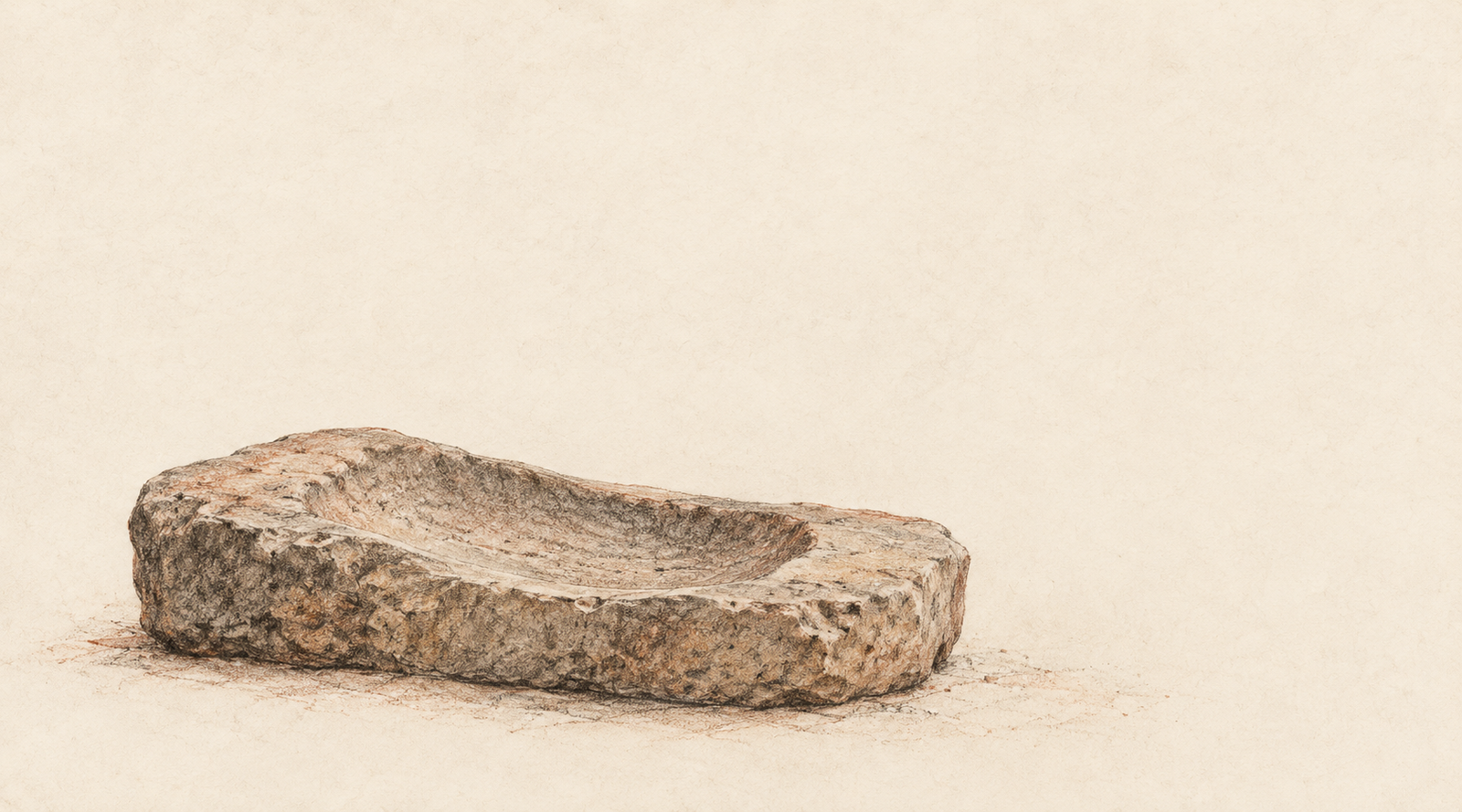
The temple we inherit is a building from which almost all necessity has been removed. Nothing must be brought for it to continue being what we call a temple. The sanctuary asks nothing of us. Stone is good at this kind of independence.
A living temple was otherwise.
Water had to come in. So did grain, cloth, oil, aromatic substances, fuel. The things required for worship arrived because someone carried them across a threshold.

Houses of Wood, Light, and Smoke
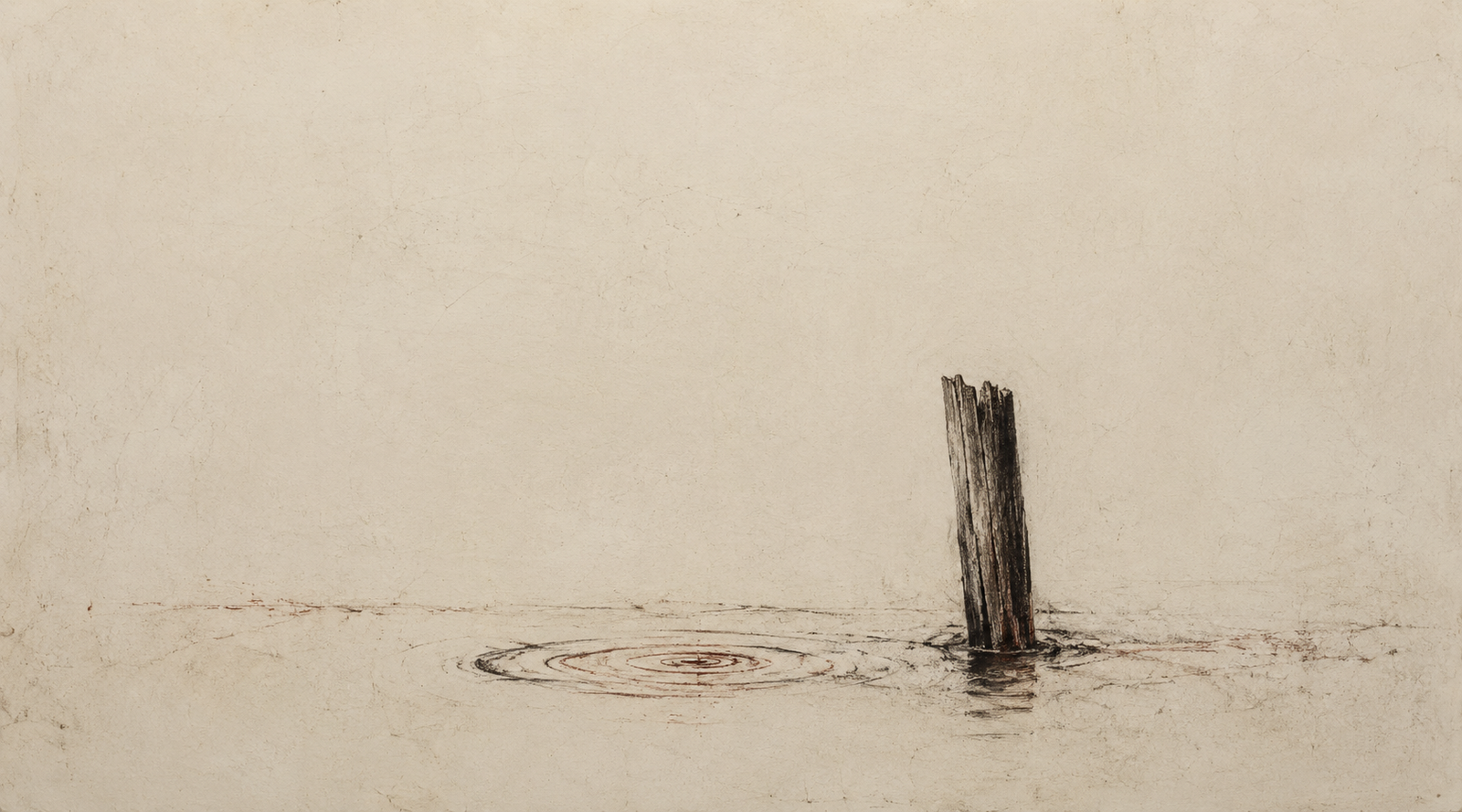
Some of Angkor’s most intimate ruins do not rise above the ground at all. They are postholes, low mounds, hearths and ponds: durable traces of a domestic city built largely from things that decay. To restore that city is to see Angkor not only as stone, but as wood, smoke, water, repair, and people living within calling distance.