

Orpheus — The Weight of Turning
On love, silence, and the human motion that cannot be recalled.
Before he tried to bring his wife back from the dead, Orpheus was once occupied, like any other husband, with a stubborn string and the small patience of an ordinary morning.
Eurydice stood in the doorway with one hand against the wood, listening as he bent his head over the lyre and turned the peg a fraction more than was necessary, then a fraction back again, for musicians are seldom content to leave a thing when it is nearly right, and husbands, if they are wise, soon learn that there are labours of the household less urgent than appearing to finish what one has begun. The room was full of the plain, good things by which a life first makes itself believable: a cup still warm from use, the heel of yesterday’s bread, the white brightness of morning at the threshold, the faint scent of olive oil and crushed thyme, and, standing among them without knowing that she made them all seem gathered and complete, Eurydice herself.
He played the string softly, then once again, and this time the note settled where it ought.
“There,” she said.
“You say that,” said Orpheus, “as though you had been waiting in grave uncertainty.”
“I have,” said Eurydice. “I had almost begun to fear for the whole order of the world.”
Now there are men who would answer such a thing with a speech; Orpheus, though he had the making of speeches in him, had not yet come to the age when every feeling must turn at once into song. So he only smiled a little and reached out without looking, and she came the rest of the way into the room.
It is worth remembering this — not because mornings are rare, for they are not, and that is their mercy, but because what is lost in the great tales is often first lost in some small and perfectly ordinary form. A hand on a doorway. A voice from the next room. A woman listening while a man pretends not to be pleased that she has heard the note come right. If you do not understand why such things matter, then you will make very little of what follows; and if you understand too well, then I am sorry, but you are fit to hear the story.
They had not been long married. The world had not yet had time to roughen their habits into those firm shapes by which old love becomes almost indistinguishable from weather, hearth-smoke, or the way a road bends where it always has. Everything was still near the surface. Their happiness had the light tread of something newly come into the house and not yet persuaded it may remain there. Orpheus, who had spent much of his life learning what music could persuade stone, tree, beast, and man to do, was only beginning to discover that the sweetest wonder of all was to have one listener for whom he need not perform.
Eurydice would sit with her sewing in the late afternoon while he played not the songs kings liked best, nor the pieces that made strangers stare and begin at once to speak of gifts and genius and all those large, windy things by which the world tries to turn a man into the sound it prefers from him. He played the quieter things then. The half-made things. Tunes that circled back upon themselves. Fragments. Little domestic musics fit for lamp-light and company, and for the breathing space between one task and the next. She listened as if listening were not a lesser art.
That was what he had before he lost her: not only love, though love was there in abundance, but nearness. Not applause. Not fame. Not the old, dangerous delight of feeling a room or hillside change because one had raised a hand and drawn breath. He had, for a little while, the smaller and better thing.
Her death came quickly.
It does, very often. The old tales may make much of prophecy, curse, vendetta, divine spite, and all the machinery by which disaster likes to announce itself like a herald, but sorrow is commonly swifter than that. One hour there is speech, and warmth, and the ordinary division of labour by which one person lifts a basket and another says, Wait, I will come with you; and then there is the hour after, in which the world has become unanswerable.
She had gone out where the grass ran long at the edge of the field and the light lay white on the stones. Whether it was a serpent in the grass, or merely the blind and ancient ill-luck by which a life is broken at the point where it seemed most securely itself, matters less than poets sometimes pretend. She cried out once. By the time he reached her, he was already too late.
There are griefs which make noise at once, and there are griefs which first remove all sound, as though the world, having done something it cannot defend, finds itself unable for a moment to speak. Orpheus knelt beside her in that silence. He said her name. He said it again. He did what every living thing does before it concedes anything to death: he called, he touched, he pleaded, he denied what was under his hands. But her breath had already gone where his voice could not follow.
Not then, at least.
Afterward, men said many things, because men always do. Some said that no sorrow had ever been so sung. Some said that trees leaned nearer to hear him, and stones wept, and even the hard faces of shepherds altered against their will. Such things may be true. Music has strange powers, and grief stranger ones. But before any song worth hearing was made, there was only a house with one cup not taken down, one place in the bed that went cold too soon, one doorway in which no hand appeared at evening, and a man discovering that all the sounds of the world had become unbearable because none of them were the one he wanted.
It was then he began to understand something terrible about his gift.
Song can summon. It can charm. It can persuade the rooted to loosen, the restless to pause, the hard-hearted to remember that they once had mothers. But there are borders which do not move merely because one has found the right note. Death had taken Eurydice into a country that did not trade in sweetness.
And yet he went.
Perhaps another man would have stayed among the living and let his sorrow grow still. There are forms of grief the world can bear to witness, especially when they ask nothing of it. Orpheus asked too much. He was still too near the life he had lost. The air of the room still held her. The cup still remembered her mouth. The songs in his hands had nowhere to go but down.
So he went to the place where the roads of men grow thin and the roots of things begin.
I will not spend too long upon the road below, partly because others have done so with more relish than wisdom, and partly because the dead deserve better than to be used as scenery for the living. It is enough to say that he came to a place where sound no longer travelled as it does under the sun. It did not leap, bloom, return. It entered the dark as into water. Whatever was heard there was heard without echo.
He played.
Not as he had played for kings. Not as he had played in bright courts where astonishment is half vanity and applause the other half. He played as a man speaks when he has nothing left with which to bargain except the thing most fully his own. The song did not ask for fairness, for there was none; nor did it claim merit, for death does not care how gifted one has been. It simply made audible what love becomes when all the ordinary gestures have been taken from it.
And because even the dead may remember, and because the rulers below are not always less moved than the gods above, though they are seldom kinder, he was answered.
He might lead her out.
But he must not look back.
There are conditions in the old stories that seem, at first hearing, almost childish in their severity, as though the world of myth had been arranged by stern nurses and exacting schoolmasters. Do this. Do not do that. Ask no questions. Open no box. Speak no name. Turn no head. Yet such conditions are rarely foolish. They reveal, rather, the exact point at which being human becomes a burden one cannot set down. A god may obey a condition without cost. A man must obey it with nerves, breath, memory, dread, and hope all contending within him at once.
He agreed.
Then he began the ascent.
You must imagine it quietly. Not as a frantic race toward light, nor as one of those scenes painters are fond of, where terror improves everybody’s posture and the underworld obligingly arranges itself into meaningful shadows. It was a path, and a man, and behind him — though he could not look — the one thing for which all the rest had been endured.
That was the cruelty of it: not that he had been denied Eurydice, but that he had been granted her under a condition fitted precisely to the shape of his love. He could go forward, yes. He could trust, yes. But he must do both without the smallest proof that the beloved still existed in the darkness behind him, and almost is the hardest distance a human mind has ever had to cross.
He heard nothing.
Or perhaps he heard too much: the sound of his own footfall; the drag of breath in his chest; the inward clamour by which hope, when it grows too great to bear, begins to imagine its own defeat. Silence is not empty to a man in fear. It fills at once. It fills with pictures.
And what his mind made in that silence was not Eurydice faithfully following. It was Eurydice halted. Eurydice falling behind. Eurydice, who had already once been lost, lost again. Love, under the strain of almost, became imagination, and imagination, being quicker than trust and older than courage, showed him the wrong image with the full force of certainty.
He turned.
Not far. That is the pity of it. Not with a cry, nor in rebellion, nor in any fit of temper against gods or law. He turned as men do the things that undo them: in one movement, wholly human, wholly understandable, and past recall before understanding has finished becoming horror.
He saw her.
That must be enough.
Whether there was forgiveness in her face, or sorrow, or only the still astonishment of being twice taken from the same world, I will not say, for the tale is cruel enough without pretending to knowledge it has not earned. He saw her, and because he saw her he lost her, and because he lost her by seeing her, no argument afterward could ever be made with the event that would not sound thin against it.
Then she was gone.
He came back alone.
This is the place where comfort might be offered too quickly, and it would be a poor bargain. One might say that sorrow improved his music, or that loss made his gift deeper, or that art repays what life removes. But grief is not so tidy as that. He had done the impossible and failed by one human motion at the edge of success. There is no improving phrase for such a thing.
But he lived, and because he lived, song remained.
It changed, that is all.
Before, song had seemed to him a power: a way of drawing the world toward harmony, of making answer appear where there had been indifference. Afterward, it became witness. He sang not because he believed song could restore what had been taken, but because the taken thing was still true, and truth, if it is to remain among the living at all, must sometimes be borne by the frailest vessels. A voice. A string. A breath crossing wood.
Years later — and the years matter, because grief that is worth anything must be endured in time and not merely struck like a dramatic pose — he too was lost to the world. Others can tell that part if they like. They may have his death in torn pieces and wild cries and all the usual business by which the end of a singer is made to satisfy those who prefer violence to silence. I do not. It is enough that he was gone, and that the river received what remained.
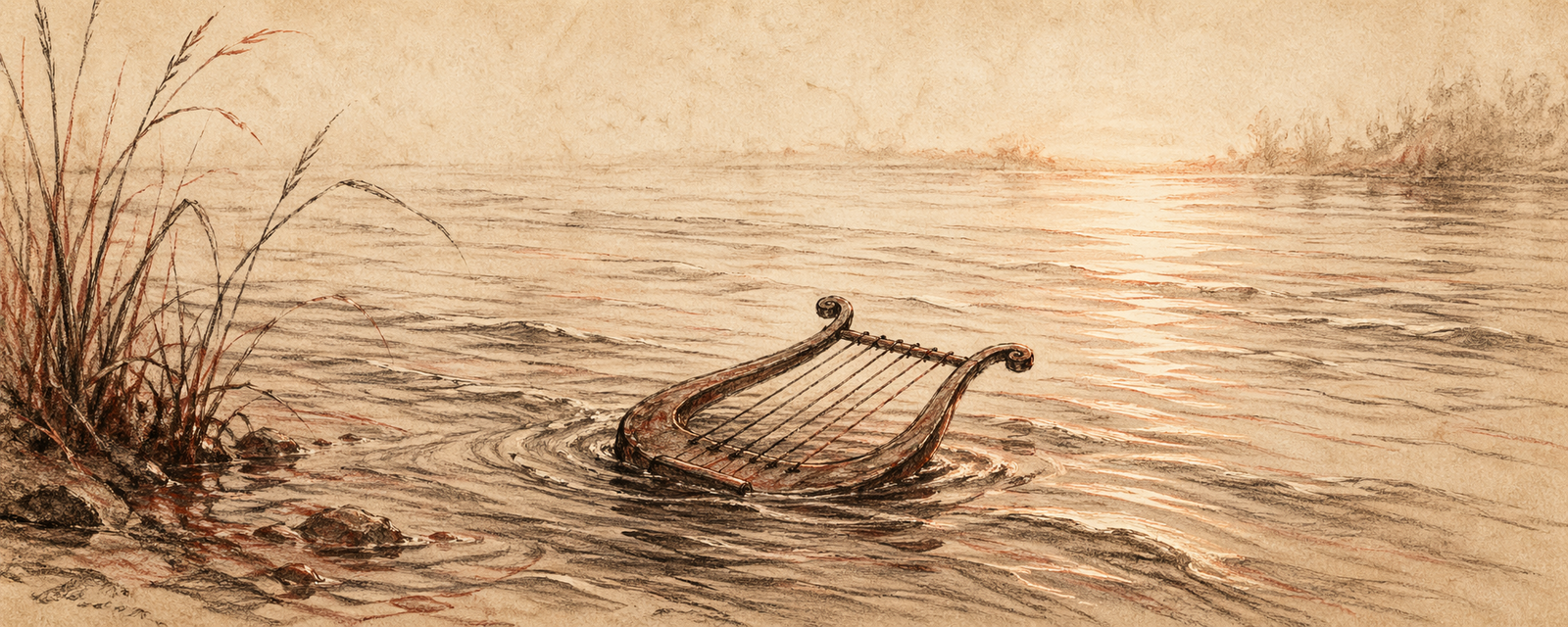
The lyre went down upon the current.
It did not sink at once. It moved lightly, caught and carried, turning a little where the water altered, as though some last small music still lived in the shape of it. Reeds leaned. The bank held its breath. The river, which keeps many things and explains none of them, took the instrument onward beneath a sky that had room for both loss and morning.
And because the world is sometimes gentler with objects than with men, it bore the lyre farther than it had borne its master.
There the tale must end.
Not because grief is finished, for it is not, nor because the image explains what the life could not, for it does not. It ends there because the man could not keep what he loved, and yet something of that love, altered beyond use but not beyond beauty, remains in motion under the open sky. That is not victory. It is not even consolation, if by consolation one means a softening of the truth. But it is what the tale has.
And if you think it too little, then you have asked of stories what even the gods have never been able to give: a world in which no one turns too soon, no beloved vanishes, and no song is left to carry what the hands could not hold.
—
Receive the next work
Subscribe free to receive new work from the The Hospitable Dark Library by email.
More from the Library


See Also
A concise and impartial dictionary of absence, promises, quarrels, ordinary objects, and the troublesome instability of words.

The City of Service
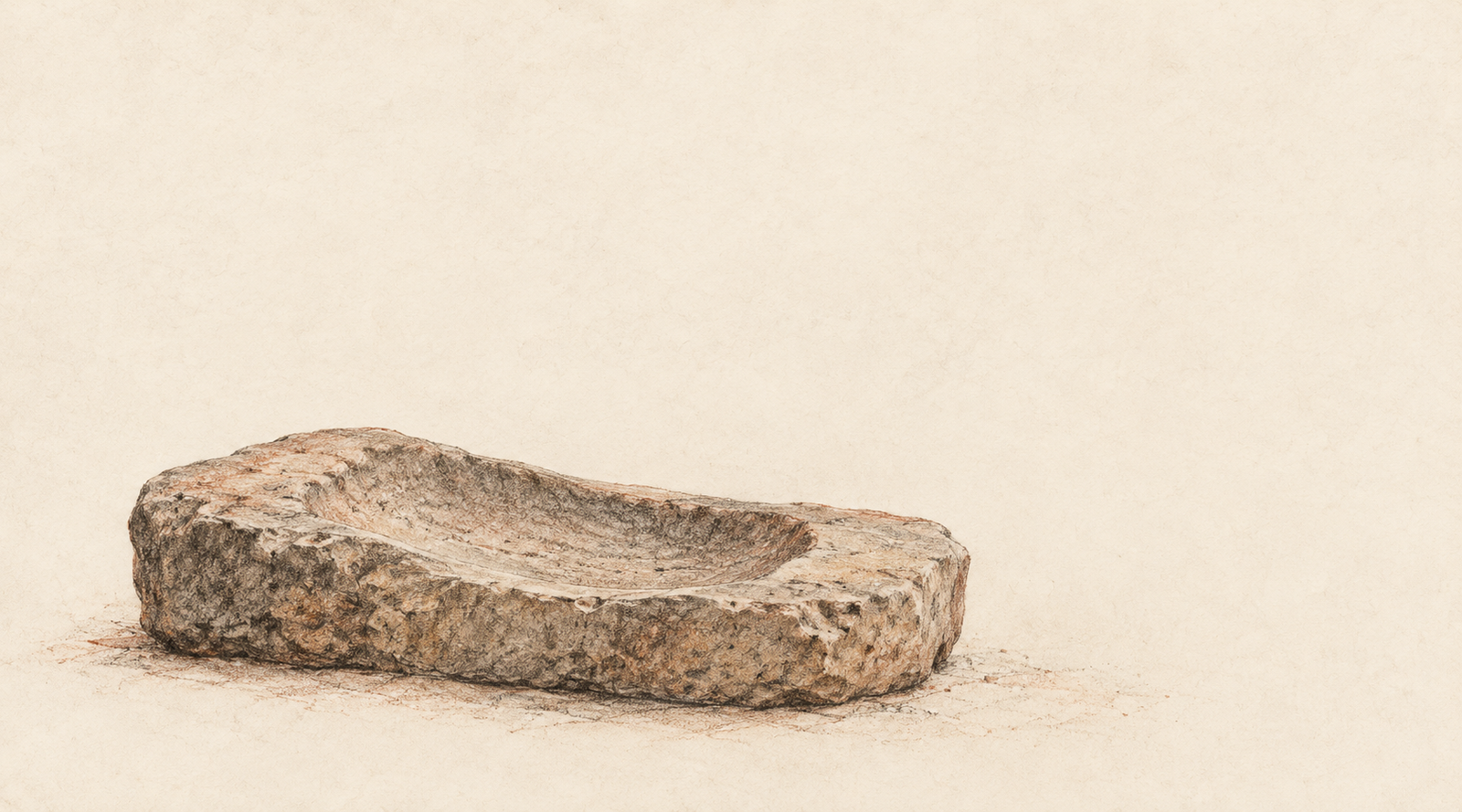
The temple we inherit is a building from which almost all necessity has been removed. Nothing must be brought for it to continue being what we call a temple. The sanctuary asks nothing of us. Stone is good at this kind of independence.
A living temple was otherwise.
Water had to come in. So did grain, cloth, oil, aromatic substances, fuel. The things required for worship arrived because someone carried them across a threshold.

Houses of Wood, Light, and Smoke
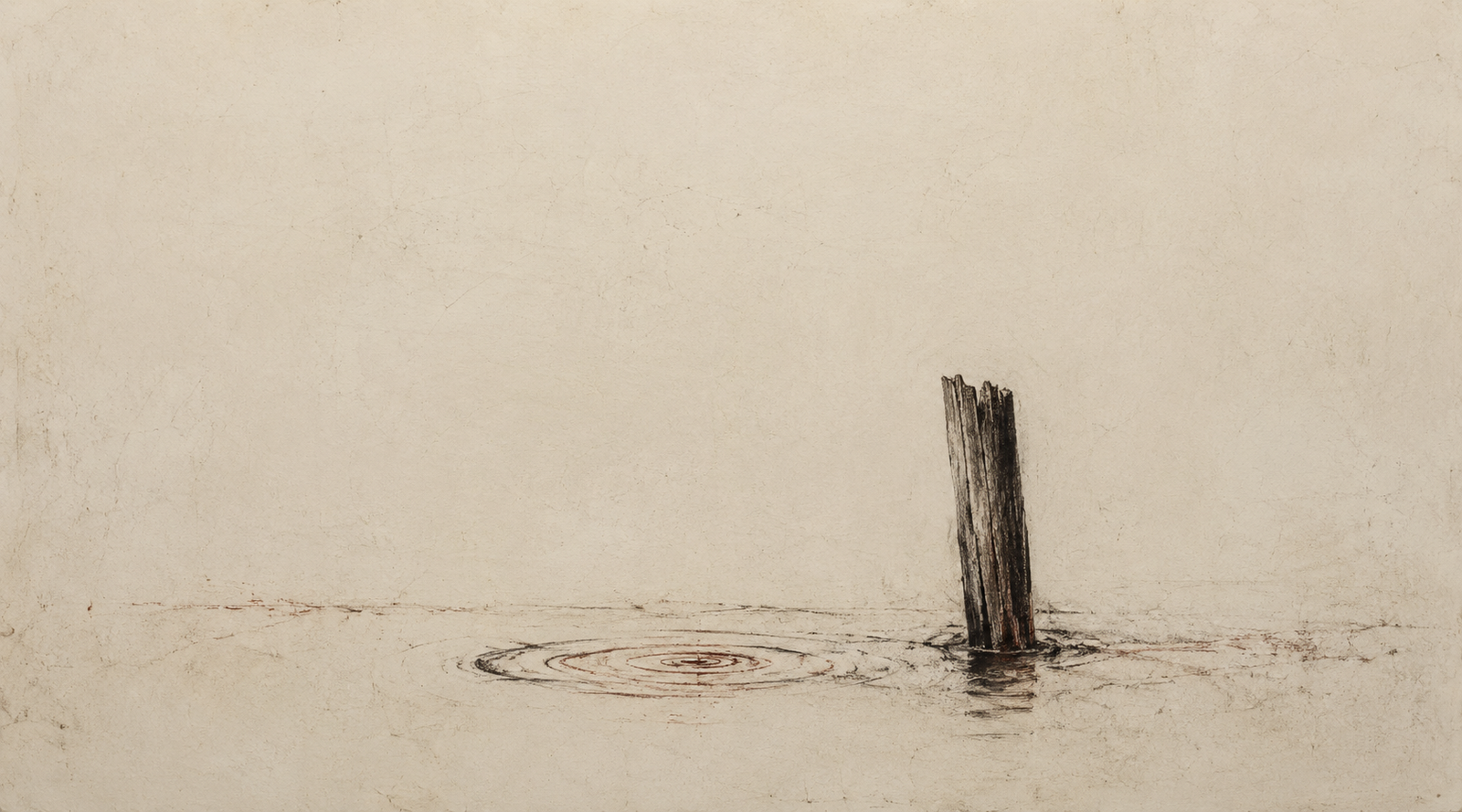
Some of Angkor’s most intimate ruins do not rise above the ground at all. They are postholes, low mounds, hearths and ponds: durable traces of a domestic city built largely from things that decay. To restore that city is to see Angkor not only as stone, but as wood, smoke, water, repair, and people living within calling distance.