

Why Calypso Cannot Be Home
A Long Return reader’s guide on safety, exile, immortality, and the mortal meaning of home.
The first difficulty with Calypso is that her offer is not nothing.
She does not offer Odysseus a cave full of bones. She does not offer him the suitors’ hall, where appetite has learned to call itself entitlement. She does not offer him Troy, with its names burning into songs while the living men who carried them begin to vanish. She offers him shelter, beauty, desire, and an end to danger. She offers him food. She offers him rest. She offers him herself. She offers him immortality.
That is why the episode matters.
If Calypso offered only imprisonment, the moral shape would be simple. Odysseus would be a captive, and his departure would be escape. But Homer gives the scene more pressure than that. Calypso keeps him. She also loves him, or at least wants him with a force that resembles love from a divine distance. She is wounded by his leaving. She is not wrong to think that what she offers is extraordinary.
A goddess offers a man what men have always feared losing: safety from age, safety from death, safety from the sea, safety from the ruin that waits in ordinary time.
And he refuses.
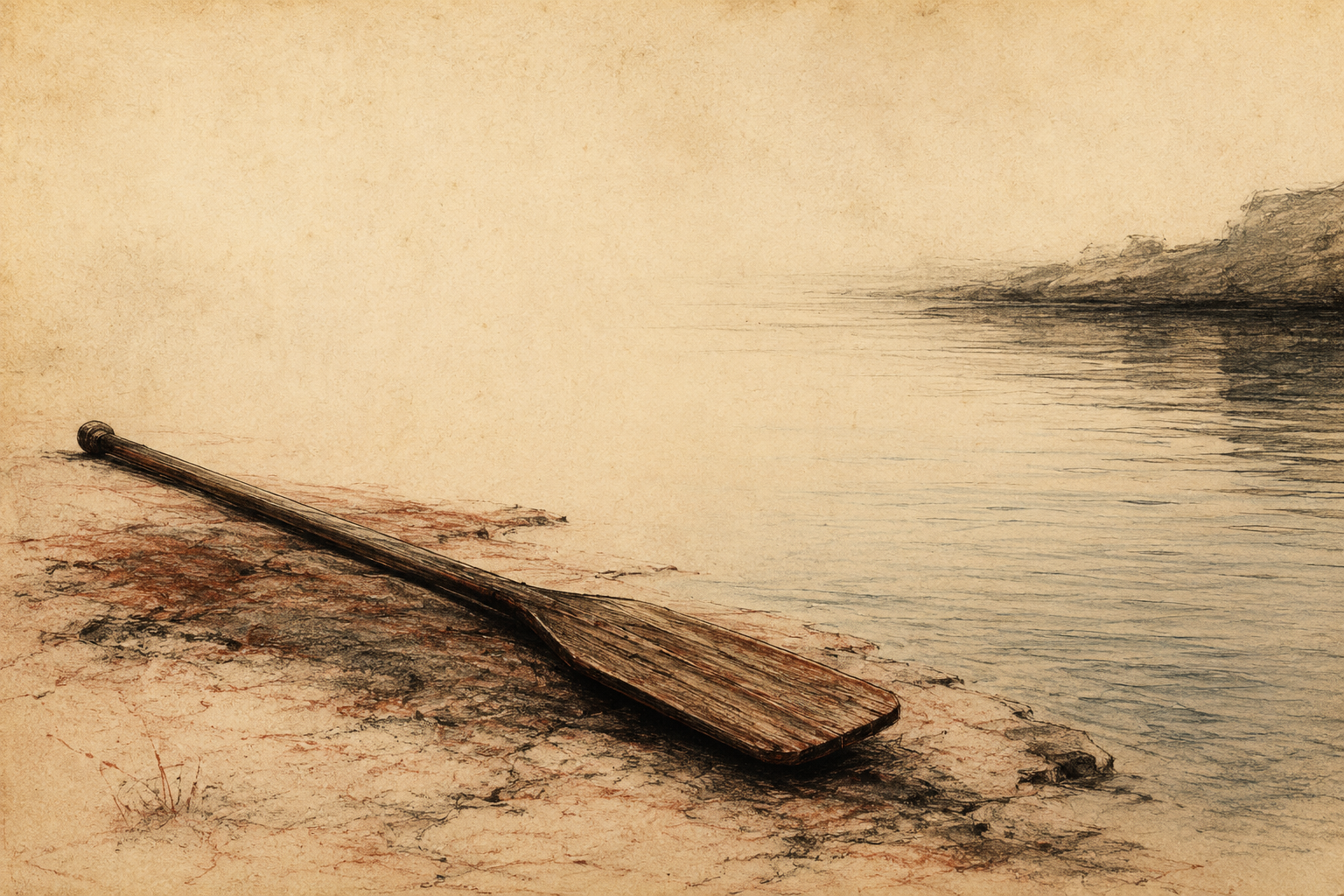
The image Homer gives us is not a man drunk on pleasure. It is a man sitting apart on the shore, looking toward the sea, grieving for a place he may never reach. The island is beautiful. The goddess wants him. The body is sheltered. But the soul has already moved elsewhere.
That is the trouble.
Odysseus does not leave because he has discovered that Calypso’s island is ugly. He leaves because its beauty cannot answer the shape of his longing. He does not refuse immortality because he is immune to temptation. He refuses because immortality, offered here, would require him to step outside the mortal life that still requires him.
Calypso can keep him alive forever.
She cannot bring him home.
That distinction is one of the great pressures of The Odyssey. Home, in this poem, is not simply the place where the body is protected. If it were, Calypso’s island would be enough. It has shelter. It has beauty. It has food. It has the goddess’s bed. It has the promise that nothing need happen next unless Odysseus consents to remain inside a life without ending.
But home is not the absence of danger.
Home is the place where a life remains answerable.
That is what Calypso cannot give him. She cannot return him to Penelope’s long intelligence, to Telemachus’s unfinished manhood, to Laertes’s grief, to the servants who have kept faith and those who have not, to the suitors eating through the order of his house. She cannot return him to the bed that will one day test whether anyone still knows what cannot be moved. She cannot return him to the name that has become rumour, wound, inheritance, and threat.
She can remove suffering from his future. But she can only do this by removing him from the web of obligations that makes his life recognisable as his own.
Calypso’s anger is not empty. When Hermes comes with the order from Zeus, she hears not only command but hypocrisy. The gods have often taken mortal beloveds for themselves. Yet when a goddess keeps a mortal man, heaven suddenly remembers law. Her complaint does not make the island home. But it does make her grief more serious. She is not merely the obstacle Odysseus must overcome. She is also someone being overruled by the same divine order that permits the suffering of mortals when it suits the gods.
That matters because the episode loses force if Calypso becomes only a captor.
She is more troubling than that.
She is troubling because she is not simply wrong.
Mortal life is fragile, painful, unjust, brief. The human house is not safe. Penelope cannot save Odysseus from age. Telemachus cannot save him from the consequences of absence. Ithaca cannot save him from recognition, judgement, bloodshed, or grief. No human home can offer what Calypso offers.
But perhaps that is exactly why Calypso cannot be home.
A home is not only where one is preserved. It is where one can still be claimed.
This is why immortality, in the Calypso episode, is not merely a reward Odysseus nobly declines. It is a kind of erasure. To become immortal with Calypso would not mean that Odysseus had conquered death. It would mean that he had stepped outside the mortal story that still requires him. He would no longer be the man who left Ithaca and must answer for what absence has done. He would no longer be husband in any difficult human sense, or father, or king, or son. He would no longer grow old into the consequences of his choices. He would no longer be tested by recognition. He would no longer have to stand at the door of his own house and discover whether the life he longs for can still receive him.
He would survive by ceasing to return.
There is a strange mercy in the fact that Odysseus understands this. Much of The Odyssey depends on his not understanding things quickly enough. He is cunning, but not always wise. He is capable of restraint, and also of vanity. He can save his men by intelligence and endanger them by the need to be known. He is not a simple emblem of faithful longing. But here, on Calypso’s island, he sees something clearly: a life without death is not necessarily a life still worth having if it costs him the mortal pattern that gives it meaning.
He wants Ithaca.
But Ithaca is not only a destination. Ithaca is the place where his life remains unfinished.
This is why Penelope matters here even when she is far away. She must not be reduced to the woman waiting at the end of the adventure, the domestic prize offered after the sea has finished with him. The poem is much more severe than that. Penelope is not merely what Odysseus wants. She is part of the reality to which he remains answerable. Her waiting is not emptiness. Her not-knowing has become a form of endurance. Her intelligence has been forced to live inside delay.
To return to Penelope is not simply to resume a marriage. It is to submit the self that has survived to the person who has also survived, differently, in rooms rather than on seas.
Calypso cannot do that. She can desire Odysseus, but she cannot test whether he is still himself. She can possess him, but she cannot recognise him in the full human sense, because she has not lived inside the mortal damage of his absence. She has not had to keep his house from being consumed. She has not had to raise his son in the shadow of his name. She has not had to decide, day after day, how long faith can last before it becomes foolishness.
Calypso’s island is outside that time.
This is its beauty.
This is its danger.
The temptation of the island is not simply sensual. It is not merely that Odysseus might prefer the goddess’s bed. That would be too small. The deeper temptation is release from history. No more Troy. No more drowned companions. No more guilt carried forward in the body. No more house ruined by absence. No more son growing up without him. No more wife waiting past certainty. No more father fading in grief. No more return that may expose him as changed beyond recognition.
Calypso offers him a life in which the past can stop making claims.
But home is where the past is still waiting.
This is why the storm that follows his departure is not just a return to danger after a pause in the plot. It is the terrible confirmation that Odysseus has re-entered mortal life. The sea hurts him. Poseidon sees him. The raft breaks. The body that Calypso would have kept from death is thrown again into exhaustion, terror, salt, and need. He is reduced almost to nothing: a man clinging, a man calculating, a man with no kingdom in his hands and no proof of himself except the stubborn refusal to disappear.
And yet the storm belongs to the road home in a way Calypso’s island never can.
That does not make the storm good. The Odyssey is not so cheap as to pretend that suffering becomes holy merely because it moves the story forward. Pain is pain. Fear is fear. The sea is not secretly kind because the man survives it. But the storm returns Odysseus to the world of consequence. It places him again among forces he cannot command. It makes him dependent, mortal, exposed, and moving.
Calypso’s island keeps him safe by stilling the story.
The storm endangers him by restoring it.
That is the hard mercy of Book V. Odysseus leaves the goddess and is almost destroyed. He leaves immortality and is given driftwood. He leaves beauty and is dragged under the waves. He leaves the woman who wants to keep him and moves toward people who will not yet know who he is.
But this is what return requires.
It requires leaving the false homes as well as surviving the obvious dangers. It requires refusing the places where one is comfortable but no longer answerable. It requires knowing that safety, when it cuts a person off from memory, obligation, and recognition, may become another form of exile.
Calypso cannot be home because she can keep Odysseus from death, but she cannot give him the danger of being known.
She cannot give him the wife who will test him, the son who has grown in his absence, the father diminished by waiting, the servants whose loyalty or betrayal must be revealed, the bed rooted in living wood, the name that must be hidden before it can be restored.
She cannot give him mortality with meaning.
So he leaves.
And once he leaves, the sea rises against him.
That is not the opposite of homecoming.
It is the first weather of return.
—
Receive the next work
Subscribe free to receive new work from the The Hospitable Dark Library by email.
More from the Library

See Also
A concise and impartial dictionary of absence, promises, quarrels, ordinary objects, and the troublesome instability of words.

The City of Service
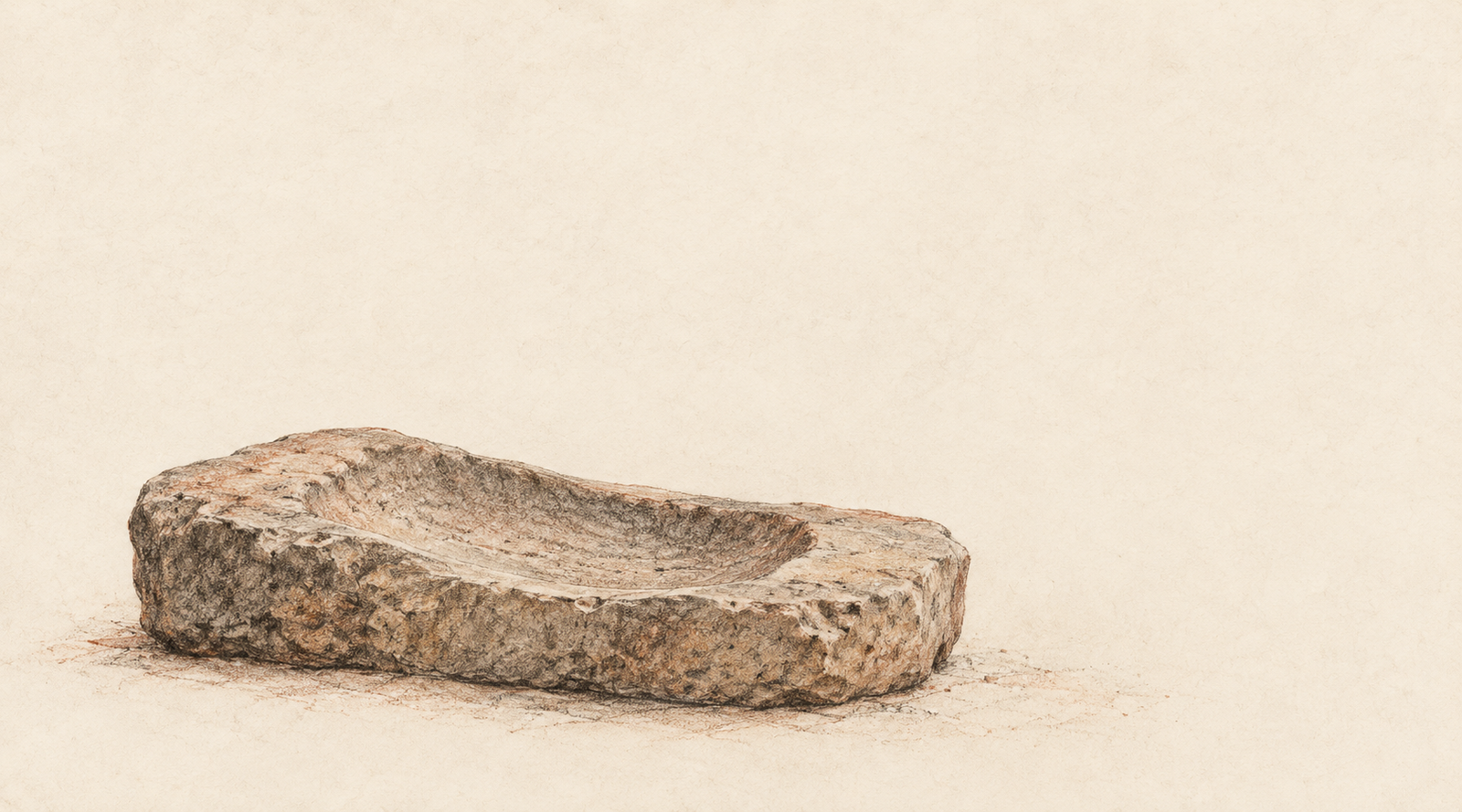
The temple we inherit is a building from which almost all necessity has been removed. Nothing must be brought for it to continue being what we call a temple. The sanctuary asks nothing of us. Stone is good at this kind of independence.
A living temple was otherwise.
Water had to come in. So did grain, cloth, oil, aromatic substances, fuel. The things required for worship arrived because someone carried them across a threshold.

Houses of Wood, Light, and Smoke
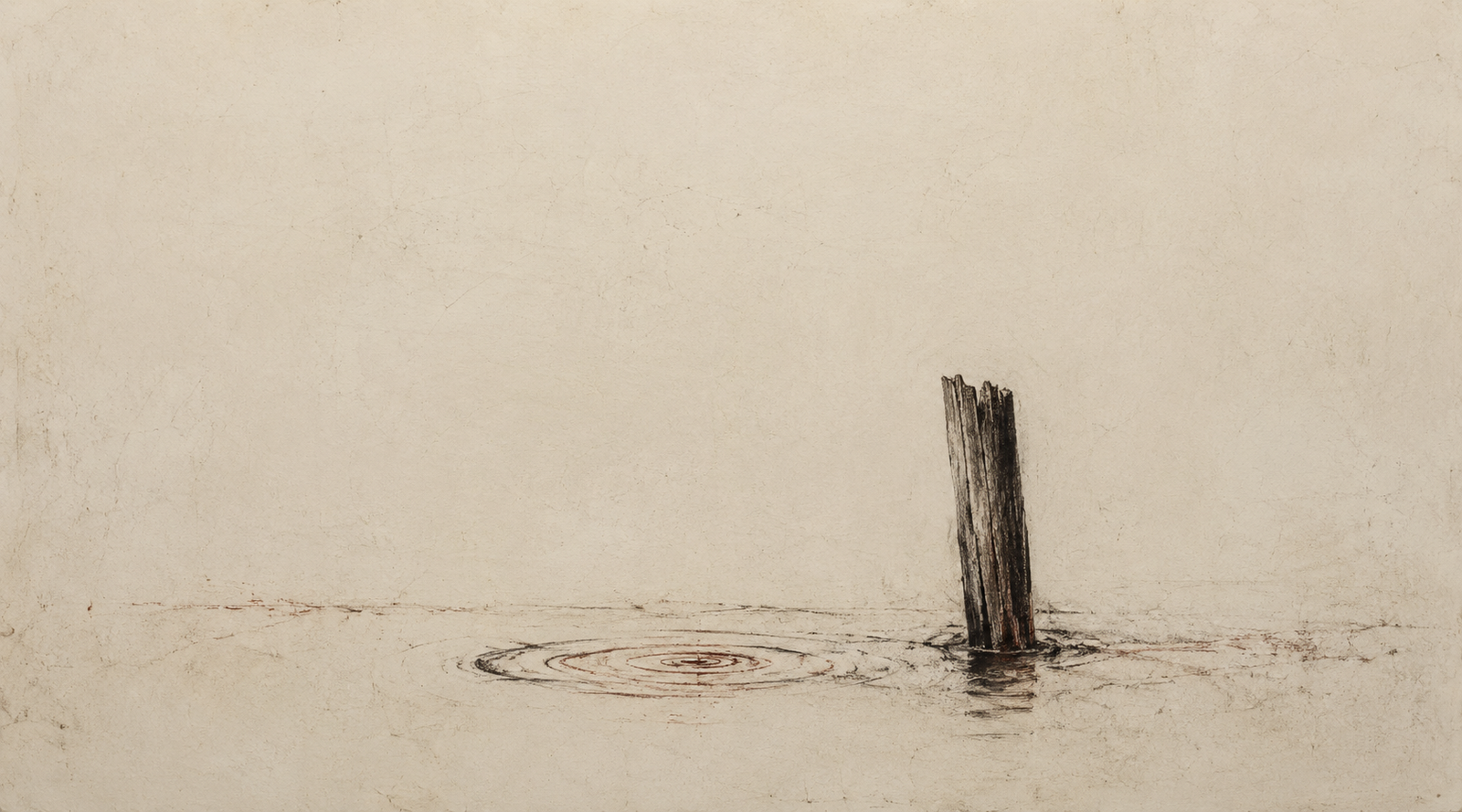
Some of Angkor’s most intimate ruins do not rise above the ground at all. They are postholes, low mounds, hearths and ponds: durable traces of a domestic city built largely from things that decay. To restore that city is to see Angkor not only as stone, but as wood, smoke, water, repair, and people living within calling distance.