Baksei Chamkrong Temple
| Date: | Early 10th century, consecrated again in 948 |
| Style: | Bakheng to Koh Ker |
| King: | Harshavarman I (reign 915 – 924 CE), restored by Rajendravarman II (reign 944 – 968 CE) |
| Cult: | Hindu (Shiva and his consort Parvati) |
Baksei Chamkrong (Khmer: ប្រាសាទបក្សីចាំក្រុង) was built in the early 10th century under Harshavarman I, and it was restored and rededicated in 948 under Rajendravarman II (reign 944-968). The temple was originally dedicated to Harshavarman I's father, Yashovarman I.
It lies at the foot of Phnom Bakheng Temple (between Phnom Bakheng Temple and Angkor Thom), the centre of Yashovarman I’s city, Yashodharapura, and was one of the first temples to be built in brick on a stepped laterite base.
Baksei Chamkrong is a beautiful, well-balanced mountain style temple that provides insight into the Angkor’s early temple style. Consistent with the early-Angkor style, only the door-frames and lintels were made from sandstone.
The square brick sanctuary, with the typical four-tiered superstructure of Angkor’s early temples, stands atop a four-level laterite pyramid, reinforcing its symbolic association with the mountaintop residence of the gods, Mount Meru. A steep staircase rises on each side to the summit.
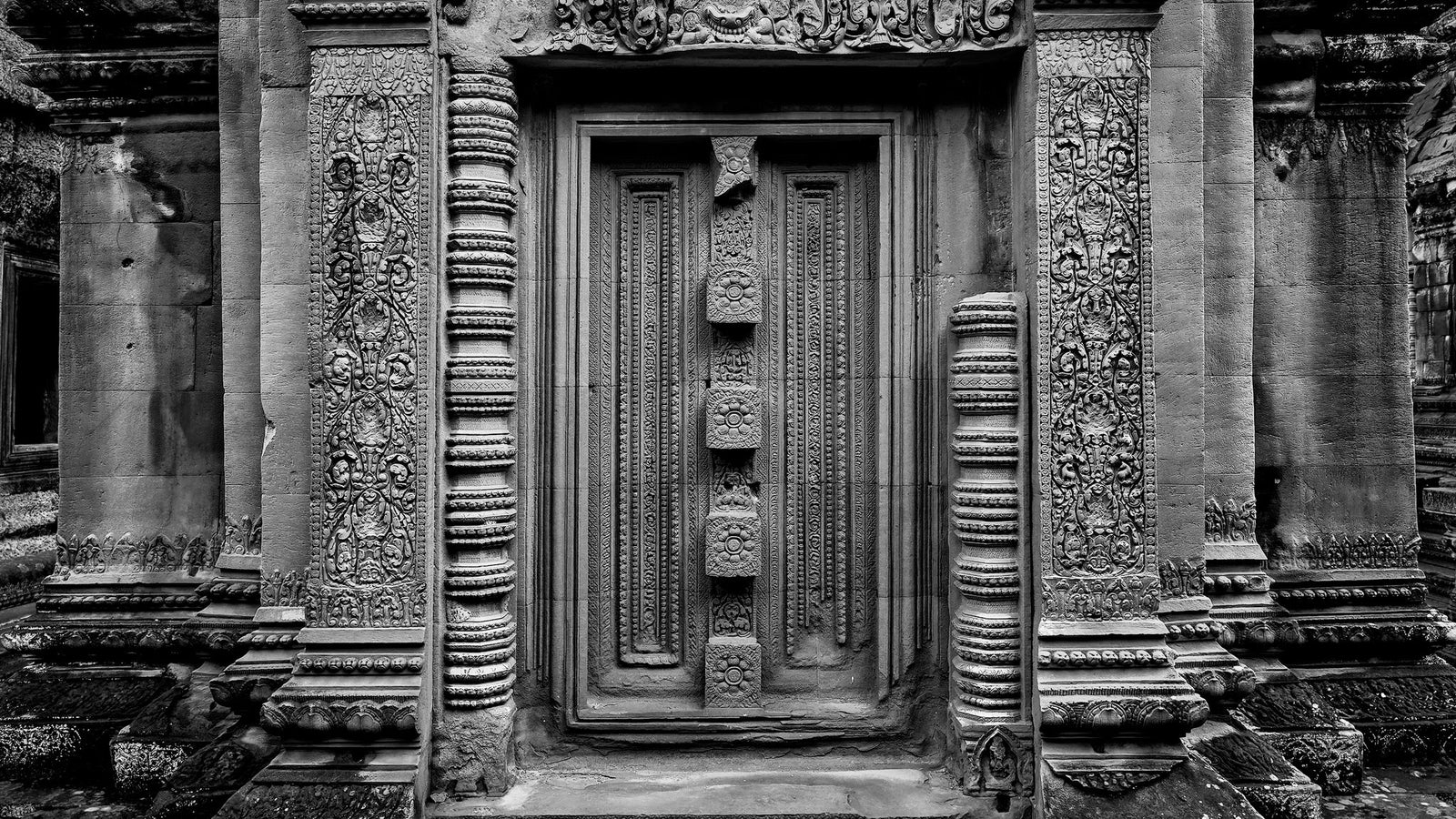
The sanctuary can only be accessed from the east side, the other three sides having blind doors. Its original stucco decoration has fallen off, but impressions of the original female guardians remain in the brick walls.
Indra rides his three-headed elephant Airavata on the lintel above the sanctuary’s eastern entrance.
The primary entrance’s door-frame holds a Sanskrit inscription from 948 that lays out the succession of Khmer kings, from pre-Angkorean times to the then-current ruler (Rajendravarman II), and the royal line’s mythological origins. The inscription also tells of a golden image of Shiva inside the temple.
Barely a trace remains of the brick enclosure wall that originally surrounded the temple, pierced by a gopura on the east and west sides.
Kravan Temple is another Angkor monument of the same period.