
Palilay Temple
| Date: | Early 12th century CE |
| Style: | Angkor Wat, Bayon to Post-Bayon |
| King: | Suryavarman II (reign 1113 - 1150 CE) (?) |
| Cult: | Theravada Buddhist |
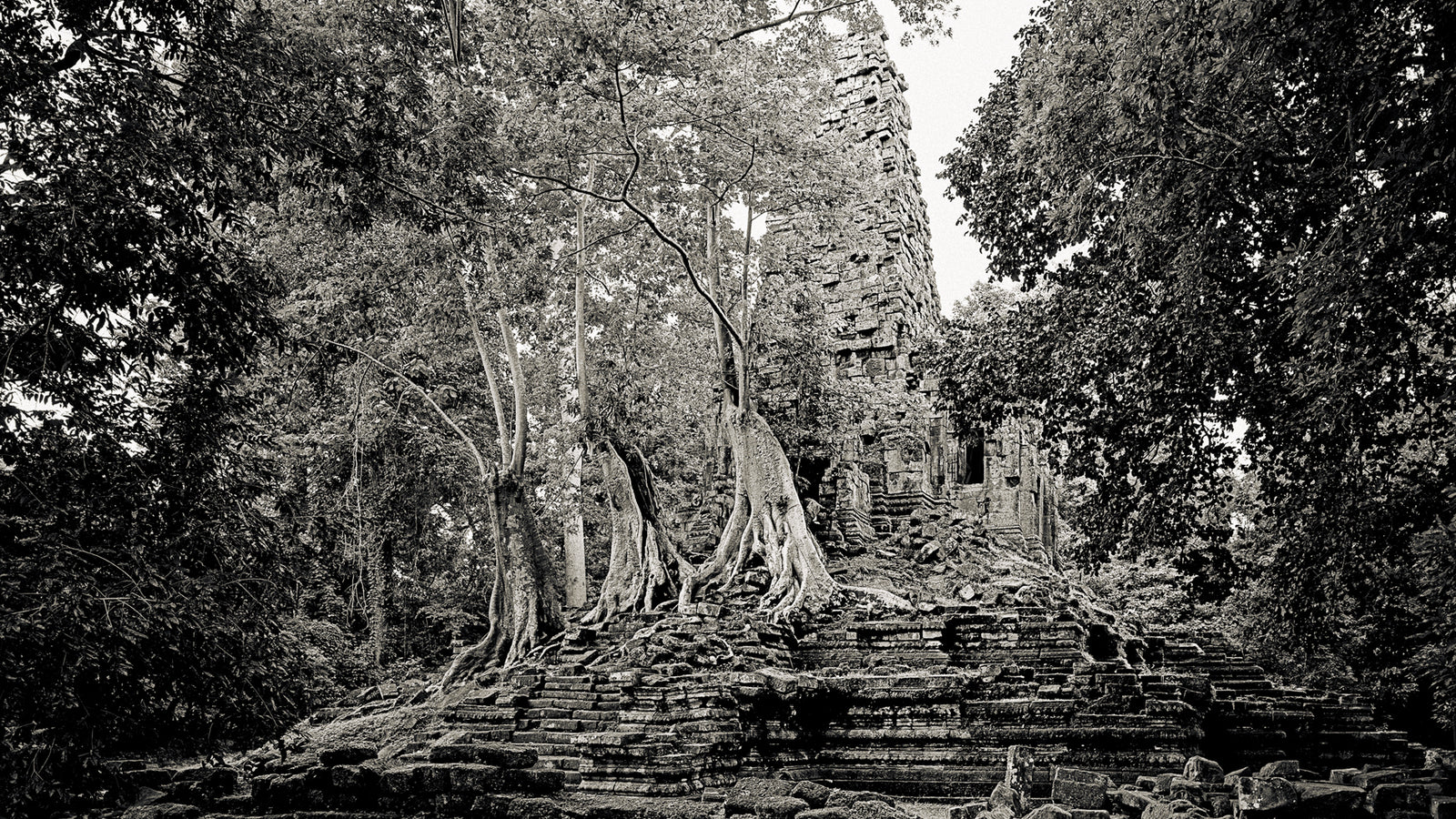
Preah Palilay (Khmer: ប្រាសាទព្រះប៉ាលេឡៃ) is a delightful little temple, lost in a peaceful section of the forest to the north of the Royal Palace.
Preah Palilay is one of the very few temples in the Angkor area where the images of Buddha have not been destroyed, leading many to believe that this temple was built after the Hindu reaction, and was therefore one of the last stone temples erected in Angkor.
My preferred theory is that, despite the dominance of Hinduism during most of the Angkorean period, Theravada Buddhism was tolerated from the end of the 9th century CE, when Yashovarman I permitted the building of Tep Pranam Temple in the shadow of the Royal Palace. The iconoclastic fever of the Hindu Reaction was directed against the Mahayana Buddhist temples but spared the Theravada monuments.
The sanctuary, perched on top of a large pyramidal base, features an unusually high tower (here a truncated pyramid, not the usual tower with reducing levels).
To the east of the sanctuary is a beautiful cruciform naga terrace, one of the best preserved in Angkor, and the eastern gate has several fabulous pediments.
Please also see , and the .
Please also see:
- My Work at Preah Palilay Temple
- The in-depth articles about Preah Palilay Temple in My Journal
- Images of Preah Palilay Temple, Angkor, Cambodia ⧉