
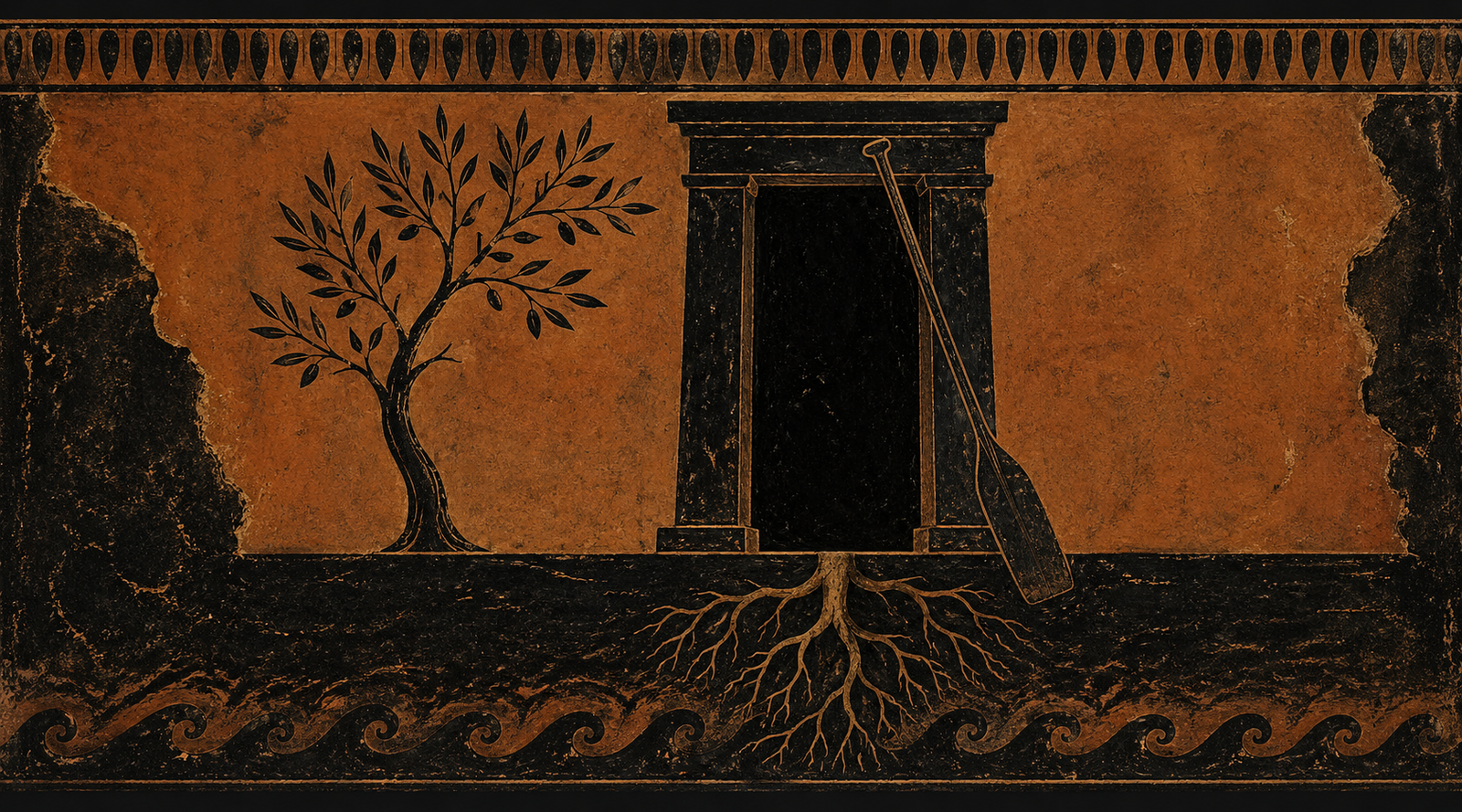

After the Door
A closing reflection on No Man Comes Home: return not as peace, but as the beginning of recognisability after survival.
The story ends after the door has opened.
That is why it cannot end in peace.
Peace would be too clean a word for what has happened. It would ask the bed to do more than any bed can do. It would ask recognition to undo absence, violence to purify the house, marriage to cancel estrangement, and morning to arrive as mercy rather than labour.
No Man Comes Home refuses that mercy.
It ends after proof.
That matters.
The dog has known. The scar has spoken. The bow has answered. The bed has revealed what no public sign could reveal. The father has held the son returned from the sea. The island has been restrained from further blood. The house has been reclaimed. The suitors are dead. The gods have intervened. The old story has reached the place where lesser tellings might let the music swell and close the door.
But the door is not the end.
The door is where the harder work begins.
Odysseus has come home by means that home cannot wholly bless. He has lied, hidden, withheld, measured, tested, endured, struck, waited, watched, and entered as less than himself in order to become more dangerous than anyone in the hall understood. Those arts brought him back. They also made him difficult to receive. The same concealment that saved him from monsters, gods, songs, and men now stands between him and the intimacy for which he crossed the sea.
This is the wound the sequence has carried from the beginning.
Not whether Odysseus will reach Ithaca.
Whether reaching Ithaca can become return.
Arrival is geographic.
Return is moral.
A ship can bring a man to shore. A goddess can clear mist. A disguise can open the hall. A bow can prove the hand. A bed can prove the secret. None of these can make twenty years unhappen. None can return Telemachus to boyhood, Penelope to untested trust, Laertes to unwounded age, or Odysseus to the man who left.
The poem ends correctly because it refuses to pretend otherwise.
Penelope receives him.
That does not mean she has solved him.
The bed proves the marriage’s root, not its ease. It proves that the man before her once entered the deepest architecture of their shared life, that he knows the secret made of tree, labour, chamber, and union. But it does not prove that war, wandering, command, deception, and survival have left him transparent. It does not make fidelity simple. It makes fidelity possible again, under harder conditions.
The marriage is not restored to innocence.
It is restored to difficulty.
That is the higher mercy.
A false ending would have let embrace become answer. This ending allows embrace to become beginning. Penelope and Odysseus are not returned to the first night. They are brought to a second threshold, older, more wounded, less easily deceived. They lie beside one another not as figures in a completed myth, but as two people required to become recognisable after the long disciplines that kept them alive.
The house, too, is not purified.
It is made capable of truth.
The suitors’ deaths answer a violation, but they do not cleanse memory. The hall has seen too much. The tables can be set again, but they cannot become innocent because bread returns. The floor can be washed, but washing is not forgetting. Every servant will carry a different version of what happened. Every neighbouring household will keep its own Ithaca. Justice inside the house becomes grief in other houses.
This is why the final canto must pass through Laertes and the island.
The story cannot remain inside the chamber.
Private recognition has public consequence. A marriage may be proved in secret, but a kingdom bleeds in daylight. Odysseus does not return only to Penelope. He returns to father, son, servants, kin-groups, old loyalties, resentments, graves, rumours, and the unfinished speech of the island itself.
Morning brings all this in.
Morning is not brightness.
Morning is exposure.
It reveals what night allowed to be held, delayed, whispered, lengthened, endured. Athena may stretch the dark for husband and wife, but even divine kindness has an edge. Dawn must come. Men must rise. Bodies must be named. Families must hear. The old king must answer not only the bed, but the island.
And Odysseus must still be checked.
That is one of the final severity’s necessary gestures. The returned man is not cured by being received. He surges forward again when violence threatens to continue. Athena must restrain him. The body that has survived by continuation does not instantly know how to stop. A man trained by danger may mistake motion for life long after stillness has become necessary.
So the gods do not reward him with simplicity.
They arrest him at the edge of repetition.
That restraint is mercy in its sternest form. Odysseus must live beyond the acts that made him Odysseus. He must become answerable to a house that no longer needs only cunning, force, and endurance. He must learn the labour no ship taught him.
How to be known.
Not named.
Not praised.
Not obeyed.
Known.
The whole sequence has moved towards that word without making it easy. Recognition has come in partial forms: scent, scar, bow, bed, trees, blood, memory, silence. Each proof is true. Each proof is insufficient alone. Together they bring the man to the threshold of recognisability, but they cannot cross it for him.
That is why the last lines remain in the dark.
Not because nothing has changed.
Everything has changed.
But because the deepest change now required cannot be staged as one more event. It cannot be accomplished by arrow, oath, test, embrace, or divine sign. It must happen in time, in repeated mornings, in speech offered without strategy, in patience after victory, in the daily disciplines of a house learning to contain truth without turning it again into concealment.
The poem has always been moving towards morning.
Not the shining morning of triumph.
The long work of morning.
The work after the tale has spent its marvels. After the monsters. After the song. After the underworld. After the bow. After the bed. After the door.
What remains is not lesser.
It is the thing all return was for.
To live after survival.
To speak after concealment.
To be recognised without demanding that recognition make the past harmless.
No man comes home entirely.
But perhaps a man may come far enough to begin.
That is where the poem leaves him.
Not at peace.
Not lost.
Beside the woman who knows enough to test him, inside the house that must now learn him, beneath the dark that has not yet become answer.
Only the long work of morning.
—
No Man Comes Home is a twelve-canto literary retelling of The Odyssey within The House of Cadmus: a poem of return, concealment, recognition, and the cost of surviving long enough to come home.
—
Receive the next work
Subscribe free to receive new work from the House of Cadmus Library by email.
More from the Library

See Also
A concise and impartial dictionary of absence, promises, quarrels, ordinary objects, and the troublesome instability of words.
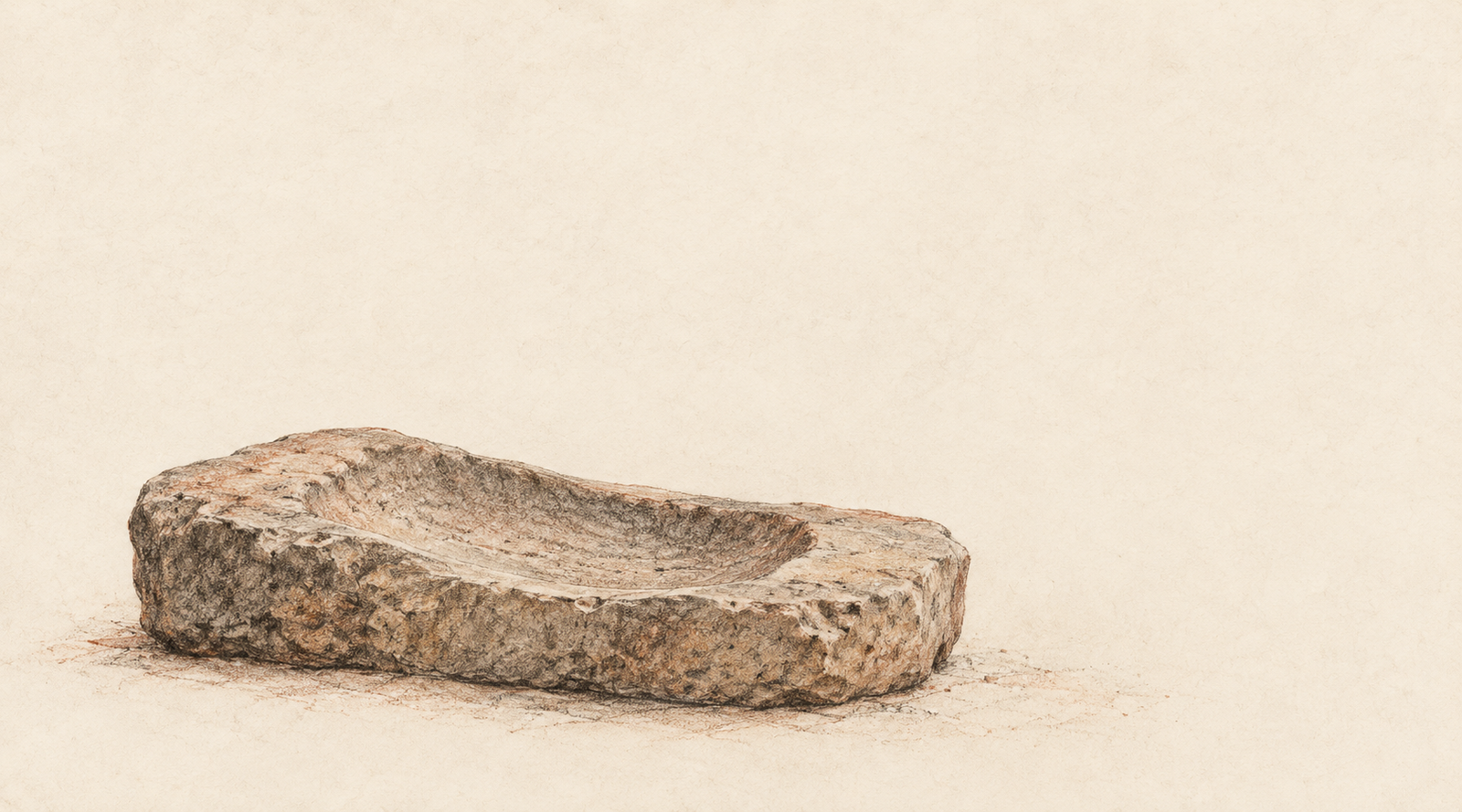

The City of Service
The temple we inherit is a building from which almost all necessity has been removed. Nothing must be brought for it to continue being what we call a temple. The sanctuary asks nothing of us. Stone is good at this kind of independence.
A living temple was otherwise.
Water had to come in. So did grain, cloth, oil, aromatic substances, fuel. The things required for worship arrived because someone carried them across a threshold.
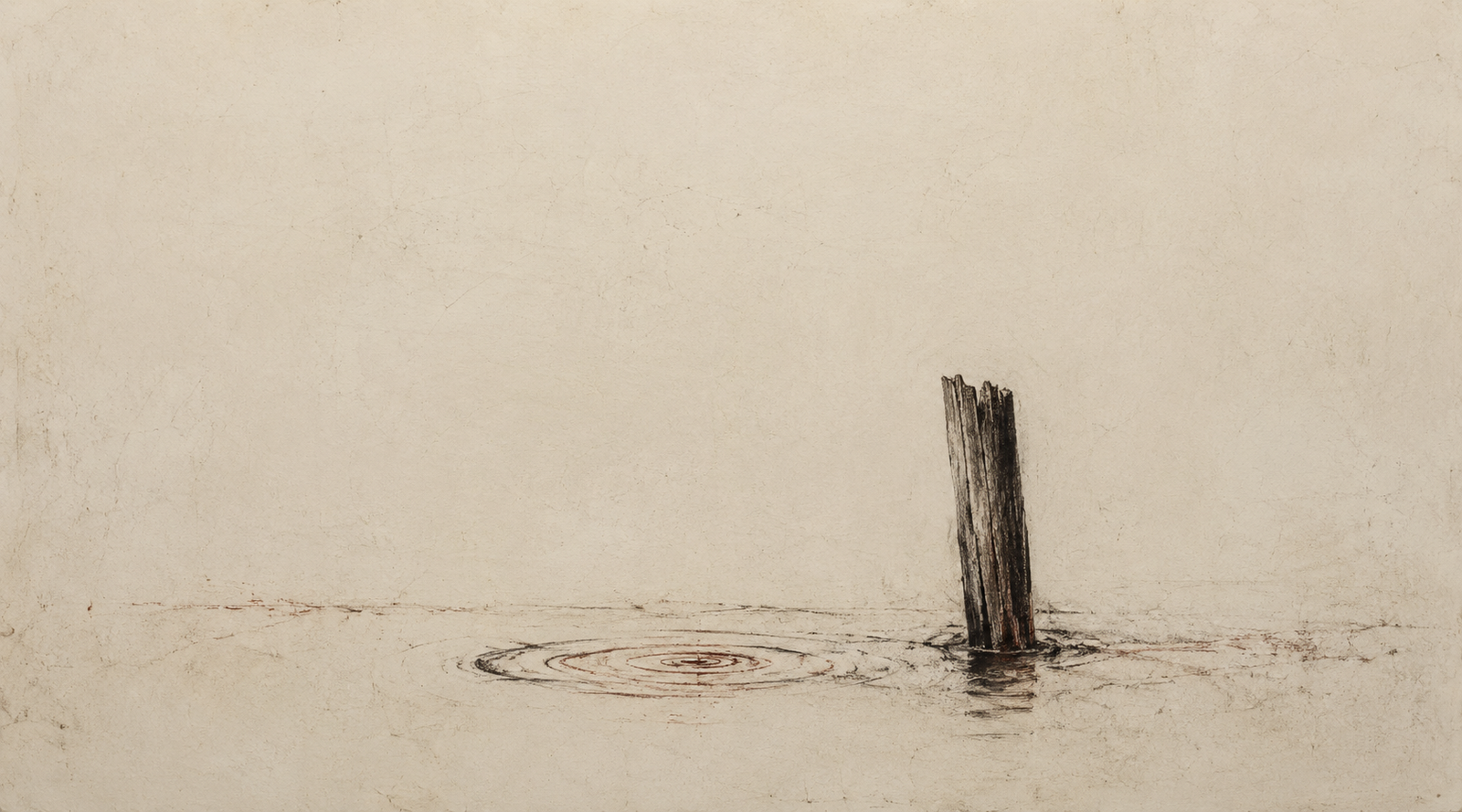

Houses of Wood, Light, and Smoke
Some of Angkor’s most intimate ruins do not rise above the ground at all. They are postholes, low mounds, hearths and ponds: durable traces of a domestic city built largely from things that decay. To restore that city is to see Angkor not only as stone, but as wood, smoke, water, repair, and people living within calling distance.