

Eros and Psyche — The Lamp and the Wound
A tale of beauty, fear, trust, and the love that must learn to bear the light.
Beauty, when it belongs to another person, is very easy to call a gift.
It is less easy to carry when strangers begin to treat your face as though it were a public shrine.
Psyche learned this before she was old enough to understand why people lowered their voices when she entered a room. She was the youngest daughter of a king and queen, and in the beginning that should have meant only ordinary things: nursemaids, lessons, combs drawn through her hair, sandals beside the bed, her mother’s bracelets cool against her cheek when she was lifted and kissed.
But beauty, if it becomes famous enough, is no longer allowed to remain ordinary.
People came from neighbouring cities to look at her.
At first they came politely. They said they had business with the king, or offerings for the household gods, or a petition to lay before the queen. Then, when the pretence became too thin to hold, they simply came and stood in the courtyards, waiting for the youngest princess to pass from one room to another.
Some brought flowers.
Some brought fruit.
Some brought small carvings and lengths of dyed cloth and little clay lamps such as one might leave before a goddess.
This troubled the king. It troubled the queen more. It troubled Psyche most of all, though no one thought to ask her.
For when a girl is praised too much, people imagine she has been given something. They do not always see what has been taken from her.
Her two elder sisters were beautiful in the ordinary human way. They had suitors, quarrels, wedding chests, bridal songs being practised by servants who pretended not to gossip. They could be admired and still remain women. Psyche could not.
No young man came to ask for her hand.
No mother said, “My son would be fortunate.”
No father came with gifts and careful speech.
Men who would have married her sisters stood before Psyche as though marriage would be too bold a thought. They gazed at her and grew reverent. They spoke of her afterwards as though they had seen something beyond household life, beyond beds and bread and children.
So her sisters were married and carried away with torches and songs.
Psyche remained.
The rooms grew larger after they left. Their laughter no longer crossed the courtyard in the mornings. Their sandals no longer lay in careless pairs by the door. The loom room, where all three had once sat together, sounded too clean. Even the servants were gentle with her in a way that made her lonelier.
Meanwhile, beyond the palace, the goddess Aphrodite began to hear troubling things.
At first it was only a rumour.
A mortal girl, they said.
A face like dawn.
A beauty that made men forget the old shrines.
Aphrodite had endured praise for many centuries, which is not the same as being secure in it. Gods are not made calm by worship. Often they are made hungrier.
Her temples grew quieter.
Garlands that should have been laid on her altars were carried to the palace gates. Young brides whispered Psyche’s name before they whispered Aphrodite’s. Men who had once prayed to the goddess for desire now spoke of the princess as if the goddess had made a mistake and poured too much radiance into mortal clay.
Aphrodite heard all this.
She smiled.
It was not a kind smile, but it was not a simple one either. There was anger in it, certainly. There was vanity. There was the old immortal outrage of one who has never learned to be replaced. But there was also something colder and more wounded than jealousy. A goddess of beauty knows better than anyone how quickly worship turns upon the beautiful. She knew what it meant to be wanted by those who had never asked whether the beloved wished to be wanted.
That knowledge did not make her merciful.
Sometimes knowledge only sharpens the knife.
She called her son.
Eros came lightly, as he always did when summoned, though there was nothing light about him. Men later made him smaller in their stories because they were afraid of what he truly was. They gave him childish limbs and laughter and mischievous wings. They forgot that desire can unhouse kings, break vows, empty cities, and make wise people walk willingly into ruin.
He came carrying his arrows.
Aphrodite told him of Psyche.
“Make her love something base,” she said. “Something unworthy. Something that will teach mortals not to raise a girl into my place.”
Eros listened.
He had obeyed his mother many times before. He had sent longing into palaces and fields, into shepherds and queens, into old men, young girls, gods, sailors, widows, warriors. He had watched love make fools of the proud and prophets of the foolish. He had seen enough to think himself wise about it.
He went to Psyche.
He found her not in a temple, nor on a balcony, nor surrounded by worshippers, but in a small inner room where the afternoon light fell across a chest of linen. She was folding one of her sisters’ old veils.
It had been left behind after the wedding. A servant had found it and brought it to her, asking whether it should be packed away. Psyche had said yes, then no, then taken it herself.
She held it now in her lap.
There was no worship in her face. There was only the tiredness of a girl who had been looked at too much and known too little.
Eros stopped.
The arrow in his hand lowered.
He had come to wound her. Instead, something opened in him with the suddenness of pain.
He did not understand at first what had happened. That may be the one mercy given to those who are struck by their own weapons: ignorance lasts for one breath longer than the wound.
He saw Psyche touch the veil to her cheek.
He saw that no one had ever been allowed simply to love her.
And because he was a god, and because gods are very slow to understand the harm they do when they call it tenderness, he decided to save her in the worst possible way.
Not by asking.
Not by standing before her.
Not by entering her life honestly.
He went instead to Apollo’s oracle and bent the machinery of fate toward his desire.
Soon afterwards, Psyche’s father climbed the road to the shrine.
He did not go proudly. Kings go proudly when they are asking for victory, heirs, rain, or revenge. He went like a man whose household has become too quiet. He asked why no husband came for his youngest daughter. He asked what god had been offended. He asked what must be done.
The answer came back in words that seemed to strike the stones before they struck the heart.
Dress the girl for a wedding.
Lead her to the high rock.
Leave her there.
No mortal husband waits for her.
A winged serpent, feared by gods and men, will take her as his bride.
Her father returned at dusk.
No one in the palace needed to ask whether the oracle had spoken kindly. His face had emptied of all ordinary strength. He walked past the servants who reached for his cloak. He walked past the lamps being lit in the hall. He went to the queen, and together they sent for Psyche.
She came quickly.
Children, even grown ones, know the sound of fear in a parent’s summons.
The king tried to speak. For a moment he could not. His hands, which had held sceptres and swords and newborn daughters, trembled against the arms of his chair.
The queen was the one who told her.
She did it badly, because there is no good way to tell a daughter she is to be given to a monster. She spoke of obedience, of divine will, of the city’s safety, of how the gods must not be angered further. Then she stopped and covered her mouth.
Psyche stood very still.
Outside, someone in the courtyard laughed at something, not knowing that the world had ended in the inner room.
“When?” Psyche asked.
Her father made a sound then. It was not speech. It was the sound of a man discovering that grief does not always make him brave.
“At dawn,” the queen said.
Psyche nodded.
That night they dressed her as a bride.
It was this, more than the oracle, that nearly broke her.
The women brought out gold-threaded garments, veils, pins, anklets, scent. They dressed her with the care due to joy. They fastened bright things upon her as though brightness could disguise what was being done. Her mother wept while smoothing the fabric over her shoulders. Her father could not remain in the room.
Psyche looked at her reflection in a polished bronze mirror.
She did not look like a sacrifice.
That was the cruelty of it.
She looked like a girl whose family was sending her to be loved.
In the dark before dawn she went once into the room where her sisters had slept. Their beds had been stripped. A spindle lay beneath one bench, forgotten. She picked it up and held it for a moment, as if the weight of an ordinary object could keep her in the ordinary world.
Then she put it down.
They had not loved her enough to save her.
This is a terrible sentence to know before sunrise.
The procession climbed the mountain slowly.
No one sang.
The bridal torches smoked in the morning air. Women sobbed into their veils. Men looked away because they were ashamed to be alive and unable to prevent what piety required. The king walked beside his daughter until the last place where the path widened. There he stopped.
Psyche kissed his hand.
He bent his head over hers, and for one moment he was only her father.
Then they left her.
The whole company descended without turning back.
Psyche watched them grow smaller along the path. She watched the last torch disappear among the rocks. The wind moved her veil against her mouth.
She waited for the monster.
Instead, the West Wind came.
It did not seize her. That would have been easier to hate. It lifted her gently, almost with courtesy, and carried her down from the rock, over gullies and pine slopes and flashes of water, until she came to a valley hidden from every road.
There stood a palace.
Not a palace such as kings build, with guards at the doors and accounts in the back rooms and someone always worrying about grain. This palace seemed made from wealth that had never been counted. Its floors shone. Its doors opened without hands. Its rooms were full of food, music, warm water, folded garments, lamps ready to be lit.
Voices served her, though no bodies appeared.
They called her mistress.
They told her to bathe, to eat, to rest.
Psyche obeyed because astonishment leaves very little room for refusal.
Night came.
Then he came.
She did not see him.
She heard only the movement of someone entering the room after the lamps had gone out. She smelled something like myrtle, smoke, and rain on hot stone. She felt the bed shift beneath his weight.
“Do not be afraid,” he said.
It was a beautiful voice.
That did not make it harmless.
“Are you my husband?” she asked.
“Yes.”
“Are you the thing the oracle promised?”
A pause.
“The oracle does not always know how to name what it has been made to say.”
This was not an answer.
Psyche understood that. She understood also that she was alone in a hidden palace with a husband who would not show his face. Both truths lay beside her in the dark.
He was gentle with her.
That must be said.
He did not hurt her. He spoke softly. He asked what she needed. He knew when she was frightened and grew still until her breathing steadied. He listened when she spoke of her sisters, her mother, the palace rooms, the strange voices that served her, the way the valley sounded after rain.
Night after night, he came.
Night after night, he left before dawn.
In time, Psyche loved him.
In time, she feared him.
The two truths lived side by side, as they often do.
The days were the hardest. A palace can be full of wonders and still become a cage if no one walks through it in daylight. Psyche ate from golden dishes. She bathed in water scented with flowers. She slept on linen finer than anything in her father’s house. Yet every morning she woke alone, and every evening she waited for a man who asked for her whole trust while giving her only darkness.
“Let me see my sisters,” she said one night.
“No.”
The answer came too quickly.
“Why?”
“They will bring sorrow.”
“They already have sorrow. They think I am dead.”
“They may be safer thinking so.”
Psyche turned from him then.
He reached for her, stopped, and let his hand fall.
Eros, who had made countless hearts restless, was beginning to learn the restlessness of being loved and not believed. It angered him because it frightened him. He had thought concealment would protect their happiness. He had not understood that a happiness built upon concealment requires one person to live inside another person’s decision.
At last he consented.
The West Wind brought her sisters to the valley.
They came crying, calling her name, clutching at her hands. For a little while their grief was real. They had stood at the foot of the mountain and believed her lost. They had dreamed of her devoured. They had carried the guilt of survival back into their husbands’ houses.
Then they saw the palace.
Grief changed shape.
It does that sometimes.
They looked at the shining floors, the invisible servants, the vessels too beautiful for ordinary use. They asked questions gently at first, then more sharply. Who was her husband? Why did he hide? Why did he come only at night? Had she never seen his hands, his face, his shadow against the wall?
Psyche defended him.
Then she faltered.
Bad counsel is most dangerous when it borrows the voice of reasonable fear.
“What if the oracle was true?” one sister whispered.
“What if he waits until you are carrying his child?” said the other. “What if he is kind now because he is patient?”
Psyche went pale.
There are fears that cannot enter us unless they find a door already open.
That night, after her sisters had gone, she listened to her husband breathe in the dark.
He slept as though nothing in the world could be lost.
Carefully, silently, she rose.
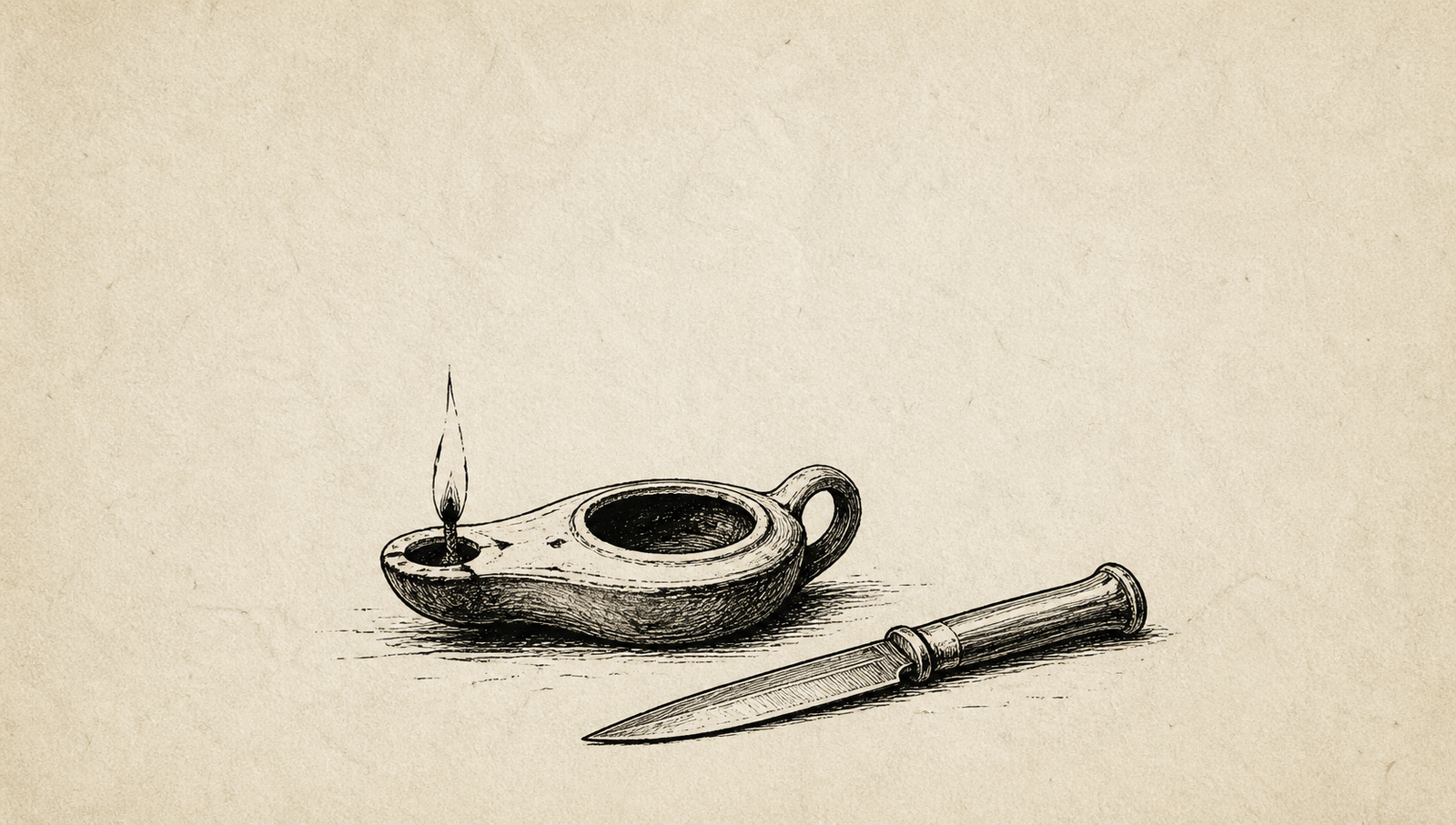
She had hidden a lamp beneath a bowl. She had hidden a knife beneath the folded cloth at the bed’s foot. Her hands shook as she took them up.
The knife was for the monster.
The lamp was for the truth.
She knelt beside the bed and lifted the flame.
There was no serpent.
There was no scaled horror, no beast with a mouth made for devouring, no nightmare from the oracle’s cold speech.
There was a god.
His wings lay folded behind him. His hair shone faintly in the lamplight. The bow and arrows rested beside the bed, and one of the arrowheads had pricked his own skin, so that a small dark mark showed where he too had been wounded.
Psyche stared.
This was not relief. Not yet.
Relief would come later, mixed with fury, grief, wonder, and the terrible knowledge that those who had frightened her had been wrong, but not wholly wrong.
For a god had hidden himself from her.
A god had taken her from the rock.
A god had accepted her love while denying her sight.
Her hand trembled.
A drop of burning oil fell from the lamp onto his shoulder.
Eros woke.
For one breath they saw one another in light.
That was the true wound.
Not the oil.
Not even the broken prohibition.
The sight.
He saw the knife in her hand. He saw the lamp. He saw her face, not faithless, not wicked, not foolish, but afraid enough to need proof.
And she saw that he understood this too late.
“Psyche,” he said.
The word held anger. It held pain. It held his own shame, though he did not yet know how to bear it.
She reached for him.
He drew back.
“Trust cannot live where it has been betrayed,” he said.
“No,” she answered, and her voice was raw. “Nor where it has been demanded blind.”
He looked at her then as though she had struck him more deeply than the oil.
Perhaps she had.
He rose from the bed. His wings opened in the dim room.
“You have wounded me,” he said.
“Yes,” said Psyche.
She did not lower her eyes.
“And I have lived in your darkness.”
He could have stayed.
This is the sorrow of the story: he could have stayed.
He could have sat beside her in the ruined lamplight and said what gods almost never say soon enough: I was wrong. I was afraid. I wanted to be loved without being known, and I called that trust.
But Eros was young in the way gods are young, even when they are older than kingdoms. His wound burned. His pride rose around it like armour.
He flew.
The palace vanished with him.
By morning Psyche lay in an empty field with ash on her hands and no roof above her.
She began to walk.
There are stories in which a woman loses love and immediately becomes a figure of noble sorrow. Those stories are unkind. Psyche was not noble at first. She was cold, hungry, ashamed, furious, frightened, and alone. She slept badly. She woke crying. She searched roads, shrines, riverbanks, groves. She asked after the god who had been her husband. Some pitied her. Some mocked her. Some recognised her beauty and began again that old, dreadful looking.
She went first to Demeter.
The goddess of grain saw her, and there was compassion in her face. But compassion is not always help.
“I cannot shelter you from Aphrodite,” Demeter said. “The fields have their own laws, and I will not draw her anger over the seed.”
Psyche bowed and went on.
She went to Hera.
The queen of the gods heard her story with grave attention. She knew something about the humiliation of a marriage arranged around divine appetite. Yet she too refused.
“I cannot help you against another goddess in her own matter,” Hera said.
So Psyche went at last to Aphrodite.
There are moments when surrender is not weakness but accuracy. Psyche had nowhere else to go.
Aphrodite received her in a high room open to the sea.
The goddess looked at her for a long time.
“So,” she said. “The girl who stole worship has come to beg.”
“I stole nothing,” Psyche said.
Aphrodite’s eyes sharpened.
That answer pleased her, though she would never have admitted it. There was no flattery in it. No pleading beauty. No attempt to turn suffering into charm.
“You accepted what was given.”
“I was looked at,” Psyche said. “That is not the same as accepting.”
For the first time, something like recognition moved across Aphrodite’s face.
It was gone almost at once.
Gods do not always become kinder when they recognise the truth. Sometimes they punish it for having arrived from mortal lips.
“You want my son,” Aphrodite said.
“I want what was broken to be brought into the light.”
Aphrodite laughed then, but softly.
“Mortals are always asking light to do more than it can.”
She set Psyche to work.
First, a heap of seeds was poured before her: wheat, barley, millet, lentils, poppy, chickpeas, all mixed together in a mound large enough to mock the hands.
“Sort them before evening,” Aphrodite said.
Psyche sat before the heap.
There was no grandeur in this task. Only smallness. Only the terrible number of things that must be separated one by one when a life has been made confused.
She began.
Her fingers ached. Her back stiffened. The light moved across the floor.
Then the ants came.
Quietly, in their hundreds and thousands, they entered through cracks in the stone. They knew grain. They knew labour. They knew how great work is done by those no one praises. By evening the seeds lay in perfect piles.
Aphrodite looked at them and said nothing.
The next day she sent Psyche after golden wool from fierce rams who grazed by the river. Their horns could crush bone. Their tempers were worse in the heat of noon.
Psyche went to the bank and would have entered the meadow directly, but a reed whispered from the water.
Not now.
Wait.
When the sun lowers, the rams will leave their wool on the thorns.
So Psyche waited. She crouched in the grass until the light softened and the beasts moved away. Then she gathered the bright wool from the bushes, strand by strand, gold caught on thorn.
Aphrodite took it.
Her mouth tightened.
Perhaps she remembered then how beauty is gathered by wounding whatever carries it.
The third task was water from the deadly height where a black stream fell sheer from the rocks and ran toward the underworld. No mortal hand could reach it. No mortal foot could stand near it.
Psyche climbed until her lungs burned.
She saw the water strike stone below with a sound like judgement.
This time an eagle came.
It took the flask from her hand, flew into the spray, and returned with the vessel filled.
Psyche carried it back.
Aphrodite’s anger had grown quieter by then.
Quiet anger is often the most dangerous.
For the fourth task she gave Psyche a small box.
“Go down,” she said. “Ask Persephone for a little of her beauty. Tell her Aphrodite requires it.”
The box was light.
That frightened Psyche more than if it had been heavy.
She went to the place where the road turns from the living world. She carried two coins and two small cakes. She had been instructed carefully: what to give, whom not to pity, where not to sit, when not to speak, how to return.
The descent was not like sleep.
Sleep is merciful. The underworld is awake in another manner.
The air changed first. Then the sound of her own steps. Then the memory of sunlight became something she could hold in her mind but not quite believe in. She passed voices that were not speaking to her. She passed hands reaching without hope. She passed faces turned toward the living warmth in her body.
Once, she heard someone weeping for a child.
She nearly turned.
She did not.
That may have been the hardest part: not the darkness, not the dead, not the river, but the obedience required to pass suffering without answering it.
She gave what she had been told to give.
She refused what she had been told to refuse.
She stood before Persephone and asked for beauty on behalf of the goddess who had sent her.
Persephone looked at her with the calm of one who had been taken, and had become terrible without ceasing to remember the flowers.
“So Aphrodite sends a mortal girl below the earth for beauty,” she said.
“Yes.”
“And you came.”
“Yes.”
Persephone placed something unseen in the box and closed the lid.
“Do not open it,” she said.
Psyche carried it upward.
The return was longer than the descent.
This is not always understood. To go down may be terror. To come back requires strength one has already spent.
By the time she reached the light, Psyche was changed. Dust clung to her dress. Her hands were grey. Her mouth was dry. She sat beside the road with the small box in her lap.
She thought of Aphrodite’s face.
She thought of Eros, who had seen her once in lamplight and flown.
She thought of beauty, which had brought worship, exile, desire, envy, punishment, and tasks no mortal should have survived.
Then a human thought came to her.
Not a wicked thought.
Not a vain one.
A tired thought.
If I must stand before him again, let me not look like what I have endured.
So she opened the box.
There was no beauty inside.
There was sleep.
It rose like a dark breath and entered her. Psyche fell where she sat, the open box beside her, her hand still resting on its lid.
Eros found her there.
He had been searching.
This, too, must be said.
Wounded pride lasts only so long in a heart that has truly loved. His shoulder had healed before his understanding did. For days he had lain hidden, nursing the burn as though the oil were the deepest injury. Then he began to see, unwillingly at first, the room as she had seen it: the dark, the condition, the unseen body beside her, the voice asking for trust while refusing the plain mercy of a face.
He remembered the knife.
He remembered her answer.
Nor where it has been demanded blind.
No arrow he had ever loosed had flown so straight.
When he saw Psyche lying beside the road, something in him gave way that was not grief only. He knelt.
The box lay open. The sleep from below clung to her like a veil. Her face was still beautiful, but beauty no longer seemed the important thing. Her feet were torn from walking. Her hands were marked by labour. Her dress was stained with earth from the lower world.
He saw, at last, what it had cost a mortal heart to be loved by a god in darkness.
Not admired.
Not desired.
Not hidden.
Loved.
The word had become heavier than he expected.
He gathered the sleep back into the box. Then he touched Psyche with one of his arrows, lightly, carefully, as if afraid now of the power he carried.
She woke.
For the second time, they saw one another in light.
Neither spoke at first.
There was no palace around them. No invisible servants. No bed. No darkness to soften what had happened. Only the road, the dust, the small closed box, and the god kneeling beside the woman he had lost.
“You came,” she said.
“Yes.”
“Because I suffered enough?”
He flinched.
“No.”
It was the first honest answer he had given her.
“Because I was wrong,” he said.
The words seemed to cost him more than the wound.
Psyche looked at him. She did not forgive him quickly. Quick forgiveness is often only another form of fear.
At last she said, “Then do not ask me to return to the dark.”
“I will not.”
“And do not call my fear betrayal.”
“I will not.”
“And do not name the dark love.”
Eros bowed his head.
“I will not.”
Only then did Psyche let him take her hand.
Eros went to Zeus.
The gods gathered, as gods do, to settle what mortals have already paid for. Aphrodite came also. She looked at Psyche standing beside Eros, and the old anger stirred in her, but it no longer stood alone. There was reluctance in her, and something like respect, though neither softened her face.
“She disobeyed,” Aphrodite said.
“She endured,” Eros answered.
“She opened what she was forbidden to open.”
“So did I,” said Psyche.
The gods turned toward her.
“I opened the lamp,” she said. “I opened the box. I have been punished for both. But others opened my life before I did. They opened it to worship, to envy, to an oracle, to a marriage I did not choose, to a darkness I was told to call happiness. If there is judgement, let it be large enough for all of us.”
A silence followed.
Even Zeus, who was not famous for moral seriousness, understood when a room had shifted.
In the end, he chose order, as he often did when justice and convenience could be made to share a cup. Psyche was given ambrosia. Immortality entered her, not like sleep, but like a door opening inward.
Aphrodite watched.
Perhaps she hated it.
Perhaps she was relieved that beauty, for once, had survived its worshippers.
Perhaps both were true.
There was a wedding then among the gods.
There was music, and feasting, and bright cups, and all the splendour Olympus knows how to arrange when it wishes to make something look inevitable.
But the true ending was quieter.
Later, when the halls had emptied and the lamps burned low, Psyche stood with Eros beside an open window.
No darkness was required between them.
The flame of a small lamp trembled in the moving air. Its light touched the scar on his shoulder. It touched her hands, still remembering seed, thorn, flask, coin, cake, box. It did not erase anything.
That was the mercy.
For love had not been made whole by forgetting the wound.
It had been made whole because, at last, it could bear the light.
—
Receive the next work
Subscribe free to receive new work from the The Hospitable Dark Library by email.
More from the Library


See Also
A concise and impartial dictionary of absence, promises, quarrels, ordinary objects, and the troublesome instability of words.

The City of Service
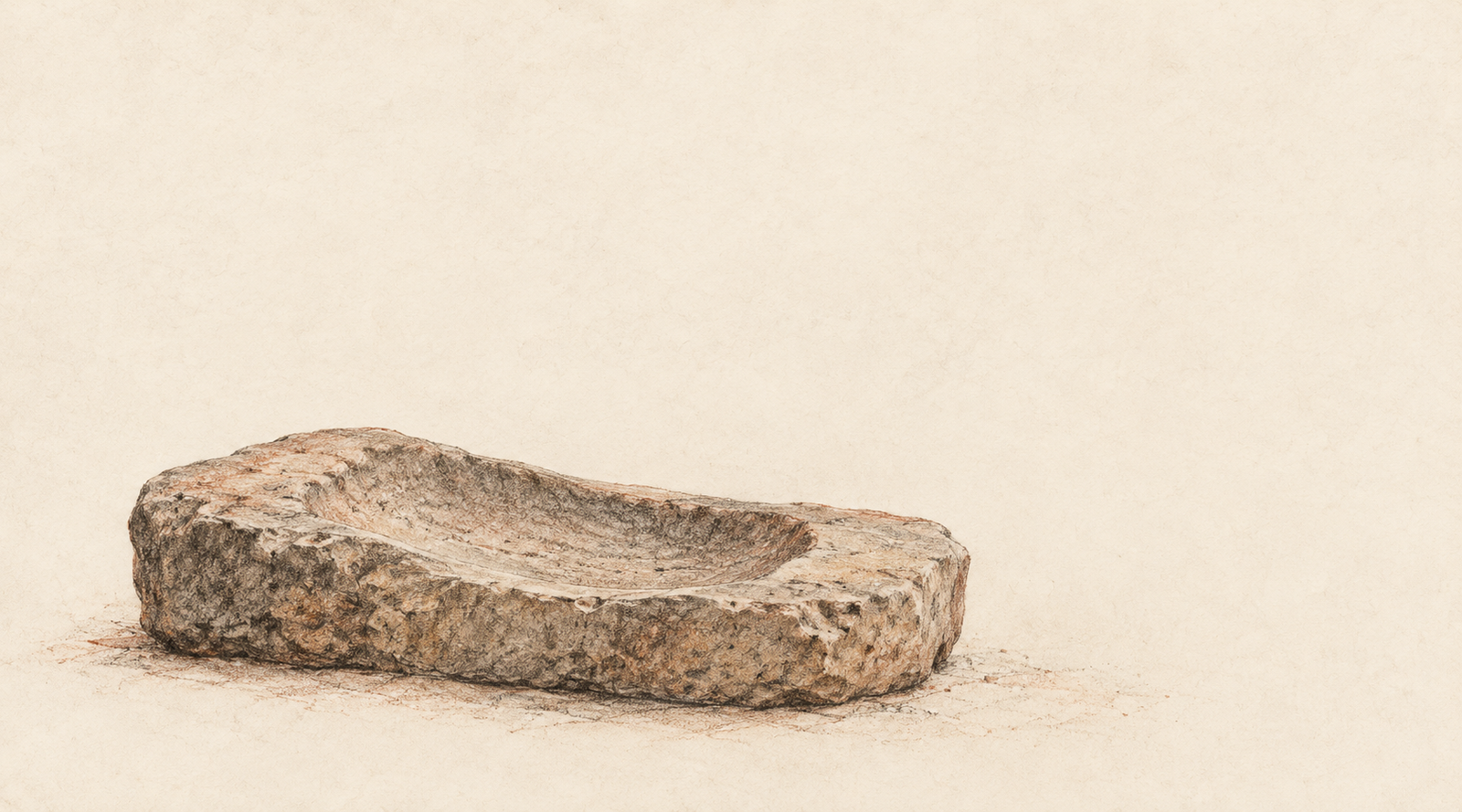
The temple we inherit is a building from which almost all necessity has been removed. Nothing must be brought for it to continue being what we call a temple. The sanctuary asks nothing of us. Stone is good at this kind of independence.
A living temple was otherwise.
Water had to come in. So did grain, cloth, oil, aromatic substances, fuel. The things required for worship arrived because someone carried them across a threshold.

Houses of Wood, Light, and Smoke
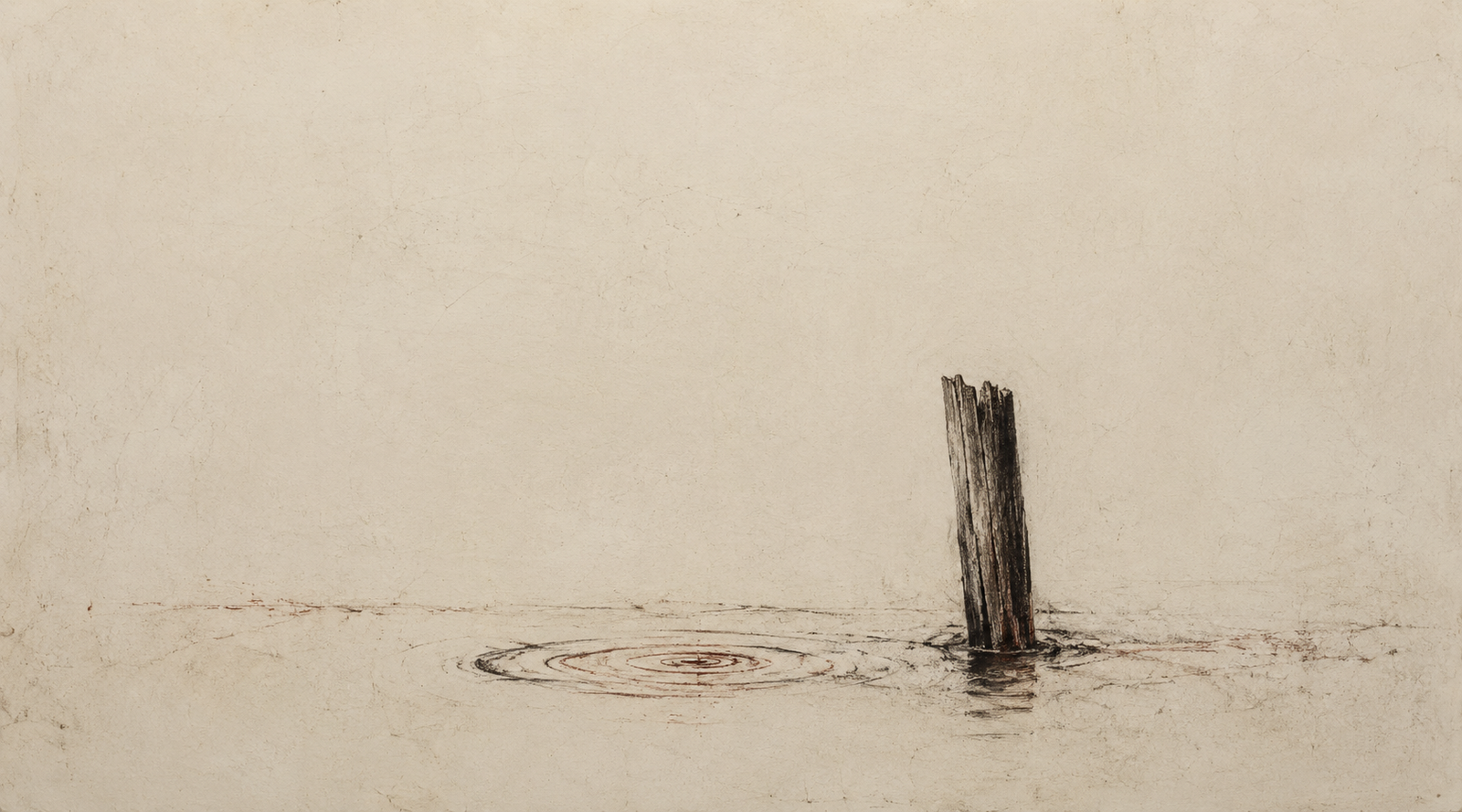
Some of Angkor’s most intimate ruins do not rise above the ground at all. They are postholes, low mounds, hearths and ponds: durable traces of a domestic city built largely from things that decay. To restore that city is to see Angkor not only as stone, but as wood, smoke, water, repair, and people living within calling distance.