

Fires of the Old World IV — The Blue Throat
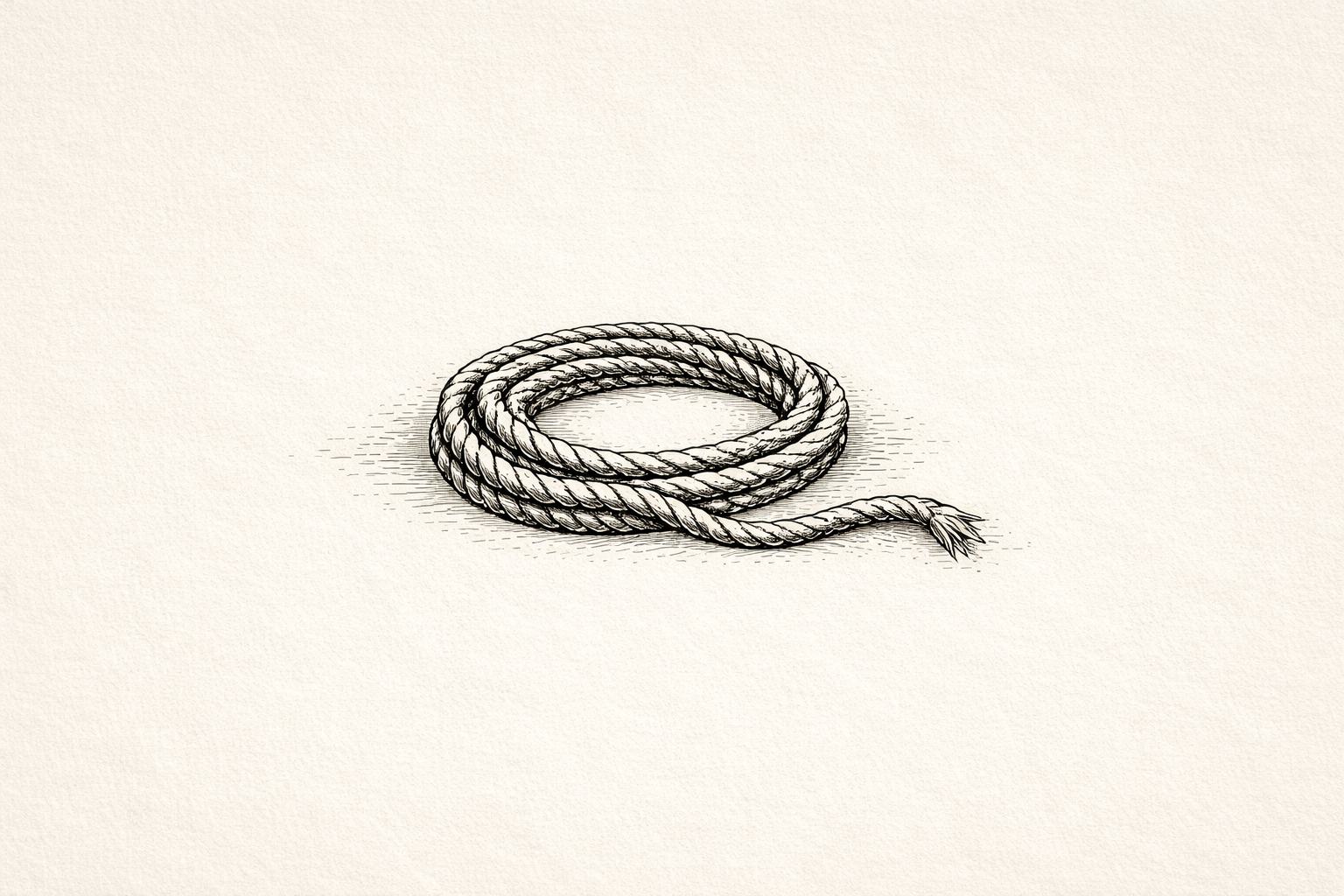
The lamp had been trimmed; the oil stood still as held breath. A lotus floated in a bowl of water, its petals folded for sleep. Ash lay soft on the hearthstone, and the air carried that clean, cold bite before dawn. Outside, insects stitched their ceaseless music; inside, a measuring cord lay coiled on the floor like a tame snake. If you listen closely, you can hear the world being kept.
In the first age, when the waters had no shore and the sky had not yet chosen its height, the gods and the asuras met upon the rolling dark. They did not come as friends. They came as hungry hands come together over one loaf.
They spoke little. Their breath made small clouds. Their eyes went often to the same thing: the sleeping god.
He lay upon the great coil as a mountain lies upon its own shadow. The serpent’s scales made a patient bed; each plate held a cold gleam, like moonlight caught in stone. The god’s chest rose and fell with the tide, and the water around him moved as if it had learned reverence.
Between the gods and the asuras stood a cord, braided from fibre and vow. It was not thick. It was not bright. It was only long, and it carried the weight of agreement.
A lotus opened near the god’s ear.
“We will churn,” said the gods.
“We will take,” said the asuras.
So they set the mountain in the water like a spindle, and they looped the great serpent about it. They gripped the measuring cord in both kinds of hands and began to pull, to and fro, to and fro, as if the sea were dough and the world must be kneaded into sweetness.
The serpent’s body strained. His coil scaled and unscaled around the mountain’s waist. His mouth opened with each pull, then closed again. His eyes held a steady, suffering light.
The churning made a sound like distant drums under water. Foam gathered. The waters whitened. Heat rose. The air thickened with salt and metal.
What lay hidden began to loosen.
Something bright broke the surface — brief, flaring — then vanished again, claimed by eager hands. The gods tightened their grip. The asuras leaned their weight into the cord. Nails bit. Shoulders bunched. No one spoke.
The mountain turned and turned. The serpent’s scales rasped. The cord hissed through palms and bruised them. The water around the spindle darkened, as if depth itself were being wrung out.
Then the sea made a different sound.
Not drum. Not thunder. A soft, climbing fizz, like fire finding oil.
From the deep came a colour the world had not yet learned to name. It seeped, then surged. It curled in the water like smoke, and where it touched, the foam fell grey and dead. The air stung the eyes. The lotus folded in on itself.
The gods pulled, and their mouths went dry. The asuras pulled, and their teeth showed. The serpent’s breath grew ragged, and his tongue quivered.
The poison rose. It rose as hunger rises. It rose as a flood rises. It rose toward every mouth.
A god coughed and spat into his sleeve, and his spit burned a small hole through the cloth. An asura laughed too loudly and then clapped a hand over his own throat, startled by the pain of his own breath.
They all felt it then: if it reached the wide air, it would take the new world by the root and turn it black.
Their agreement had been simple. Pull, and share. Pull, and take.
But there had been no word for this.
The serpent’s eyes rolled back, white with strain. The mountain slipped; the cord jerked. A god’s knuckles split and bled, and the blood darkened before it could fall. An asura’s wrist blistered under his own grip.
The poison climbed higher. It licked the edge of creation’s mouth.
They looked, finally, at the sleeping god.
He did not open his eyes. Yet something in him shifted, as if the world’s ache had touched his dreaming.
A smear of ash lay on his throat, the faint mark of last night’s fire. The lotus, half-closed, trembled on its stem.
The gods and the asuras did what rivals do when fear makes them kin: they fell silent together.
The god lifted one hand. Water ran from his fingers in clean lines. He touched the lotus bowl. The petals steadied. He touched the ash on his own throat. The ash clung, as if it recognised its work.
Then he sat, unhurried, as if waking were an ancient craft.
The serpent beneath him loosened one coil and breathed. The mountain stilled for a heartbeat. The cord slackened between bruised hands, and no one moved.
The poison rose into the open air, a dark breath searching for a mouth.
The god leaned forward.
He drank it as if it were water.
For a moment nothing changed. Then his throat darkened, as if night had been poured inside him. The colour spread under his skin like ink in cloth. The muscles in his neck tightened once, hard as a fist, and the sound he made was not a cry but a swallowing — dry, final, irrevocable.
His eyes stayed calm. His hands did not shake.
The poison did not vanish. It did not become harmless. It lived inside him, held back by the simplest act: a closed gate.
The gods felt their shoulders drop. Their hands loosened on the cord, and blood ran warm into their palms. The asuras stared, their mouths open, and the taste of fear on their tongues turned suddenly to awe, which they hated and could not help.
The serpent’s body shivered along its whole length, scales lifting, then settling, as if the world itself had been stroked.
The churning began again, but the sound had changed. It was less frantic now, more like labour than panic. The mountain turned with steadier purpose. Foam rose clean. The air cleared, and the lotus opened one petal at a time, slow as thought.
The god did not ask for thanks. He did not demand a hymn. He only sat with the dark in his throat, holding it. Holding it as one holds a coal in a wrapped hand — feeling the heat, choosing not to drop it.
The bargain remained, unseen and unbroken.
Later, when the sky had chosen its height and the waters had found their shore, a lamp was lit in a small house at the edge of the world. Its flame stood straight; the oil did not tremble. A lotus floated in a bowl of water on the floor, and beside it a measuring cord lay coiled, ready to be used.
An old woman warmed her palms over ash and listened to the night insects.
She had never seen the great serpent. She had never gripped the cord of churning. Yet she knew, the way the body knows a change in weather, that something terrible had been kept from the mouth of the world.
She dipped a finger in the ash and touched her own throat, leaving a faint grey mark. The gesture was small, almost careless, but it carried the weight of remembering.
The lamp burned. The lotus held. The cord slept in its coil.
Outside, the night went on stitching its music.
Inside, the air remained drinkable.
And the last thing the hearth remembered was the taste of smoke.
—
Receive the next work
Subscribe free to receive new work from the Lucas Varro Library by email.
More from the Library

See Also
A concise and impartial dictionary of absence, promises, quarrels, ordinary objects, and the troublesome instability of words.

The City of Service
The temple we inherit is a building from which almost all necessity has been removed. Nothing must be brought for it to continue being what we call a temple. The sanctuary asks nothing of us. Stone is good at this kind of independence.
A living temple was otherwise.
Water had to come in. So did grain, cloth, oil, aromatic substances, fuel. The things required for worship arrived because someone carried them across a threshold.

Houses of Wood, Light, and Smoke
Some of Angkor’s most intimate ruins do not rise above the ground at all. They are postholes, low mounds, hearths and ponds: durable traces of a domestic city built largely from things that decay. To restore that city is to see Angkor not only as stone, but as wood, smoke, water, repair, and people living within calling distance.