

Fires of the Old World VI — The Mountain Under His Hand
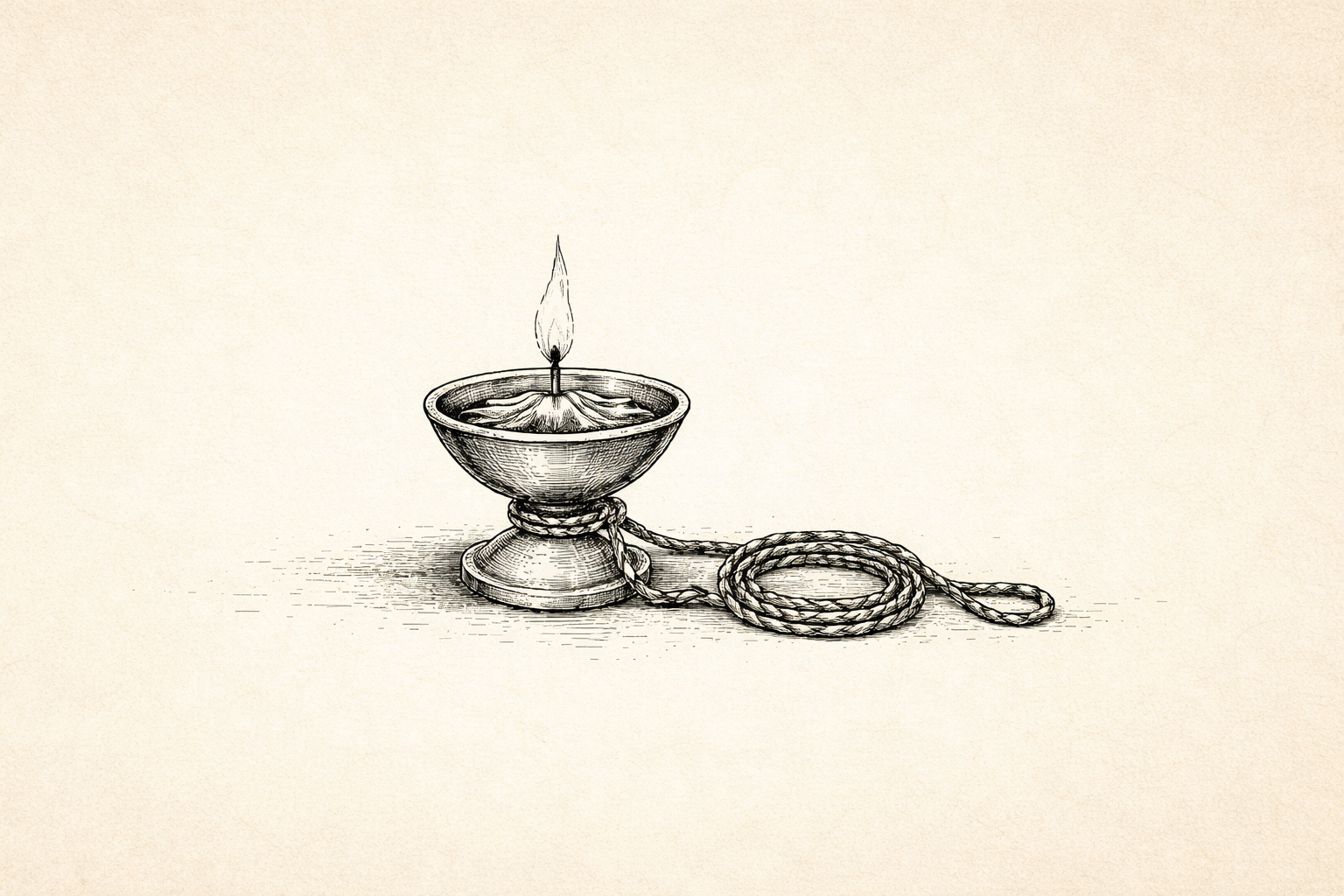
The lamp at the ledge burned low, and the oil held its own small hush. Cold stone sweated in the night air. A few lotus petals lay curled in a brass bowl, faintly sweet, already browning. Wind worried the shrine-ash, then fell quiet again, as if listening too. There was a thread tied round the lamp’s stem to keep it steady, and beside it a length of measuring cord, knotted with care.
Listen.
Some deeds begin with thunder. Their price comes later, soft-footed, when the proud heart has no witness.
Ravana was not a small king.
His crown carried ten victories. His hair was bound with a clasp of scaled bone, taken from something that fought to the end. His arms were thick with oath-bands. His chest bore old scratches where gods had refused him. He liked the world to answer to his hand, so he carried a measuring cord — braided fibre, knots at set lengths — because measure felt like mastery.
He had lifted towers by decree.
He had lifted men by fear.
He had lifted his own name.
The mountain was next.
Kailasa rose where clouds learned patience. Snow lay on its shoulders like undisturbed ash. Stones there did not speak to hurry. They spoke to weight.
Ravana came with storm in him.
His men brought torches and drums, because silence felt like insult. Yet the higher air took their fire. Flames guttered. Sound thinned. There is a height where noise loses its teeth.
Ravana went on alone.
He returned to the ledge-shrine as if it were his own gate, and laughed at the lamp’s small flame. He turned the cup in his hand and watched the soot. He lifted the thread, then the measuring cord, as if both were toys.
“Even your fire needs binding,” he said.
He could have stepped past.
He could have left it.
He could have gone on clean.
Instead, he made a bargain with the threshold.
He tied his measuring cord to the lamp’s stem, knotting his pride to that small steadiness, and spoke as if speaking to a servant.
“If I lift this mountain,” he said, “let the one who sits upon it know my strength. Let him taste it in his stillness.”
The wind moved, then did not.
The flame held.
The lamp watched.
He did not touch the lotus petals.
He did not touch the ash.
He did not bow.
Above, Kailasa waited.
—
Higher still, the world thinned to bone. The clouds dropped beneath him. Snow took the colour from everything it touched. His breath sharpened. Each inhale carried iron. Each exhale left him lighter, as if the mountain were already taking its due.
At last he reached a place where stone rose sheer, and shadow lay under an overhang like poured ink. The rock formed a great lip. Beneath it, cold sat unmoving.
Ravana ran his hands along the stone.
Grit bit his palms.
Cold gripped him.
The mountain did not flinch.
He wedged his fingers into a seam and tested. The seam did not give. He set his feet wide and lowered his shoulder. He breathed once, deep and steady, because kings enjoy the sound of their own preparation.
Then he pushed.
Muscles stood on his arms like ropes. Veins rose. Meltwater slicked his hair. His crown tilted as his neck strained. His teeth set. His eyes went bright.
He pushed again.
Snow lifted in spirals. Wind scraped past his ears. For a moment the world looked as if it might come loose, as if the mountain might be persuaded by force and attention.
Ravana roared.
The sound fell into stone and did not return.
He drove his hands deeper, searching for purchase. He shoved his shoulder under the rock’s lip and heaved, as if lifting a roof from a house where a god slept.
Something in the mountain answered.
Not with movement.
With weight.
It was like being pressed by the whole sky. It was like being pressed by the sea. It was like a patient hand settling more fully upon his head.
Ravana’s knees buckled.
His crown bit his brow. Blood warmed his face and ran into his mouth, metallic and intimate. His fingers slipped. Skin tore. Nails cracked. The stone remained unchanged, and yet the king was made small.
He tried again, because pride does not know when to stop.
He screamed and pushed, and the mountain’s stillness deepened, as if insulted into calm. His breath turned ragged. His ribs shook. His heart hammered against bone like a trapped bird.
Then the pressure increased.
Not quickly.
Not angrily.
With the inexorable care of law.
Ravana felt it in his spine first: a slow folding, a quiet insistence. The mountain did not crush like a falling wall. It crushed like truth.
His crown creaked.
Gold bent.
Pride learned shape.
The mountain did not move. Ravana did.
For a breath, that was all.
Then Ravana moved again — downwards.
His crown flattened against his skull. The points that had reached for sky were driven into his hair. His cheek pressed into snow. His mouth filled with it, cold and clean, and he could not spit. His arms, those famous arms, were pinned. Far below, the measuring cord — tied to a lamp he had mocked — seemed to tighten in his mind, knot by knot, drawing him into his own bargain.
His roar became a groan.
He saw, in the shadow under the rock’s lip, the faint outline of a foot.
Bare.
Still.
Dustless.
A toe shifted.
That was all it took.
Dread entered then, not as terror, but as recognition. Ravana had met warriors, serpents, kings, and the bright-eyed deva who strike like lightning. This was different. This was a stillness so complete it did not need to announce itself.
Ravana tried to speak. Snow blocked him. He swallowed it. His throat burned with cold.
He understood the shape of his own foolishness by the way his bones complained.
He could not lift.
He could not breathe.
He could only endure.
In that endurance, something cracked that was not bone.
—
Time passed as it passes under snow: slowly, without witnesses.
Ravana’s mind ran, searching for a lever. He tried rage. Rage broke. He tried contempt. Contempt tasted like blood. He tried bargaining again, because that had been his way.
“Release me,” he managed, words thick in his mouth. “I have kingdoms. I have gifts.”
The foot in shadow did not move.
Ravana’s hands twitched. His fingers were numb. Under his nails, grit had lodged, black and stubborn. He felt the mountain in every nerve.
He remembered the lamp at the ledge.
He remembered the lotus petals.
He remembered the ash.
He had laughed at small devotion.
Now the only thing left to him was smallness.
He began to sing.
Not a king’s song.
Not a victory song.
A raw song.
It did not come polished. It came torn. It came from the place in the body that learns humility by force. It came in a low, strained cadence at first, then steadier, because the heart will find rhythm even under weight.
He sang of night and mountain.
He sang of the coil of hair.
He sang of the lamp that watches.
He sang of the god whose stillness is a kind of mercy.
The words did not explain.
They offered.
They endured.
As he sang, the pressure changed — not lifting, not easing in any way a proud man might notice. It changed like a hand pausing mid-gesture. It changed like a breath taken, then held.
Ravana dared not stop.
His throat grew raw. His lips cracked. Snow melted against his cheek from the heat of his shame, then froze again. His crown, crushed into a blunt ring, cut his scalp with each tiny movement of breath.
He sang.
Somewhere inside the mountain, something listened.
At last the foot in shadow shifted again.
A single toe pressed down.
Then lifted.
Then rested.
The pressure eased by the width of a hair.
Ravana gulped air, thin and sharp as a knife. His ribs expanded with pain and gratitude, tangled together. He sang on, because he had learned that relief can vanish if the offering does.
The shadow stirred. The outline of a hand appeared — not reaching, not blessing, only present. Two fingers touched stone.
The mountain answered with the smallest tremor.
Ravana felt it through his cheek like the beat of a distant drum. He froze. The tremor did not become movement. It became permission.
The weight lifted.
Not abruptly.
Not kindly.
Simply.
Ravana slid out from under the rock’s lip like a broken thing pulled from rubble. He lay on snow, gasping. He spat out ice and blood. His hands trembled uncontrollably, because strength had left him and something else had arrived in its place.
He tried to rise.
He failed.
He laughed once, hoarse and amazed.
In the shadow, the foot did not follow him. The hand withdrew. The mountain returned to its complete stillness, as if nothing had occurred.
Ravana turned his face towards the overhang.
His crown lay misshapen on the snow. The gold was dented. Its points were blunted. It looked less like a sun and more like a collar.
He reached for it, then stopped.
He did not put it on.
He rose instead, unsteady, and bowed once — low, simple, without flourish.
Then he turned.
Departure, when it comes after dread, is not a parade. It is a careful placing of feet, a refusal to look back too long.
Ravana went down, step by step, and his men saw him from a distance and did not cheer. His shoulders were rounded. His hands were empty. His crown was not on his head.
The wind followed him, quieter.
—
At the ledge-threshold, the shrine-lamp still waited.
The flame was small, sheltered by the cup. The soot on the rim had not changed. The lotus petals had browned further, curled like old paper. The ash smear remained, pale against stone.
Ravana knelt.
He untied his measuring cord from the lamp’s stem. His fingers fumbled, because his nails were split and his hands were shaking. He did not curse. He did not hurry. He freed the lamp gently, as one frees a sleeping child from a tight blanket.
He laid the cord beside the shrine, coiled neatly, knots visible.
He set his crushed crown down too, beside the ash, as if leaving a weight he no longer wished to carry. His body did the speaking by the way it moved with care.
He touched the ash with one fingertip.
It clung.
It marked him.
It stayed.
Then he took one lotus petal — only one — and placed it in the lamp-cup, so it floated in the oil like a pale boat.
The flame leaned towards it, and did not consume it at once.
Ravana watched until his breath slowed.
When he rose, he did not look taller.
He walked down into the lower air, where drums might begin again and torches might burn. Yet something of the mountain’s stillness had entered him, quiet as snow settling.
And what remained on Kailasa, when the storm was gone, was the lamp’s small watch and the king’s crown beside the ash, knot-marked, dull, and true — ash.
—
Receive the next work
Subscribe free to receive new work from the Lucas Varro Library by email.
More from the Library

See Also
A concise and impartial dictionary of absence, promises, quarrels, ordinary objects, and the troublesome instability of words.

The City of Service
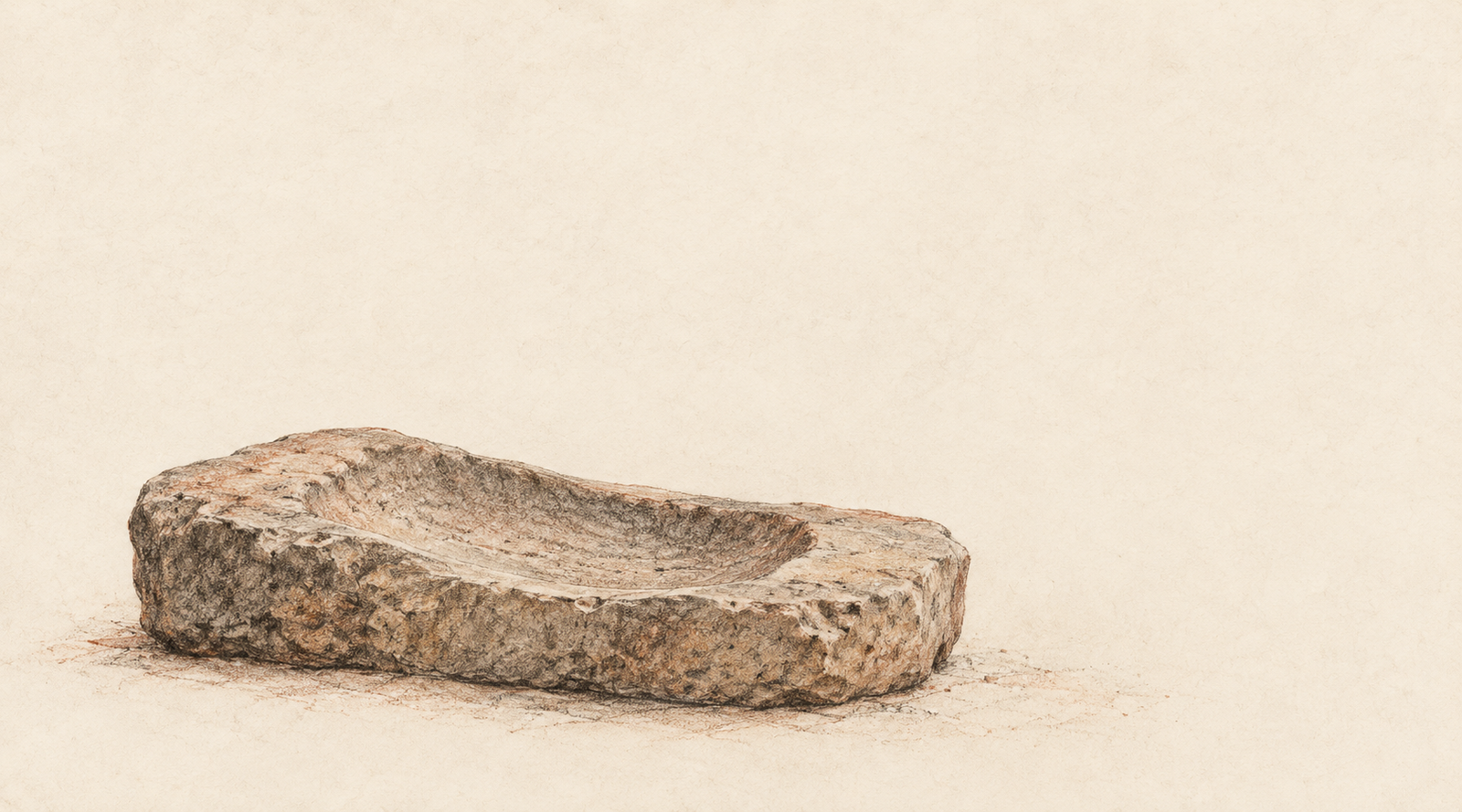
The temple we inherit is a building from which almost all necessity has been removed. Nothing must be brought for it to continue being what we call a temple. The sanctuary asks nothing of us. Stone is good at this kind of independence.
A living temple was otherwise.
Water had to come in. So did grain, cloth, oil, aromatic substances, fuel. The things required for worship arrived because someone carried them across a threshold.

Houses of Wood, Light, and Smoke
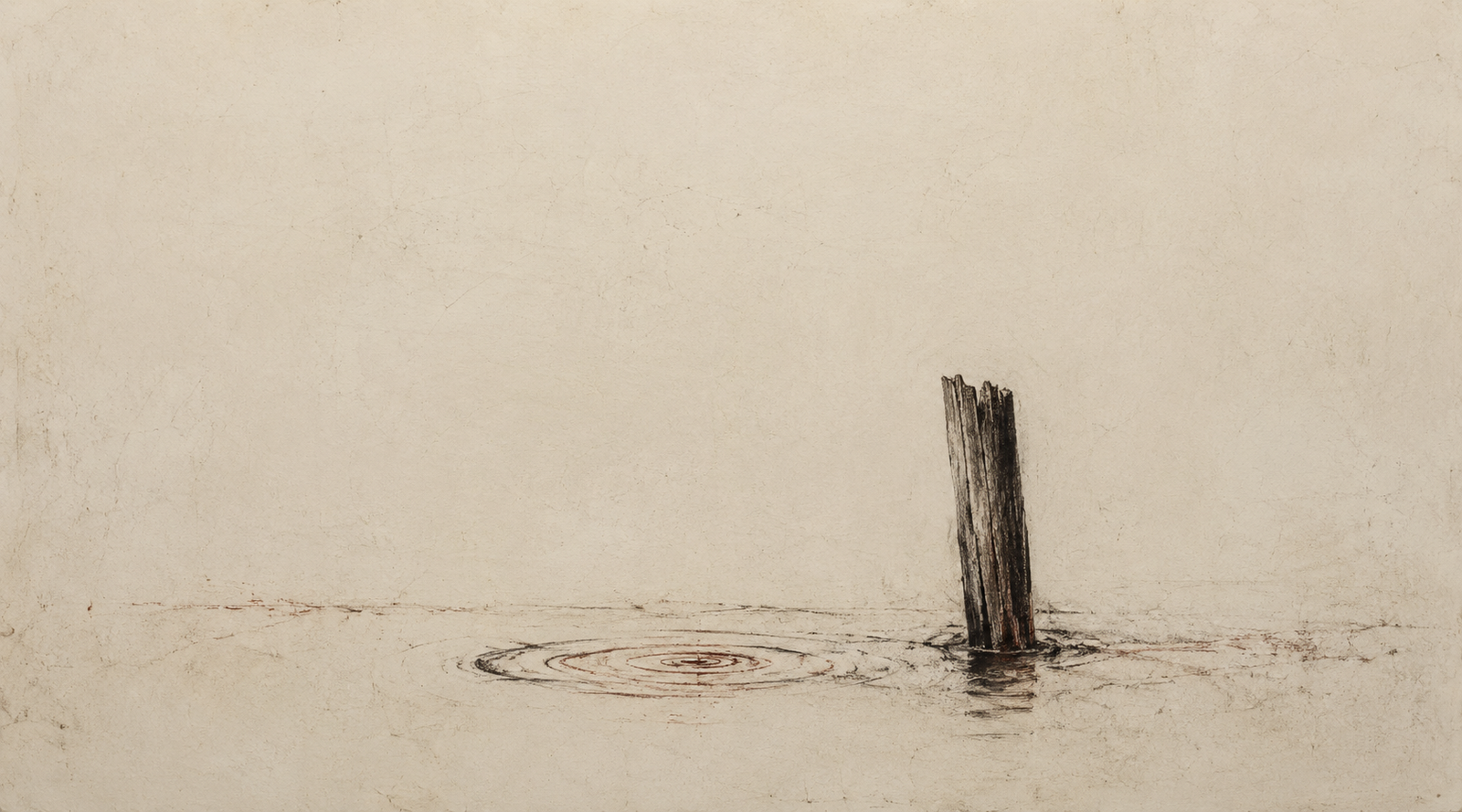
Some of Angkor’s most intimate ruins do not rise above the ground at all. They are postholes, low mounds, hearths and ponds: durable traces of a domestic city built largely from things that decay. To restore that city is to see Angkor not only as stone, but as wood, smoke, water, repair, and people living within calling distance.