


NICE PEOPLE
Spell: “We’re just trying to help.”
The meeting room is cold enough to make the body feel slightly wrong, as if the skin has forgotten the country it lives in. The air-conditioner hums with the steady confidence of a machine that has never had to explain itself. Fluorescent light makes everyone look clean. On the table: bottled water, biscuits sweating under plastic, forms clipped to boards with identical metal jaws.
There are name tags. There is a facilitator. There is a whiteboard with today’s objectives written in patient, friendly handwriting:
Alignment
Stakeholders
Outcomes
Someone makes a joke about the heat outside — the kind of joke that says: we are not entirely out of place here. Laughter arrives on cue. Not because the joke is funny, but because laughter is part of the tone. Laughter is proof of comfort. Comfort is proof of virtue.
The Khmer staff sit with their notebooks open. Their pens move at just the right speed. Across from them, the foreigners lean back with the practised ease of people who do not have to prove competence in a second language.
The donor representative arrives ten minutes late, smiling apologies, holding a laptop like a shield. A few heads bow. A few hands press together politely. Everyone agrees, silently, that lateness is nothing.
The meeting begins.
A slide appears with the project title in bold. Under it: an acronym. Under that: the budget. Under that: a photograph of a child whose face has been blurred.
No one comments on the blur. The photograph is already compliant.
The facilitator says, warmly, that the work is going well. The facilitator says there are challenges — always challenges — but also “very encouraging signs”. The facilitator says the “community engagement component” has been “strong”.
The Khmer programme officer looks down at her notes and does not move.
A question is asked about the numbers. Another about sustainability. Another about capacity.
Everything is a question that already knows its answer.
The tone does not only protect feelings. It protects the whole apparatus. Beneath “impact” and “outcomes” there is another set of questions most people in this room have learned not to ask in public. Where, exactly, does the money go once it enters the system? How much reaches the village? How much remains in offices like this, in salaries, in vehicles, in reporting structures that must be maintained regardless of whether anything changes?
These are not accusations. They are structural facts. In this ecosystem, the story often functions as the audit. A long list of good deeds can replace a ledger. A photograph can stand where transparency should be. The tone insists that scepticism is cynicism, and cynicism is a form of cruelty.
I have lived here long enough to know which questions are considered rude.
It takes fifteen minutes for the first sentence to arrive that matters. It is offered gently, without accusation, as if truth must present itself with good manners.
The Khmer programme officer clears her throat. She speaks in English that has been carefully taught, carefully corrected, carefully filtered through the donor’s listening habits.
“There is… concern in the village,” she says. “Some people feel… the selection process is not fair.”
The room stays polite. The air stays cold. The biscuits stay untouched.
The donor representative tilts their head slightly, as if listening for tone rather than content.
The facilitator smiles — not a cruel smile, not a dismissive one — a smile meant to keep everyone safe.
“We should be careful,” the facilitator says. “We don’t want this to become… divisive.”
The programme officer nods as if agreeing.
Someone else offers a bridge sentence: “We’re hearing similar things across the sector.”
The phrase does what it always does: it makes the harm feel normal. It makes the specific feel inevitable. It turns damage into a pattern.
Then the donor representative says it. Not harshly. Not defensively. Almost tenderly.
“We’re just trying to help.”
The sentence falls into the room like a stamp.
And you can feel the shift. Not in anyone’s face. Not in anyone’s voice. In the moral structure. In the invisible permissions.
The programme officer says nothing. Her gaze stays down. Her hands are still.
Because what can be said now?
If she insists on unfairness, she will be insisting against help. If she names the anger in the village, she will be naming ingratitude. If she describes how the criteria are being understood on the ground — how the project has changed behaviour, changed stories, changed the subtle choreography of hunger — she will be accused of negativity.
Not because anyone intends to silence her. Because the tone has rules. Because “help” has a halo. Because niceness is the operating system.
Niceness is not friendliness. Niceness is not kindness. Niceness is a form of governance: a way of preventing moral contact.
It is the tone that allows power to keep its innocence.
And innocence is what the system protects.
In Cambodia, where heat makes everything vivid and where the living can look close enough to the dead that the past feels resident rather than historical, the violence of administrative language becomes easier to see. Not because Cambodians are more tragic, but because the gap between reality and the sentences used to describe it is often too wide to ignore.
The NGO world depends on that gap.
Not in theory. In practice.
The donor needs a story that can be funded. The organisation needs a story that can be reported. The project needs a story that can be measured. The village needs a story that can be heard. The Khmer staff need a story that can be spoken without risking their job.
And the story most compatible with funding is never the truth.
The truth is messy. The truth is morally inconvenient. The truth makes the helper look implicated rather than generous. The truth contains anger. The truth contains shame. The truth contains the possibility that the project — even if well-intentioned — is doing harm.
The truth is not constructive.
So the truth is re-coded.
Harm becomes “complexity”. Not because the situation is not complex, but because complexity removes guilt. Complexity makes everything feel like weather. Complexity dissolves moral edges into conditions.
Dissent becomes “negativity”. Not because negativity is wrong, but because calling dissent negative turns the dissenter into the problem. It relocates the discomfort away from what is happening and into how someone is speaking about it.
Accountability becomes “unconstructive conflict”. Because unconstructive conflict is what happens when someone refuses to cooperate with the tone. The tone is the real border. You can say anything — anything — as long as you say it in the voice that preserves innocence.
When the Khmer programme officer says “the selection process is not fair,” she is not simply reporting sentiment. She is pointing to a mechanism. Projects do not arrive in a village like rain; they arrive like incentives. They reshape the village’s moral ecology. They change what people say. They change what people conceal. They change what people become willing to perform.
And the unfairness villagers feel is not abstract. It is intimate. It is daily. It enters family and neighbour.
One village is told: the eligible households are those with proof — documentation, letters, signatures. A widow who cannot read does not have her papers in order. A man with a cousin in the commune office does. Both are poor. Only one is legible. Help does not go to the neediest; it goes to the most administratively fluent.
The next village learns to perform.
A small cash support programme arrives with its criteria, and the village receives a new grammar overnight. People learn the intake vocabulary. They learn the correct shape of suffering. They learn what to emphasise and what to hide. A woman stops telling the truth about her son’s work because it reduces her “vulnerability score.” A family hides a motorbike behind a wall because it looks like dignity. A neighbour learns, with shock, that honesty is now a disadvantage.
Not because anyone is dishonest.
Because they are intelligent.
A system that rewards legible need produces legible need.
And legible need becomes a kind of theatre — not for entertainment, but for survival.
Then the criteria become a weapon in local hands.
A list is drafted. Names are added. Names are removed. A village chief’s nephew appears. Someone who argued in a public meeting disappears from the list. The official reason is always clean: does not meet criteria. But everyone understands the real reason. People learn not only how to suffer correctly, but how to behave correctly. They learn that dissent has consequences even when aid is present.
This is what villagers mean when they say the process is not fair.
They mean: the programme does not just distribute resources. It reshapes power.
In a system where assistance is administered, need becomes a currency. People learn how to become admissible. They learn to produce themselves in a way that can be approved.
Not because they are morally weak.
Because the system makes dignity unprofitable.
A system that pays people to stay broken eventually produces breakage that can be administered.
This is not a moral judgement on the so-called dependent. It is a judgement on the machinery that requires dependence in order to justify itself. A system that insists on legible need cannot tolerate quiet competence. It cannot tolerate dignity that does not display itself in the required form.
In such a system, even gratitude becomes performative. Even suffering becomes strategic. Even the human voice becomes a kind of evidence.
The people who feel this most sharply are not the donors. They are not even the beneficiaries. They are the Khmer staff — the ones inside both worlds, translating between them, carrying the weight of mutual incomprehension.
The Khmer programme officer is not naïve. She knows what the village is saying. She knows what the project is doing. She knows, often, what will happen next.
She has been in enough villages to recognise the pattern. She has watched neighbours look at each other differently once the criteria are announced. She has watched pride turn into quiet arithmetic. She has seen men speak for women because they believe the donor will listen to a man. She has seen mothers repeat the same story of hardship until the story feels more real than the life it describes.
She has also learned a second truth, one that rarely appears in any report. Projects do not move through a country like this as pure intention. They pass through gates. They touch authority. They require signatures, approvals, permissions — and permission is not always free.
Sometimes what delays a project is not incompetence but withholding. Sometimes what accelerates a project is not efficiency but payment. Sometimes roadblocks appear because someone has decided they should.
This is not scandal. It is reality. And it is precisely the sort of reality niceness is designed to keep out of the room. To name it is to become impolite. To name it is to make the helper look implicated in what they cannot control — or worse, in what they can.
So even this becomes re-coded. It becomes “stakeholder management”. It becomes “context sensitivity”. It becomes “local realities”. The sentence remains clean, and what it refers to remains unnamed.
She has also seen what happens when a Khmer staff member speaks too truthfully. How quickly “professionalism” becomes a weapon. How quickly the donor’s smile can harden into distance. How quickly funding can be “reconsidered”. How quickly someone can be described as difficult, emotional, or lacking in systems thinking.
So she learns another kind of English.
Donor-safe English.
Donor-safe English is not a language of truth.
It is a language of permission.
In donor-safe English, nothing is ever morally clear. Everything is a “challenge”. Everything is a “barrier”. Everything is a “gap”. Harm has no author; it has contributing factors. Anger has no cause; it has perceptions. People are not robbed; they are underserved. Violence is not violence; it is vulnerability.
And money is rarely money. It becomes “resource allocation”. It becomes “overheads”. It becomes “operational requirements”. It becomes a set of confident nouns that allow everyone to be in the same room without touching what the numbers mean on the ground.
In donor-safe English, the world becomes administrative.
And the moment the world becomes administrative, moral injury becomes manageable.
A Khmer staff member who knows the truth must translate it into a form that can be heard without disturbing the helper’s innocence. She must take living reality and flatten it into a sentence that will not offend a funding cycle.
This is not merely frustrating.
It is the cost.
The cost is that knowledge becomes subordinate to tone. The cost is that the person closest to the truth must speak as if she is farthest from it. The cost is that local expertise — lived, earned, scarred — is treated as anecdotal unless it can be converted into donor grammar.
The foreign amateur with a framework becomes more authoritative than the local professional with experience.
The cost is that truth becomes unprofessional.
And when truth becomes unprofessional, niceness becomes violence.
Not the violence of shouted hatred or open cruelty — the violence of clean sentences that prevent the world from being felt.
The donor representative does not want to do harm. Most donors do not. Many of them are sincere. Many of them believe their work matters. Many have sat in rooms like this for years and have come to think of politeness as virtue.
That sincerity is precisely what makes the system durable.
Because once the helper’s intention becomes the moral centre, the recipient’s reality becomes secondary. Once good intentions become moral absolution, harm becomes merely unfortunate. Once help becomes a halo, criticism becomes cruelty.
This is how nice people become components.
They do not wake up and decide to exploit. They do not consciously decide to silence. They do not plot the continuation of dependency.
They simply obey the tone.
They make sure meetings stay constructive. They keep language positive. They discourage “blame”. They “hold space”. They ask everyone to remember that we are all here because we care. They say, with genuine warmth, that “we’re just trying to help.”
And by doing so, they ensure the system never has to face what it is doing.
Niceness is the most efficient form of avoidance because it feels like goodness. It makes people proud of their restraint. It makes people confused about their own anger. It teaches conscience to apologise.
There is a professional speech now whose job is to protect the speaker from moral consequence. In the NGO ecosystem it appears as tone discipline, as reporting language, as the careful conversion of lived truth into fundable sentences. It sounds like care. It often is care.
But it also functions as laundering.
The programme officer watches the meeting continue. More slides. More acronyms. More “lessons learned”. The donor representative nods in satisfaction as the data becomes a clean line. The facilitator keeps smiling. The room stays cold.
Nobody mentions the village anger again. Nobody mentions unfairness. Nobody mentions the untraceable distance between budget and village, between story and receipt. Nobody mentions the gates.
Instead, a paragraph is drafted for the report:
Community concerns were noted and will be addressed through strengthened engagement strategies.
A sentence that does not lie, exactly — but does not tell the truth either.
Outside, the motorbikes scream past in the heat. The city moves with the energy of bodies that know the air belongs to them.
Inside, the air remains borrowed.
This is where “nice” becomes unbearable: not because kindness is bad, but because niceness is kindness without cost. It is mercy that never risks itself. It is compassion that refuses clarity. It is a desire to help that cannot tolerate consequence.
Kindness is different.
Kindness is not softness. Kindness is not agreement. Kindness does not prioritise the helper’s comfort over the helped person’s reality.
Kindness is clarity plus cost.
Clarity: the willingness to name what is happening without laundering it into “complexity”. The willingness to say: this project is reshaping local power. This criterion is rewarding performance over need. This process is unfair. The story is not an audit.
Cost: the willingness to accept what naming will do. The fact that someone may call you unconstructive. The fact that funding may be threatened. The fact that your career may become more fragile. The fact that the smile in the room may disappear.
But there is one more requirement — the one that matters most if you want this truth to be heard.
The people closest to the harm are the least free to speak.
The villager can be punished by exclusion. The Khmer programme officer can be punished by professionalism. Both punishments are executed politely. Both punishments are invisible to the report.
So the burden of truth must often be carried by those who can afford it.
The outsider. The donor. The expat consultant. The visiting evaluator. The person whose passport is also a kind of armour.
If you want to help, do not ask the vulnerable to be brave for you.
Build a counter-archive instead.
Keep two ledgers: the funder-facing story and the private record of what is actually happening — who is excluded, how criteria are gamed, what conflict is being produced, what gate has been paid.
Learn to quote villagers without exposing them. Learn to speak in structures, not accusations. Name incentives. Name leakage. Name dependence loops. Name what gets rewarded.
Then say it in the room where it matters — the room where funding decisions are made.
A system does not change because people mean well.
A system changes when someone refuses to keep it innocent.
If you want to help, stop insisting on niceness.
Tell the truth in the language of consequence.
Then sign your name.
—
Receive the next work
Subscribe free to receive new work from the Mytharium Library by email.
More from the Library

See Also
A concise and impartial dictionary of absence, promises, quarrels, ordinary objects, and the troublesome instability of words.
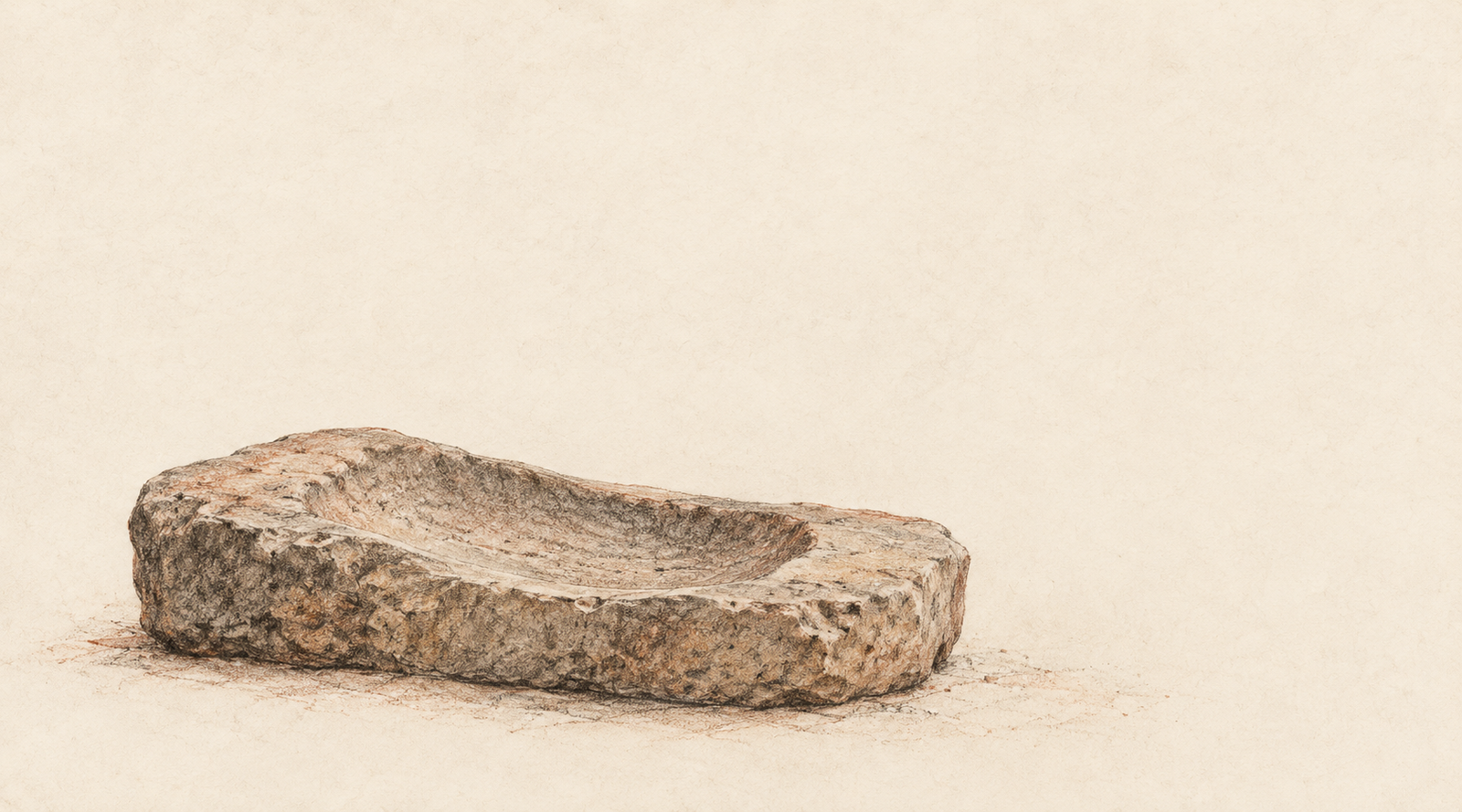

The City of Service
The temple we inherit is a building from which almost all necessity has been removed. Nothing must be brought for it to continue being what we call a temple. The sanctuary asks nothing of us. Stone is good at this kind of independence.
A living temple was otherwise.
Water had to come in. So did grain, cloth, oil, aromatic substances, fuel. The things required for worship arrived because someone carried them across a threshold.


Houses of Wood, Light, and Smoke
Some of Angkor’s most intimate ruins do not rise above the ground at all. They are postholes, low mounds, hearths and ponds: durable traces of a domestic city built largely from things that decay. To restore that city is to see Angkor not only as stone, but as wood, smoke, water, repair, and people living within calling distance.