
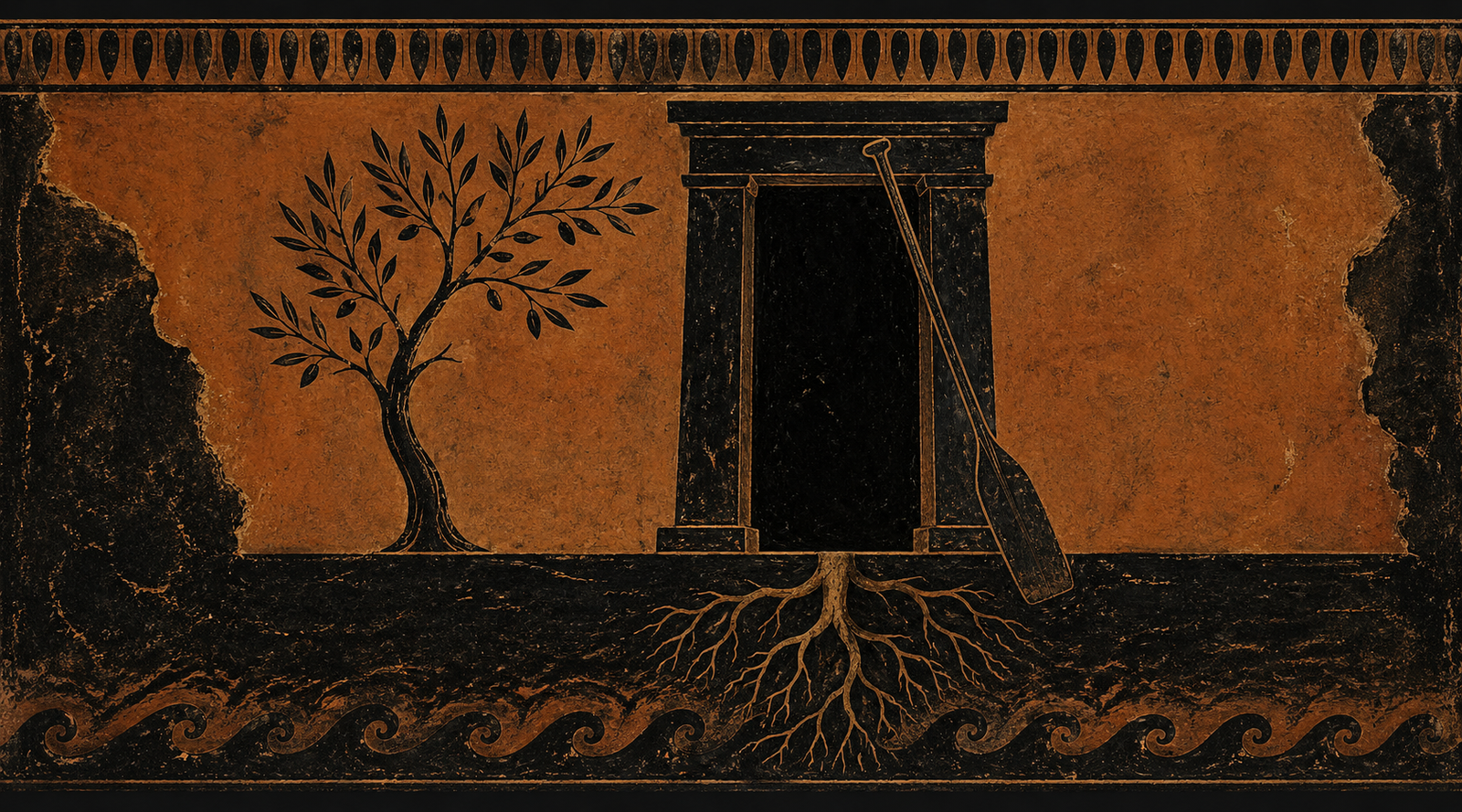

No Man Comes Home IX — The Beggar at His Own Door
Odysseus reaches Ithaca, enters concealment again, and is recognised by the son who must now help hide him.
Ithaca did not recognise him.
That was mercy.
If the island had cried out his name from the first stone, if the trees had bent towards him, if the paths had opened with the old obedience of remembered feet, he might have believed return was simple. He might have trusted the ache in his chest and called it proof. He might have mistaken arrival for restoration.
But Ithaca withheld itself.
Morning lay over the shore with no ceremony. The ship had come through darkness, swift and silent, carrying the sleeping man as though sleep could cross what wakefulness could not. The Phaeacians had lifted him from their vessel and set him down with gifts beside him: bronze, gold, garments, the visible grammar of honour given by a house that had received the stranger and sent him onward.
Then they left.
That, too, was mercy.
No crowd. No herald. No king’s return beneath the eyes of men. No wife summoned too early. No son broken open by sudden joy. No suitors warned by rumour of sails. Only a man asleep on his own shore, surrounded by wealth he could not yet use, hidden from the island that had made him.
When he woke, he did not know the land.
This should not be passed over quickly.
A man may long for one place through storm, captivity, hunger, song, blood, and death, and still fail to recognise it when his body reaches it. Desire preserves its own Ithaca. The actual shore is always stranger. Rocks stand where memory has smoothed them. Paths have shifted. Light touches differently. The place has continued without needing the absent man to witness its continuity.
Odysseus rose among the gifts and looked around him as if the gods had made another deception from hope.
He had been lied to often enough to suspect mercy.
Mist lay over the land. Athena had placed it there, not to confuse him only, but to protect the hour before knowledge could be safely endured. Even home must sometimes be given by degrees. A full recognition too soon may undo the man it intends to restore.
He cursed the Phaeacians in his heart.
That was very human.
A man who has suffered long may meet uncertainty and immediately call it betrayal, because betrayal is easier to understand than the fear that one has arrived and cannot recognise arrival. He counted the gifts. This, too, was human. Gold, bronze, cloth. Before wonder, inventory. Before gratitude, suspicion. A survivor counts because counting is a small authority over chaos.
The gifts were all there.
The land remained hidden.
Then the goddess came.
Not as herself.
Rarely as herself.
Athena appeared in another shape, because truth given nakedly is not always mercy. She found him beside the goods, wary, angry, measuring the shore as if land itself might be an enemy. She asked him who he was, where he came from, why he guarded such wealth.
Odysseus lied.
At once.
This was the first thing he brought home.
Not an embrace.
Not a prayer.
Not tears in the dust.
A fiction.
He stood on Ithacan soil and made another man out of speech.
The lie was quick, competent, layered with blood, exile, accident, plausible need. Crete again. Killing. Flight. Ships. A useful past assembled from pieces no listener could easily test. Even before he knew the island, he knew how to survive the person asking.
Athena listened.
Perhaps she smiled before she showed it.
There are gods who love sacrifice, gods who love law, gods who love thunder, gods who love the reckless splendour of men breaking themselves against fate. Athena loved intelligence when it sharpened under pressure and did not lose its edge even at the threshold of desire.
She revealed herself.
The mist did not lift all at once. First the stranger became goddess. Then the shore became Ithaca.
Recognition entered him like pain.
Not because the land had changed back, but because the hidden thing had been true while he doubted it. The olive. The harbour. The cave of the nymphs. The rough ground. The beloved poverty of rock and slope after all the shining houses of others.
He touched the earth.
Men kiss the ground for many reasons. Relief. Reverence. Exhaustion. Possession. Gratitude. Odysseus kissed it with all of these and something less clean than any of them: the hunger of a man who has been denied his place so long that even the dirt must be taken back through the mouth.
He was home.
He could not yet go home.
That was the law of the hour.
Athena told him enough.
The house was full of enemies. The suitors had not tired of eating. Penelope had not yielded. Telemachus had gone seeking him and was returning through danger. Servants had divided in loyalty. The old father grieved apart. The dog still lived, if life is the name for breath remaining near the end of hope. The bed waited. The bow waited. The whole house had become a question no man could answer by walking through the door as himself.
Odysseus listened.
He did not ask first to see his wife.
This should not be softened.
Love was there. Longing was there. But the old habit of danger arranged him faster than longing could. The room of his mind filled with positions: suitors, servants, son, weapons, thresholds, allies, timing, concealment, proof. He had returned by the sea and immediately became inland strategy.
Athena knew him.
That was why she did not despise him.
Together they hid the gifts.
This was the first labour of return.
Not reunion.
Concealment.
They carried splendour into darkness and stored it where the land itself could keep it from men who would turn honour into plunder. Bronze and gold disappeared into the cave. The Phaeacian gifts, evidence of welcome, were put away before the house could see them. Return began by hiding what return had earned.
Then Athena touched him.
The body changed.
Not restored.
Reduced.
Skin slackened. Hair thinned and greyed. Shoulders bent. The old brightness withdrew. His clothing became poor. His flesh seemed marked by deprivation. His eyes kept more than they should have kept, but everything around them was lowered into age and damage. The man who had once been made more beautiful before Nausicaa was now made less than himself before Ithaca.
This, too, was a gift.
A terrible one.
A king cannot test his house by being recognised at the door. Recognition would summon habit, loyalty, fear, performance. Men behave differently before a known power. The house had to reveal itself to the powerless shape before the powerful man judged it.
So Athena made him a beggar.
The disguise did not simply hide him.
It accused the house.
Hospitality begins where usefulness is absent. A beggar at the door brings no alliance, no dowry, no cattle, no threat worth fearing, no name worth flattering. He brings only need. How a house receives him tells the truth beneath its manners.
Odysseus would enter his own house as the question every house must answer.
But first he went to the swineherd.
The path to kingship led through the hut of a servant.
That was right.
Eumaeus lived with the animals, under poor shelter, close to the labour that keeps a great house alive while great rooms make themselves visible. He had not forgotten. Some men preserve fidelity not by speeches, but by doing the necessary work correctly in the absence of praise. Pigs must be guarded. Fire kept. Bread given. Dogs watched. Strangers received. The day has duties even when the lord is gone and the house is being eaten by men without reverence.
The dogs saw the beggar first.
They rushed him.
Odysseus had faced men, monsters, storm, and gods; now his life narrowed to teeth. This is how return humbles: not by arranging symbolic trials, but by making the next danger local, animal, unglorious. He sat down quickly, lowering himself before the pack could make prey of him.
Eumaeus drove them back.
Then he welcomed the stranger.
He did not know whom he welcomed.
Therefore the welcome mattered.
He brought him inside. He gave a seat, rough but offered. He gave food from the labour under his care. He spoke with the bitterness of loyal men who have had too many years to watch wrong prosper. He mourned his master not as bards mourn heroes, but as servants mourn the one whose absence has made daily honour difficult to keep.
Odysseus listened to himself being loved by a man who thought him lost.
This was harder than praise.
Praise enlarges the name. Love tends the wound beneath it.
Eumaeus spoke of the house. Of the suitors. Of Penelope. Of Telemachus. Of the old king. Of the waste, the arrogance, the corrupted law. He spoke of Odysseus as one who would have rewarded faithfulness and restored order, as though the man before him were not already measuring how much blood order would require.
The beggar lied.
Again.
A false life. Foreign roads. Old losses. Hints of noble origin buried under ruin. And, because mercy also needs bait, news of Odysseus.
He is alive, the beggar said.
Eumaeus did not believe him.
Hope had been used too often by strangers seeking food.
This was one of absence’s crimes: it had made good news sound indecent.
The swineherd rebuked him gently or not gently enough. Do not comfort me with lies. Do not purchase hospitality by touching the wound of my master’s name. A poor man still has honour enough to refuse false consolation.
Odysseus endured it.
That was new labour.
To be doubted when telling lies is ordinary. To be doubted when telling truth under a lie is a stranger punishment.
Night came.
The hut held them.
Rain, perhaps, or wind. The animals shifted. Men settled. Fire made a small authority against the dark. Odysseus watched Eumaeus arrange covering for him, watched him give more care than wealth required and less than love desired. The swineherd went out to sleep near the pigs because property still had to be guarded, because loyalty often lies down where comfort is thinnest.
Odysseus saw.
He remembered.
A king in disguise receives knowledge no throne can give.
In the poor hut, fidelity had survived.
In the great house, appetite ruled.
The island was already judging itself.
Meanwhile Telemachus returned.
Athena guided him away from the suitors’ trap. The ship came through danger. The son set foot again on the island he had left as shame and returned to as witness. He did not go first to his mother. He went where the goddess sent him: to the swineherd’s hut, to the place where his father waited in a form no son would choose for recognition.
Eumaeus saw him and rejoiced.
The old servant’s joy broke through him without strategy. He kissed the young man’s head, eyes, hands, as one who receives back not merely a person but the future that had almost been cut off. He had feared the suitors’ ambush. He had feared another absence added to the first. Now the son stood in the doorway, alive.
Odysseus watched his son being welcomed.
Not by him.
Not yet.
This may have been one of the severest moments of his return.
Telemachus entered as master and child together. He spoke to Eumaeus with affection and urgency. He asked about the stranger. He gave orders. He carried news. He bore travel in his face now, Pylos and Sparta not as geography but as alteration. The boy had crossed from shame into knowledge and come back with the first edge of command.
Odysseus saw the man beginning in him.
The father could not yet claim him.
Concealment required cruelty again.
Telemachus looked at the beggar and saw a duty.
That was all.
He offered what honour required: food, protection as possible, perhaps passage later. He would not take him to the palace yet, where the suitors’ violence might turn on him. This was prudence. This was also ignorance. He spoke before his own father as one arranging mercy for a stranger.
Odysseus listened.
The body does not always obey concealment cleanly.
Something in him must have moved. A breath held too long. A gaze that stayed. A hand closing around the staff. The body knows the beloved before the strategy permits recognition. But Athena had not yet opened the hour. The father remained under the beggar’s skin.
Eumaeus was sent to tell Penelope her son had returned.
That was necessary.
It also cleared the hut.
Gods and stories both arrange privacy by sending loyal men on errands.
When the swineherd had gone, Athena came near again. Telemachus did not see her as Odysseus saw her. Divine presence is not equally distributed even in the same room. She stood outside or at the door or in the charged space where mortal sight fails. She gave the sign. The moment had arrived.
She touched Odysseus.
Age fell away.
Not completely into youth. Nothing returns that simply. But the beggar’s ruin withdrew. The shoulders filled. The face resumed its old danger. The eyes stood clear under the weight of what they had seen. The garments changed. The room, small and smoky a moment before, now held a man too large for the life his son had imagined.
Telemachus stared.
Fear came before belief.
That was right.
No one receives the impossible first as joy.
He thought it a god.
This, too, was right.
A father returned from twenty years’ absence resembles divinity more than humanity for one terrible instant, because both god and father can alter the world without asking whether the body is ready.
Odysseus spoke.
Not the lie now.
Not the public name hurled across water.
The claim.
“I am your father.”
The words did not restore anything.
They broke open the place where restoration might begin.
Telemachus refused them.
His refusal was not stupidity. It was self-defence. A man cannot rearrange a lifetime because one transformed stranger commands belief. Childhood had built a father out of absence. Shame had built another. Public praise had built another. Hope had built many and destroyed them. Now a man stood before him demanding that all those shapes yield to flesh.
“No mortal man could do this,” he said, or something like it.
He was not wrong.
No mortal man returns as the same man imagined by the son.
Odysseus answered.
Athena, he said. The goddess has changed me. Wonder is not proof against truth. Do not marvel too long. I am here.
There should have been a longer mercy.
There was only a little.
Telemachus had imagined his father many times and had survived each imagining.
The man in the hut did not resemble survival.
He was salt, scar, command held under breath, a body restored from too many forms of concealment. He stood where the beggar had been and filled the room too quickly. The air changed before the son believed it.
This was not the father childhood had kept for him.
Childhood keeps what it lacks by making it merciful. It gives the absent man the face required by the wound. But the gods do not return a man according to the wound that asked for him. They return what war, sea, hunger, cunning, and endurance have not managed to destroy.
Telemachus looked at him and understood, before joy could reach him, that the house had changed masters.
The shame he had carried for years did not vanish.
It lost its throne.
Then neither of them spoke.
That was the mercy.
For one breath Odysseus was only a body in the room: older than the songs, harder than the name, breathing as if breath itself had been dragged through salt and wreckage and returned against its will. Telemachus saw the hands first. Not the face. The hands. Broad, darkened, damaged, still full of decision. Hands that had gripped oars, throats, cups, ropes, knees of strangers, hilts, doorposts, perhaps once the cradle of a son too young to remember them.
The hands opened.
They did not know whether to claim or ask.
Telemachus stepped towards him and stopped, because no one had taught his body what to do when a prayer became a man.
Odysseus crossed the space first.
He put one hand on the boy’s shoulder. Not gently. Not roughly. As if testing the truth of flesh. As if the son, too, might be some god’s device, some last island of deceit before home.
Telemachus did not move.
Under that hand he felt, with a child’s terror and a man’s shame, how much of his life had been spent making room for this weight.
Then Odysseus drew him close.
It was not yet comfort. It was recognition before comfort had found its language. The father’s breath struck his hair. The son’s hands rose, late and awkward, to the torn cloth at Odysseus’s back. For a moment they held one another like men saved from different shipwrecks.
Then the moment ended.
Odysseus released him.
When he spoke, the father was gone into the king.
“Listen carefully,” he said.
And Telemachus listened.
This was the second dispossession.
The first had been absence.
The second was command.
The father who had returned immediately required the son to become useful. There would be no long exchange of lost years, no gentle inventory of childhoods missed, no slow stitching of one life to another. The house was full of men who must not know. Weapons must be moved. Servants tested. Penelope not yet told. Rage governed. Tears contained. Recognition itself concealed before it could spread.
The son had received his father.
Now he must help hide him.
Odysseus spoke of the suitors as one speaks of a force to be studied before it is struck. Numbers. Timing. The hall. The removal of weapons. The endurance of insult. The necessity of silence even if the beggar were mocked, struck, dishonoured before the son’s eyes. Could Telemachus bear that? Could he see his father abused and not reveal him? Could he keep the room ignorant until ignorance became the trap?
This was the inheritance.
Not a throne.
Not embrace.
The discipline of withheld violence.
Telemachus answered as best he could.
He was young. He was not soft. The house had made softness impossible early. But he did not yet know what it means to watch power refuse itself in order to become more dangerous later. He did not yet know that patience can be another form of blade.
Odysseus would teach him.
That, too, was terrible.
In the palace, the suitors heard that Telemachus had escaped them.
Their plot had failed.
Failure sharpened them. Men accustomed to impunity do not become humble when thwarted. They become offended by the continued existence of those they intended to remove. They spoke of killing the son openly or nearly openly, depending on who listened. They were crossing from appetite into fear.
Fear makes appetite honest.
Penelope came among them when she learned enough.
Not all.
Enough.
She paused at the stair before entering fully, one hand still holding the veil at her throat. She did not look first at the suitors. She looked at the room: the cups, the benches, the men arranged inside her husband’s absence as if habit had made them lawful. Only then did she turn to them, and the turn itself required them to face her.
She rebuked them with the authority still left to a besieged woman whose son had nearly been murdered by men eating beneath her roof. She named what decency required them to deny. She made the hall hear, for a moment, its own ugliness.
The suitors answered with smooth words.
Smoothness is useful when shame must be delayed.
They promised innocence, concern, order, the public face of men whose private intentions had already passed beyond the need for lies among themselves. Penelope heard what such words were worth. She had spent twenty years listening to men preserve appearances while consuming truth.
Evening moved towards the house.
Eumaeus returned to the hut.
He found the beggar again.
Athena had restored the disguise. The father vanished back under poverty before the faithful servant’s eyes could betray the miracle. Telemachus now knew the poverty was mask. That knowledge changed the room more completely than appearance could.
The three men ate together.
One knew.
One did not.
One was hidden from the man who loved him and known by the son who had just lost the right to imagine him.
This is how return entered Ithaca: not as proclamation, but as a meal inside divided knowledge.
The swineherd spoke. Telemachus answered. The beggar listened. Firelight moved over the face of the man who had come through the sea, through song, through the dead, through the curse of his own name, into the smallest and most dangerous concealment of all: to be near those who needed him and not yet relieve them.
Night held the hut.
Outside, the animals breathed in their pens.
Beyond them, the palace burned with unlawful light.
Inside, father and son lay under the same roof for the first time in twenty years.
They did not sleep as men at peace.
Peace had not entered yet.
Only recognition.
Only concealment.
Only the first shape of the reckoning waiting at the door.
—
No Man Comes Home is a twelve-canto literary retelling of The Odyssey within The House of Cadmus: a poem of return, concealment, recognition, and the cost of surviving long enough to come home.
—
Receive the next work
Subscribe free to receive new work from the House of Cadmus Library by email.
More from the Library

See Also
A concise and impartial dictionary of absence, promises, quarrels, ordinary objects, and the troublesome instability of words.
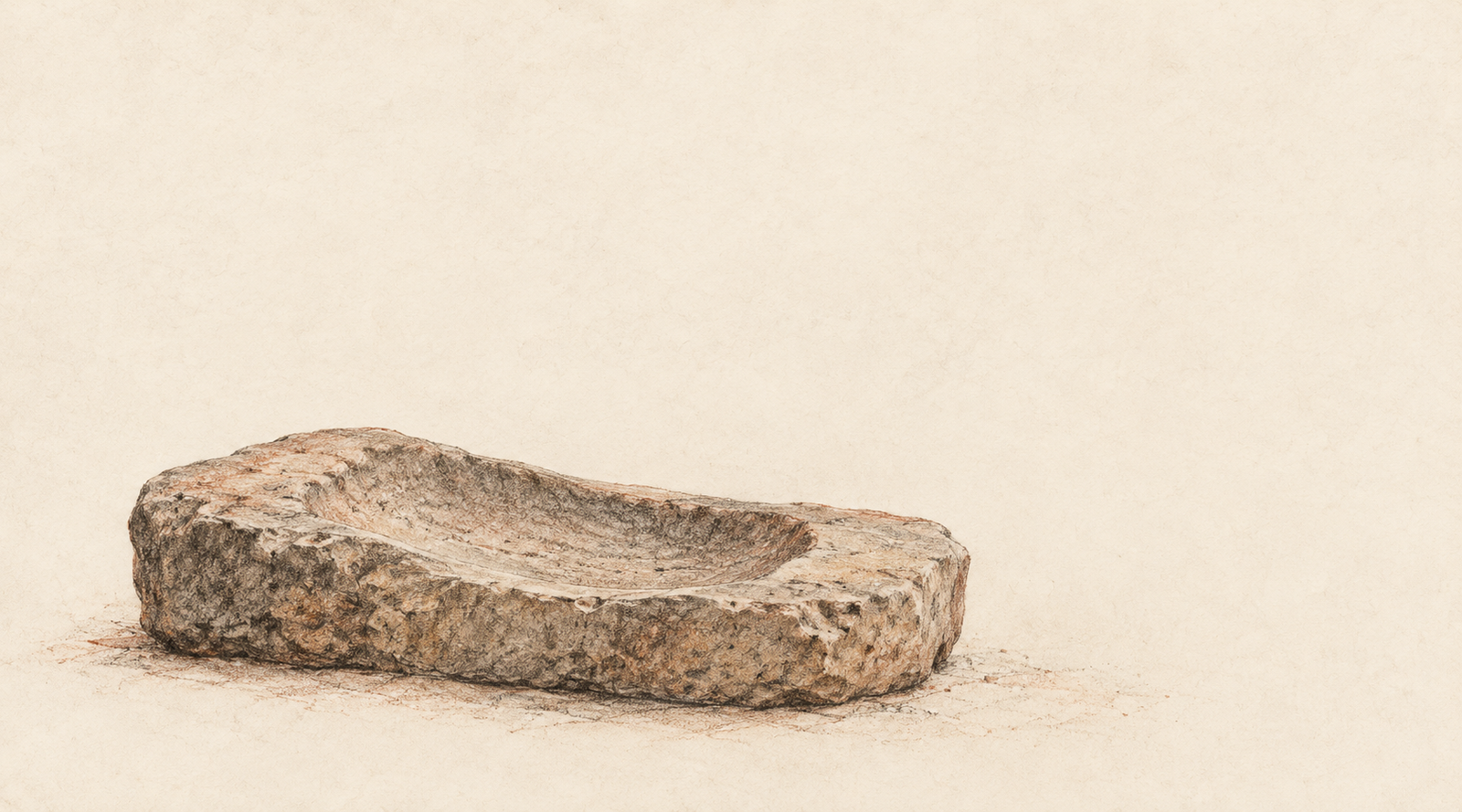

The City of Service
The temple we inherit is a building from which almost all necessity has been removed. Nothing must be brought for it to continue being what we call a temple. The sanctuary asks nothing of us. Stone is good at this kind of independence.
A living temple was otherwise.
Water had to come in. So did grain, cloth, oil, aromatic substances, fuel. The things required for worship arrived because someone carried them across a threshold.
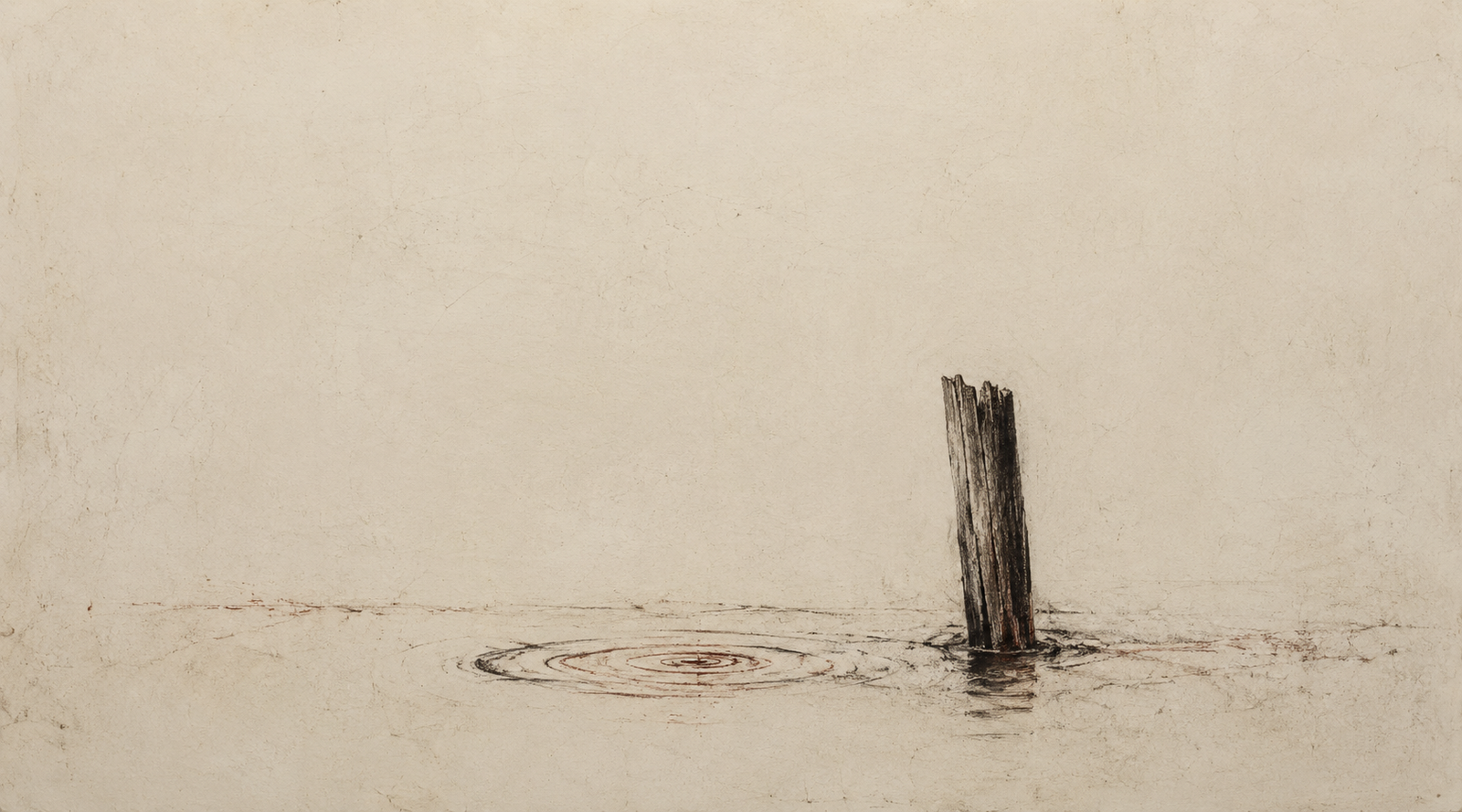

Houses of Wood, Light, and Smoke
Some of Angkor’s most intimate ruins do not rise above the ground at all. They are postholes, low mounds, hearths and ponds: durable traces of a domestic city built largely from things that decay. To restore that city is to see Angkor not only as stone, but as wood, smoke, water, repair, and people living within calling distance.