
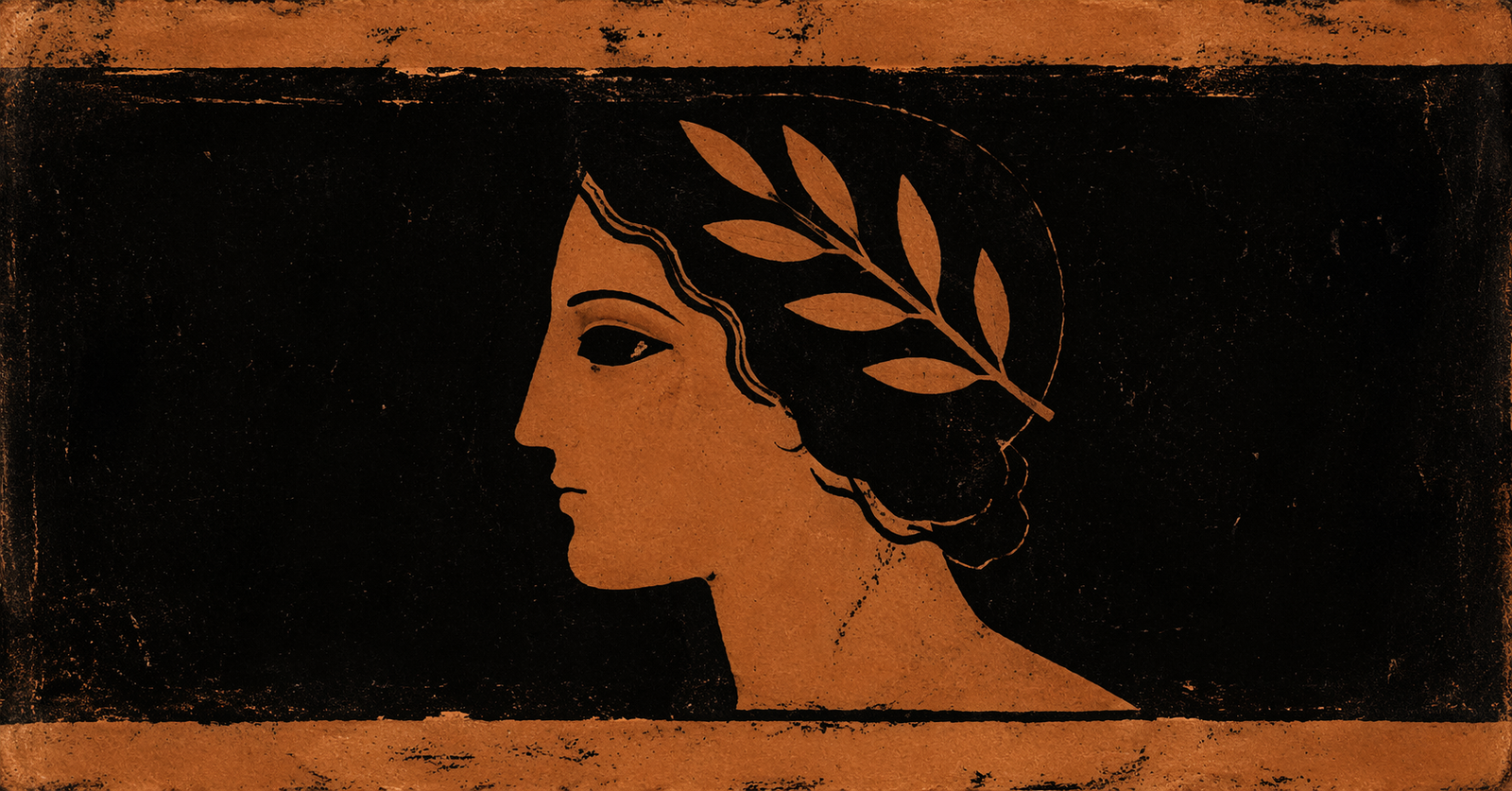

Orpheus — The Weight of Turning
I entered the underworld already divided.
Not in flesh. Not yet.
But in the measure by which I had known the world: sound sent outward, sound returned; step answered by step; breath finding its companion and settling into a shared time. When she died, that measure altered. The answer came later than it should. Rooms seemed to close too quickly after I had crossed them. My own name, spoken aloud, no longer came back with the same shape.
I did not understand this as grief.
I understood it first as misalignment.
Listen.
Some losses take away the beloved. Others take away the interval in which the beloved had lived beside you and made the world complete. Her death did not merely empty the place she had occupied. It altered the law by which nearness had once been known.
That was the first turning.
The body followed afterwards.
—
The descent was not a path but a subtraction.
Light withdrew by degrees, not into darkness, but into refusal. First colour loosened. Then edge. Then the small continuities by which one surface offers itself to the next. Stone no longer carried shape forward. Air no longer promised distance. Each step entered a space that did not prepare itself to receive the next.
I had brought the lyre because the hands require their old devotions when the world begins to thin. The fingers found the strings. The strings answered. But the answer travelled nowhere. The notes did not ring out and diminish. They did not hang. They did not search for wall or vault or passage. They ended where they were born, as though sound itself had been denied extension.
That was when I first understood the country below.
It was not a place of torment, as the living like to imagine. Torment still requires duration. It was not even a place of punishment. Punishment implies address. It was something colder and more exact. A realm in which relation failed to carry. A realm in which nothing was obliged to answer what touched it.
I went on.
Not because music led me. Here, nothing led. Things either continued or ceased.
I continued.
—
There are presences below that do not appear. They revise.
You feel them first as corrections in your own body: the shortening of breath, the quiet refusal of the joints, the way the spine begins to behave as though standing before a height or edge, though no height and no edge have yet declared themselves. The body knows when it has entered a jurisdiction that preceded it.
I came at last before those who govern the terms by which ending remains ending.
Before them, appeal lost its usual order. Argument presumes sequence. Sequence had been pared thin here. One thing did not lead naturally to another. Cause no longer approached result by a road the mind could follow. All that remained intact was condition.
So I did not plead as men plead above, by piling one grief upon another, by naming love and hoping love might soften law.
I held.
That is the nearest word.
Not hope. Hope is too bright and moves too quickly towards the future. Not defiance. Defiance still imagines itself opposed by something that can be forced to recognise it. What remained in me had neither brightness nor pride. It was only a direction kept under pressure. A refusal to release the measure in which she had once answered me.
I held, and because I held, the world below altered by a degree too fine for triumph.
Nothing was granted.
A condition was extended.
—
She would follow.
That was the term.
I was not to turn.
This was not spoken as warning. It was not laid before me as trial, or proof, or bargain weighted towards failure. It belonged to the structure itself, as the bank belongs to the river and the hinge belongs to the door. There are arrangements under which two conditions may overlap for a little while without becoming one thing. This was such an arrangement.
The dead might pass behind the living.
The living might continue toward the light.
But the living could not re-enter the old relation and still keep the passage open.
I understood enough to accept the terms.
Acceptance does not make a thing easy. It only means the body has recognised the law that will not bend for it.
I turned my face upward.
And began.
—
I say that she followed, though at first there was nothing I could have sworn to before any god or man.
No footstep.
No breath.
No brush of cloth.
No shift of gravel.
Only the knowledge that the condition had been allowed to continue, and that my task was now to move within it without breaking its shape.
The first steps of the ascent were almost easier than the last steps of descent. Downward, the world had been emptying itself. Upward, some remnant of inclination remained. But ease is not mercy. It is only the body not yet recognising the full burden that has been laid upon it.
I walked.
My foot met stone.
The stone held.
I lifted the next foot.
Behind me there was nothing.
Then not nothing.
A delay.
That is the best name I can give it.
The silence after my passing did not close at once. It arrived a fraction later than it should have, as though the air were settling around another movement I could not hear. Where the underworld had ended each gesture cleanly, now closure came imperfectly. Something followed in the interval between completion and its remainder.
I learned to go by that delay.
—
This was the second measure.
Not sound and echo.
Not voice and answer.
Step and the slight withholding of final stillness.
It was little. Too little for certainty. Too little for comfort. Too little even for trust, if trust means the body relaxing into what it knows. But it was enough to continue.
I set my pace by it.
One step.
Then the air behind me taking longer than it should to become empty again.
One breath.
Then silence settling, but not with the clean swiftness of solitude.
I had lived too long among proportions not to feel what was happening. A shared measure was trying to form itself in a world that did not wish to sustain it. Not openly. Not securely. Only as a narrow distortion permitted under conditions that could not bear examination without collapse.
This was what she now was to me in the passage upward: not a face, not a hand, not the known cadence of her tread beside mine, but the refusal of emptiness to complete itself at the proper speed.
It was enough.
Until it was not.
—
The body does not endure uncertainty nobly. It negotiates.
The first negotiations are small. A deepening of breath where no greater breath is needed. A slight pause before the foot is put down. A lessening of pace, as though time itself might be widened and certainty persuaded to enter it. The body does not yet rebel. It inquires.
Are you sure?
No answer is available.
Continue.
I continued.
But continuation is not an abstract act. It is accomplished each moment against the grain of older laws. The living are made for confirmation. We reach and feel the table there. We call and hear the answer. We turn when a voice addresses us. We know the world by its willingness to answer our approach with touch, sound, weight, resistance. Remove those things and the body does not ascend into wisdom. It begins to starve.
Still I kept the measure.
Stone.
Step.
Delay.
Breath.
Stone.
Step.
Delay.
The pattern held. Or seemed to hold. Or held only because I was there to bear it forward without asking too much of it.
There is very little difference between those states once a man has gone far enough into them.
—
At times I thought I felt her more distinctly.
Not by sound. Never sound.
But by a soft thickening at the nape of the neck, as if the air there had acquired attention. By a minute resistance in the back of the shoulders, not touch but the nearness from which touch might come. By the sense that the space just traversed had not yet closed because another life was entering it behind me.
The temptation is to say that love sharpened my perception.
That is not exact.
Love sharpened my hunger for correspondence.
The perception itself remained poor, mean, almost insultingly slight. A lesser man might have called it illusion. Perhaps it was. But illusion too has structure. It does not emerge at random. It gathers where the body cannot otherwise survive the terms imposed upon it.
So I made no claim.
I walked by the altered settling of the world.
—
The ascent grew harder.
Not because the underworld clutched at us. It did not clutch. That would have implied desire. It remained what it was: exact, withholding, complete in its refusal to answer what passed through it. But the nearer we drew to the upper air, the more the senses began to remember their old rights.
Shape returned by degrees.
Not full shape. Permission first. A loosening of the refusal in surfaces. Stone beginning to hold its outline a moment longer. The path distinguishing itself from the wall. The wall from the dark beyond it. Above, somewhere still distant, a paling too faint to be called light and yet already dangerous because it restored the thought of light.
This was where the burden changed.
Below, I had been sustained by extremity. In utter reduction the law is at least pure. But near the world, mixture begins. Here, memory re-enters sensation. Here, the body recalls what nearness once meant. Here, confirmation ceases to be a metaphysical impossibility and becomes again the simplest and most ancient instinct.
I felt her strongest then.
Or perhaps I most needed to, as the world began to resemble return.
The delay behind me lengthened. The silence did not merely hesitate; it seemed to arrive in two motions, first after me, then after what followed me. More than once I believed I could distinguish two ascending times interwoven on the path: mine, coarse and flesh-bound; hers, finer, later, almost there.
I did not turn.
But the body had begun to gather itself around the possibility.
—
There is a cruelty in nearing fulfilment that the depths do not possess.
In the depths, one knows only distance. The law stands entire. The body obeys because it has no language for anything else. But close to the threshold, resemblance returns. The world begins to imitate restoration. Not fully. Never fully. Only enough to awaken the old readiness of the nerves. One starts to feel again how easy it would be, above ground, to confirm what one loves. A hand on the wrist. A name spoken. A glance over the shoulder. The smallest turn and the world would once more declare itself shared.
That is where danger truly begins: not in darkness, but in the first soft conspiracy of returning form.
The path narrowed.
Or perhaps my certainty narrowed within it.
I no longer measured only the delay. I measured its consistency. I counted without wishing to count. I listened for whether the second settling came at the same interval, whether it weakened, whether it approached, whether it faltered. The discipline that had carried me thus far began to bend inward upon itself. Continuation was no longer enough. I wanted proof that continuation still corresponded to something beyond my own will — proof the condition itself could never furnish.
—
My shoulders tightened first.
Then the throat.
Then the small muscles at the base of the skull, which know before the mind knows when a face is preparing to seek what should not yet be seen.
I kept walking.
Stone.
Step.
Delay.
Breath.
But the order had altered. Earlier, the pattern had carried me. Now I carried it, and could feel its weight. What had been just sufficient for movement became insufficient for belief. Each interval asked more trust than the last. Each withheld answer sharpened the ache for answer.
I knew the law.
Knowledge does not still the flesh.
A man can understand the terms by which he must live and still find the body already arranging itself against them. The spine lessens its forward lean. The pace eases. The chest opens as if to receive an expected sound. The head, that frail tower of appetite and direction, begins its old obedience to doubt.
Are you alone?
Continue.
Is the delay real?
Continue.
Has she come this far?
Continue.
What follows you?
Continue.
These questions were not formed in language then. Language comes later and pretends it was present at the birth of every catastrophe. No. At the time there was only pressure seeking orientation.
Above, the light strengthened by a degree.
The world was nearly willing to have edges again.
I felt the path behind me not as emptiness, but as occupancy waiting to be sealed by sight.
That was the most dangerous illusion of all.
Not that she was absent.
But that seeing would preserve what only unseeing could bear.
—
The threshold was close enough for the air to change upon my face.
Not warmth. Not yet. But a finer grain in the wind. A less deathly stillness. The first suggestion that above us things still moved according to ordinary sequence: leaf answering wind, dust answering foot, voice answering mouth. The world of confirmation had begun to lean down into the passage.
At that nearness, the second measure behind me seemed almost complete.
I could imagine the weight of her step aligning with mine.
Not hear it. Never hear it.
But imagine it with such force that imagination itself became a species of pressure. I knew where her foot would fall if she were there. I knew the interval at which breath would follow breath if she were there. I knew the exact shape the world would take if the passage had almost worked.
Almost.
My pace altered.
No more than any observer above ground would have noticed. A slight check. A tiny surrender in the insistence of the forward line. But within the body it was vast. For one moment the movement upward ceased to be pure continuation and became expectancy.
Expectancy seeks its object.
The muscles at the neck filled with fire.
I resisted.
Resistance is not peace. It is only the body tearing against its own design.
For the space of one breath, perhaps less, there was balance: the old world calling from ahead, the unfinished measure pressing from behind, and I suspended between them like a note held past the point of safety.
Then doubt changed shape.
Until that moment it had asked: Is she there?
Now it asked: If you do not turn, what if the one you lead is nothing but your refusal to accept emptiness?
The body cannot dwell long inside that question. It will choose a law.
Mine chose confirmation.
—
I turned.
—
Do not ask what I saw.
Sight was not the wound.
The wound was that the world resumed.
Backward became backward again.
Forward ceased to carry what belonged to the dead.
The narrow distortion by which a second life had followed in my wake was corrected. The interval collapsed into its proper order. What had been allowed as passage became once more impossible as relation.
She was not taken.
She was placed where the world requires the dead to remain.
The loss did not begin again.
It finished.
—
I stood at the lip of the living world with the light on my face.
Above me, morning — or something like morning — continued according to its ancient habits. Air moved. Stone received shape. Distance offered itself to the eye without reluctance. A bird called somewhere beyond the mouth of the passage and the call travelled outward as calls do, entering space, crossing it, diminishing according to law. My own breath answered my lungs without delay. The lyre hung at my side and when my hand, by habit, touched the strings, they gave back a sound fit, at last, to inhabit the air.
Everything had returned.
That was how I knew what had been lost.
Not by any cry.
Not by collapse.
But by the perfect obedience with which the world resumed its proper measures once she was no longer between death and day.
I did not call after her.
Calling belongs to distance. There was no distance to cross. Only division restored.
I stepped fully into the light.
And the passage behind me did not darken, did not close, did not announce that anything impossible had almost occurred there. The world has no obligation to mark the places where it briefly permitted what it could not sustain.
—
Since then I have understood more, though understanding has not been a comfort.
The command was not cruelty.
Cruelty enjoys suffering. This law did not enjoy. It simply held.
The living cannot bear the dead forward by sight. Sight confirms relation under the terms of the upper world. But the relation granted to me in the passage was not of the upper world. It depended upon incompletion: presence without proof, nearness without answer, accompaniment carried only by the delayed settling of emptiness. To turn was to demand of that condition the wrong kind of reality.
And the wrong reality, once demanded, arrived at once.
This is why the body was always going to fail me.
Not because the body is weak.
Because it is faithful to the world in which it was made to survive.
It seeks answer. It seeks weight. It seeks the other where the other can be confirmed. Ask it instead to proceed by an unverified measure, and sooner or later it will try to close the interval on which the whole passage depends.
This is not guilt.
Guilt is too human a word for the exactness of what occurred.
I entered the underworld already divided between what had been and what could still be borne. I left with that division fixed inside me as law.
—
I still walk forward.
There is no other direction left to flesh.
But direction is not simple now.
Something in me continues to incline towards what cannot be answered. Not the head. The head learned. Not the feet. They have kept the road laid before them. Deeper than both, the inward measure by which one life once knew itself accompanied has never resumed its former shape. It still waits for the second settling. It still listens after each completed sound for what should arrive a fraction later and does not.
This is the true weight of turning.
Not the instant at the threshold.
Not even the loss, if by loss one means only the beloved removed.
It is the continuance afterwards of a structure that can no longer be enacted in the world and yet does not cease within the one who has inhabited it. A man goes on. He eats, speaks, touches the strings, stands beneath weather, walks among others. Outwardly he belongs again to sequence, and sequence receives him. But inwardly another measure persists, exact and unusable, asking the air after him to delay, asking silence not to close so quickly, asking for the answer that would make movement shared.
No answer comes.
Still the measure remains.
—
Do not call this a lesson.
The dead do not exist to improve the living.
Do not call it punishment.
Nothing was inflicted that did not follow from the law itself.
And do not call it merely love. Love is named too easily above ground, where people think its truth lies in how brightly it declares itself. There is a darker fidelity than brightness. There is a form of attachment that survives not as consolation, but as a permanent distortion in the order by which one receives the world.
That is nearer.
I know now that the place of turning does not recede.
Roads recede. Years recede. Cities, griefs, seasons, the sounds of those who once knew your face — all these diminish and pass into proportion. But the place where the body chose confirmation over the impossible carrying of doubt remains exact. Not because memory preserves it with unusual vividness. Memory fades like everything else that belongs to time.
This does not belong to time.
It belongs to structure.
I entered the underworld already divided.
I left bearing a measure the world cannot complete.
I go on.
The air closes.
The step is answered by no second step.
Silence settles at once.
Yet some part of me, with every forward movement, still waits for the delay.
And the waiting does not end.
—
—
Receive the next work
Subscribe free to receive new work from the House of Cadmus Library by email.
More from the Library

See Also
A concise and impartial dictionary of absence, promises, quarrels, ordinary objects, and the troublesome instability of words.
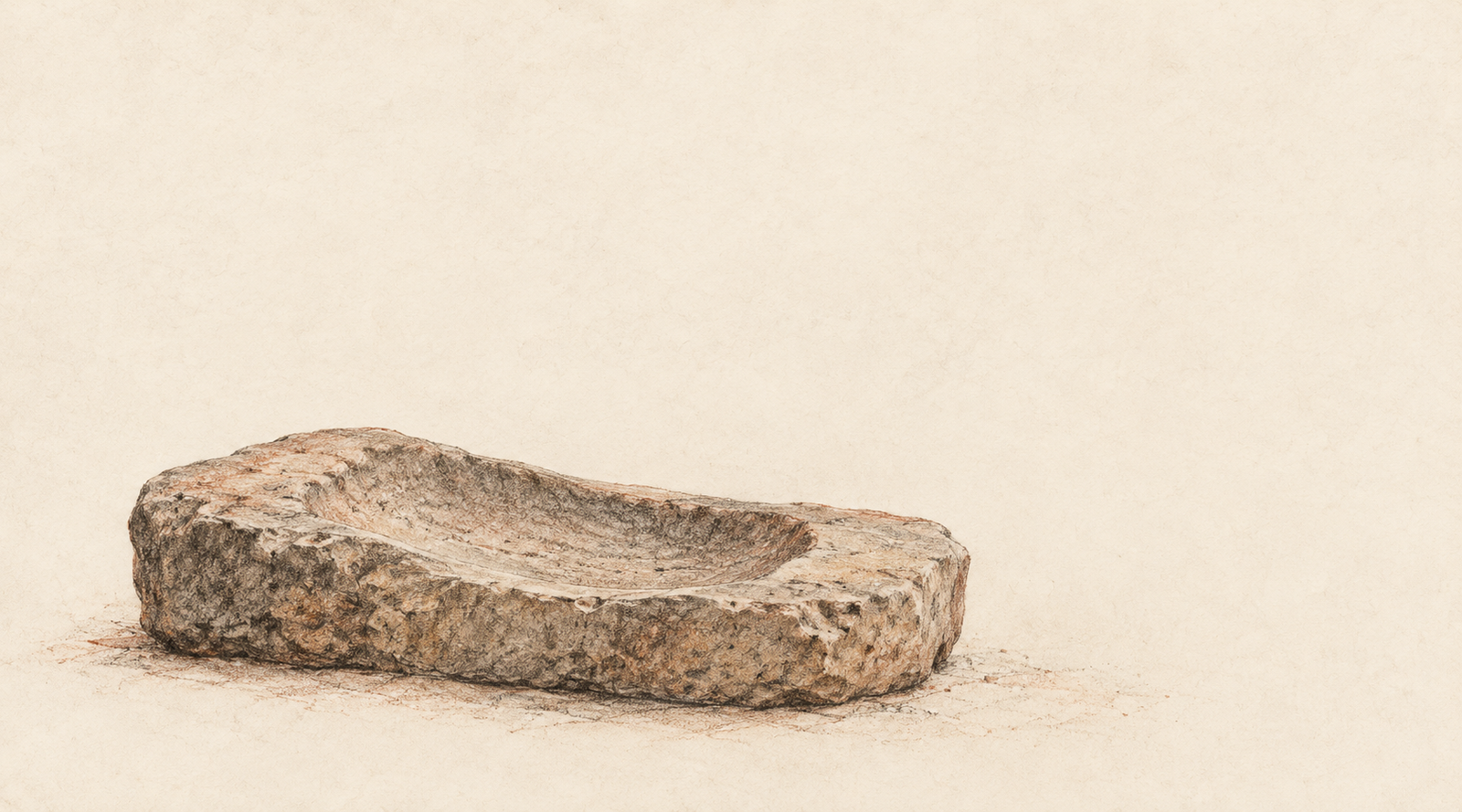

The City of Service
The temple we inherit is a building from which almost all necessity has been removed. Nothing must be brought for it to continue being what we call a temple. The sanctuary asks nothing of us. Stone is good at this kind of independence.
A living temple was otherwise.
Water had to come in. So did grain, cloth, oil, aromatic substances, fuel. The things required for worship arrived because someone carried them across a threshold.
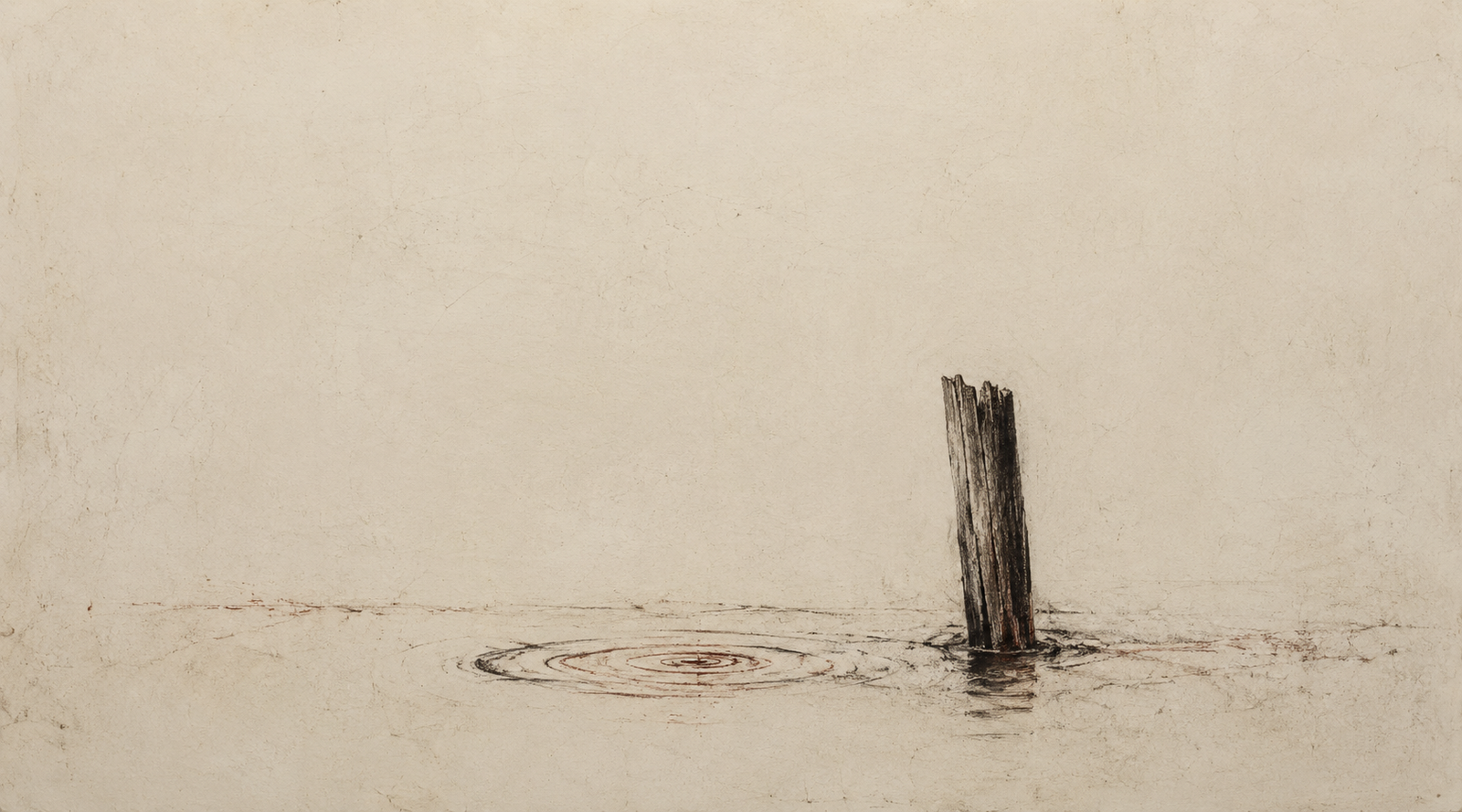

Houses of Wood, Light, and Smoke
Some of Angkor’s most intimate ruins do not rise above the ground at all. They are postholes, low mounds, hearths and ponds: durable traces of a domestic city built largely from things that decay. To restore that city is to see Angkor not only as stone, but as wood, smoke, water, repair, and people living within calling distance.