
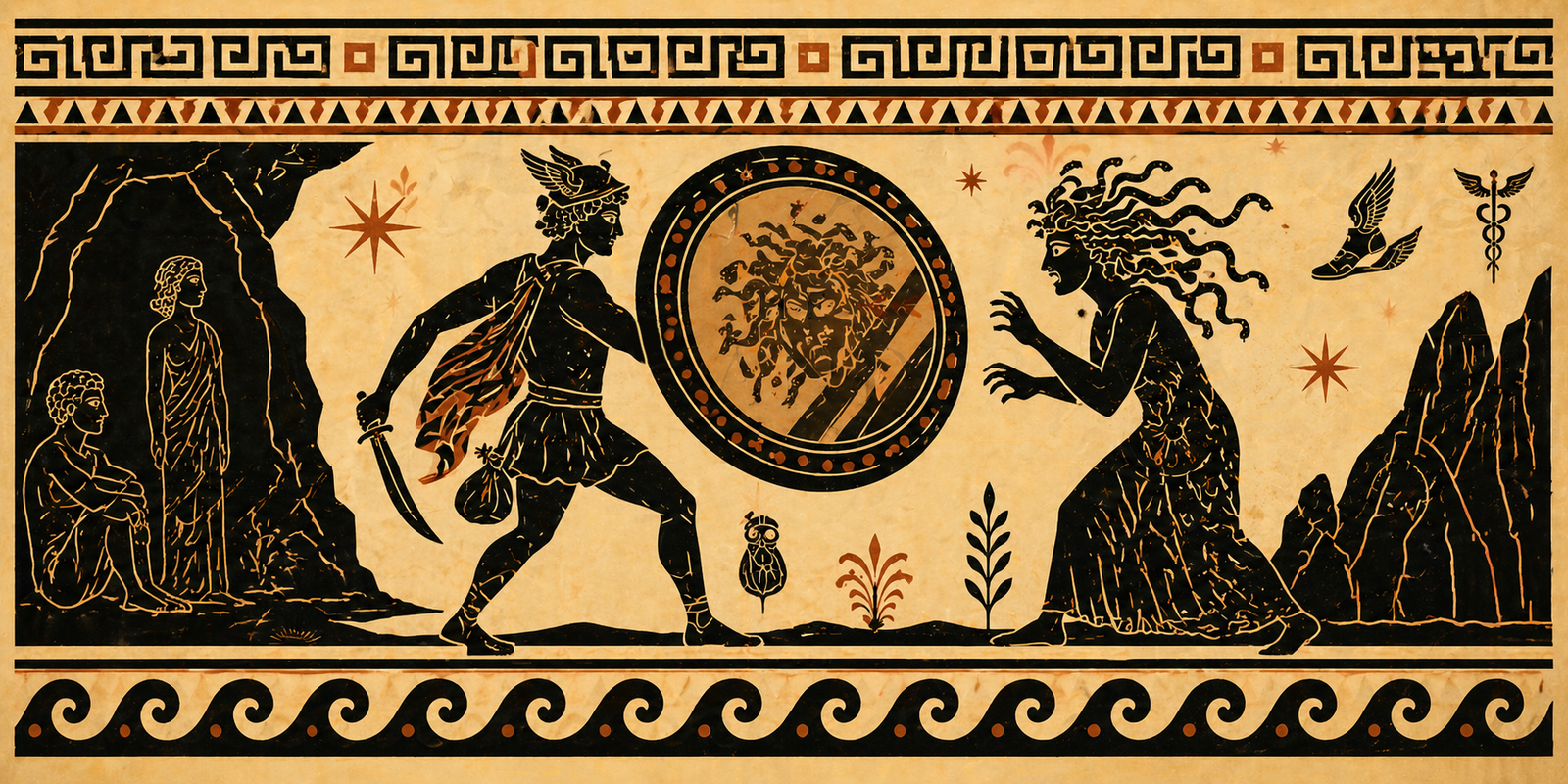

Perseus and the Shield of Athena
A Greek myth retold for serious child readers: dangerous, warm, and full of courage that trembles before it acts.
Perseus grew up on a small island where the wind was always trying to steal something.
It stole smoke from the cooking fires, spray from the waves, figs from the trees, and, whenever it could, the words from people’s mouths. The fishermen of Seriphos were used to shouting across the shore with both hands cupped around their faces. The goats were used to leaning sideways. Even the houses looked as if they had braced themselves long ago and decided never to stand quite straight again.
Perseus lived there with his mother, Danae, in the house of Dictys the fisherman, who had found them years before when the sea brought them to the island in a wooden chest.
That is the sort of thing the sea sometimes does in old stories. It takes what one king throws away and carries it carefully to someone kinder.
Danae never spoke much of the chest. She did not speak much of the king who had put her in it, either. She spoke instead of useful things: whether the nets needed mending, whether the bread was done, whether Perseus had remembered to sharpen the small knife Dictys used for cleaning fish.
But Perseus knew this much. His mother had once been a princess. She had been shut away by a frightened father. Zeus himself had found her, as gods tend to find what men try hardest to hide. And when Perseus was born, that frightened king had put mother and child into a chest and pushed them out onto the sea.
Perseus did not remember the chest.
Danae did.
That was enough.
By the time Perseus was almost a man, he was strong in the shoulders, quick in the hand, and far too ready to answer insult with courage. Courage is a splendid thing, but when it is young it often runs ahead before wisdom has put on its sandals.
The trouble began with King Polydectes.
Polydectes ruled Seriphos, though it must be said that ruling a small island had not made him modest. Some kings govern as if power has been lent to them. Polydectes governed as if the gods had personally written his name across the sky and asked everyone else to admire the lettering.
He wanted Danae for his wife.
Danae did not want Polydectes.
This should have ended the matter. In a better world, it would have. But many myths begin because a king hears no and decides it must mean try harder.
Perseus saw how his mother grew quieter when Polydectes entered a room. He saw how Dictys stood nearer to the door. He saw how the king rested one hand on the back of Danae’s chair while speaking to other men, as if the chair, the room, and the woman beside it had already been counted among his possessions.
One evening Polydectes held a feast.
The men of Seriphos came with gifts: horses, cups, cloaks, gold rings, things they could afford and things they could not. Perseus came with nothing.
He had nothing grand to bring. He had a knife, a cloak patched at the shoulder, two strong hands, and a temper hot enough to boil seawater.
Polydectes looked at him across the hall.
“And you, Perseus?” he said. “What gift do you bring your king?”
Laughter moved among the tables. Not loud laughter. Worse than that. The small kind that hides behind cups.
Perseus felt his face burn.
“I would bring you anything you asked,” he said.
That was the sort of sentence a wiser person leaves lying on the floor.
Polydectes leaned back.
“Anything?”
“Anything.”
The king smiled. His smile had no warmth in it.
“Then bring me the head of Medusa.”
The hall went still.
Even the men who had laughed looked down at their plates.
Everyone knew the name. Medusa, one of the Gorgons, had serpents for hair and a face no living person could look upon and remain alive. One glance turned flesh to stone. Warriors had gone to find her. Sailors had boasted of finding her. None returned, except as stories told by men who had not gone with them.
Perseus stood very still.
He thought of his mother.
He thought of Polydectes’ hand closing around the arm of her chair.
He thought of the king removing him from the island without seeming to do so.
“All right,” said Perseus.
It was not a clever answer.
It was, however, an answer.
Danae rose at once. “No.”
Polydectes spread his hands, all innocence. Kings are very good at looking innocent after arranging something dreadful.
“He offered.”
Danae looked at her son, and for the first time in many years Perseus saw the chest in her eyes: the dark wood, the saltwater, the helplessness of being carried where another person had sent you.
He wanted to tell her he would not go.
He wanted to tell her he would go and return before morning.
Neither would have been true.
So he crossed the hall, knelt before her, and put his forehead against her hand.
“I will come back,” he said.
His mother rested her fingers in his hair.
“Then come back as my son,” she whispered. “Not as someone trying to prove he is brave.”
That was a better gift than any horse at the feast, though Perseus did not understand all of it yet.
At dawn he left the house of Dictys.
The island was pale in the early light. Nets hung from poles. The goats complained from the rocks. A woman swept sand from her doorway, though the wind would return it in an hour. Perseus looked back once and saw Danae standing by the threshold.
She did not wave.
Neither did he.
Some promises are too heavy for waving.
He walked beyond the last houses and climbed toward the high bare ridge above the sea. He had no map. He had no ship. He had no idea where Medusa lived. These are serious disadvantages in any quest, especially one involving a monster who turns people into stone.
By noon he was hungry.
By evening he was lost.
By night he was beginning to suspect that courage, by itself, was not a method.
He sat beside a spring under a stunted olive tree and put his head in his hands.
“So,” said a voice nearby, “you are going to find Medusa.”
Perseus looked up.
A young man stood beside the spring. He wore a traveller’s cloak and winged sandals, which is not usually the first thing one notices about a person, unless the sandals are actually fluttering above the grass. He carried a staff with two serpents twined around it, and his eyes were bright with the kind of humour that arrives before permission.
Perseus stood quickly.
“Hermes,” he said, because even young fools know some gods on sight.
Hermes bowed a little. Not much. Gods rarely overdo courtesy.
“You have been walking all day in the wrong direction,” he said.
Perseus looked at the path behind him.
“I did not know there was a right one.”
“There is usually a right direction,” Hermes said. “The difficulty is that mortals often begin by choosing several wrong ones with confidence.”
Perseus flushed.
Another figure stepped from the shade of the olive.
She was tall, grey-eyed, and armed. Her helmet caught the last of the light. She did not smile, but the air around her became clearer, as if every foolish thought nearby had suddenly stood up straighter.
Athena.
Perseus dropped to one knee.
“Stand,” said Athena. “Kneeling wastes time, and you have already lost a day.”
Perseus stood.
“I have to bring back Medusa’s head,” he said.
“Yes,” said Athena.
“My mother—”
“Yes,” said Athena again, more gently.
Perseus swallowed. “Can it be done?”
Hermes tilted his head. Athena looked at the boy long enough that he began to wish she would look somewhere else.
“At least you ask the right question now,” she said. “Yes. It can be done. Not by strength. Not by looking directly. Not by shouting and rushing forward, which I mention because you seem the sort of person to consider it.”
Hermes made a small sound that may have been a laugh attempting to behave itself.
Athena lifted a polished shield from beside the spring.
It was round, bright, and clear as still water. The bronze had been worked so finely that Perseus could see the olive tree behind him, the first star above it, and his own face looking much younger than he had hoped.
“You must not look at Medusa,” Athena said. “Not once. Not even for an instant. You will look only here.”
She held out the shield.
Perseus took it.
It was heavier than he expected.
“That is because it is not only bronze,” Athena said. “It is obedience.”
Perseus did not much like the sound of that.
Hermes handed him a curved sword. “This will cut what must be cut.”
Then he gave Perseus a leather pouch. “This will hold what must be carried.”
“And these,” said Athena, “you must earn.”
She pointed toward the west, where the sky had deepened and the first shadows were filling the hollows of the hills.
“The Graeae know where the nymphs of the far place dwell. The nymphs hold three gifts you need: winged sandals, a cap of darkness, and a bag strong enough for the Gorgon’s head. Find the Graeae. Take care. They are old, hungry for secrets, and not fond of boys who ask questions badly.”
“How should I ask, then?”
“Better than you boast,” said Athena.
The gods vanished.
Perseus was left beside the spring with a sword, a shield, a pouch, and the uncomfortable feeling that he had been correctly described.
He found the Graeae at the edge of the world, or at least at the edge of any world Perseus wanted to visit twice.
They were three sisters, old as dry roots, sitting in a hollow between grey rocks. They had one eye and one tooth between them, which they passed from hand to hand. This arrangement had not improved their temper.
“Who comes?” said the first.
“Someone breathing,” said the second.
“Someone young,” said the third.
“I can smell young bones.”
Perseus stood behind a rock and watched the eye move from one wrinkled hand to another.
He waited.
This was difficult for him.
He waited longer.
This was almost heroic.
When the first sister took the eye from the second and reached toward the third, Perseus sprang forward and snatched it from the air.
All three screamed.
“Thief!”
“Robber!”
“Boy!”
The last one seemed to them the worst.
“I will give it back,” said Perseus, holding the eye tightly closed in his fist, “when you tell me where to find the nymphs who keep the sandals, the cap, and the bag.”
“Never!”
“Perhaps never!”
“Almost certainly never!”
Perseus began to walk away.
“East!” cried one.
“West!” cried another.
“Fools!” cried the third. “North, beyond the black river, under the cliffs where no birds nest.”
Perseus stopped.
“Thank you,” he said.
“Give back the eye!”
He rolled it gently across the stone toward them and left while they were still arguing over whose fault the whole thing was.
The nymphs were not old or grey. They were bright as water over stones, and they had been expecting him. This is one of the advantages of dealing with beings who live near the edge of the world. They are often inconvenient, but rarely surprised.
They gave him winged sandals that trembled in his hands like living birds.
They gave him the cap of darkness, soft and shadowy.
They gave him the bag, folded small, though it seemed to weigh as much as an oath.
“Do not let the head touch your skin,” said one.
“Do not look at it,” said another.
“Do not be proud afterward,” said the third.
Perseus looked at her.
She looked back.
“People often forget the last warning,” she said.
Perseus put on the sandals.
The ground fell away.
The first moment of flying is not like walking on air. Walking is a thing your feet understand. Flying is a thing your stomach notices before your courage does. Perseus lurched upward, wind tearing at his cloak, the world dropping beneath him in one great breath. He almost shouted.
Then he remembered he was trying to be quiet.
He flew over black water, over sleeping fields, over mountains whose peaks held the last fire of sunset. At last he reached a land where no birds sang.
There were cliffs there, and a shore white with old salt, and beyond the shore a cave mouth dark enough to look like the entrance to night itself.
Around it stood statues.
At first Perseus thought they were carvings: men with swords lifted, women with mouths open, a dog caught mid-leap, a bird with wings spread forever above a stone branch.
Then he saw the fear in one soldier’s face.
Not carved.
Changed.
Perseus landed behind a broken pillar.
The air was cold.
From inside the cave came a sound like snakes moving over dry leaves.
He put on the cap of darkness. His hands disappeared. His arms disappeared. If he had looked down, he would have seen nothing of himself, which is a strange thing and not as amusing as one might think.
He lifted Athena’s shield.
In its polished curve, the cave appeared before him in reflection: dim, reversed, silvered by bronze. He could see the stone floor, the long shadows, the sleeping shapes of three Gorgons.
Two were monstrous in the old way: powerful, huge-winged, clawed, immortal.
The third was Medusa.
She slept apart from the others.
Her hair moved though there was no wind. Serpents coiled and uncoiled around her face, lifting their heads, tasting the air. Even in reflection, Perseus felt the danger of her. Not because she was ugly, as foolish people sometimes say when they do not know what else to say. She was terrible because the world around her had forgotten how to remain alive. Every path toward her ended in stillness. Every bird, soldier, and beast outside the cave had come with a future and lost it at a glance.
Perseus took one step backward into the cave, watching only the shield.
Then another.
His heel touched loose stone.
It shifted.
The smallest sound rang through the cave.
One serpent lifted its head.
Perseus stopped breathing.
The Gorgons slept on.
He moved again, backward, shield raised, sword low. Each step felt wrong. Heroes like to face what they fear. That is one of the things heroes must sometimes unlearn. Facing danger is not the same as staring at it.
He came close enough to see Medusa’s reflection clearly.
His hand shook.
This is important.
His hand shook.
Perseus thought of his mother at the threshold. He thought of Polydectes smiling without warmth. He thought of the wooden chest on the sea, though he had never seen it except in Danae’s silence.
Then he lifted Hermes’ sword.
He struck once.
The sound that followed was not long, but it seemed to open the whole cave.
The other Gorgons woke.
Perseus thrust the head into the bag without looking, pulled the cord tight, and leapt aside as a claw struck the stone where he had been. Sparks flew. Wings beat the dark air. The cave filled with a shriek so fierce the statues outside seemed almost to flinch.
Almost.
Perseus ran.
Invisible, yes. Armed, yes. Favoured by gods, yes.
Still running.
There is no shame in running when running is the correct plan.
He sprang from the cave mouth and the winged sandals caught him. The two immortal Gorgons burst out behind him, beating the air, their cries tearing across the cliffs. Perseus flew low over the sea. Spray struck his face. The bag knocked against his side with each movement, heavy and dreadful.
“Where is he?”
“I smell him!”
“Sister-killer!”
The word struck him harder than the wind.
The cap of darkness hid him. The shield hung at his arm. The sea opened below like hammered iron.
He flew on.
The Gorgons searched until dawn, but they could not find what darkness concealed and wings carried away. At last their cries faded behind him.
Perseus did not cheer.
He did not sing.
He flew with the bag at his side and understood that surviving a terrible thing is not the same as making it light.
On his way home he saw many lands. He saw deserts where the sun lay on the sand like a sheet of bronze. He saw rivers twisting like green cords through fields. He saw mountains with snow burning pink at dawn.
And once, far below, he saw a girl chained to a rock above the sea while something huge moved beneath the waves.
That is another tale.
It is enough to say that Perseus did not pass her by.
By the time he returned to Seriphos, he had learned several things: that gods may help but will not do the hard part for you; that monsters are not made harmless by being defeated; and that a young man who has flown over the world may still be most afraid of what waits at home.
He landed outside the house of Dictys at dusk.
The door stood open.
Inside, Danae was gone.
Dictys met him by the hearth. The old fisherman’s face was bruised.
“The king took her to the palace,” he said. “She would not go. He took her.”
Perseus felt the room narrow around him.
For one moment he was again the boy at the feast, hot-faced, ready to shout. Then his hand touched the shield at his back.
Not by strength, Athena had said.
Not by shouting and rushing forward.
He drew a long breath.
“Where is Polydectes?”
“In the hall. Feasting.”
Of course he was. Some men find that feasting improves their courage when other people are the ones in danger.
Perseus walked to the palace.
No one stopped him. Perhaps they did not recognise him at first, covered in dust and sea-salt, with a strange bag at his side and a shield darkened by travel. Perhaps they did recognise him and decided very wisely that stopping him was not a necessary part of their evening.
The hall was bright with torches.
Polydectes sat at the high table. Danae stood near the wall between two guards. Her face was pale, but when she saw Perseus, she did not cry out.
She stood straighter.
That nearly broke him.
Polydectes stared.
“Well,” said the king. “The boy returns.”
Perseus walked into the centre of the hall.
“I brought your gift.”
A murmur passed through the room.
Polydectes laughed. It was too loud.
“Do you expect us to believe that?”
“No,” said Perseus. “I expect you to look.”
Danae’s eyes widened.
Perseus did not look at her. If he had, he might not have been able to finish.
He turned to the men in the hall.
“Anyone who is my friend,” he said, “or my mother’s friend, should cover his eyes.”
Some did at once. Dictys, who had followed him in, covered both eyes with the speed of a sensible man.
Some hesitated.
Polydectes stood.
“This is foolishness.”
“Yes,” said Perseus. “There has been a great deal of that.”
He opened the bag.
He did not look.
The hall filled with a silence harder than stone.
When Perseus pulled the cord tight again, Polydectes was still standing at the high table.
But he would never move from it.
The king’s mouth was open. His hand rested on his cup. His face held the exact expression of a man who had finally discovered that other people’s children are not as easily disposed of as he had hoped.
No one spoke.
Then Danae crossed the hall and took Perseus in her arms.
For a moment he was not a hero, or a monster-slayer, or a young man favoured by gods.
He was her son.
That was better.
Later, when the hall had emptied and the torches burned low, Perseus went alone to the shore. Athena was waiting there where the waves drew silver lines across the sand.
He laid the shield before her.
“It saved my life,” he said.
“You used it well.”
“I was afraid.”
“Yes.”
Perseus looked at her. “That is all?”
Athena’s grey eyes rested on him.
“What else should there be?”
“I thought courage might feel different.”
“It rarely does at the time,” said Athena. “That is why it is courage.”
Perseus unfastened the bag and gave it to her without looking inside. Athena took it, and the night seemed to settle more deeply around the thing it held.
“What will you do with it?” he asked.
“I will bear it where it can still protect,” she said.
Later, men would say that the head of Medusa was set upon Athena’s shield, so that even after death the Gorgon’s power guarded the goddess of wisdom. Men say many things. Some of them are true.
Perseus watched the goddess lift the shield. The bronze caught moonlight now, not sunlight. In it he saw the island behind him: the crooked houses, the restless sea, the doorway where his mother waited.
He had gone out to bring back a monster’s head.
He had brought back his mother’s safety.
That is not a smaller thing.
Athena stepped into the dark and was gone.
Perseus stood on the shore a little longer. The wind tugged at his cloak. It tried to steal the salt from his skin, the warmth from his hands, the breath from his mouth.
This time, Perseus laughed.
Then he turned and went home.
— A. M. Sharp
—
Receive the next work
Subscribe free to receive new work from the The Alexander Series Library by email.
More from the Library

See Also
A concise and impartial dictionary of absence, promises, quarrels, ordinary objects, and the troublesome instability of words.
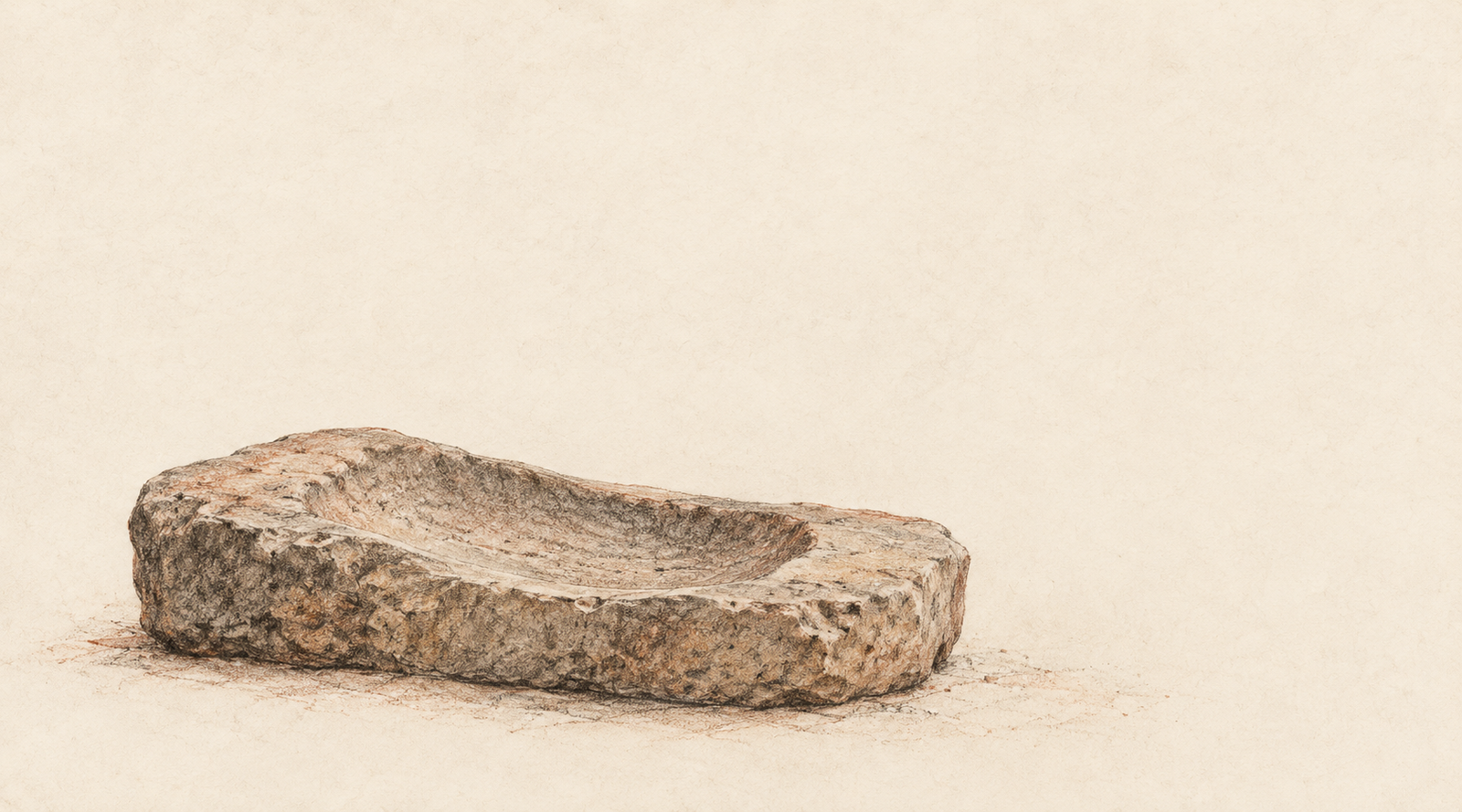

The City of Service
The temple we inherit is a building from which almost all necessity has been removed. Nothing must be brought for it to continue being what we call a temple. The sanctuary asks nothing of us. Stone is good at this kind of independence.
A living temple was otherwise.
Water had to come in. So did grain, cloth, oil, aromatic substances, fuel. The things required for worship arrived because someone carried them across a threshold.
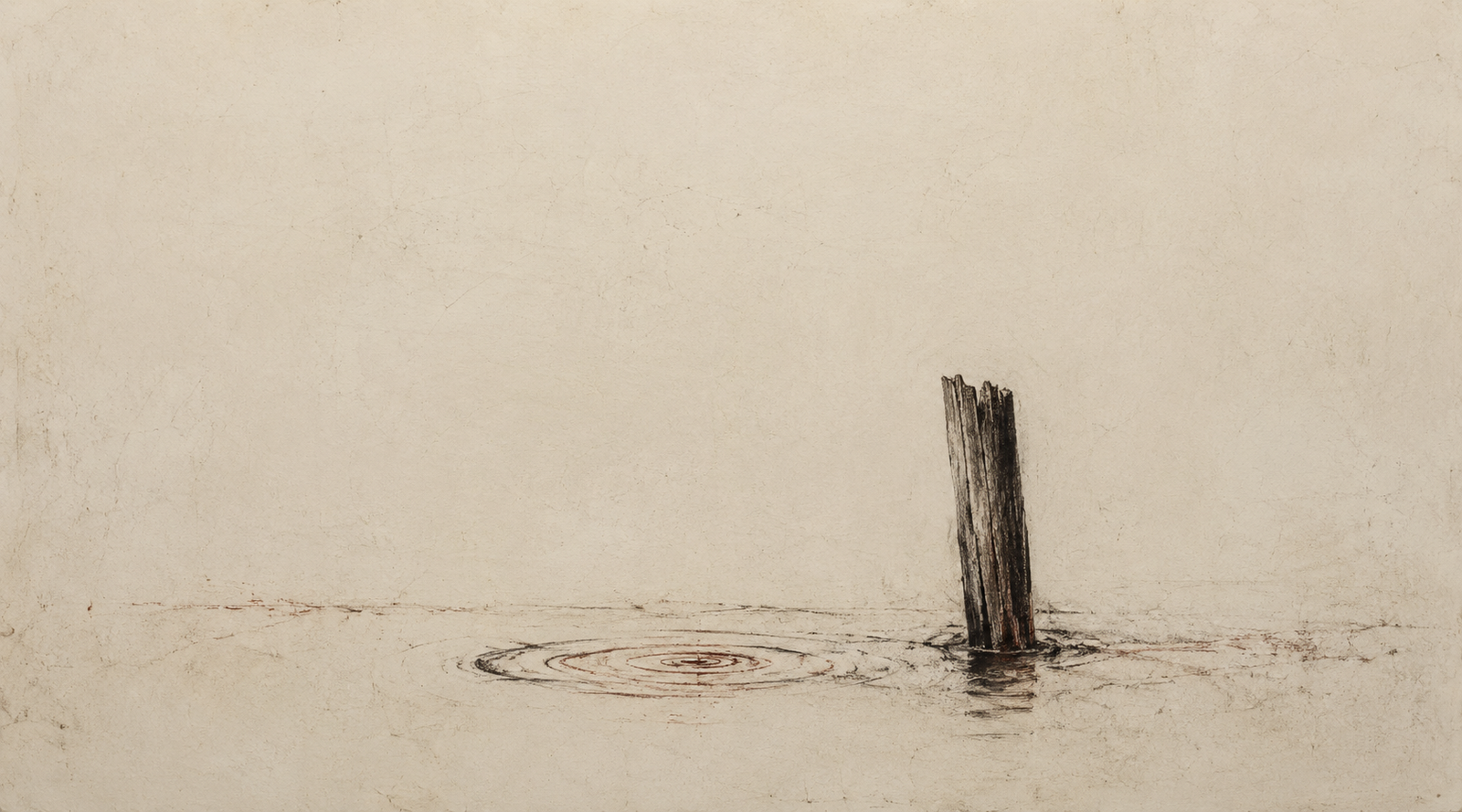

Houses of Wood, Light, and Smoke
Some of Angkor’s most intimate ruins do not rise above the ground at all. They are postholes, low mounds, hearths and ponds: durable traces of a domestic city built largely from things that decay. To restore that city is to see Angkor not only as stone, but as wood, smoke, water, repair, and people living within calling distance.