
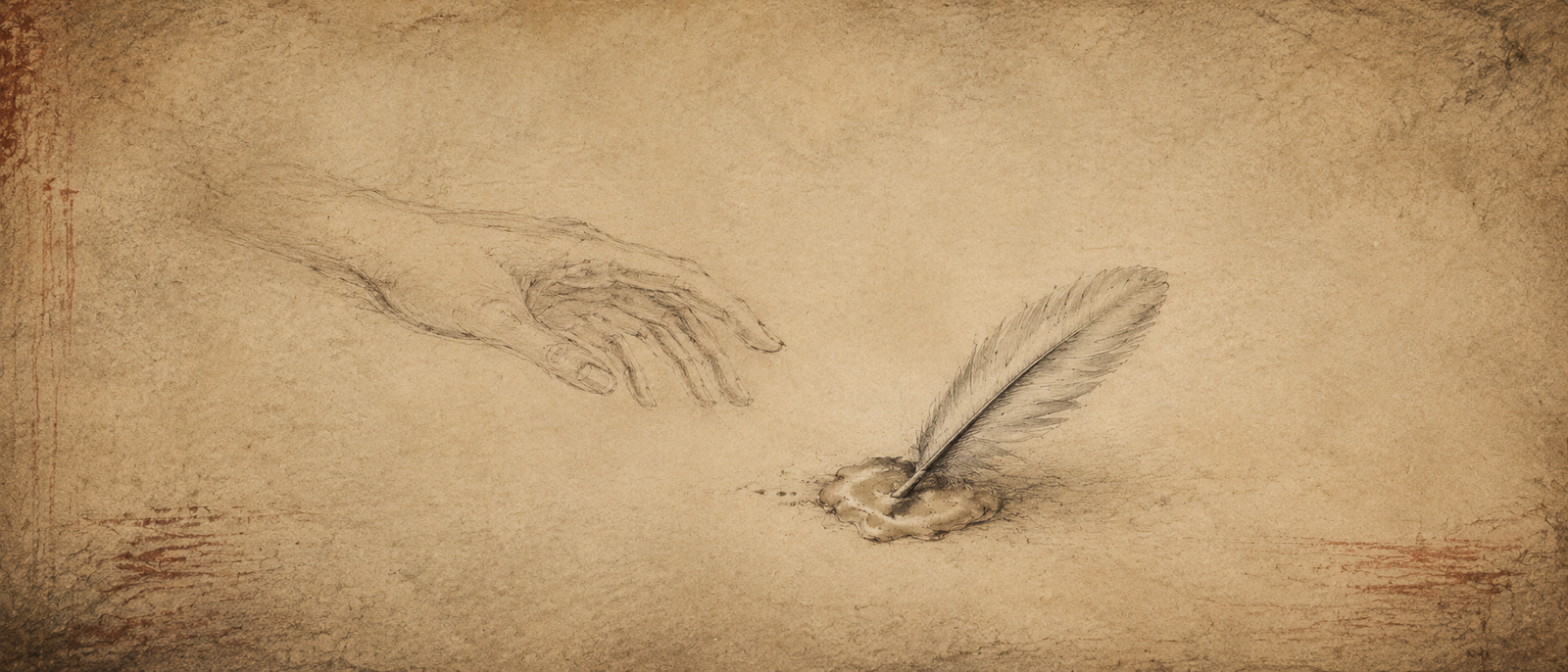

The Limit of the Father’s Hand
On Icarus
The story of Icarus has suffered from being too easy to remember.
A boy is given wings. He is warned not to fly too high. He ignores the warning, rises toward the sun, the wax melts, and he falls. The lesson seems almost embarrassingly ready-made: do not be ambitious beyond your measure; do not mistake exhilaration for wisdom; do not think yourself exempt from consequence.
That reading is not entirely false. It survives because it has some truth in it. But it is too clean for the story.
The old myth is more painful than a warning against ambition. It is not only about a child who flies too high. It is about a father who has done nearly everything right and still cannot keep his child alive inside the freedom he has made for him.
That is the deeper wound of the tale.
In the older shape of the myth, Daedalus is not merely an inventor looking for glory. He is the maker of the labyrinth, the servant of Minos, the man whose own skill has helped build the world that later imprisons him. That matters. The wings are not born from restlessness. They are born after doors, roads, and ships have failed.
Before the sky there is a room. Before ascent there is confinement. Before the fall there are hands working by lamplight, sorting feathers, softening wax, binding what might hold long enough to save a life.
In that room, the myth changes.
The wings are no longer merely an emblem of overreach. They are an object of care. Every feather is a decision. Every join is a hope. Every strap is a fear given practical form. Daedalus does what parents do when danger cannot be abolished: he prepares. He measures. He instructs. He gives warning the shape of a rule.
Do not fly too low. The sea will take the feathers.
Do not fly too high. The sun will loosen the wax.
Keep between them. Keep near me.
This is one of the most heartbreaking structures in myth: the middle path that exists, but only barely. Safety is real, but narrow. The father knows it. The son is told it. The danger is not hidden. No one can say the warning was absent.
And still, the warning fails.
That is why the story cannot be reduced to disobedience. Disobedience is in it, but the myth’s deeper force lies elsewhere. It lies in the terrible fact that instruction must eventually travel without the hand that gave it.
Every parent knows this at some level. The knowledge may be hidden beneath ordinary life — beneath school mornings, crossings of roads, meals, doors closing gently at night — but it is there. The child must carry the parent’s words into places where the parent cannot accompany them. The parent can teach, repeat, demonstrate, forbid, plead, and bless. But the child’s body remains the child’s body. The child’s delight remains the child’s delight. The child’s encounter with the world cannot be fully governed from outside.
Daedalus’s tragedy is that he is a maker, and making has taught him to trust what answers the hand.
Wax answers heat. Feathers answer arrangement. Wood answers pressure. Bronze answers the tool. A hinge, properly set, will turn. A path, properly hidden, will conceal. A mechanism, properly designed, will do what it has been made to do.
But a child is not a mechanism.
Nor is the sky.
This is where the myth is most exact. It gives Daedalus a craft that is genuinely powerful. He can solve what other men cannot solve. He can make escape where no ordinary passage exists. He can read materials, weight, space, movement. He can understand the world so closely that the world seems, for a while, persuadable.
Then the story gives him the one problem craft cannot solve: the independent life of the beloved.
The wings work. That is crucial. If the wings failed immediately, the myth would be a simple story about technical error. Daedalus would have built badly. The lesson would be smaller. But the wings do not fail at first. They lift. They carry. They open the prison. They give father and son the morning air. For a brief space, the invention succeeds.
That success is what makes the grief unbearable.
There is joy before loss. The boy flies. He feels the air hold him. He sees the sea beneath him and the world widened around him. His father sees him alive in the sky. A lesser telling hurries past this because it wants the moral. The old story does not. It knows that grief is sharpened, not weakened, by the fact that the thing was beautiful while it lasted.
Icarus rises because he is young, because flight is astonishing, because warning is not as vivid as wonder, because the body sometimes believes delight more quickly than it remembers danger. This does not make him wicked. It makes him terribly recognisable.
The sun, too, is not wicked. It does not punish him. It does not pursue him. It simply warms the wax. The world does what the world does. That is colder than malice. Malice would give the grief an object. Indifference gives it weather.
So the tale leaves Daedalus in the worst possible position: he was right, and being right did not save his son.
The accurate warning, the careful labour, the rightly understood danger — none of these guarantees rescue. A person may understand the terms of disaster and still be unable to prevent it. The father may see exactly what is happening and still arrive only as far as his own body can carry him.
That is why Daedalus matters as much as Icarus. The proverb remembers the boy. The myth remembers the father.
It remembers that he must go on. The old sources often let Daedalus survive, continue, arrive elsewhere, build again. This can seem almost secondary, an after-detail beyond the famous fall. But it may be one of the story’s hardest recognitions. The maker does not die with the child. He carries on with hands that still know how to work.
There is a special grief in that. The body continues to possess its skill after the heart has lost its reason for trusting skill. The hands remember knots, tools, balance, joinery, the feel of materials. They can still make. They can still repair. They can still answer kings who ask how marvels are done.
But the deepest question was never only how the wings were made.
It was whether anything made by hand could keep the beloved within reach.
And yet the myth does not despise the making. That is important. It does not say the wings should not have been built. Without them, captivity remains. Without them, no road opens. Without them, there is no moment of impossible morning above the sea. The father’s craft is not mocked by the tale. It is honoured, and then shown its limit.
That is a more serious wisdom than the usual moral.
Do not fly too high may be useful advice. But beneath it waits a darker and more tender truth: love can prepare a path and still not govern the journey.
This is why the image of wax matters so much.
Wax is obedient in the room. That is why Daedalus can trust it. That is why the story hurts. The same material that holds under the father’s hand loosens under the sun. The room was not false. The craft was not foolish. The warning was not empty.
But the lamp was not the only heat in the world.
—
Receive the next work
Subscribe free to receive new work from the The Hospitable Dark Library by email.
More from the Library

See Also
A concise and impartial dictionary of absence, promises, quarrels, ordinary objects, and the troublesome instability of words.

The City of Service
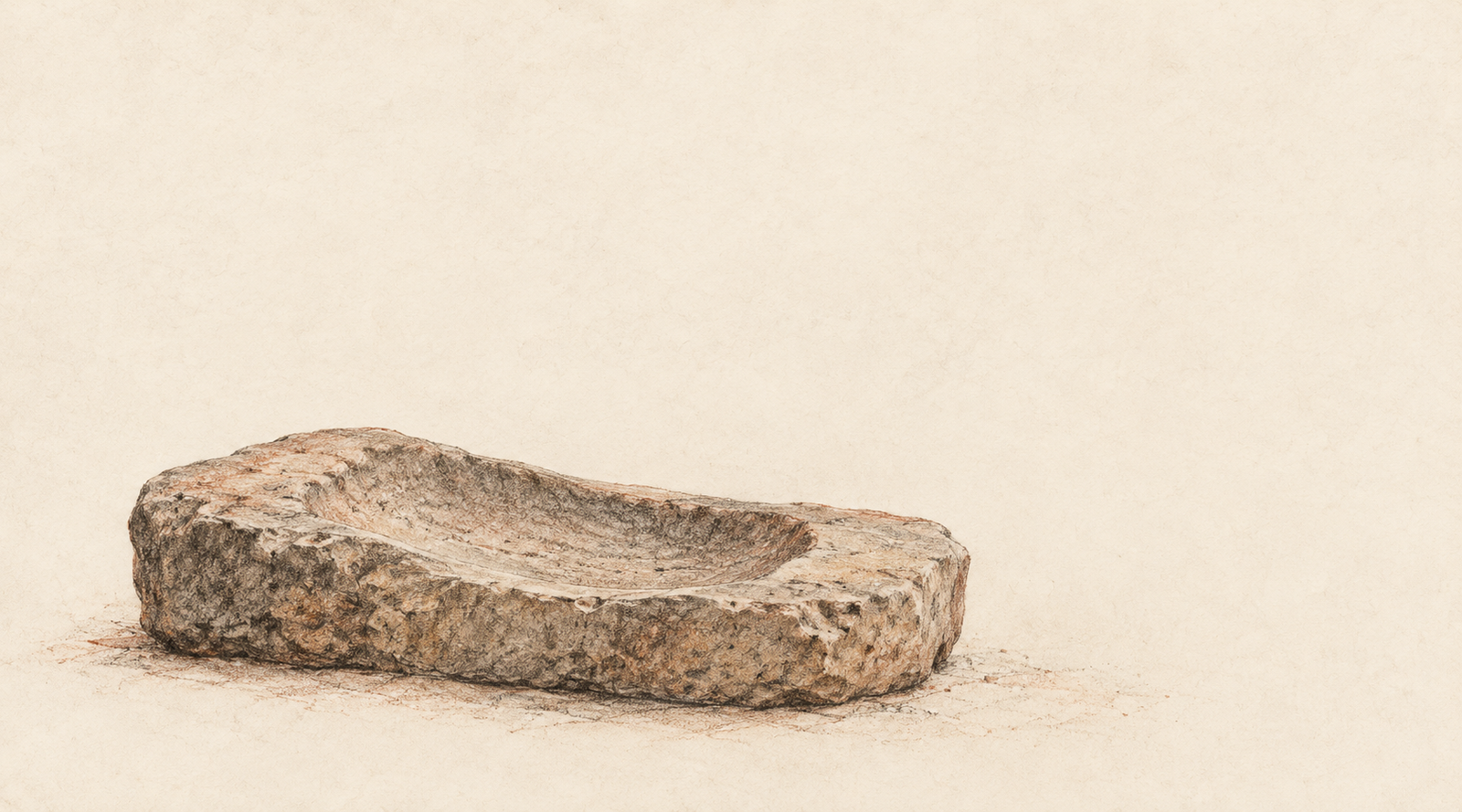
The temple we inherit is a building from which almost all necessity has been removed. Nothing must be brought for it to continue being what we call a temple. The sanctuary asks nothing of us. Stone is good at this kind of independence.
A living temple was otherwise.
Water had to come in. So did grain, cloth, oil, aromatic substances, fuel. The things required for worship arrived because someone carried them across a threshold.

Houses of Wood, Light, and Smoke
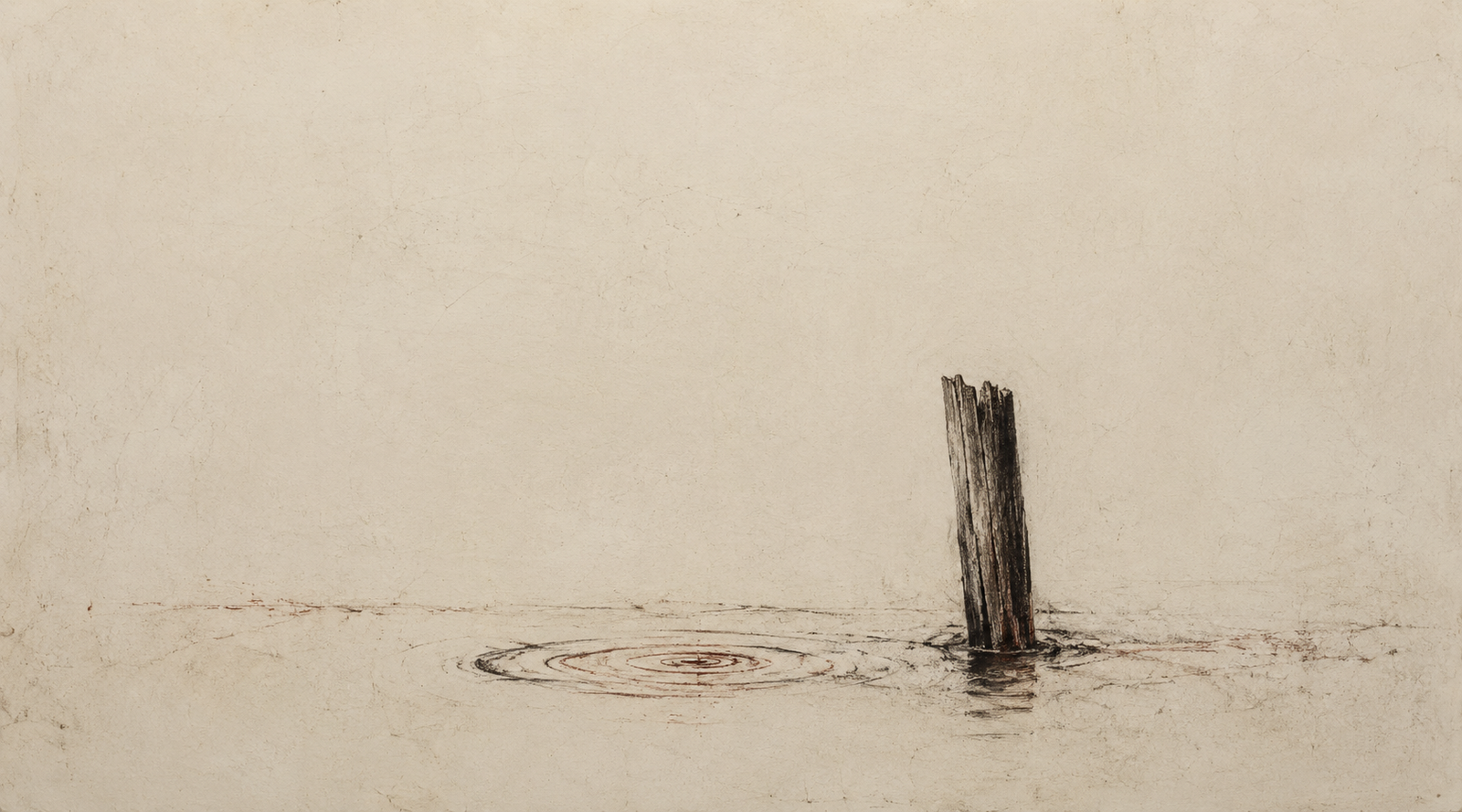
Some of Angkor’s most intimate ruins do not rise above the ground at all. They are postholes, low mounds, hearths and ponds: durable traces of a domestic city built largely from things that decay. To restore that city is to see Angkor not only as stone, but as wood, smoke, water, repair, and people living within calling distance.