
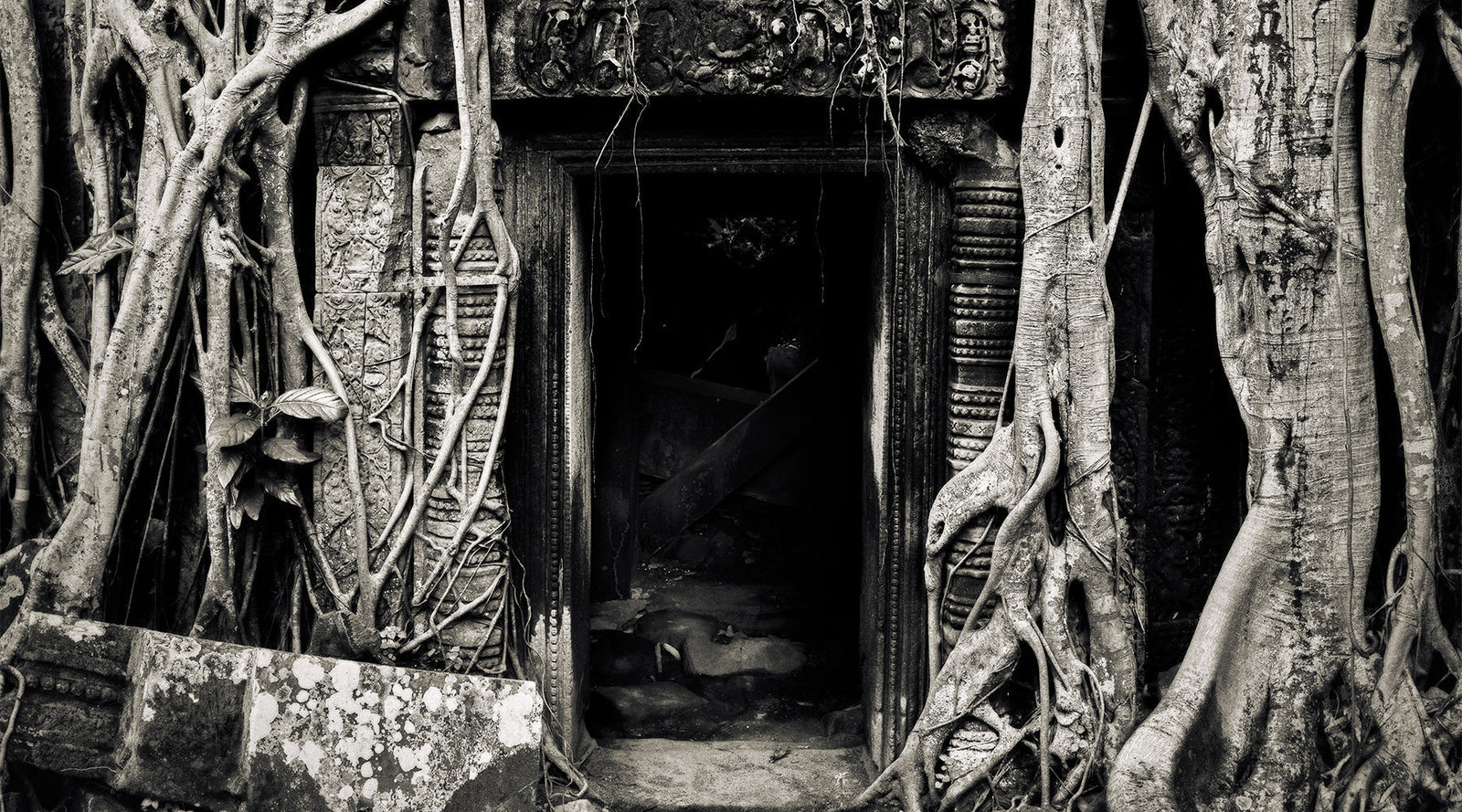

The Portal That Remembers Silence
The strangler fig’s roots descend like fingers through centuries. Where they meet the host tree, and the stone carved beneath it, something ancient tightens—a tension not of violence, but of listening. The threshold at Ta Prohm has become more than an architectural relic. It is a breathing aperture of time.
When I arrived, the rain had only just left. Everything glistened with memory. The carved Kala above the portal opened its mouth in mythic stillness, while darkness behind the door waited without invitation. I exposed the film slowly. That gesture was not technique, but devotion.
In the studio, the negative unfolded like a held breath. I shaped it through chiaroscuro, calling the shadows back to their original weight. Each print is hand-toned until the hush becomes visible again.
Within the Spirit of Angkor series, The Door That Breathes rests at a pivot between decay and becoming. It is not a record of ruin, but of reverent surrender. The image invites the viewer to dwell in that space where stone yields without breaking, where presence is defined by patience.
Between breath and stone, a quiet pulse endures.
Printed as an 8 × 8-inch hand-toned archival pigment print on museum-grade Hahnemühle Bamboo paper, the edition is strictly limited to 25 impressions, with 2 Artist’s Proofs. Each is signed and numbered on the border recto, a mark of quiet authorship and enduring care.
To bring this image into one’s space is not to possess it, but to keep company with a doorway that still breathes—an aperture into silence, and into your own listening.
More from the Library

See Also
A concise and impartial dictionary of absence, promises, quarrels, ordinary objects, and the troublesome instability of words.
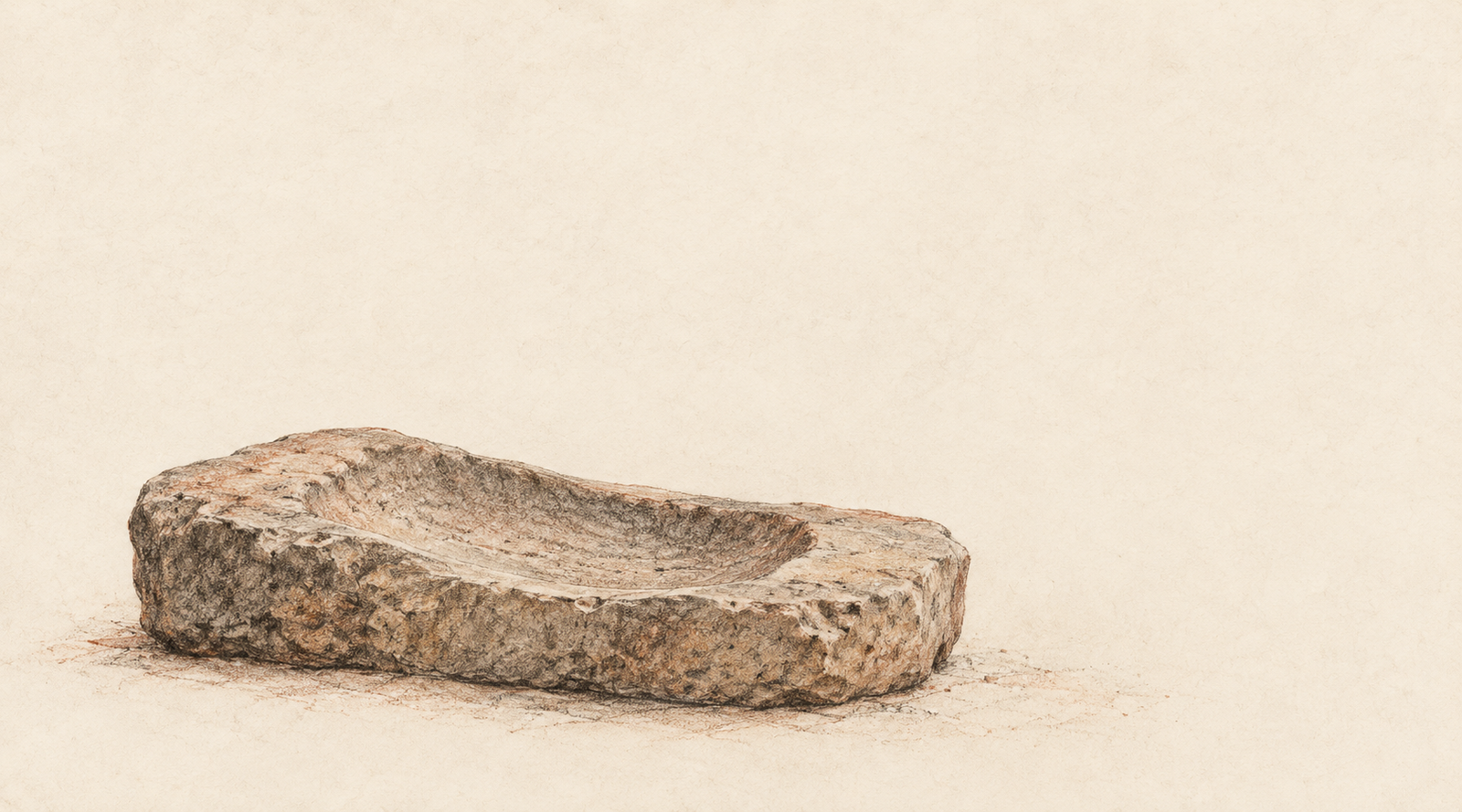

The City of Service
The temple we inherit is a building from which almost all necessity has been removed. Nothing must be brought for it to continue being what we call a temple. The sanctuary asks nothing of us. Stone is good at this kind of independence.
A living temple was otherwise.
Water had to come in. So did grain, cloth, oil, aromatic substances, fuel. The things required for worship arrived because someone carried them across a threshold.
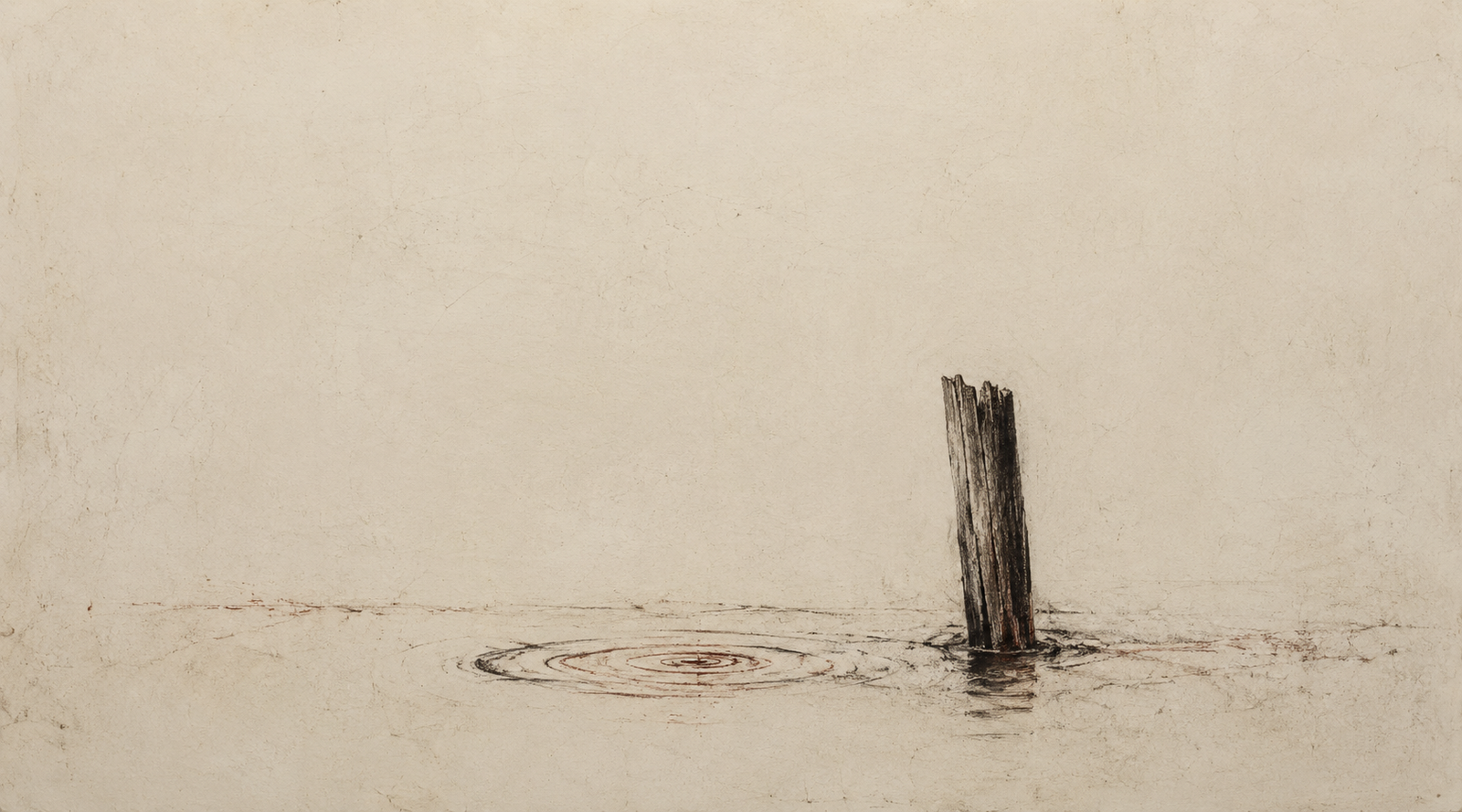

Houses of Wood, Light, and Smoke
Some of Angkor’s most intimate ruins do not rise above the ground at all. They are postholes, low mounds, hearths and ponds: durable traces of a domestic city built largely from things that decay. To restore that city is to see Angkor not only as stone, but as wood, smoke, water, repair, and people living within calling distance.

$895
Ta Prohm, Angkor, Cambodia — 2020
Limited Edition Archival Pigment Print
Edition
Strictly limited to 7 prints + 2 Artist’s Proofs
Edition Number
This listing is for the first numbered print from the Large Collector Edition: 1/7
Medium
Hand-toned black-and-white archival pigment print on Hahnemühle Bamboo — a museum-grade fine art paper chosen for its quiet tactility and reverent depth, echoing the spirit of the temples.
Signature & Numbering
Each print is individually signed and numbered by the artist on the border (recto)
Certificate of Authenticity
Accompanies every print
Image Size
28 x 28 inches (71.1 x 71.1 cm)
There are doorways that do not open into rooms, but into listening.
At Ta Prohm, before the jungle stirred, I stood before one such portal. Two trees—one strangling, one yielding—had braided themselves into the stone, their roots clinging like hands to a forgotten threshold. Above, the Kala’s mouth devoured time. Below, silence pressed against the dark.
The photograph was made slowly, as breath returned to the forest after rain. I worked with a large-format analogue camera, allowing the long exposure to gather what little light there was. In the studio, I shaped each silver tone by hand, using classical chiaroscuro to echo not just the scene, but the hush I felt inside it.
The final print is an 8 × 8-inch archival pigment print on museum-grade Hahnemühle Bamboo paper. The edition is strictly limited to 25, with 2 Artist’s Proofs. Each piece is hand-toned, signed, and numbered on border recto, and includes a certificate of authenticity.
Let this image become a threshold of stillness in your space.
Click here to step through the breath of the image into the Artist’s Journal.
Previously titled ‘Strangled Doorway, Ta Prohm Temple, Angkor, Cambodia. 2020,’ this photograph has been renamed to better reflect its place in the series and its spiritual tone. The edition, provenance, and authenticity remain unchanged.