


Where the River Outlasts Us
A poem on beauty, absence, and the wound of arriving after the door has closed.
You stand where the cliff ends.
Not falling.
Worse.
Held.
Below you, the river keeps
its one long sentence moving
through stone, reed, evening,
water saying nothing
and never finished.
The sky has opened
with its terrible patience.
Clouds move apart
as if revealing
what was already gone.
Here, perhaps,
some god once leaned
one bright hand on the world.
Here, perhaps,
the air once broke
under wings.
Here, perhaps,
the dead were visible
for one last moment,
crossing the ford
with light still caught
in their faces.
But you have arrived
after the door.
The ground is real.
Your hands on the rail,
real.
The grass bending under wind,
real.
The river taking the last gold
from the sun
and carrying it away,
real.
That is the cruelty.
Not that beauty leaves.
That beauty stays
after everything it seemed
to promise
has withdrawn.
You look until looking
becomes a wound.
The world does not answer.
A bird turns once
above the darkening water
and vanishes
without haste.
Evening continues.
The cliff cools beneath your shoes.
Somewhere below,
the river touches stone
with the same indifference
it gave to kings,
pilgrims,
animals,
children not yet born—
all of them standing here
for one brief hour,
believing the view
had opened for them.
It had not.
It opened.
That was all.
And still
you cannot turn away.
Because to know
where you are standing
is to feel the whole earth
beneath you
and the whole vanished world
beside you,
almost touching,
shining
where no hand
can enter.
—
Receive the next work
Subscribe free to receive new work from the Lucas Varro Library by email.
More from the Library
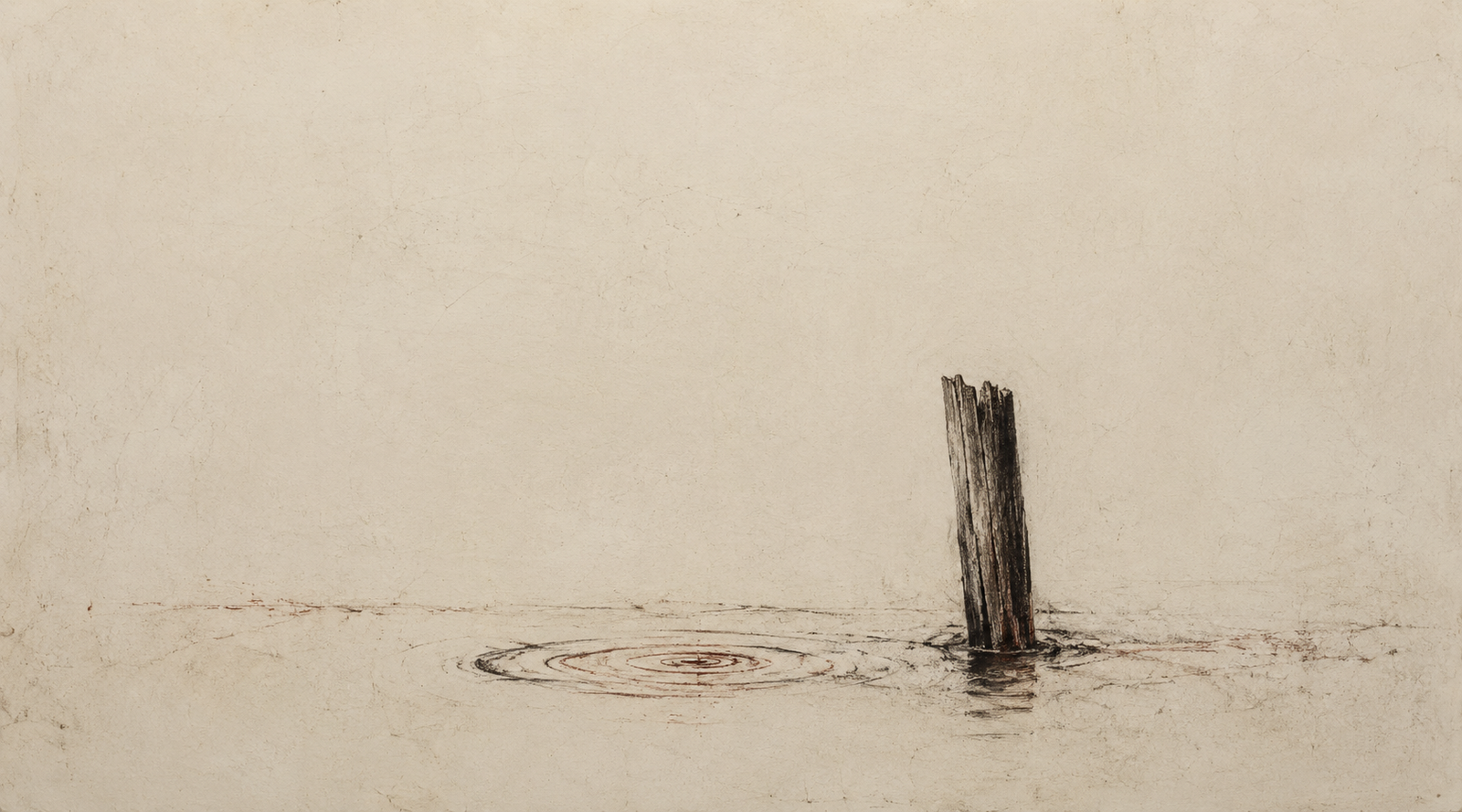

Houses of Wood, Light, and Smoke
Some of Angkor’s most intimate ruins do not rise above the ground at all. They are postholes, low mounds, hearths and ponds: durable traces of a domestic city built largely from things that decay. To restore that city is to see Angkor not only as stone, but as wood, smoke, water, repair, and people living within calling distance.
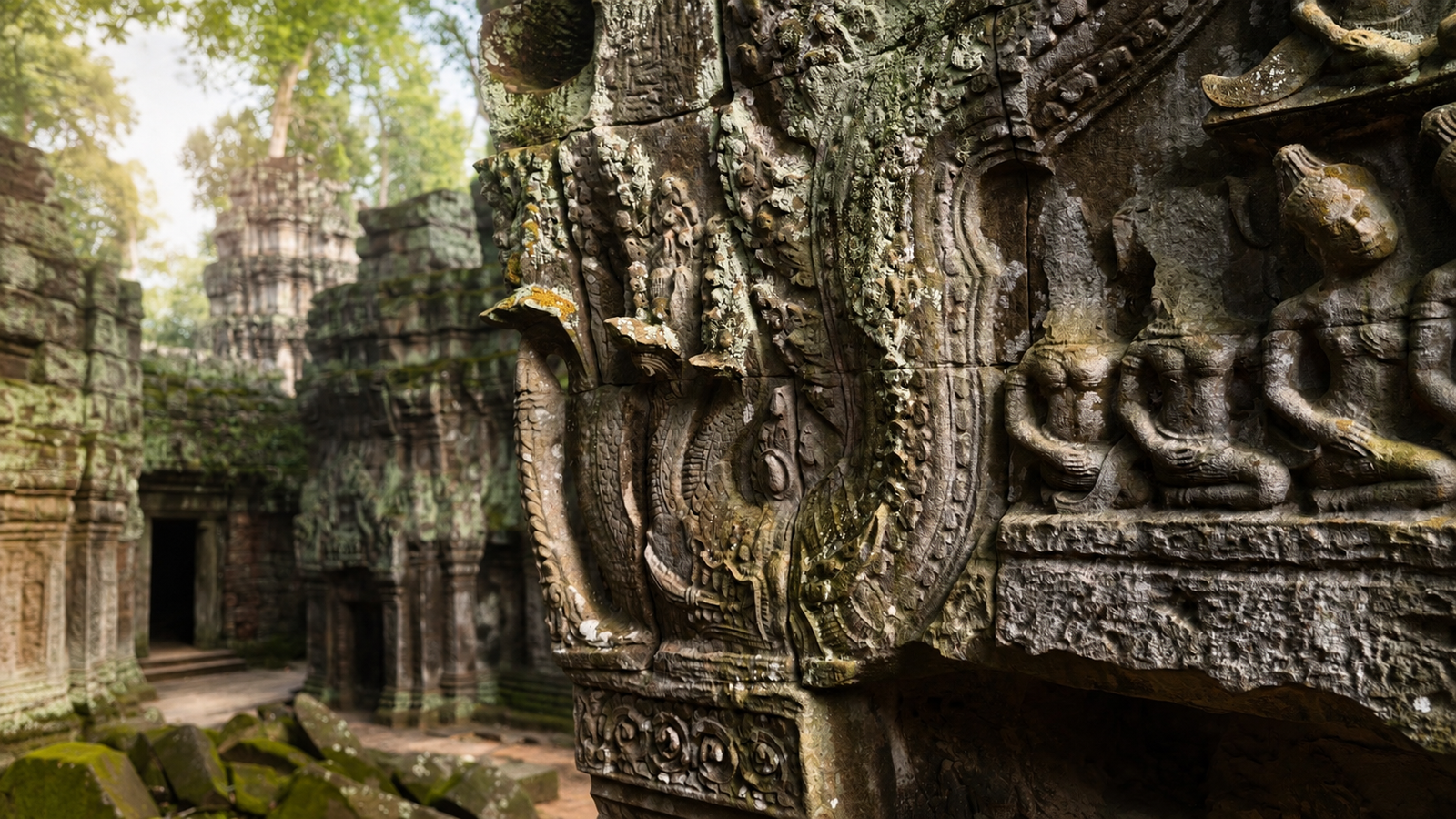

What Stone Brings Forth
I had mistaken a gift for something being expelled.
Beneath the nāga's mouth, a stone garland descended bead by bead. Nearby, a makara opened its jaws and another form emerged. Looking closer, the whole temple began to change: serpent became ornament, ornament became architecture, architecture became foliage.
The forest did not introduce this language.
It answered it.
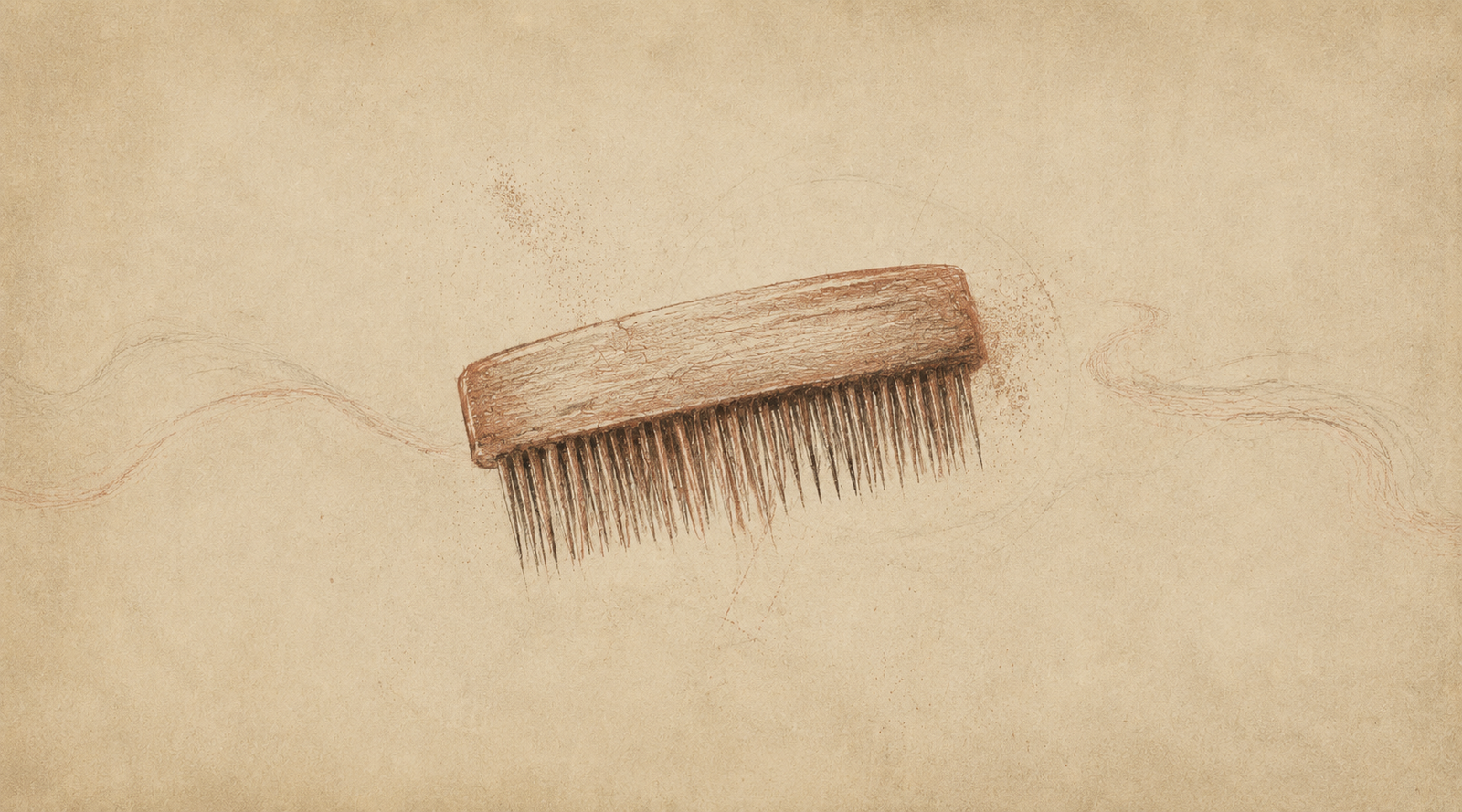

The Eighth Daughter
Seven daughters have already been taken by Yamata-no-Orochi when Susanoo reaches the River Hi. Only Kushinada-hime remains. The Eighth Daughter retells the Kojiki episode through a family’s waiting, a girl transformed into a comb, and the patient preparation for the serpent’s return.