
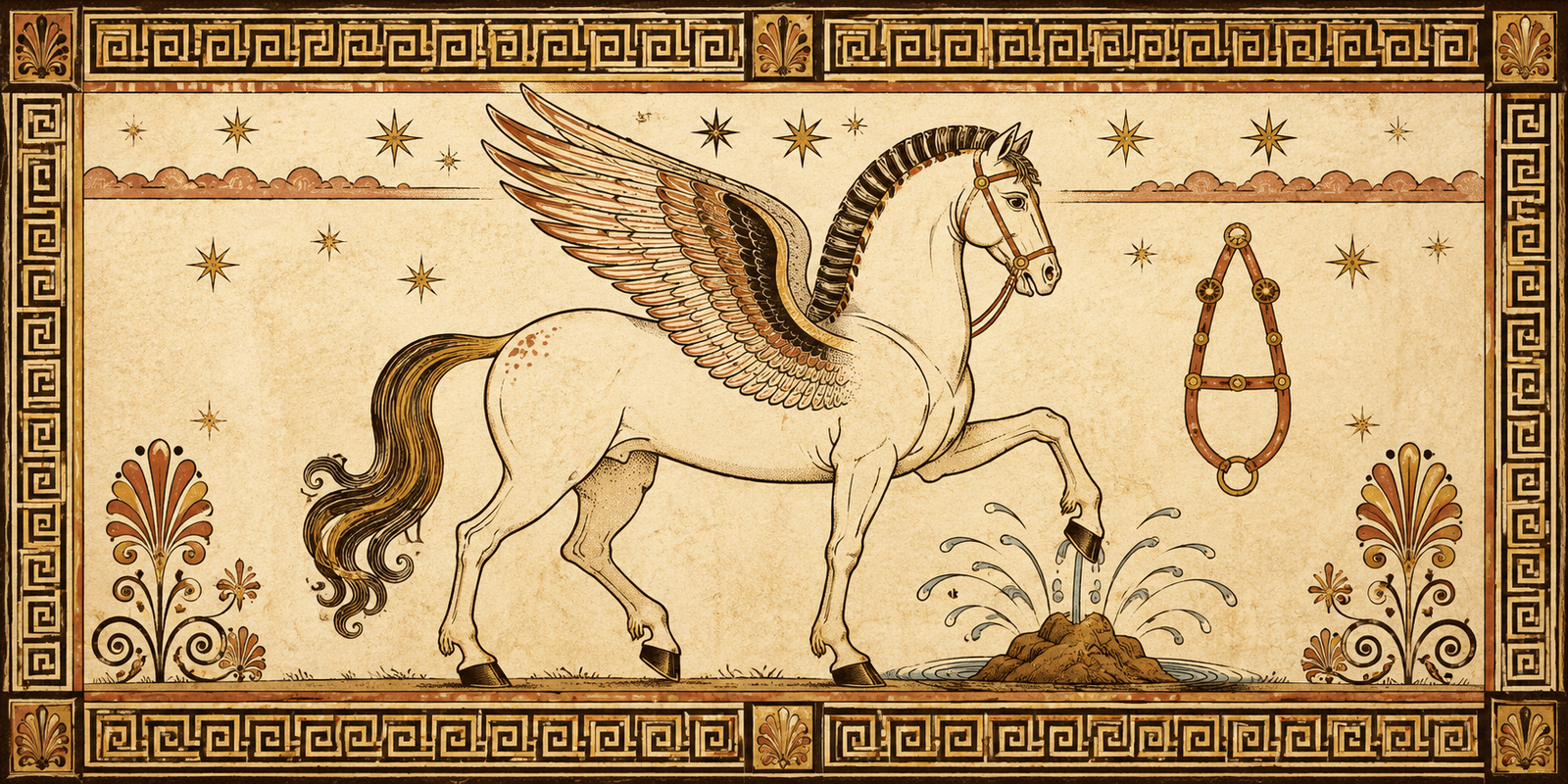

Pegasus — The Winged Horse of Greek Myth
Pegasus is part of The Greek World, the illustrated reference shelf of The Alexander Series: Greek myths retold for children who want to be trusted by stories.
Before Bellerophon takes the bridle, before the Chimaera fills the road ahead, before the sky itself becomes part of the battle, a child should know what kind of creature Pegasus is.
Not a pet.
Not a cloud with hooves.
Not a pretty idea someone has decorated with feathers.
Pegasus is the winged horse of Greek myth: swift, bright, powerful, and not quite tame. He belongs to heroes and gods, monsters and mountains, springs and sky, danger and wonder.
When Pegasus enters a story, the ground is no longer the only road.
A horse is already a marvellous creature. It has thunder in its hooves, heat in its body, and a mind of its own about gates, roads, strangers, and whether you have any business touching its neck. A horse can carry a person farther than human feet can go. It can turn a road into speed.
Now give that creature wings.
That is Pegasus.
But the first thing to understand is this: Pegasus is not wonderful because he lets a hero do whatever he likes.
He is wonderful because he makes possible what human feet could never do — and that is exactly why he must be approached carefully.
In Greek myth, a gift is rarely simple. A shining thing may help you. It may also test you. A god may give you what you need, but not always in the way you expected. A creature may carry you higher than courage alone could manage, but height does not become safe because you have been allowed into it.
Pegasus is one of those gifts.
He is wonder with wings.
And wonder has rules.
The old myths say Pegasus came from the story of Medusa, after Perseus had done the terrible thing he had been sent to do. Greek myth often lets something bright rise from something frightening. It does not always clean the world before beauty appears. Sometimes the beautiful thing comes from a place where fear has already been.
That does not make Pegasus ugly.
It makes him Greek.
He has hooves for the earth.
He has wings for the sky.
He belongs to both, and entirely to neither.
In the full post, Pegasus becomes more than “the flying horse.” The entry follows the bridle, the spring, the sky, and the danger of height — preparing the child for Bellerophon and Pegasus without turning wonder into a lesson.
Continue reading: Pegasus at The Alexander Series on Substack.
Also in The Alexander Series
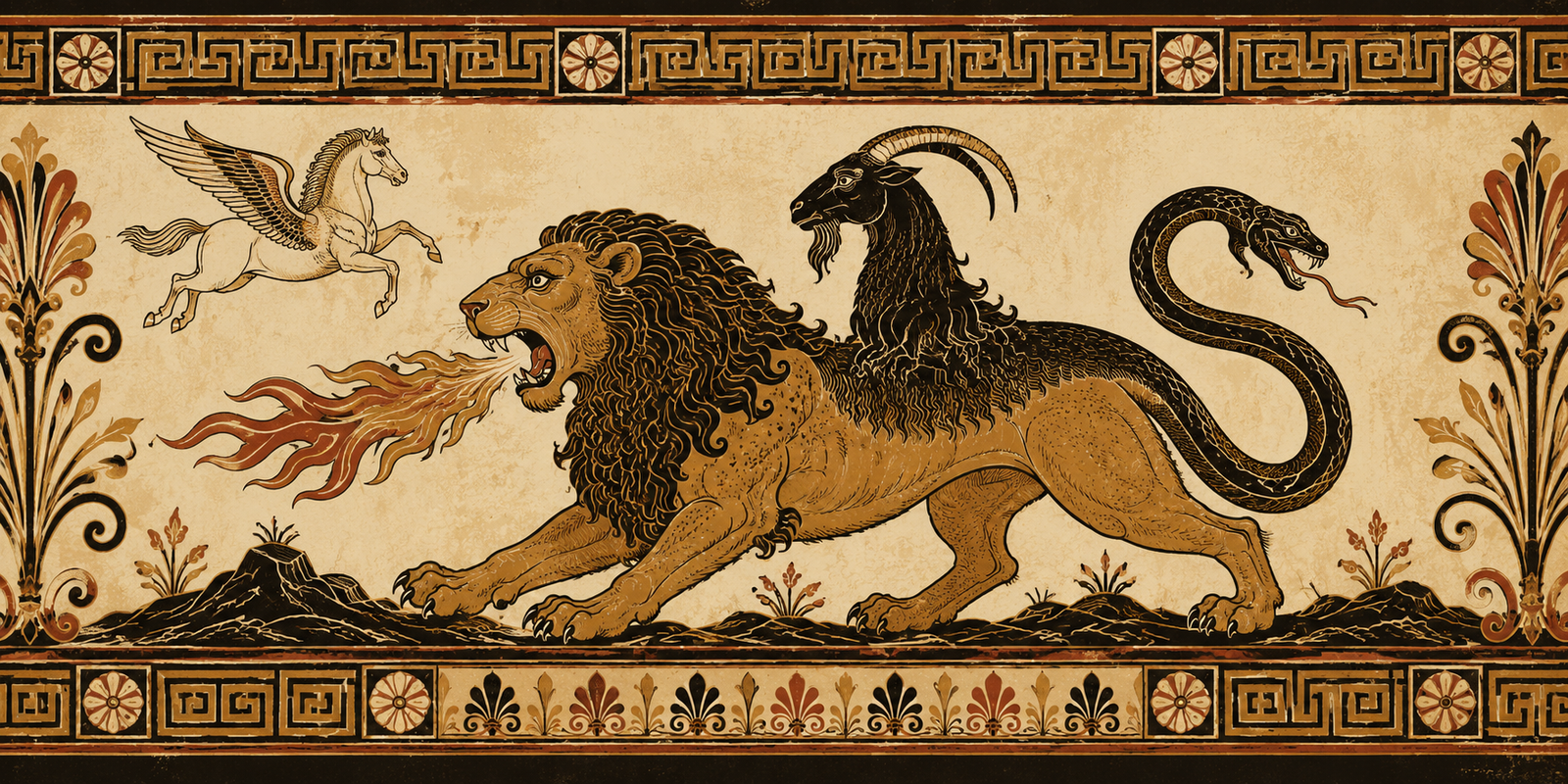

The Chimaera — A Greek Monster of Many Dangers
A child-readable Greek myth guide to the Chimaera: lion, goat, serpent, fire, and the monster’s many joined dangers. This excerpt from The Greek World shows why Bellerophon needed Pegasus, and why the Chimaera is not merely a strange animal mixture, but a precise Greek monster-sign.
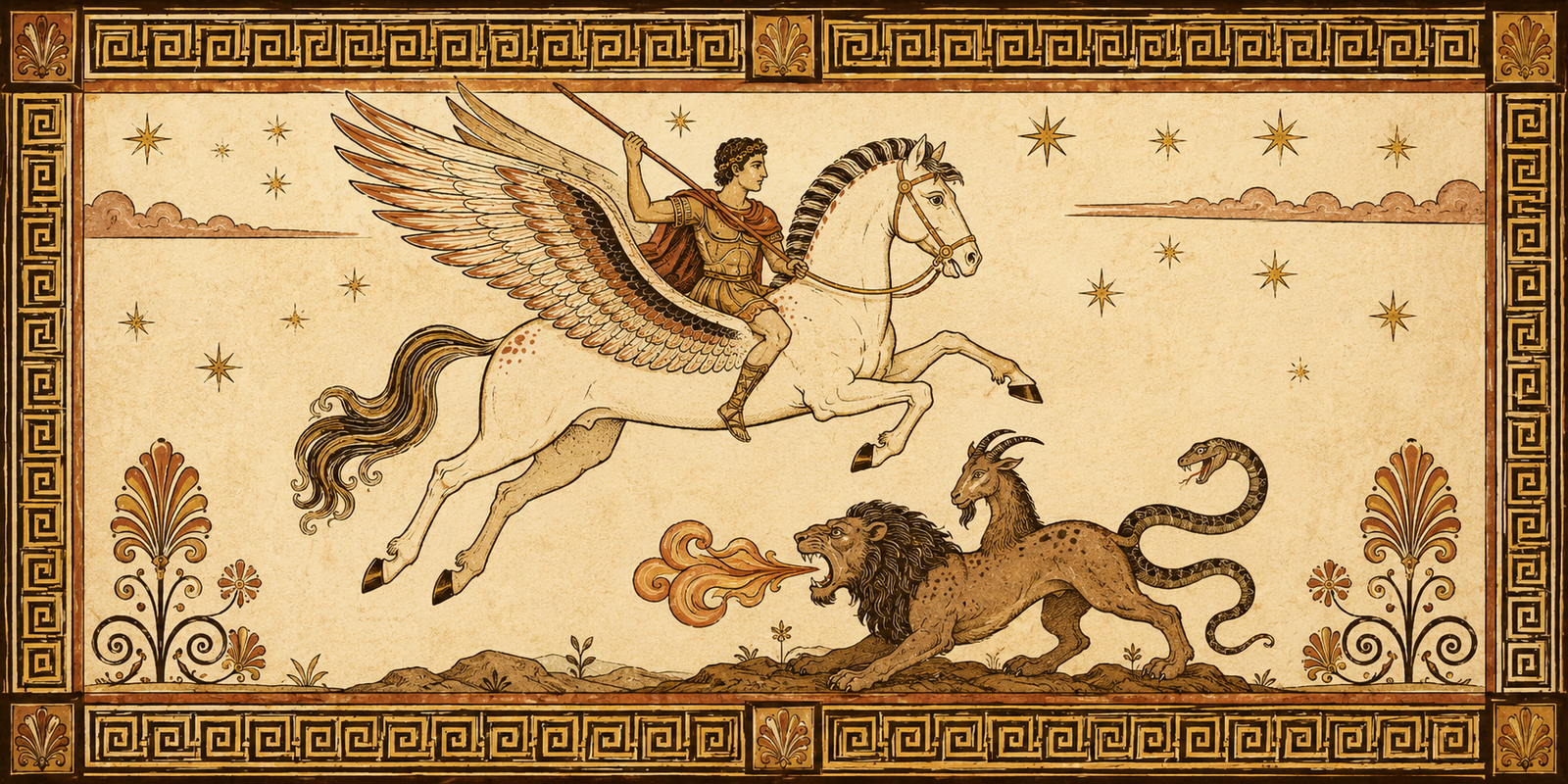

Bellerophon and Pegasus — A Greek Myth Retold for Children
A sealed message, a fire-breathing monster, a golden bridle, and the winged horse Pegasus. This Alexander Series tale retells the Greek myth of Bellerophon for serious child readers, preserving wonder, danger, courage, and the old warning hidden inside height.
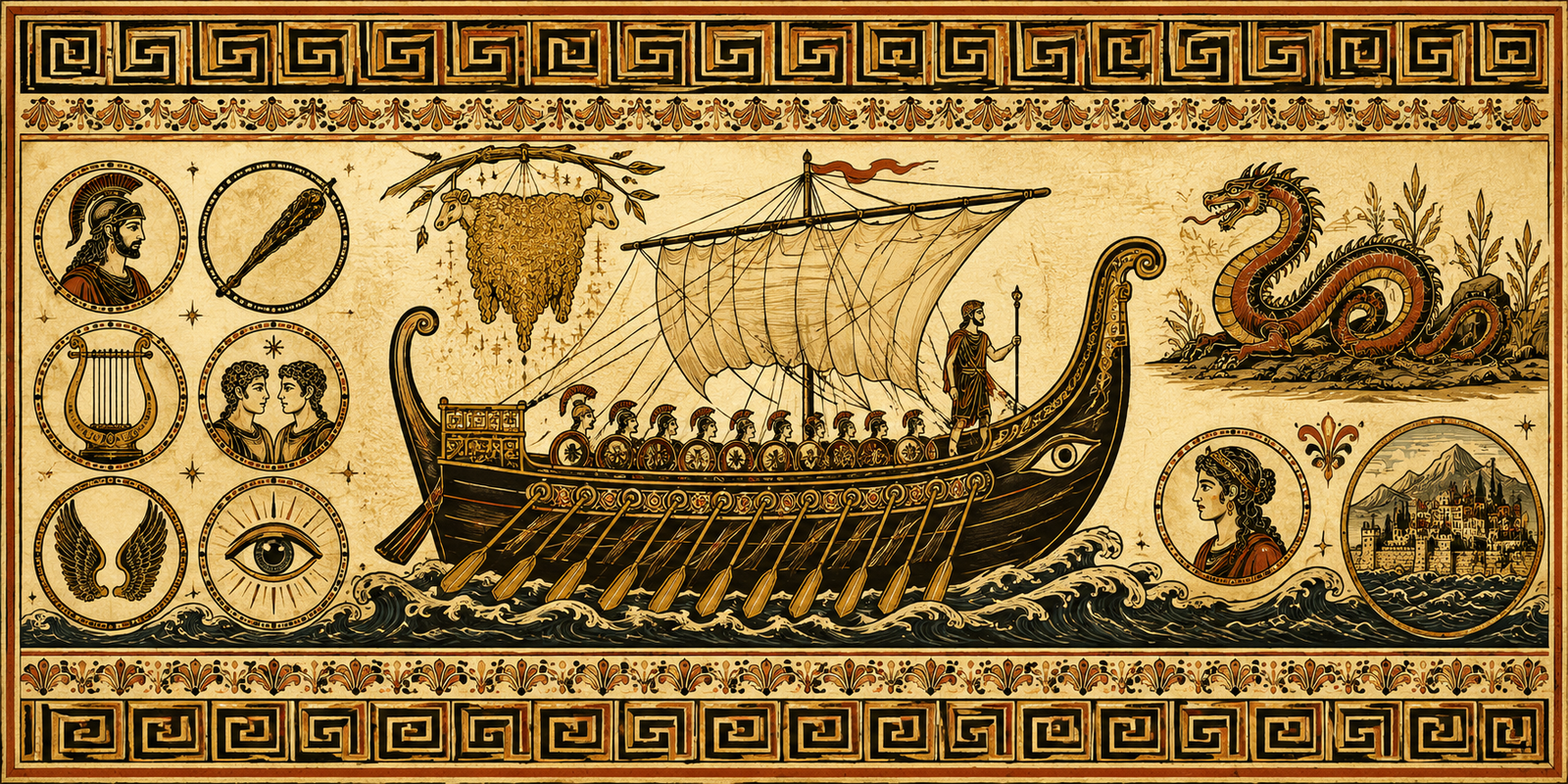

The Argonauts — Jason’s Ship, Crew, and the Quest for the Golden Fleece
A child-readable Greek myth guide to the Argonauts: Jason’s ship, the Argo, the heroes aboard her, the Golden Fleece, Colchis, the dragon, and the great voyage that made one hero part of a larger world.
Continue Reading
If this piece found something in you, you may wish to continue the journey elsewhere.
On The Lantern Chronicles, I gather writings from Angkor, myth and legend, contemplative essays, and poetry — works shaped by silence, beauty, wonder, memory, and the deeper questions that follow us through the world.
It is a place for stone and story, reflection and vow, shadow and revelation.
You would be most welcome there.