
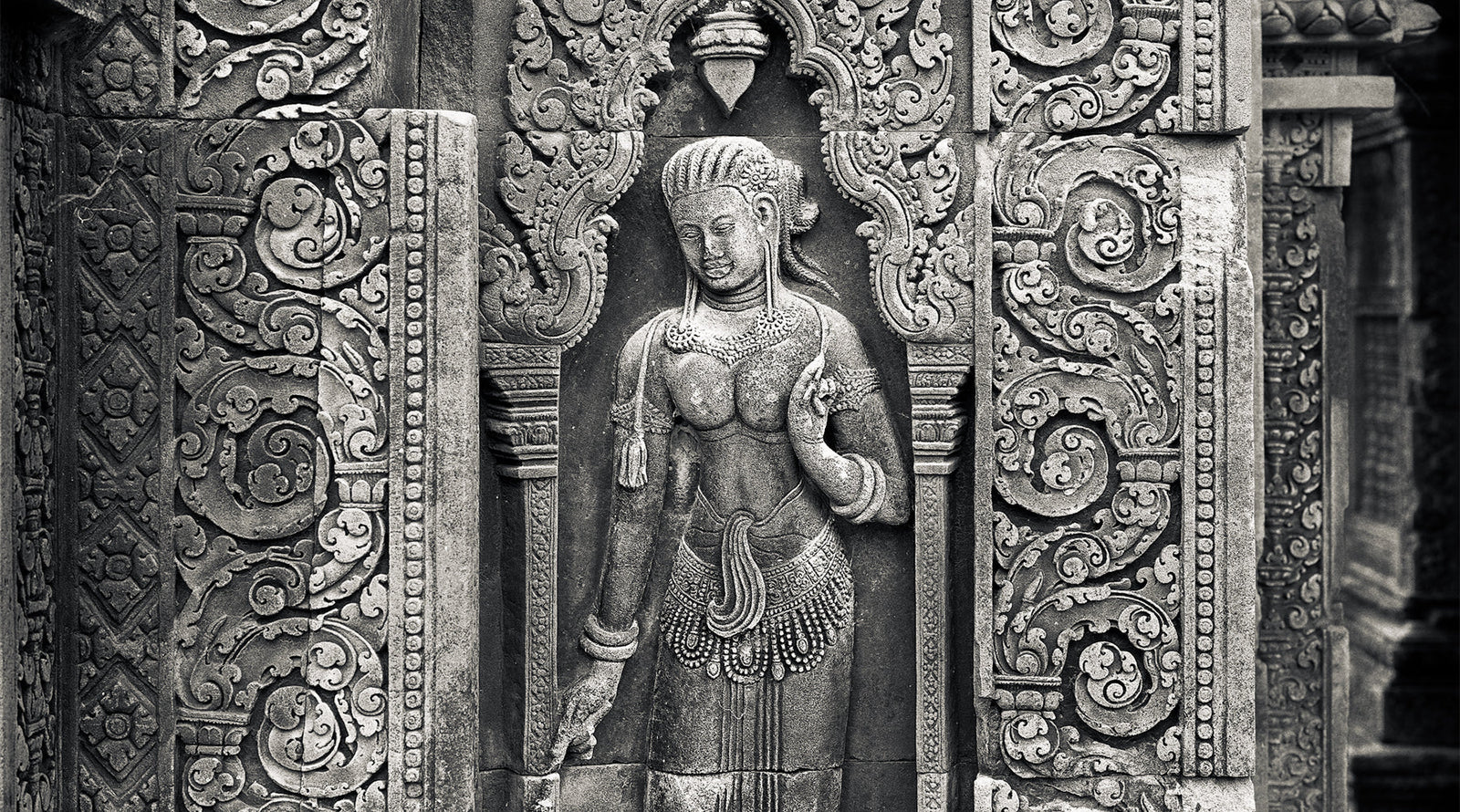

An Apsara Before the First Light
“There is a silence more sacred than stillness: the one that listens back.”
The path through Banteay Srei was still wet from the night’s rain. Leaves shimmered in their stillness. Not a sound stirred—not even birdsong. The temple breathed with memory, and I followed its breath.
It was not light that first drew me to her, but presence. She stood at the heart of the sanctuary, her form emerging from the stone like something long remembered. One hand raised in quiet offering, the other by her side, she appeared neither goddess nor dancer, but something more elemental: an expression of balance, of grace held just before release.
The hamsas beneath her feet, those sacred swans, were carved as if waiting to carry her onward. And yet she remained—anchored and weightless. I could not tell if she leaned out from the wall or into it.
For a long time, I didn’t raise the camera. The light was still blue and directionless, pooled in crevices and folded robes. I simply stood, letting the silence gather around us.
Only when the faintest glint touched the curve of her brow did I begin to compose. The shutter fell like breath exhaled. In the stillness afterwards, I understood: the image had already formed—it was my listening that had arrived late.
vine-shadowed dawn hush
a single braid catching light
stone remembers breath
More from the Library

See Also
A concise and impartial dictionary of absence, promises, quarrels, ordinary objects, and the troublesome instability of words.

The City of Service
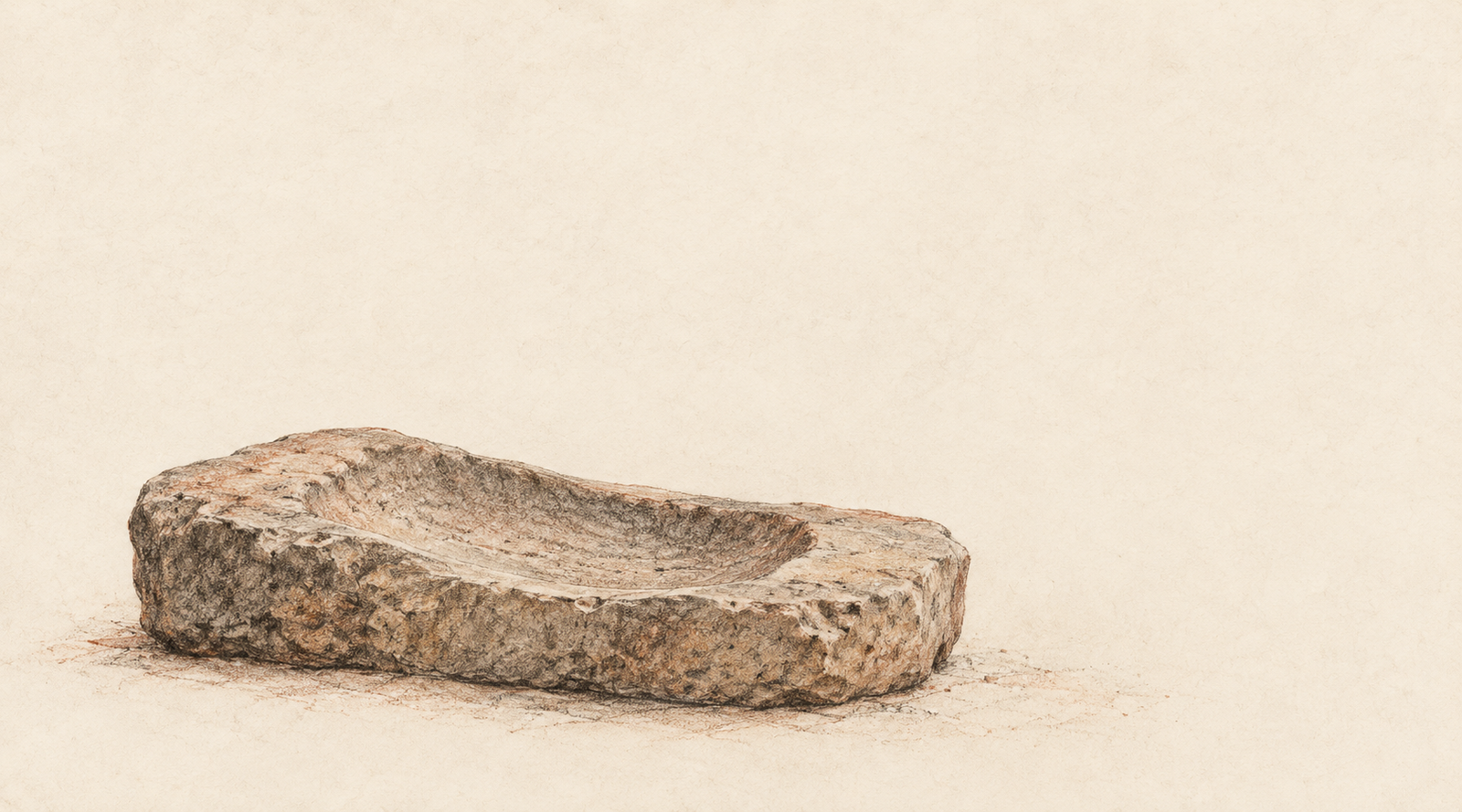
The temple we inherit is a building from which almost all necessity has been removed. Nothing must be brought for it to continue being what we call a temple. The sanctuary asks nothing of us. Stone is good at this kind of independence.
A living temple was otherwise.
Water had to come in. So did grain, cloth, oil, aromatic substances, fuel. The things required for worship arrived because someone carried them across a threshold.

Houses of Wood, Light, and Smoke
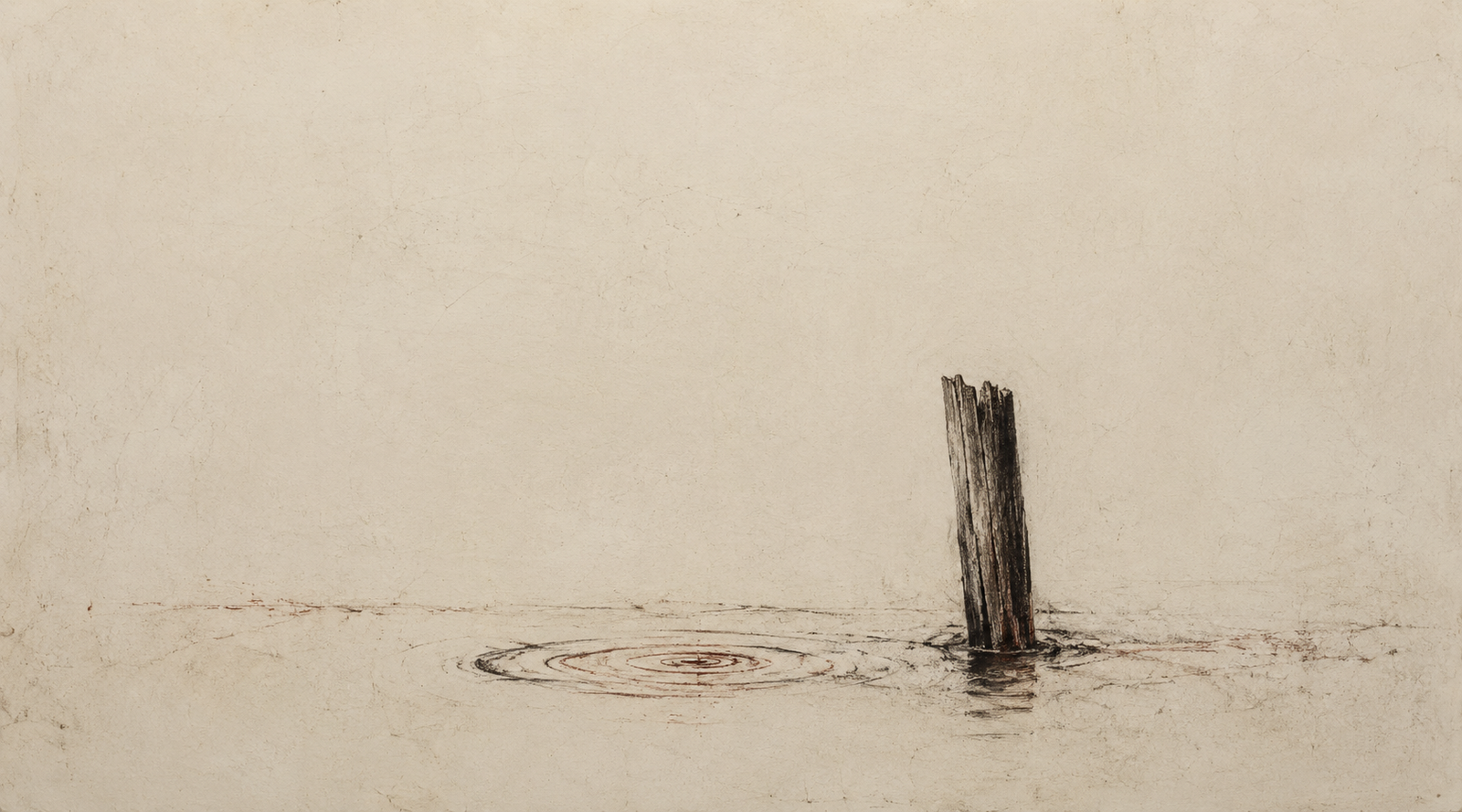
Some of Angkor’s most intimate ruins do not rise above the ground at all. They are postholes, low mounds, hearths and ponds: durable traces of a domestic city built largely from things that decay. To restore that city is to see Angkor not only as stone, but as wood, smoke, water, repair, and people living within calling distance.

$895
Banteay Srei Temple, Angkor, Cambodia — 2022
Limited Edition Archival Pigment Print
Edition
Strictly limited to 7 prints + 2 Artist’s Proofs
Edition Number
This listing is for the first numbered print from the Large Collector Edition: 1/7
Medium
Hand-toned black-and-white archival pigment print on Hahnemühle Bamboo — a museum-grade fine art paper chosen for its quiet tactility and reverent depth, echoing the spirit of the temples.
Signature & Numbering
Each print is individually signed and numbered by the artist on the border (recto)
Certificate of Authenticity
Accompanies every print
Image Size
34.3 x 22.9 inches (87.1 x 58.2 cm)
The first light touches carved sandstone like breath on water. At Banteay Srei, a solitary apsara steps forward from the temple wall, hips bowed, expression inward, surrounded by tendrils of lotus, scroll, and sky.
The courtyard is silent, rain-washed. A sweetness lingers in the air—moss, frangipani, and the faint trace of fire. She appears not as ornament, but as invocation: a gesture caught between time and eternity.
The moment stilled me. I stood with the camera lowered, waiting. When I finally exposed the film, it was not just light that entered—it was the presence of something older, something listening.
Photographed on medium-format black-and-white film, shaped with classical chiaroscuro techniques, and hand-toned with pigment and prayer, each print preserves this reverent hush. The edition is strictly limited to twenty-five, with two Artist’s Proofs. Each print is made on museum-grade Hahnemühle Bamboo paper and signed on the border recto.
Own this quiet gesture of divine memory.
Click here to follow the echo deeper into the Artist’s Journal.
Previously titled ‘Apsara II, Banteay Srei Temple, Angkor, Cambodia. 2022,’ this photograph has been renamed to better reflect its place in the series and its spiritual tone. The edition, provenance, and authenticity remain unchanged.