
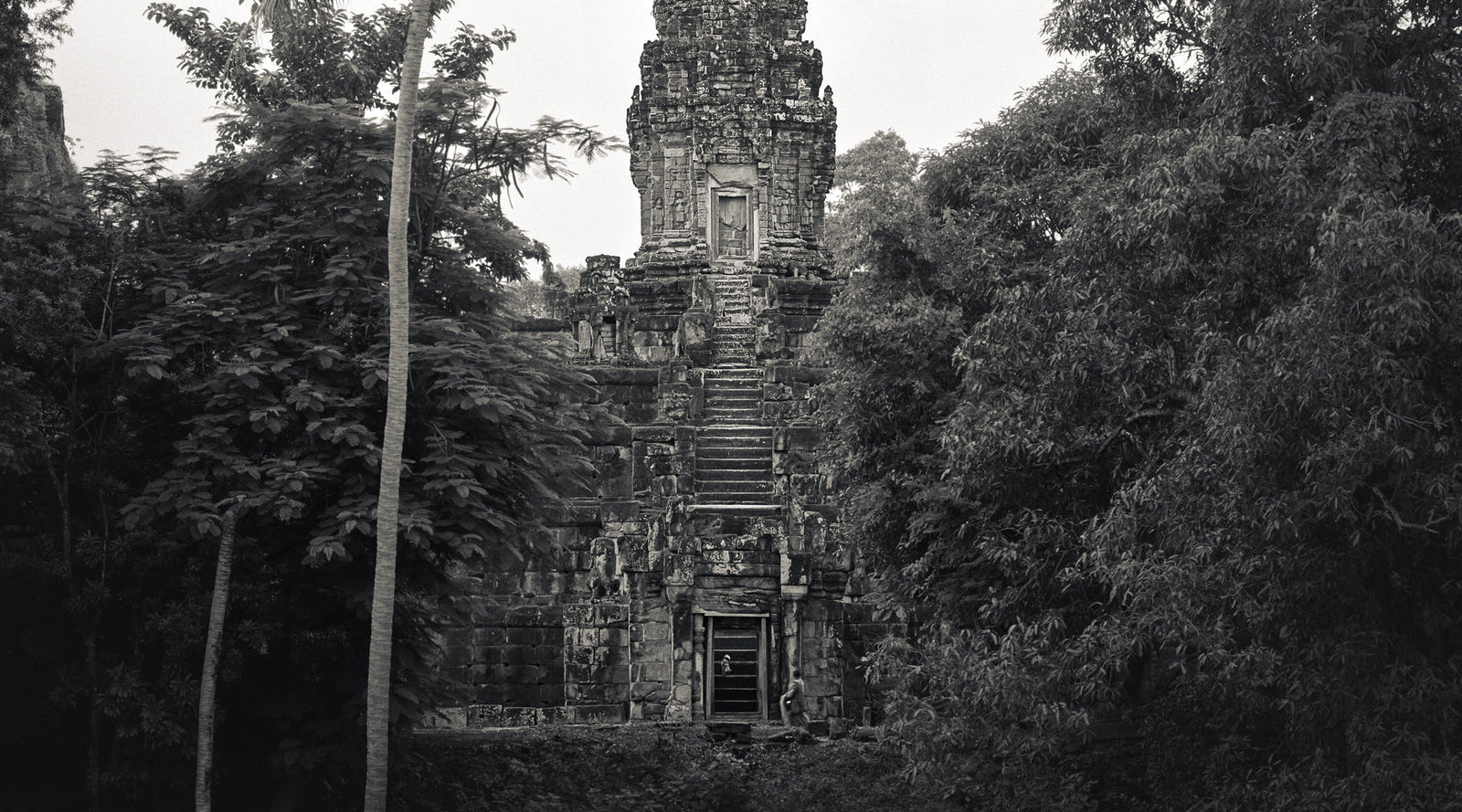

Bakong’s Dawn and the Art of Devotion
“Some silences walk beside us, carrying the dawn.”
Bakong Temple, oldest of Angkor’s state pyramids, was raised as a terrestrial echo of Mount Meru. Its five tiers once shimmered with stucco and gold; now weather and vine have gentled the edges, granting the monument a grave intimacy. Yet each morning a living monastery stirs within the outer enclosure, folding contemporary prayer into ninth-century stone.
On one such dawn Lucas Varro waited beyond the northern moat, the humidity still fragrant with monsoon rain. He sought neither spectacle nor solitude, only a conversation between light and living breath. It arrived in the unguarded moment when a monk approached the stair and his dog rushed down to meet him. Their exchange, tender and wordless, awakened the pyramid’s geometry, reminding the stair why it rises.
Using a large-format camera, Varro allowed a prolonged exposure to receive that delicate tension—stone, mist, footfall, and the invisible filament of loyalty. In the studio, under safelight silence, chiaroscuro revealed hidden contours, and layer upon layer of hand-applied gold warmth restored the faint ember of dawn. Printed on museum-grade Hahnemühle Bamboo paper, each sheet becomes a quiet reliquary, holding breath, silver, and time.
The edition is strictly limited to twenty-five impressions and two artist’s proofs, each signed on the recto margin. Yet rarity alone does not confer value. What endures is the hush that lingers—an invitation to stand where prayer and companionship balance on a single stair, reminding us that devotion often arrives on four feet before echoing through stone.
For collectors, this print offers more than an image; it is a companion in stillness, crafted through hours of analogue care and the silent dialogue between artist, temple, and first light. It asks only to be received, and in receiving, to open a space where dawn can forever begin again.
More from the Library


See Also
A concise and impartial dictionary of absence, promises, quarrels, ordinary objects, and the troublesome instability of words.

The City of Service
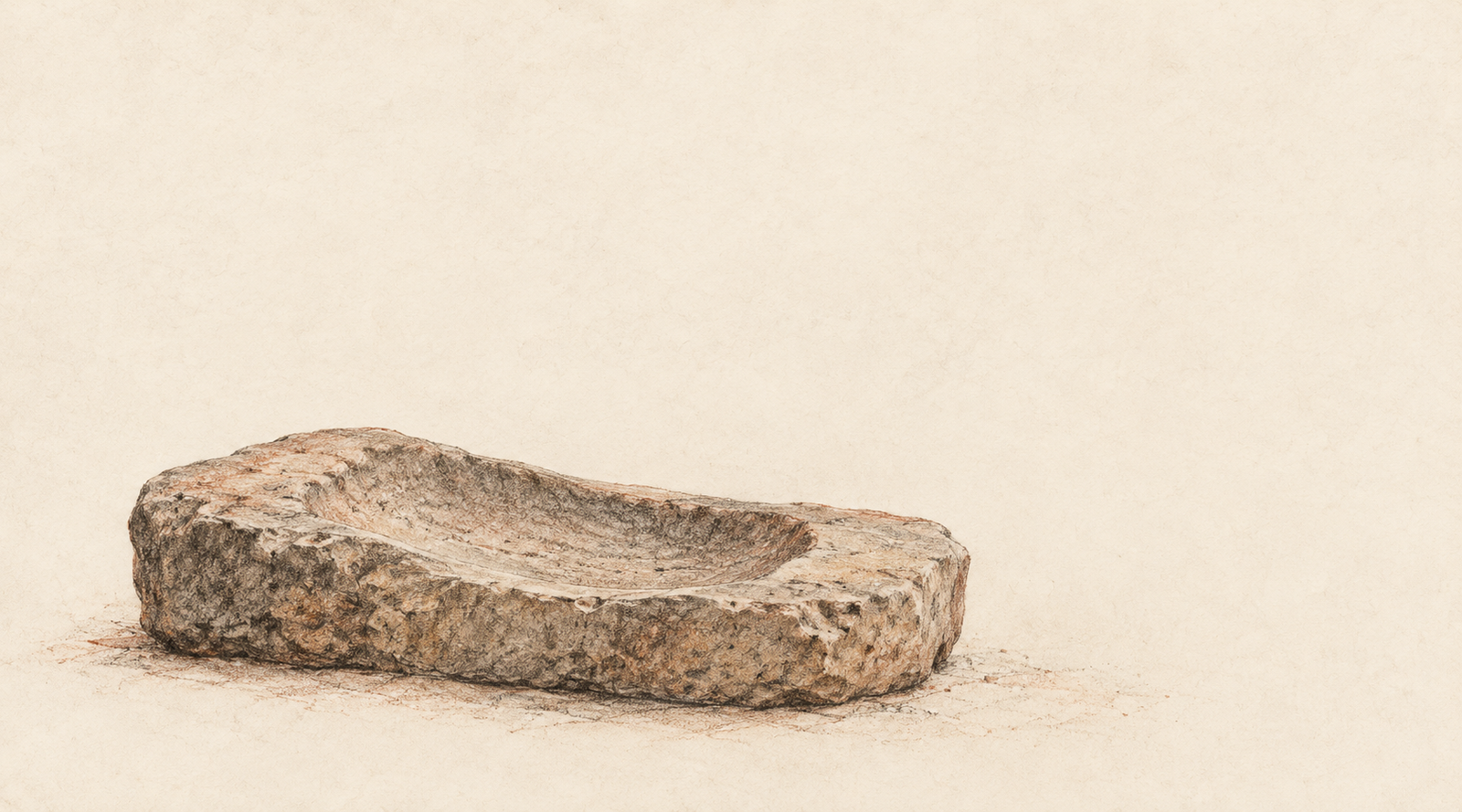
The temple we inherit is a building from which almost all necessity has been removed. Nothing must be brought for it to continue being what we call a temple. The sanctuary asks nothing of us. Stone is good at this kind of independence.
A living temple was otherwise.
Water had to come in. So did grain, cloth, oil, aromatic substances, fuel. The things required for worship arrived because someone carried them across a threshold.

Houses of Wood, Light, and Smoke
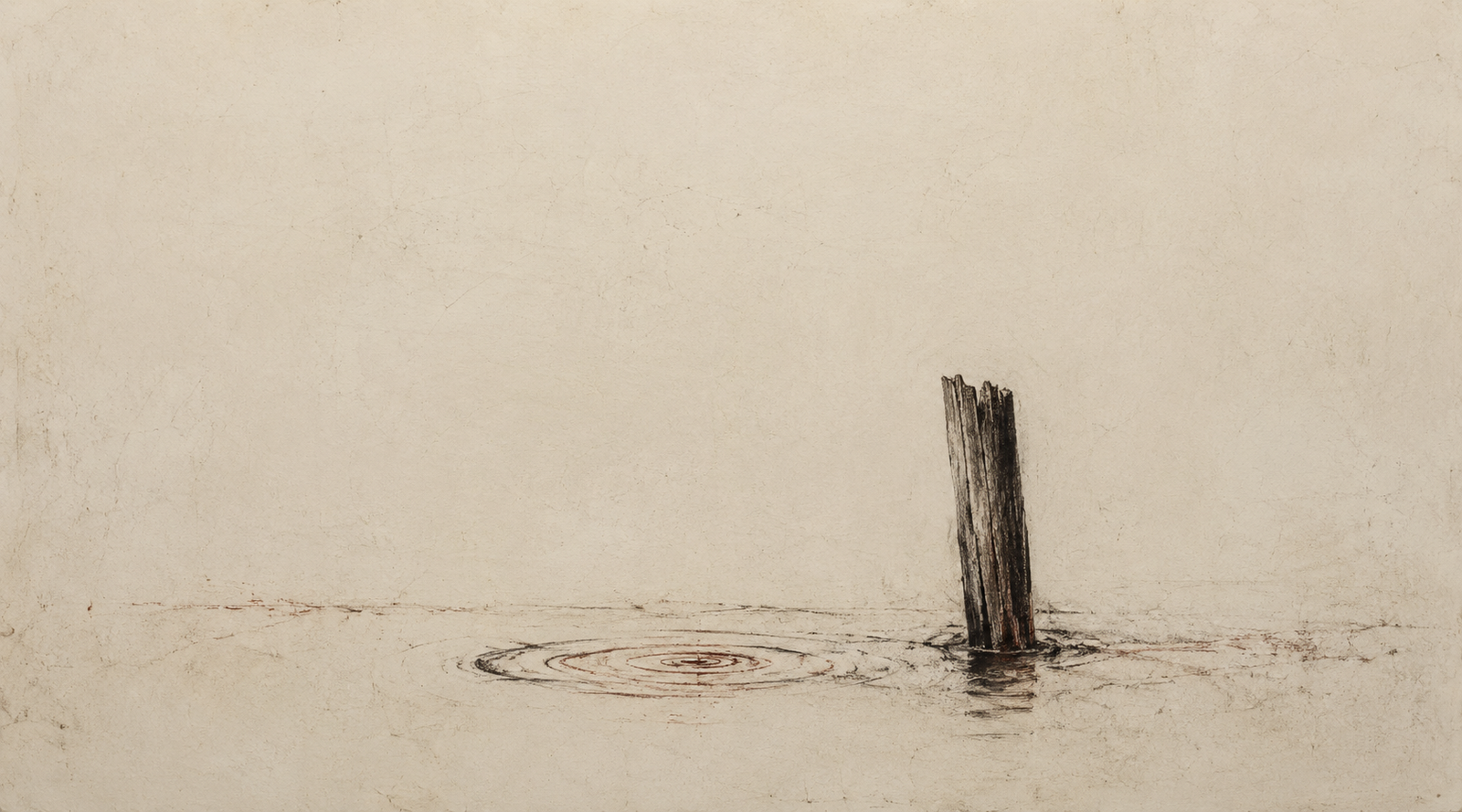
Some of Angkor’s most intimate ruins do not rise above the ground at all. They are postholes, low mounds, hearths and ponds: durable traces of a domestic city built largely from things that decay. To restore that city is to see Angkor not only as stone, but as wood, smoke, water, repair, and people living within calling distance.

$895
Bakong Temple, Angkor, Cambodia — 2018
Limited Edition Archival Pigment Print
Edition
Strictly limited to 7 prints + 2 Artist’s Proofs
Edition Number
This listing is for the first numbered print from the Large Collector Edition: 1/7
Medium
Hand-toned black-and-white archival pigment print on Hahnemühle Bamboo — a museum-grade fine art paper chosen for its quiet tactility and reverent depth, echoing the spirit of the temples.
Signature & Numbering
Each print is individually signed and numbered by the artist on the border (recto)
Certificate of Authenticity
Accompanies every print
Image Size
28 x 28 inches (71.1 x 71.1 cm)
The moat still murmured with last night’s rain when Bakong’s stone pyramid emerged into morning mist. Trees stood in quiet formation, their leaves damp with remembrance. The air was breathless, waiting.
Then—soft footsteps. A solitary monk stepped onto the path, saffron brushing shadow. His dog appeared at the stair’s base, bounding upward with familiar joy. At that instant, the ancient geometry of the temple seemed to inhale.
From across the moat, I opened the large-format lens. The exposure was long, silent—letting light and reverence gather in equal measure.
In the darkroom, chiaroscuro shaped the form until the stair held presence. Warm gold-toning followed—gently hand-applied to echo the robe, the dawn, the intimacy of this shared return.
Printed on museum-grade Hahnemühle Bamboo paper, in a strictly limited edition of 25 + 2 AP, each hand-toned print is signed on the recto.
Let this image enter your space as a quiet threshold between prayer and companionship.
Click here to walk further into the Artist’s Journal.
Previously titled ‘Monk and Friend, Bakong Temple, Angkor, Cambodia. 2018,’ this photograph has been renamed to better reflect its place in the series and its spiritual tone. The edition, provenance, and authenticity remain unchanged.