
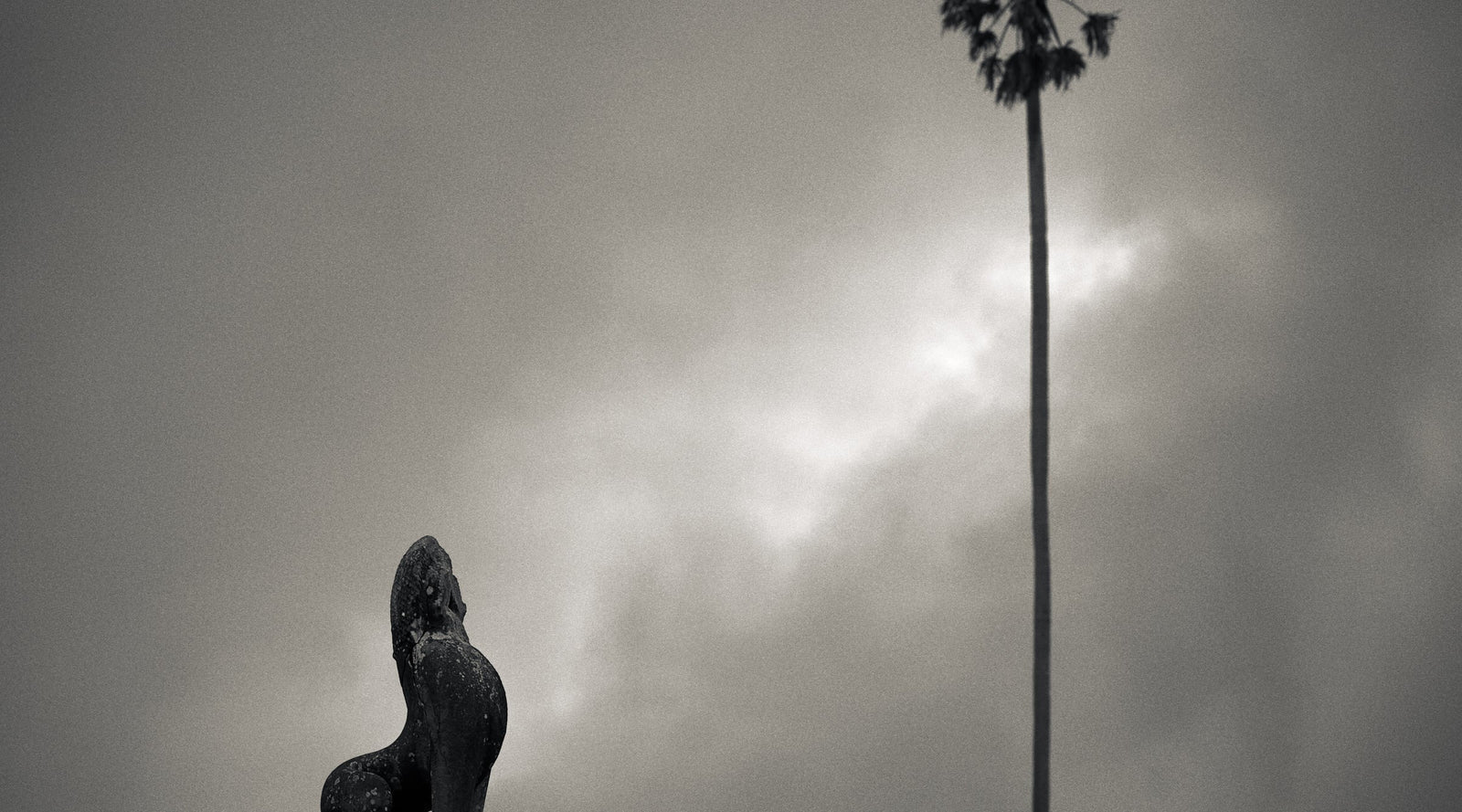

Beneath the Listening Sky
The hour was turning. That strange, weightless seam between day and storm, when even the birds seemed to withdraw their names. The stone at my feet had cooled. Rain had not yet begun, but the sky had already committed to it.
The lion was there before me. And beside it, impossibly tall, a palm held the sky with effortless spine. They did not face me, nor each other. Yet they stood in accord—an alignment older than language. Watching, I sensed no tension, no question. Only the gravity of presence.
I placed the tripod low, slow, as one might lower a candle into an alcove. Cloth over head. Ground glass inhaling light. And in that long breath before the shutter, I vanished from the frame.
storm-silent sky breathing
lion and palm stand in stillness
thunder holds its tongue
Even now, I do not know what passed between them. But I remember how the air smelled of wet root and shadowed stone. I remember how the hush leaned inward. I remember how the storm did not speak, and neither did I.
More from the Library


See Also
A concise and impartial dictionary of absence, promises, quarrels, ordinary objects, and the troublesome instability of words.
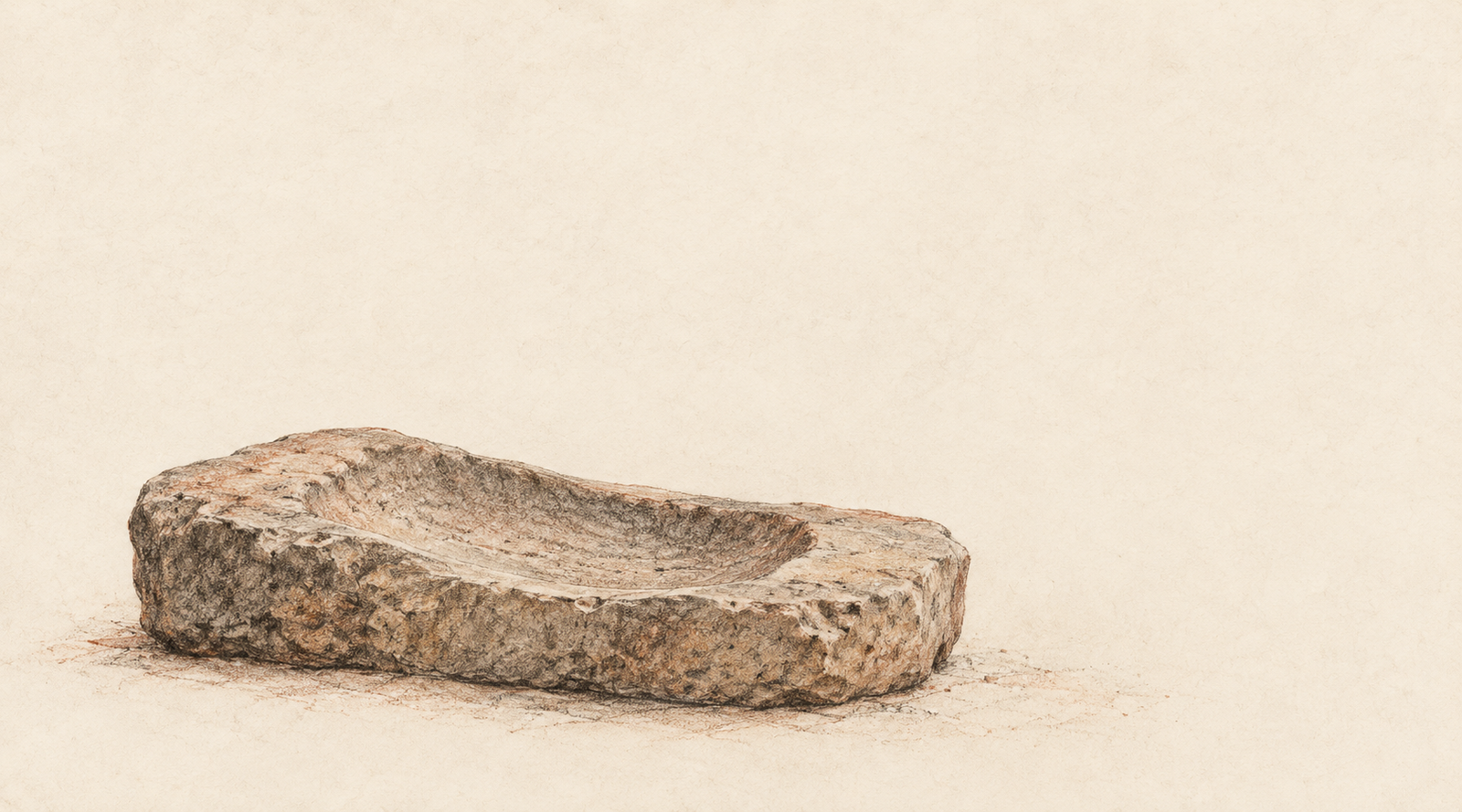

The City of Service
The temple we inherit is a building from which almost all necessity has been removed. Nothing must be brought for it to continue being what we call a temple. The sanctuary asks nothing of us. Stone is good at this kind of independence.
A living temple was otherwise.
Water had to come in. So did grain, cloth, oil, aromatic substances, fuel. The things required for worship arrived because someone carried them across a threshold.
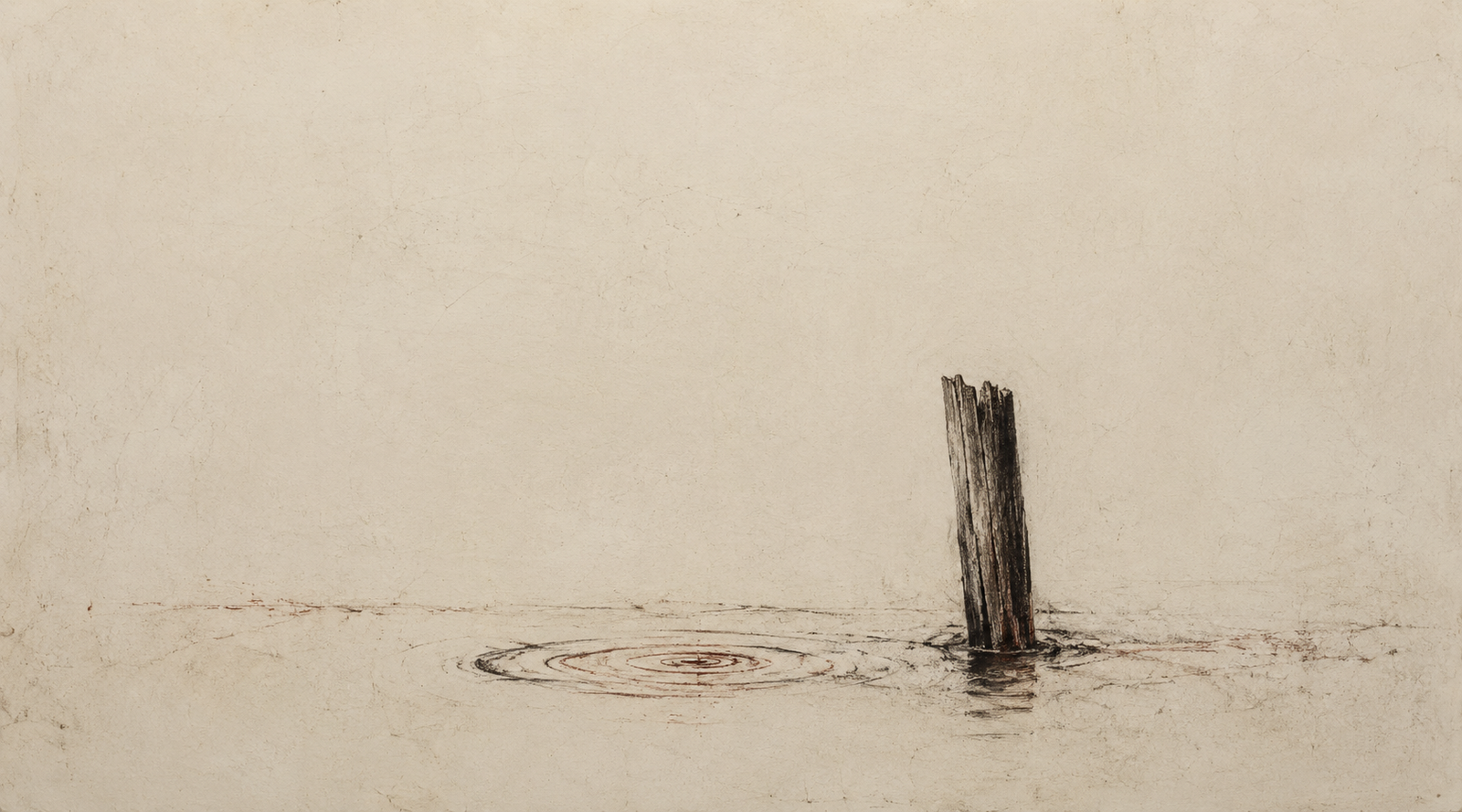

Houses of Wood, Light, and Smoke
Some of Angkor’s most intimate ruins do not rise above the ground at all. They are postholes, low mounds, hearths and ponds: durable traces of a domestic city built largely from things that decay. To restore that city is to see Angkor not only as stone, but as wood, smoke, water, repair, and people living within calling distance.

$895
Angkor Wat, Cambodia — 2020
Limited Edition Archival Pigment Print
Edition
Strictly limited to 7 prints + 2 Artist’s Proofs
Edition Number
This listing is for the first numbered print from the Large Collector Edition: 1/7
Medium
Hand-toned black-and-white archival pigment print on Hahnemühle Bamboo — a museum-grade fine art paper chosen for its quiet tactility and reverent depth, echoing the spirit of the temples.
Signature & Numbering
Each print is individually signed and numbered by the artist on the border (recto)
Certificate of Authenticity
Accompanies every print
Image Size
28 x 28 inches (71.1 x 71.1 cm)
A stone lion steadies itself at the parapet; a lone palm ascends into iron-grey cloud. Between them stretches the charged quiet that precedes rain—the temple holding its breath, the jungle relearning stillness.
Stormlight draws every edge toward revelation. The air smells of wet bark, carved sandstone, distant thunder withheld. Presence settles like fine dust upon the lens.
I stood there, head bowed behind the dark-cloth, feeling not observer but acolyte. Their vigilance entered the glass; my pulse slowed to meet it.
Captured on large-format black-and-white film in a single long exposure, the negative was later shaped through chiaroscuro and meticulous hand-toning until shadow carried the heft of cloud and highlight held the pulse of stone.
Printed on museum-grade Hahnemühle Bamboo paper, The Watchers is limited to twenty-five prints, plus two artist’s proofs.
A threshold of stillness—ready to be welcomed into your space.
To listen alongside the guardians, click here to explore the Artist’s Journal.
Previously titled ‘Guardian, Angkor Wat Temple, Cambodia. 2020,’ this photograph has been renamed to better reflect its place in the series and its spiritual tone. The edition, provenance, and authenticity remain unchanged.