

The Caress Between Lifetimes
Angkor Wat · Cruciform Galleries — November 2018
There is a kind of touch that does not fade,
even when carved from the breath of stone.
—
I hadn’t meant to return that afternoon.
Preah Khan had already filled the morning with silence, and I was simply looking for somewhere quiet to eat. The western galleries of Angkor Wat are often overlooked—a place I knew well, and where I could sit unnoticed. But as I entered, the air changed. A hush, heavy with gold, met me in the Cruciform Galleries. And though the temple was full of footsteps, here there was stillness. A silence that waited.
I unwrapped my cheese butty with a smile and settled in beneath the vaulted passage, content to watch light move across the courtyard stones. Then, a pause. A sense of being seen. Not by a person, but by the place itself.
Across the courtyard, where the last light of afternoon poured molten gold onto the wall, I saw them.
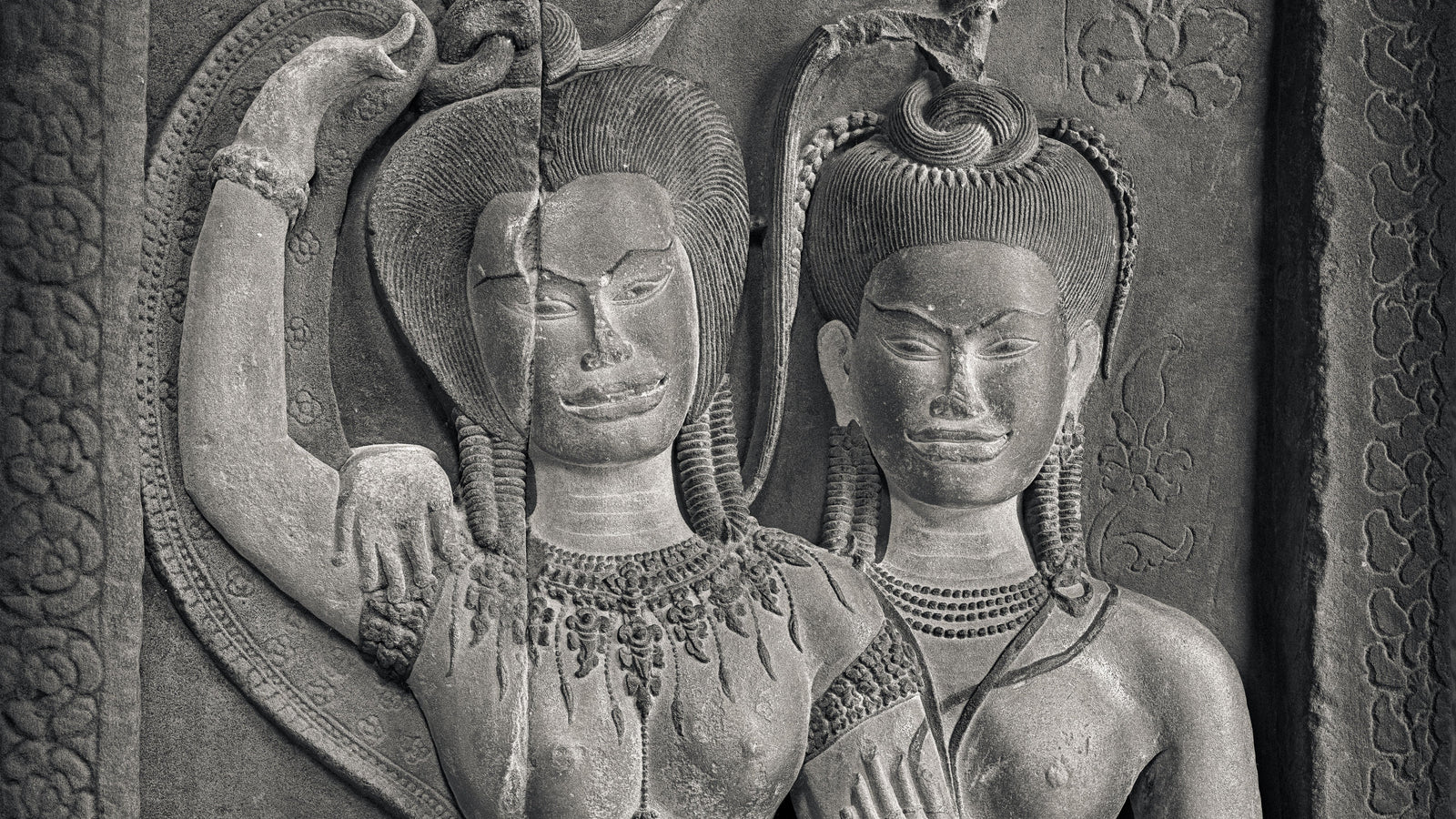
Two apsaras, carved in high relief—one gently leaning into the other. Their forms softened by time, yet still exquisite, still glowing. One smiled. A real smile. With teeth.
It is a detail found in only a handful of Angkor’s thousands of devata. A secret, barely whispered, that speaks directly to the soul.
Stone leans toward stone
as if the sun’s last caress
still lingers in flesh.
I sat in silence for a long while before moving. The chants of monks echoed from deeper within the temple—faint, but rhythmic, like the breath of a world held just behind the veil.
When I rose, it was not to take a picture, but to draw.
To draw is to listen with the hand. To follow the memory held in the curve of a hip, the knowing that rests in the tilt of a shoulder. These were not mere decorations. They were beings who remembered.
The photograph came much later.
Over many weeks, I returned—sometimes in person, sometimes in memory. I would walk the galleries again, revisit the hush that first revealed them. The final image was made using large-format film and shaped in chiaroscuro to honour the sculptural truth of the figures and the tenderness between them. I hand-toned each print in gold to carry the warmth of that late Cambodian light, the breath of sun before departure.
Their embrace speaks not only of sacred kinship, but of something older—something that reaches through lifetimes to remind us we have been held before. And may be held again.
Not all presence fades.
Some remains in the stone.
Some waits for us to see it.
And some, like a smile nearly forgotten,
returns.
—
What lives between lifetimes leans toward us still,
radiant with memory, waiting to be seen again.
—
Receive the next work
Subscribe free to receive new work from the Lucas Varro Library by email.
More from the Library


See Also
A concise and impartial dictionary of absence, promises, quarrels, ordinary objects, and the troublesome instability of words.

The City of Service
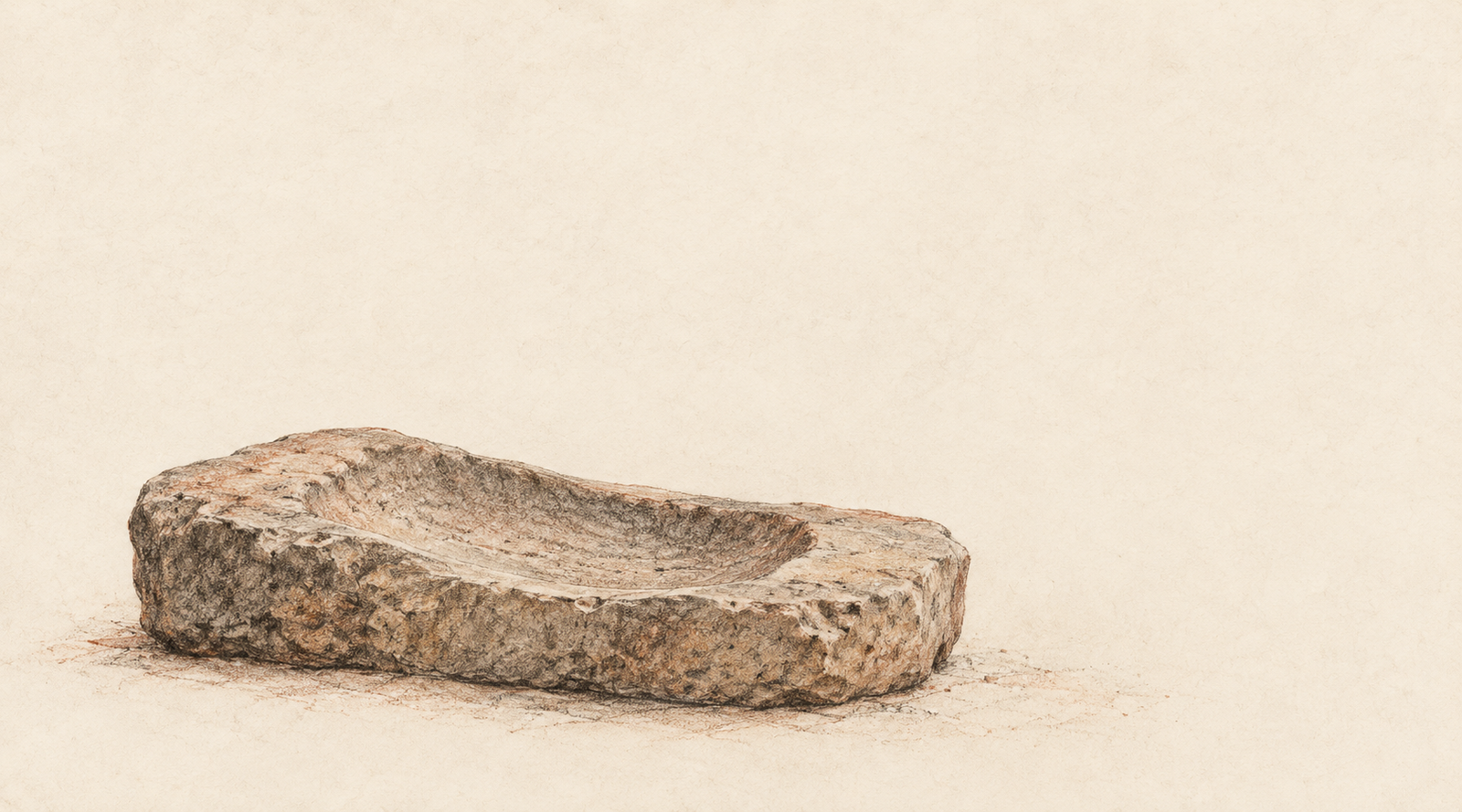
The temple we inherit is a building from which almost all necessity has been removed. Nothing must be brought for it to continue being what we call a temple. The sanctuary asks nothing of us. Stone is good at this kind of independence.
A living temple was otherwise.
Water had to come in. So did grain, cloth, oil, aromatic substances, fuel. The things required for worship arrived because someone carried them across a threshold.

Houses of Wood, Light, and Smoke
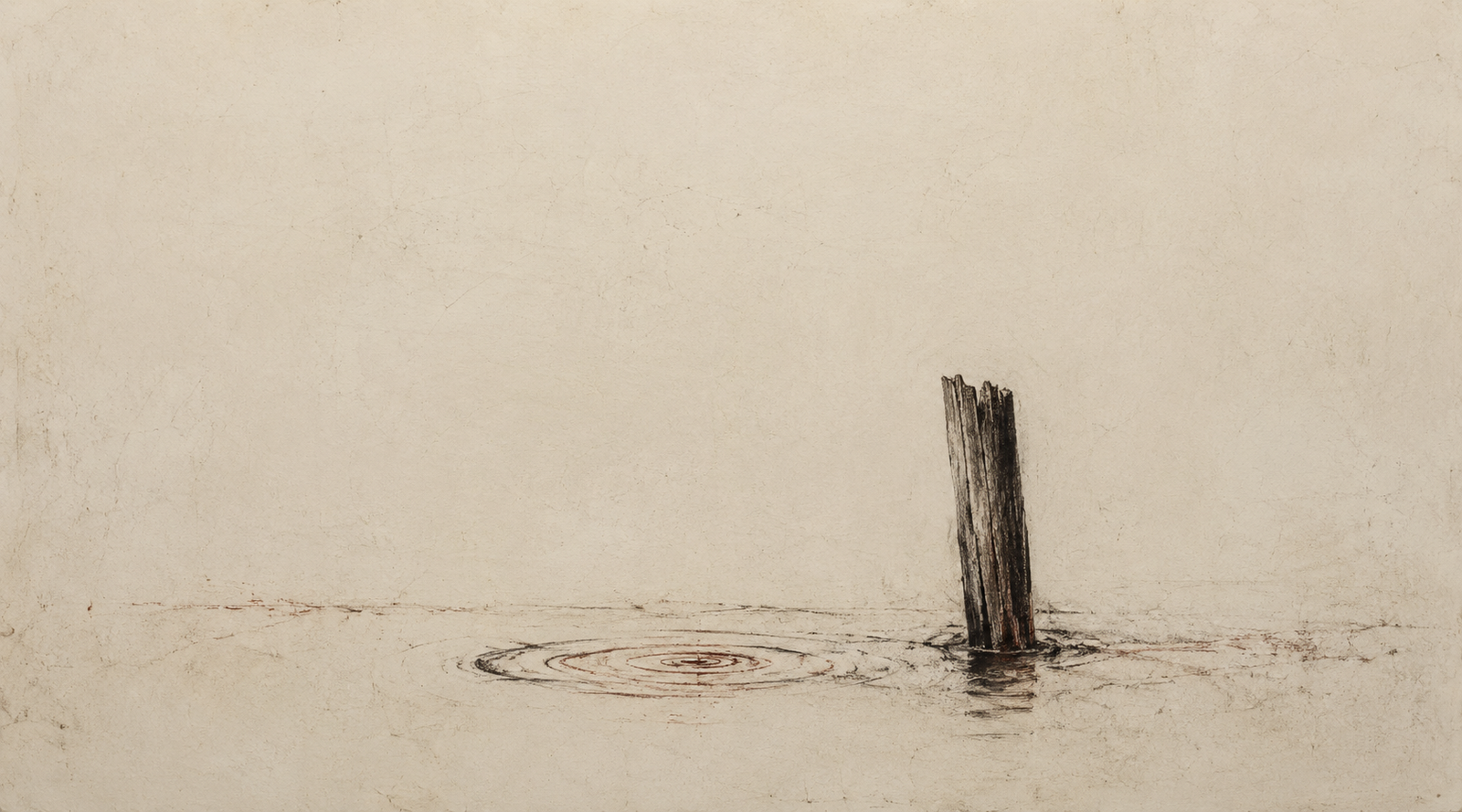
Some of Angkor’s most intimate ruins do not rise above the ground at all. They are postholes, low mounds, hearths and ponds: durable traces of a domestic city built largely from things that decay. To restore that city is to see Angkor not only as stone, but as wood, smoke, water, repair, and people living within calling distance.

$895
Angkor Wat Temple, Cambodia. 2018
Limited Edition Archival Pigment Print
Edition
Strictly limited to 7 prints + 2 Artist’s Proofs
Edition Number
This listing is for the first numbered print from the Large Collector Edition: 1/7
Medium
Hand-toned black-and-white archival pigment print on Hahnemühle Bamboo — a museum-grade fine art paper chosen for its quiet tactility and reverent depth, echoing the spirit of the temples.
Signature & Numbering
Each print is individually signed and numbered by the artist on the border (recto)
Certificate of Authenticity
Accompanies every print
Image Size
44.3 x 17.7 inches (112.5 x 45 cm)
For more information on the making of this image, please see my Journal article The Making of Apsaras I, Angkor Wat Temple, Cambodia. 2018.
These millions of gracious figures…
They were never carved by the hands of men!
They were created by the Gods
- living, lovely, breathing women!
– Pang, seventeenth century Cambodian poet, writing about apsaras