

In the Gold Between Them
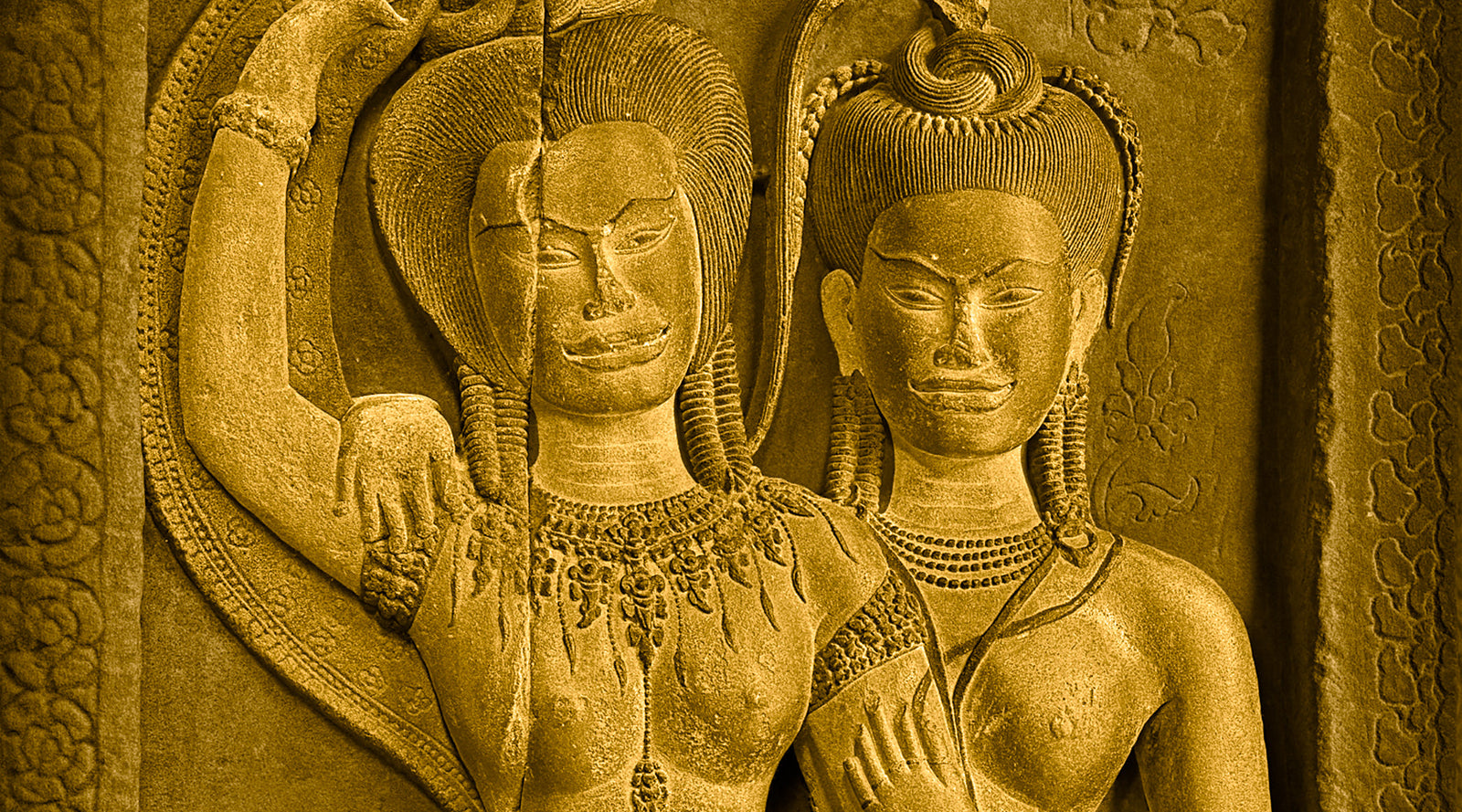
The sandstone corridor held its hush. Late light fell across the carvings in broad, deliberate strokes. And there they stood—two apsaras emerging from the wall not as ornament, but as presence.
They leaned into one another as if to whisper. Their closeness was not performative. It was lived. A shoulder brushing a shoulder. A curve echoing a curve. The kind of intimacy shaped not by gesture, but by time.
One of them smiled.
The moment slowed. I watched how the gold light pooled in the quiet between their bodies. There was a fullness to the space—like breath between words, or the pause before a vow is spoken.
Later, in the studio, I would shape that gold into chiaroscuro. I would let the light re-enter them gently. But in that moment, there was only this:
—
They do not turn,
but something within them
leans
toward
gold.
One smile
rises
through centuries
of stillness—
a warmth never carved,
but found.
Their hips touch like wind
against stone,
and the light between them
remembers
what silence
once held.
More from the Library


See Also
A concise and impartial dictionary of absence, promises, quarrels, ordinary objects, and the troublesome instability of words.

The City of Service
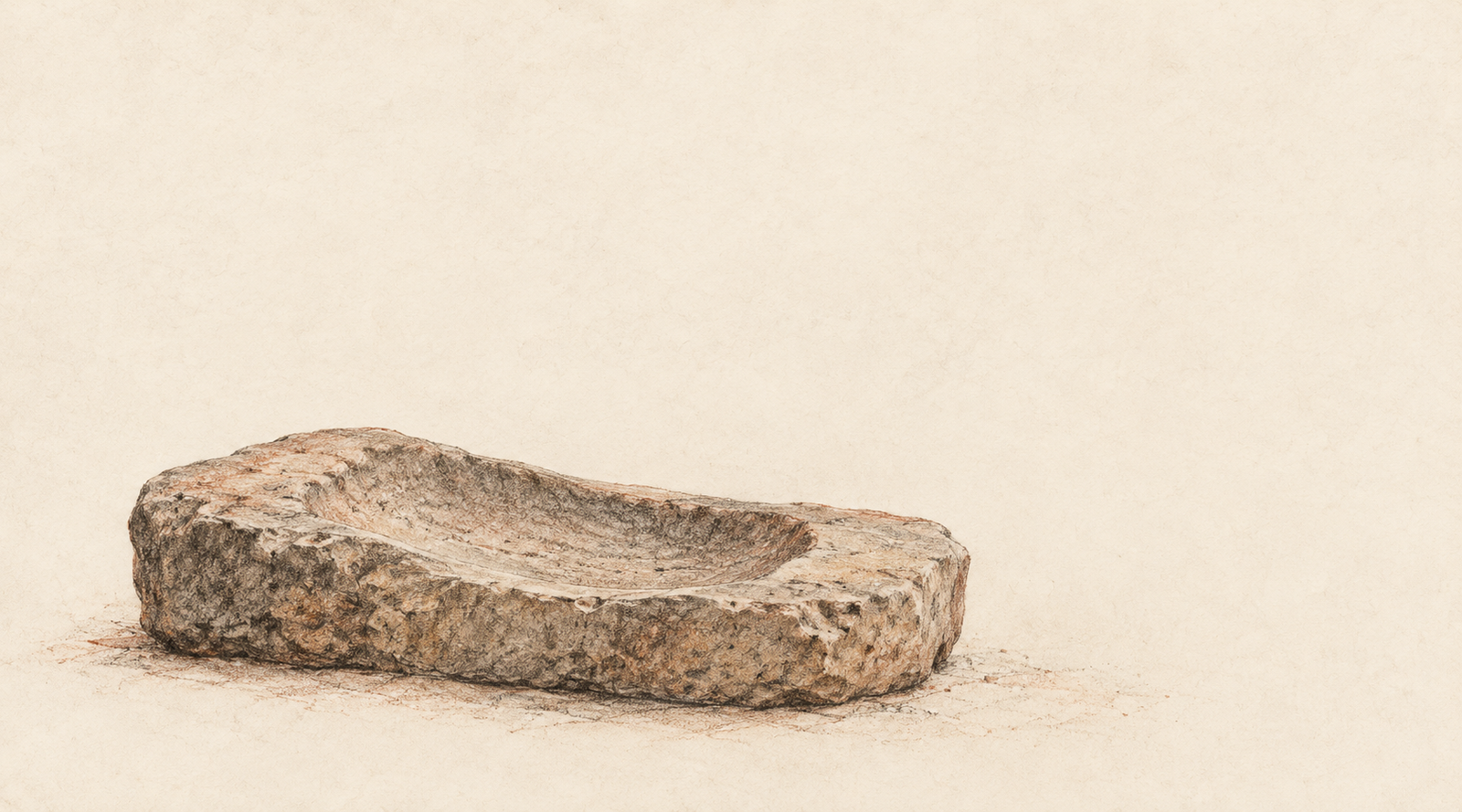
The temple we inherit is a building from which almost all necessity has been removed. Nothing must be brought for it to continue being what we call a temple. The sanctuary asks nothing of us. Stone is good at this kind of independence.
A living temple was otherwise.
Water had to come in. So did grain, cloth, oil, aromatic substances, fuel. The things required for worship arrived because someone carried them across a threshold.

Houses of Wood, Light, and Smoke
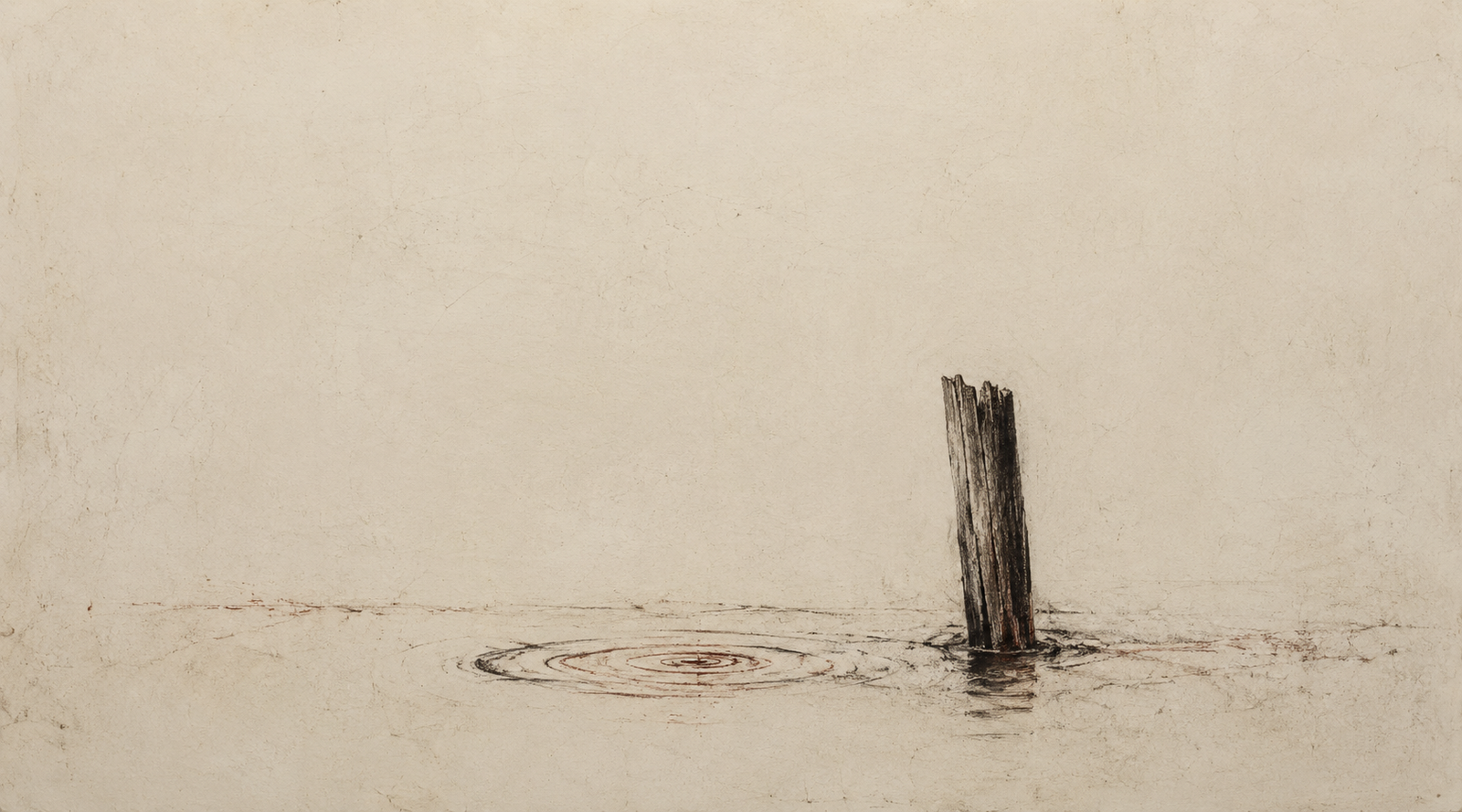
Some of Angkor’s most intimate ruins do not rise above the ground at all. They are postholes, low mounds, hearths and ponds: durable traces of a domestic city built largely from things that decay. To restore that city is to see Angkor not only as stone, but as wood, smoke, water, repair, and people living within calling distance.

$395
Angkor Wat Temple, Angkor, Cambodia — 2020
Limited Edition Archival Pigment Print
Edition
Strictly limited to 15 prints + 2 Artist’s Proofs
Edition Number
This listing is for the first numbered print from the 12-inch Intimate Collector Edition: 1/15
Medium
Gold-toned black-and-white archival pigment print on Hahnemühle Bamboo — a museum-grade fine art paper chosen for its quiet tactility, warm natural tone, and reverent depth.
Signature & Numbering
Individually signed and numbered by the artist on the border (recto)
Certificate of Authenticity
Accompanies every print
Image Size
19 × 7.6 inches (48.3 × 19.3 cm)
The sun was descending when I found them: two apsaras leaning toward one another in the Cruciform Galleries of Angkor Wat, touched by the last warmth of day. Around them, the temple carried footsteps and distant chants; here, between the figures, another stillness gathered — intimate, inward, and lit from within.
This intimate collector edition asks to be approached closely. At 19 × 7.6 inches, the long, narrow form draws the viewer toward the quiet space between the figures, where shadow, gold, stone, and breath seem to meet. The scale is not small in feeling, but close in spirit: a threshold of attention suited to private contemplation.
I returned again and again, sketching, watching, waiting for the light to become more than illumination. The image was made on large-format black-and-white film, using long exposure and classical chiaroscuro to preserve the hush of the gallery. Later, in quiet devotion, I hand-toned the print in gold to echo the evening radiance I could not forget.
Printed on Hahnemühle Bamboo, signed, numbered, and accompanied by a certificate of authenticity, this first numbered print from the 12-inch equivalent edition is prepared as a close-held object of presence. It carries the Cruciform Galleries not as ornament, but as sacred intimacy: two figures, one silence, and the fading gold of an Angkor evening.
May it rest where tenderness is still allowed to be quiet.
Enter the Artist’s Journal to step deeper into the silence between shadow and gold.\