
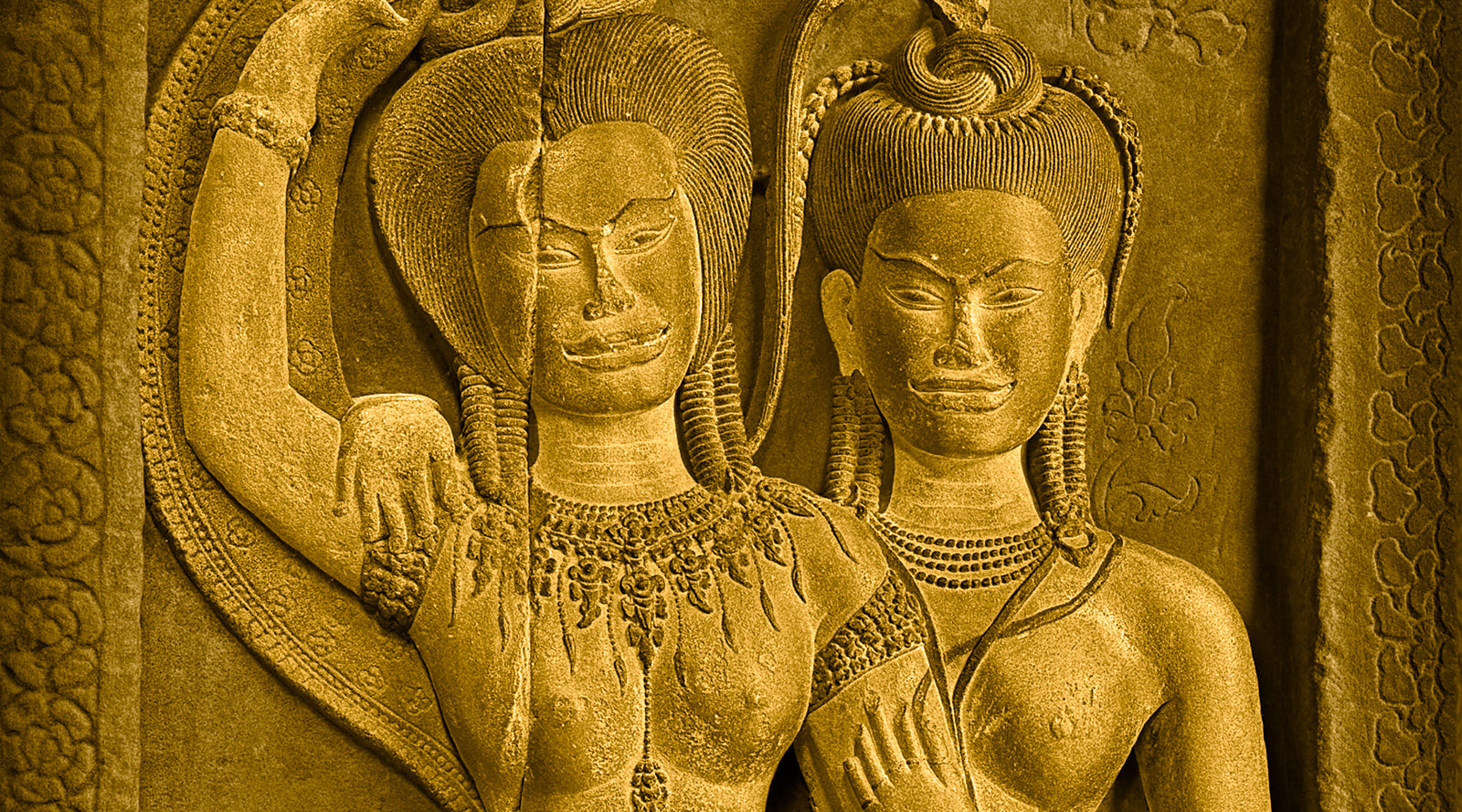

Where Stone Leans Toward Memory
It was near sunset when the light began to change. I stood alone in the Cruciform Galleries, where the cool shadow met the breath of the jungle. Soft chanting rose like mist from the inner sanctum. The stone at my feet was warm. The hush—complete.
And then, as if they had stepped forward without moving, I saw them.
Two apsaras, carved centuries ago, emerged from the gallery wall. Their forms touched at the shoulder and hip, so gently one might think it an accident of time. But there was intention in the lean, in the grace of their mirrored posture. And there was that smile—a rare one, teeth just barely visible. I have seen thousands of devata across Angkor, but almost none who smile like that.
I did not raise the camera.
There are moments the lens cannot meet until the breath has slowed enough to match the stillness before it. I sat with them. I let the light pool between us, golden and fading. I returned again and again in the months that followed—sometimes to photograph, often to simply be near. Their presence was not something to capture. It was something to honour.
I shaped the final image slowly, months later, using classical chiaroscuro to let the light fall as it had that day. Each print I hand-tone in gold to recall the warmth that wrapped their embrace. But even now, it’s not the photograph I carry—it’s the moment before. The quiet recognition. The feeling that they remembered me.
stone leans into stone—
the warm breath of evening light
is older than time
More from the Library


See Also
A concise and impartial dictionary of absence, promises, quarrels, ordinary objects, and the troublesome instability of words.
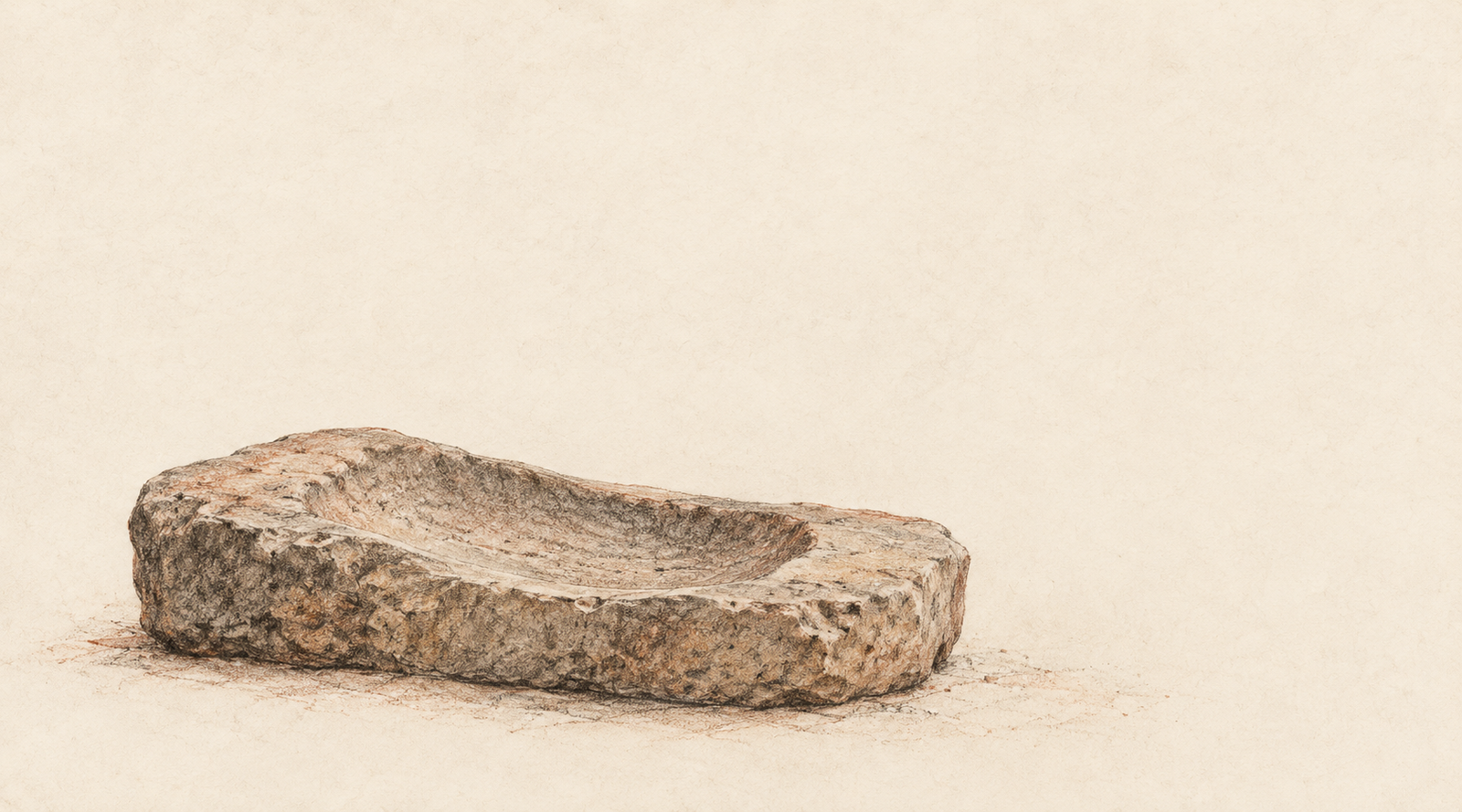

The City of Service
The temple we inherit is a building from which almost all necessity has been removed. Nothing must be brought for it to continue being what we call a temple. The sanctuary asks nothing of us. Stone is good at this kind of independence.
A living temple was otherwise.
Water had to come in. So did grain, cloth, oil, aromatic substances, fuel. The things required for worship arrived because someone carried them across a threshold.
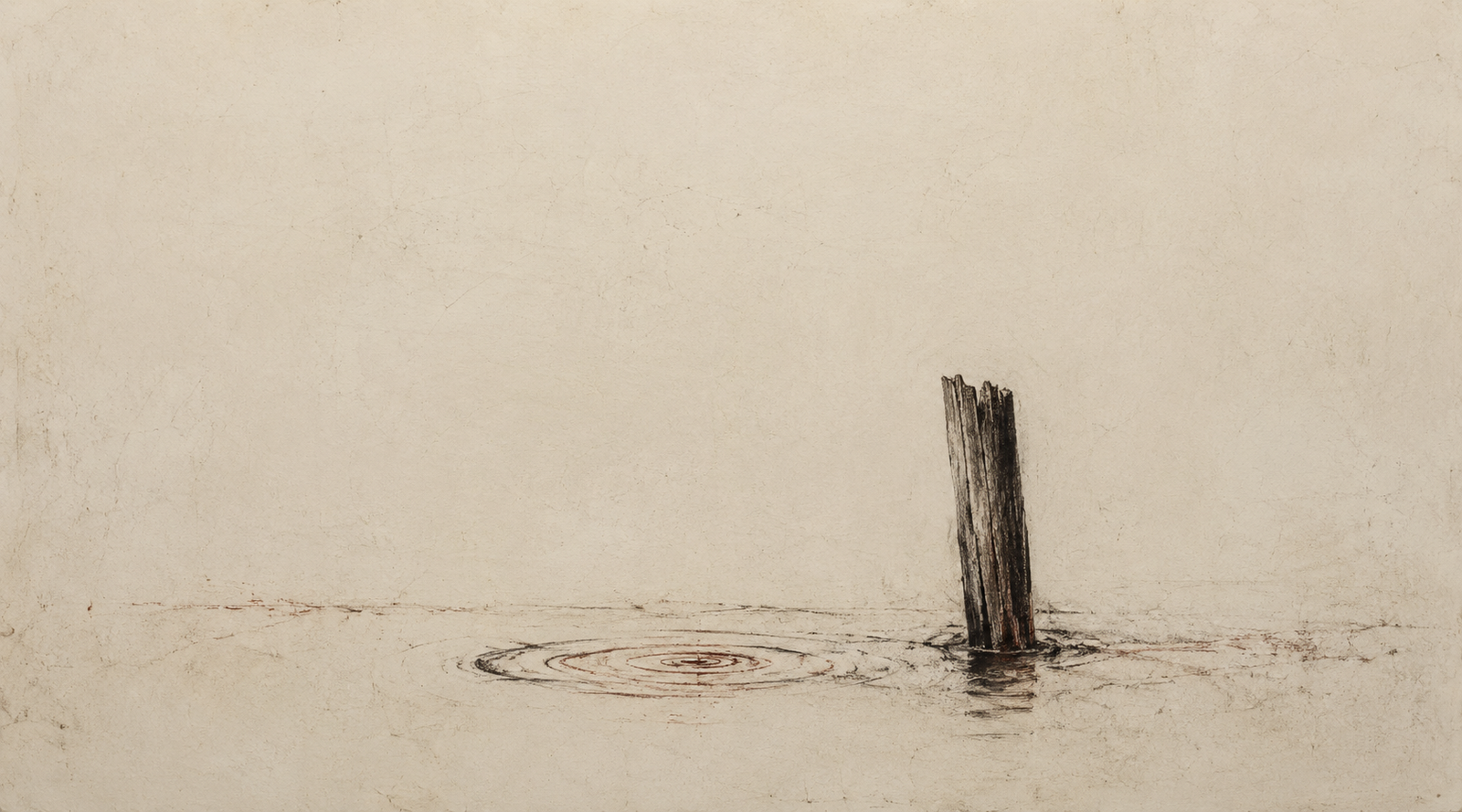

Houses of Wood, Light, and Smoke
Some of Angkor’s most intimate ruins do not rise above the ground at all. They are postholes, low mounds, hearths and ponds: durable traces of a domestic city built largely from things that decay. To restore that city is to see Angkor not only as stone, but as wood, smoke, water, repair, and people living within calling distance.
$49.00
This area is used to describe your product’s details. Tell customers about the look, feel, and style of your product. Add details on color, materials used, sizing, and where it was made.