

“On Fairy-Stories” as the Key to Everything
Sub-creation, Eucatastrophe, and the grammar of Tolkien’s world.
The strangest thing about Tolkien’s key to Middle-earth is that it does not look like a key.
It is not a map, though maps matter deeply to him. It is not a genealogy, though his imagination moves through descent and inheritance as naturally as others move through plot. It is not a language, though language is one of the roots from which his whole world flowers. Nor is it hidden in one of the great tales themselves: not in the Music, not in the Silmarils, not in the Ring, not in the Grey Havens.
It comes to us as an essay on fairy-stories.
That fact should make us pause. “On Fairy-Stories” is often approached as a defence of fantasy, a lecture on genre, an Oxford philologist’s attempt to rescue fairies from the nursery. It is all of these things in part, but none of them reaches the centre. The essay is not a side chamber in Tolkien’s work. It is the grammar of the house.
In it, Tolkien names the laws by which Middle-earth breathes: Sub-creation, Secondary World, Enchantment, Recovery, Escape, Consolation, and Eucatastrophe. These are not ornaments placed beside the fiction. They are load-bearing stones. They tell us why Tolkien’s world feels true, why its sorrow does not collapse into despair, why its joy does not cheapen grief, and why the old stories, when properly made, do not lead us away from reality but return us to it with clearer sight.
Tolkien begins by refusing false doors.
A fairy-story is not simply a travellers’ tale, in which marvels exist somewhere far away in the geography of the known world. It is not a dream, safely explained by sleep. It is not merely beast-fable, however charming or grave. These exclusions are not pedantry. Tolkien is protecting the nature of wonder. He will not allow Faërie to be reduced to distance, psychology, satire, or disguise. The marvellous, for him, is not a decoration applied to the ordinary world. It is the sign of another order of making.
Faërie is not elsewhere on the map.
It is entered by another act of attention.
That act depends upon what Tolkien calls the Secondary World. The successful story-maker creates a world the mind can enter. While the reader is inside it, what is told is true according to that world’s laws. The moment disbelief intrudes, the spell breaks, and the reader is outside again, looking not at a world but at a contrivance.
This is among Tolkien’s most important insights, and among the easiest to trivialise. He is not asking whether dragons are biologically plausible, or whether Elves can be fitted into modern anthropology, or whether wizards survive the tests of rational probability. He is asking whether the made world possesses inward law. Does it hold? Does it answer to itself? Does it bear the pressure of belief?
Belief, here, is not credulity. It is hospitality.
The reader enters a Secondary World not because she has become childish, but because the maker has honoured her intelligence. The world has weight. It has weather, grammar, memory, ancestry, ruin, and cost. Its marvels are obligations. A dragon must not merely be impressive; it must belong. A language must not merely sound beautiful; it must carry history in its roots. A ruin must not decorate the road; it must feel as if men once stood there, desired there, failed there, and passed into song before the present tale began.
Middle-earth does not feel like a setting. It feels like a world through which a story has happened to pass.
Behind every visible thing lies an older thing. Behind Aragorn, Númenor. Behind Númenor, the Edain. Behind the Edain, the griefs of the Elder Days. Behind those griefs, the rebellion against the Music. Behind the Music, the mystery of a theme given before the world was. The reader does not need to know all of this at once. Much of the power lies in not knowing it fully. But the pressure of depth is everywhere. Tolkien persuades us that the visible tale is only the upper leaf of a tree whose roots go down beyond sight.
The plot is not the treasure. The plot is the road by which the treasure becomes visible.
That is the first sense in which “On Fairy-Stories” is the key. It teaches us that Tolkien’s achievement is not invention alone. It is Sub-creation.
The word is chosen with care. Tolkien does not imagine the artist as a rival creator, conjuring meaning out of nothing by sovereign will. He imagines the artist as a maker under creation: a creature whose making is itself part of the gift of being made. Art becomes the link between imagination and expression, the discipline by which an image receives the inner consistency of reality. That phrase is one of the hidden centres of Tolkien’s thought. The artist’s task is not novelty. It is not self-display. It is the making of something that bears reality from within.
The Ainulindalë is this idea translated into myth.
Tolkien’s world begins not with machinery, nor conquest, nor matter assembled by force, but with music. The Ainur receive a theme. They answer it. They elaborate, deepen, harmonise, and at last behold the vision their music has shaped. Even then, their making is not independent. They are not original in the absolute sense. They create because they have first received. When Ilúvatar gives the vision being, Sub-creation is gathered into Creation. The music becomes world.
That is not incidental. It is the deep structure of Tolkien’s imagination. The good maker does not dominate the material. He listens. The good ruler does not impose a private design upon unwilling wills. He serves an order he did not originate. The good reader does not consume the story as an object possessed. She enters it as a guest.
Again and again, the artistic law and the moral law are the same.
This is why Tolkien’s distinction between Enchantment and Magic matters so much. Enchantment creates a Secondary World into which maker and beholder may enter. Magic seeks alteration in the Primary World. Enchantment is artistic in desire. Magic is technical. It tends toward power.
For Tolkien, the opposite of enchantment is not disenchantment. It is domination.
Sauron is not evil because he is ugly, monstrous, or chaotic. He is evil because he is a maker who has ceased to serve making. His imagination has hardened into management. He does not want a world in which free beings may dwell. He wants a world whose wills have been bent into his pattern.
The Ring is the perfect image of Magic in Tolkien’s sense. It offers power in the Primary World. It does not enchant; it coerces. It does not reveal things in their freedom; it subjects them to a single will. It is technique without reverence, order without mercy, mastery without self-possession.
Tom Bombadil stands at the opposite pole. He is master, but not possessor. The land and the things belong to themselves. This is not a comic detour from the mythology. It is a clue placed in plain sight. Bombadil is almost impossible to classify because he does not participate in the economy of possession by which the rest of the drama is driven. The Ring has no hold on him because it can offer him nothing. He is not innocent because he is ignorant. He is free because he does not wish to dominate.
The same law governs Tolkien’s account of Recovery.
Fairy-stories, he says, help us regain a clear view. Not a sentimental view. Not a prettified view. A clear one. They clean the windows through which the familiar world has been blurred by habit, boredom, greed, and use. We cease to see things because we think we know them. Tree, stone, bread, road, fire, water, star: the old nouns become dulled in the hand. Fairy-story restores their otherness.
This is one of the least escapist claims ever made for fantasy.
Tolkien does not say that fairy-story teaches us to despise the Primary World. He says it gives the Primary World back to us. We go into Faërie and return able to see a tree as a tree again—not timber, not scenery, not property, not metaphor first, but a living otherness before which the self becomes modest. Recovery is the cure for possessiveness. It teaches the eye to receive.
No scene in The Lord of the Rings enacts this more quietly than Sam’s vision of the star in Mordor.
Nothing outward has changed. Mordor remains Mordor. Frodo is still burdened. The road is still nearly impossible. Sauron’s power still lies over the land. But Sam looks up and sees, beyond the wrack of cloud, a white star. Its beauty strikes him, and with that beauty comes knowledge: the Shadow is not the whole truth. It is vast, near, terrible, and historically real; but it is not ultimate. There is light beyond its reach.
Recovery does not make the world less wounded.
It makes the wound less absolute.
Tolkien’s defence of Escape follows from this. Modernity often uses the word as an insult. Escapism is supposed to mean cowardice, evasion, refusal to face things as they are. Tolkien reverses the charge. If a man is in prison, why should he be scorned for wanting to get out and go home? The world beyond the prison has not become unreal because the prisoner cannot see it.
He is not defending distraction. He is defending proportion. To speak only of prison walls is not realism if the prison is not the whole of reality. To accept the jailer’s map of the world is not courage. Fairy-story refuses the tyranny of the immediate. It does not deny confinement, suffering, mortality, or grief. It denies their claim to final jurisdiction.
Beren and Lúthien carry this law into the deepest chamber.
Before Mandos, Lúthien does not argue a doctrine. She sings. The song gathers love, mortality, beauty, and loss into a plea so fair that pity enters even the house of the dead. Beren is summoned. The lovers meet again beyond the Sundering Seas. Their return is brief, green, wounded, and passing.
Nothing in the tale makes death cheap.
That is why the mercy matters.
Their escape is not from seriousness. It is from final imprisonment in loss.
All this prepares Tolkien’s highest word for the fairy-story’s gift: Eucatastrophe.
The word has become familiar enough to be softened. It is easy to make it mean “happy ending,” as if Tolkien were defending the comforting turn by which everything comes right in the last chapter. But Tolkien is more severe than that. Eucatastrophe does not deny dyscatastrophe. It does not deny sorrow, failure, rupture, or death. The joy of deliverance requires their possibility. What it denies is universal final defeat.
Eucatastrophe is not the abolition of grief. It is the interruption of despair.
This distinction is the heart of Tolkien’s world. The Ring is destroyed, but Frodo is not made whole. Sauron falls, but the Shire has still been wounded. Aragorn is crowned, but the Elves are leaving. Sam returns home, but his beloved master must go beyond the Sea. The joy is real, but it is not total in the childish sense. It is total only in the deeper sense: it reveals that sorrow does not possess the last word, even when sorrow remains.
At the Black Gate, the catastrophe is complete. The armies of the West are surrounded. Frodo has claimed the Ring. The Quest has failed at the last possible moment, and not by accident. It has failed at the point where Tolkien’s moral imagination is most exacting: no embodied creature can bear such pressure indefinitely and remain unbroken.
If the story ended there, it would be honest.
But it would not be Tolkien’s full honesty.
The fall of Gollum, the unmaking of the Ring, the collapse of Sauron’s power, and the praise of the Ring-bearers at Cormallen do not erase failure. They transfigure it. Providence does not require Frodo’s perfection. It requires that he carry the burden as far as he can.
Eucatastrophe is not merely a narrative device. It is Tolkien’s account of hope.
Hope, in Tolkien, is not optimism. Optimism expects favourable conditions. Hope continues when conditions offer no visible warrant. Optimism is a temperament. Hope is an obedience of the soul. The eucatastrophic turn arrives not because the characters have calculated it, deserved it, or forced it, but because grace enters the story from beyond the visible machinery of cause and effect. Yet this grace is not arbitrary. It has been prepared by pity, endurance, mercy, loyalty, and all the small acts that seemed, at the time, insufficient.
The pity that spared Gollum becomes the hinge of the world.
Here “On Fairy-Stories” opens onto Tolkien’s theology, and the essay must be allowed to say so without embarrassment and without reduction. Tolkien does not write allegory. He rejects allegory because it subjects the reader to the author’s domination. He prefers applicability: the living freedom by which a true story may answer different readers differently without becoming a code. His Catholicism is therefore not pasted onto Middle-earth as explanation. In his own account, the religious element is absorbed into story and symbolism. It is dissolved into the created world like light into water.
This matters because Tolkien’s claim about the Gospels is not that Christianity is merely one more beautiful myth. Nor is it that fairy-stories are disguised sermons. His claim is stranger and more daring: fairy-stories contain, as desire and pattern, something that the Gospel fulfils as event. The Resurrection is, for him, the Great Eucatastrophe—not an escape from history, but the moment when the deepest longing of fairy-story enters history and becomes fact. Legend and History meet.
For the reader who does not share Tolkien’s faith, this still illuminates the structure of his fiction. Middle-earth is not Christian because its characters preach Christianity. They do not. It is Christian in the deeper imaginative sense that its world is built upon creation, fall, mercy, providence, sacrifice, and hope beyond visible defeat. Its light is not labelled. It is absorbed.
And yet a serious objection remains.
“On Fairy-Stories” cannot be the key to everything if by “key” we mean an instrument that unlocks every chamber neatly. The legendarium began long before the lecture that became the essay. Tolkien’s earliest mythic materials were already forming decades earlier. The Hobbit had already appeared. The Elder Days had already taken substantial shape. The theory follows the creative act as much as it governs it. The fiction is older, wilder, stranger, and more various than the essay. It contains tonal survivals the mature Tolkien did not entirely approve, mysteries he wisely refused to explain, and figures—Bombadil above all—who resist system as a matter of artistic necessity.
This objection does not weaken the argument.
It saves it from becoming mechanical.
“On Fairy-Stories” is not the source-code of Middle-earth. It is not a complete map of Tolkien’s mind. It is not the master switch by which every image, character, and turn can be explained. The fiction exceeds it because living fiction always exceeds theory. A story that can be exhausted by its author’s poetics is not yet alive.
But grammar does not write the poem.
It makes the poem intelligible.
That is the distinction. “On Fairy-Stories” is the mature articulation of what Tolkien had been doing by instinct, faith, philology, grief, craft, and love. It does not generate Middle-earth from outside. It names the laws by which Middle-earth had already begun to live. The essay is not greater than the fiction, any more than grammar is greater than language. But without the grammar, we may mishear the speech.
We may think Tolkien offers escape from reality, when he is offering escape from the prison of reduction.
We may think he offers fantasy, when he is practising Sub-creation.
We may think he offers happy endings, when he is defending joy against universal final defeat.
We may think he is nostalgic, when he is teaching Recovery.
We may think he invents gods and Elves to avoid theology, when he is absorbing theology so deeply into story that it becomes atmosphere, structure, and light.
The reader who has understood “On Fairy-Stories” will read the legendarium differently. The Music of the Ainur will not seem like ornamental cosmogony, but the first and deepest statement of Sub-creation. The Ring will not seem merely a magical object, but the image of technique severed from reverence. Bombadil will not seem merely an unsolved riddle, but a sign of being without possession. Sam’s star will not seem like encouragement inserted into darkness, but Recovery itself: the restoration of proportion under the eye of beauty. The Field of Cormallen will not seem like reward, but Eucatastrophe.
The Grey Havens will not seem like a sad appendix to victory, but the mercy required by a joy that has refused to lie.
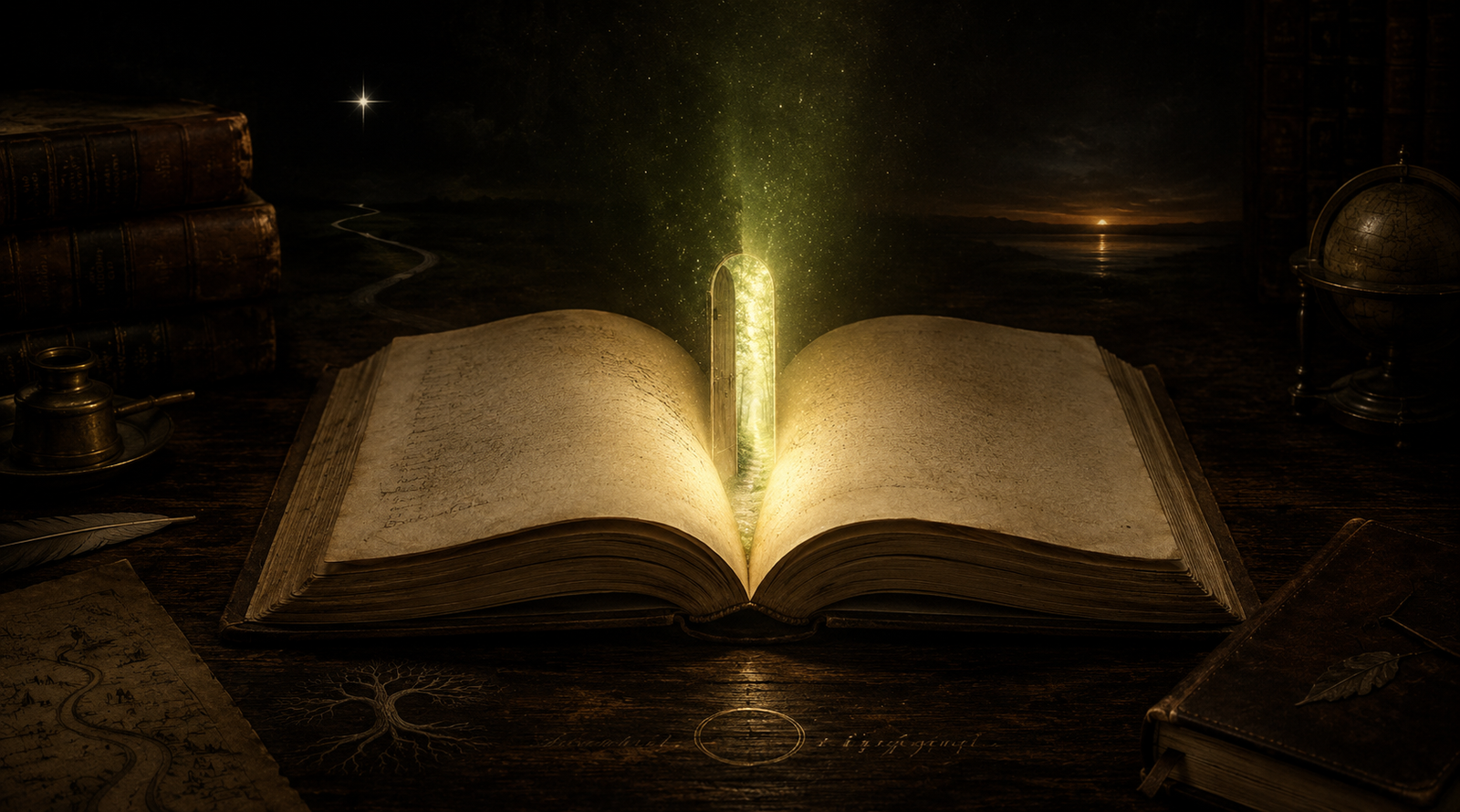
The door into Faërie does not close behind the reader. That is the secret.
One enters, if the story is well made, and then one returns. Not with a smaller love for the Primary World, but with the windows cleaned. The tree is more itself. The road is more road. Bread is more bread. Death is still death, sorrow still sorrow, Mordor still Mordor. But despair has lost the right to call itself realism.
Tolkien’s defence of fairy-stories is therefore not a minor literary argument. It is one of the great modern statements about what imagination is for. Against the reduction of the world to utility, it sets Recovery. Against the prison-house of the immediate, it sets Escape. Against the will to dominate, it sets Enchantment. Against nihilism, it sets Eucatastrophe.
And beneath all of these is the deeper answer: Sub-creation.
The maker makes because he has been made. He receives before he shapes. He answers before he invents. He does not create in order to escape the given world, but because the given world has awakened in him the desire to praise, to mend, to echo, to continue.
The key does not explain everything away.
It opens the door.
And once the door has opened, we discover that the old stories were never asking us to leave the world behind. They were asking whether we had seen it clearly yet.
—
Receive the next work
Subscribe free to receive new work from the Mytharium Library by email.
More from the Library

See Also
A concise and impartial dictionary of absence, promises, quarrels, ordinary objects, and the troublesome instability of words.

The City of Service
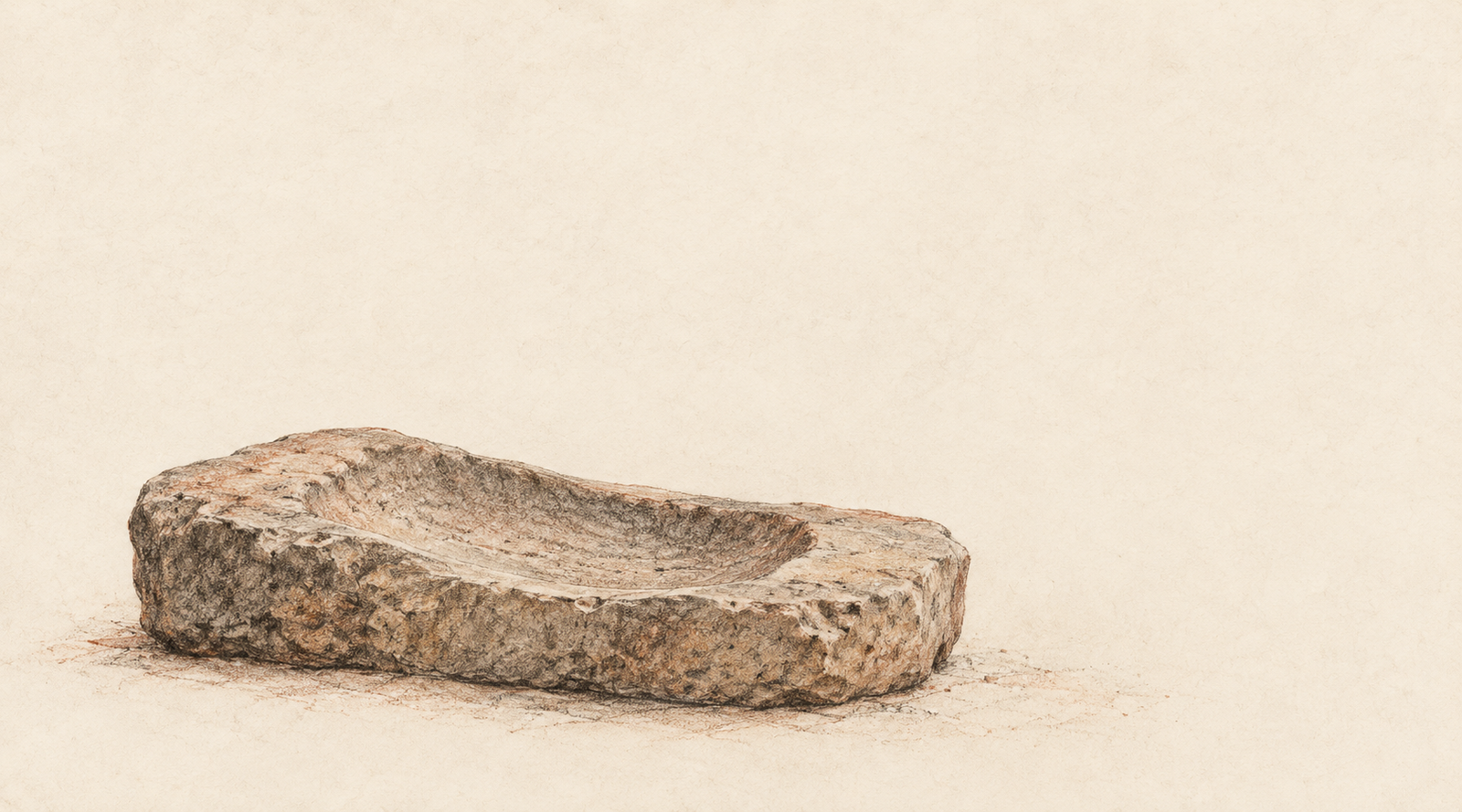
The temple we inherit is a building from which almost all necessity has been removed. Nothing must be brought for it to continue being what we call a temple. The sanctuary asks nothing of us. Stone is good at this kind of independence.
A living temple was otherwise.
Water had to come in. So did grain, cloth, oil, aromatic substances, fuel. The things required for worship arrived because someone carried them across a threshold.

Houses of Wood, Light, and Smoke
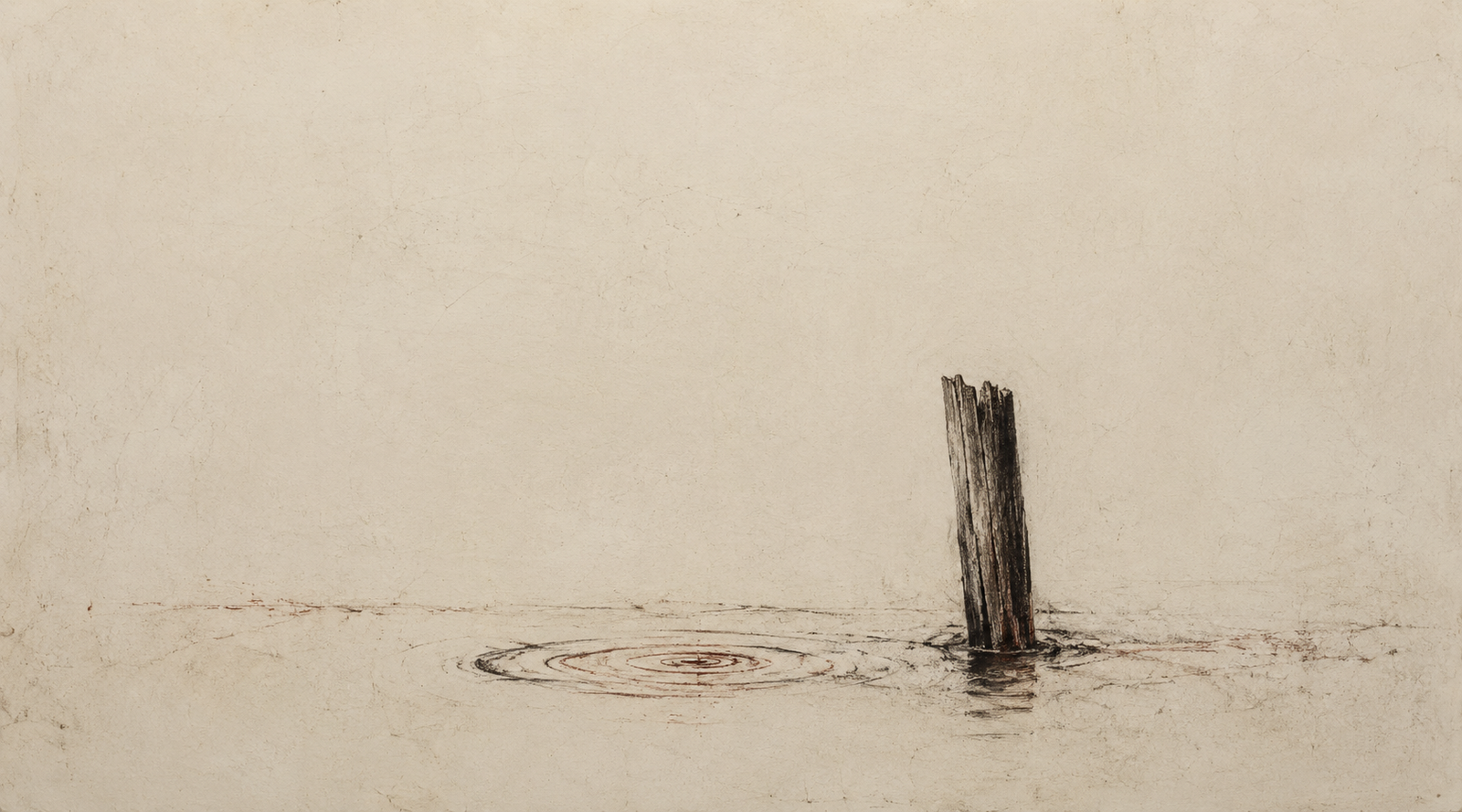
Some of Angkor’s most intimate ruins do not rise above the ground at all. They are postholes, low mounds, hearths and ponds: durable traces of a domestic city built largely from things that decay. To restore that city is to see Angkor not only as stone, but as wood, smoke, water, repair, and people living within calling distance.