

Presence Beyond Time: A Sacred Axis of Seeing
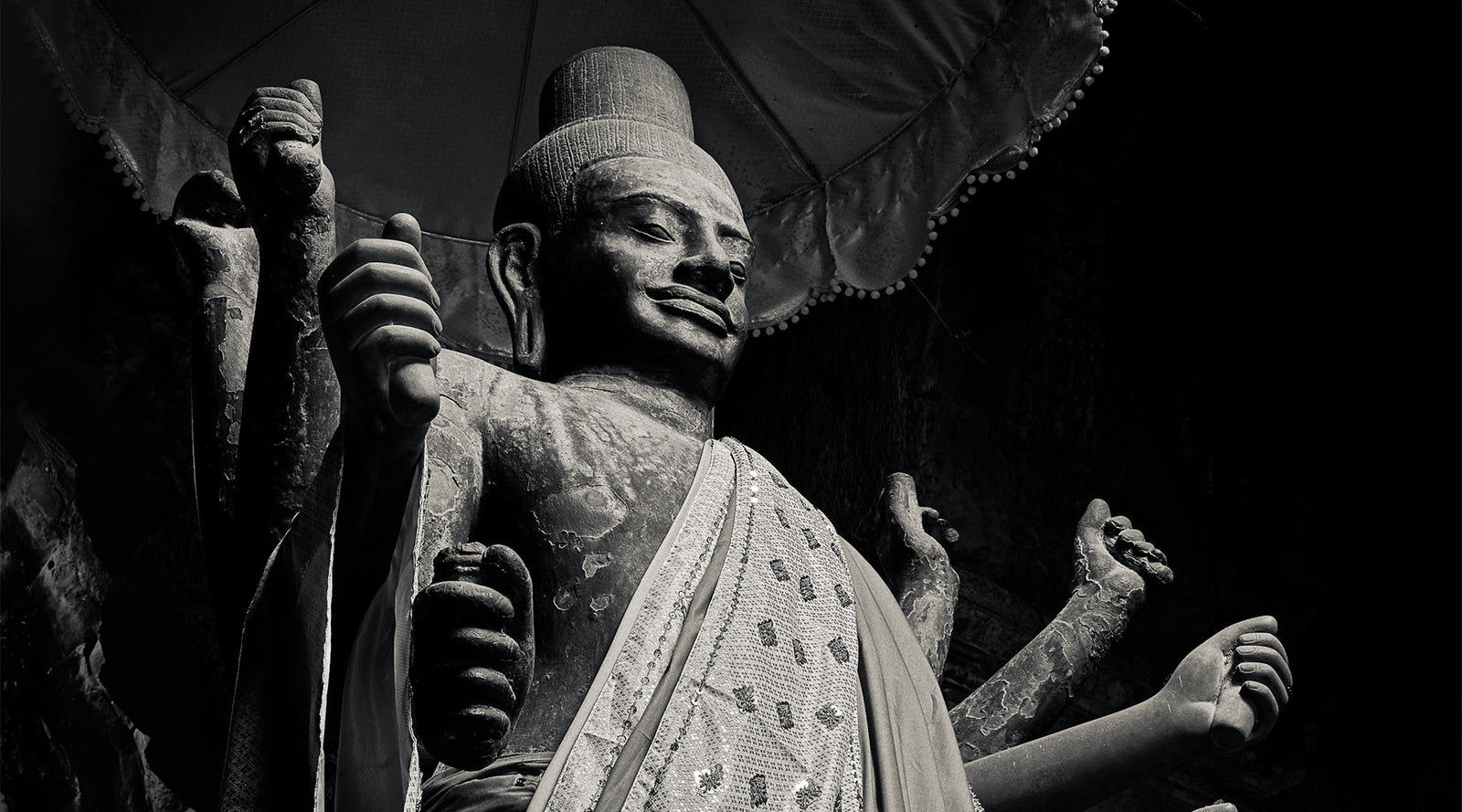
At the threshold of Angkor Wat, a god waits without speaking. Eight arms extend from a body cloaked in jasmine and sequined saffron. Known as Ta Reach—the King of the Ancestors—he stands not as relic, but as presence. To encounter Him is to feel a hush enter the chest. To photograph Him is to listen more than to frame.
Lucas Varro arrived before dawn. The corridor smelled of sandalwood and time. Pilgrims moved like breath. When the hush within the gopura and the hush within the artist aligned, the shutter opened for a single long exposure—medium format black-and-white film receiving what words cannot hold. In the studio, light and shadow were shaped through classical chiaroscuro and hours of hand-toning until presence returned to the print.
Here, Vishnu does not dominate—He dwells. His smile, grave yet human, holds both creation and dissolution in balance. This is Cambodia’s soul: ancient, wounded, luminous. Within the Spirit of Angkor series, Presence Beyond Time stands as a sacred axis—an image through which all others quietly orbit.
The edition is limited to 25, with 2 Artist’s Proofs reserved. Each print is signed, numbered, hand-toned, and printed on museum-grade Hahnemühle Bamboo paper—chosen for its softness, sustainability, and reverent tactility. Included are a Certificate of Authenticity and Collector’s Print Folio Statement.
To live with this work is to welcome a presence—not loud, but unyielding. A gaze that remains.
More from the Library


See Also
A concise and impartial dictionary of absence, promises, quarrels, ordinary objects, and the troublesome instability of words.

The City of Service
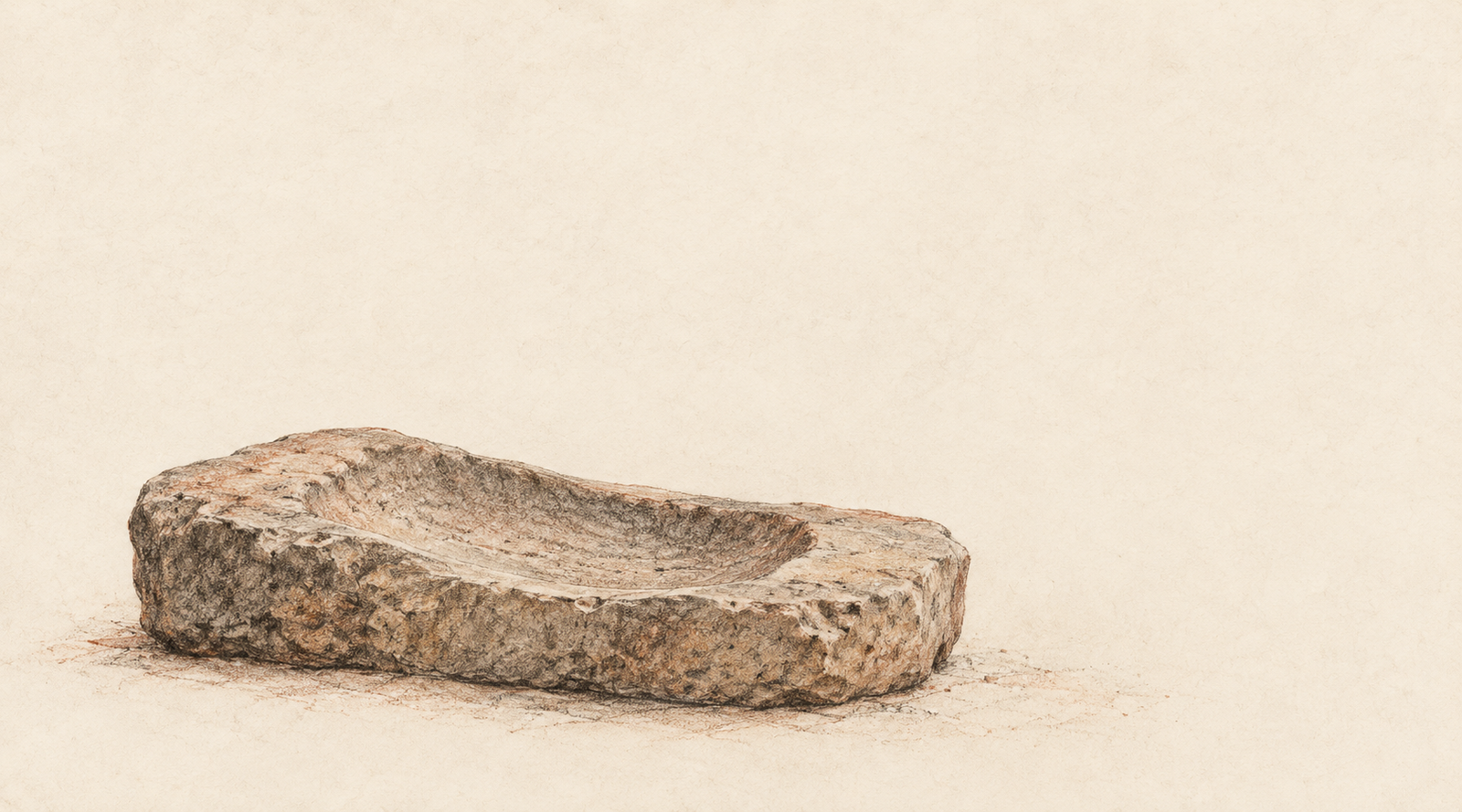
The temple we inherit is a building from which almost all necessity has been removed. Nothing must be brought for it to continue being what we call a temple. The sanctuary asks nothing of us. Stone is good at this kind of independence.
A living temple was otherwise.
Water had to come in. So did grain, cloth, oil, aromatic substances, fuel. The things required for worship arrived because someone carried them across a threshold.

Houses of Wood, Light, and Smoke
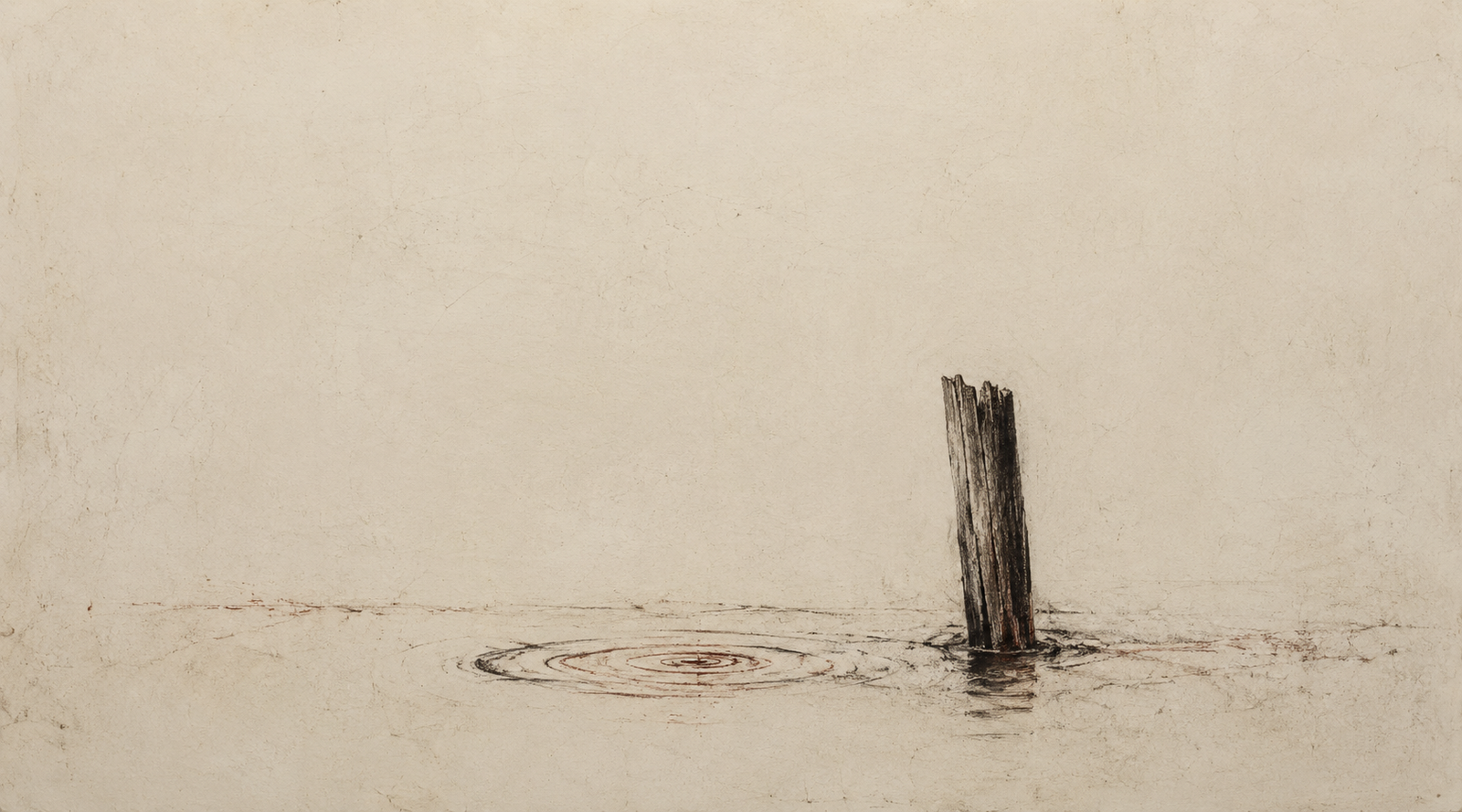
Some of Angkor’s most intimate ruins do not rise above the ground at all. They are postholes, low mounds, hearths and ponds: durable traces of a domestic city built largely from things that decay. To restore that city is to see Angkor not only as stone, but as wood, smoke, water, repair, and people living within calling distance.