

Quiet Ascent Before Light
“The wind does not speak. It remembers.”
— Khmer monastic proverb
Before the sky stirred—before the towers took shape from shadow—there was only breath. The kind that belongs to stone after rain.
I walked without a torch, guided by the glisten of wet pathways, the scent of bark and moss, and the far-off hush of water falling from hidden ledges. The courtyard opened like a held exhale. No one had come. The world was blue-grey and veiled.
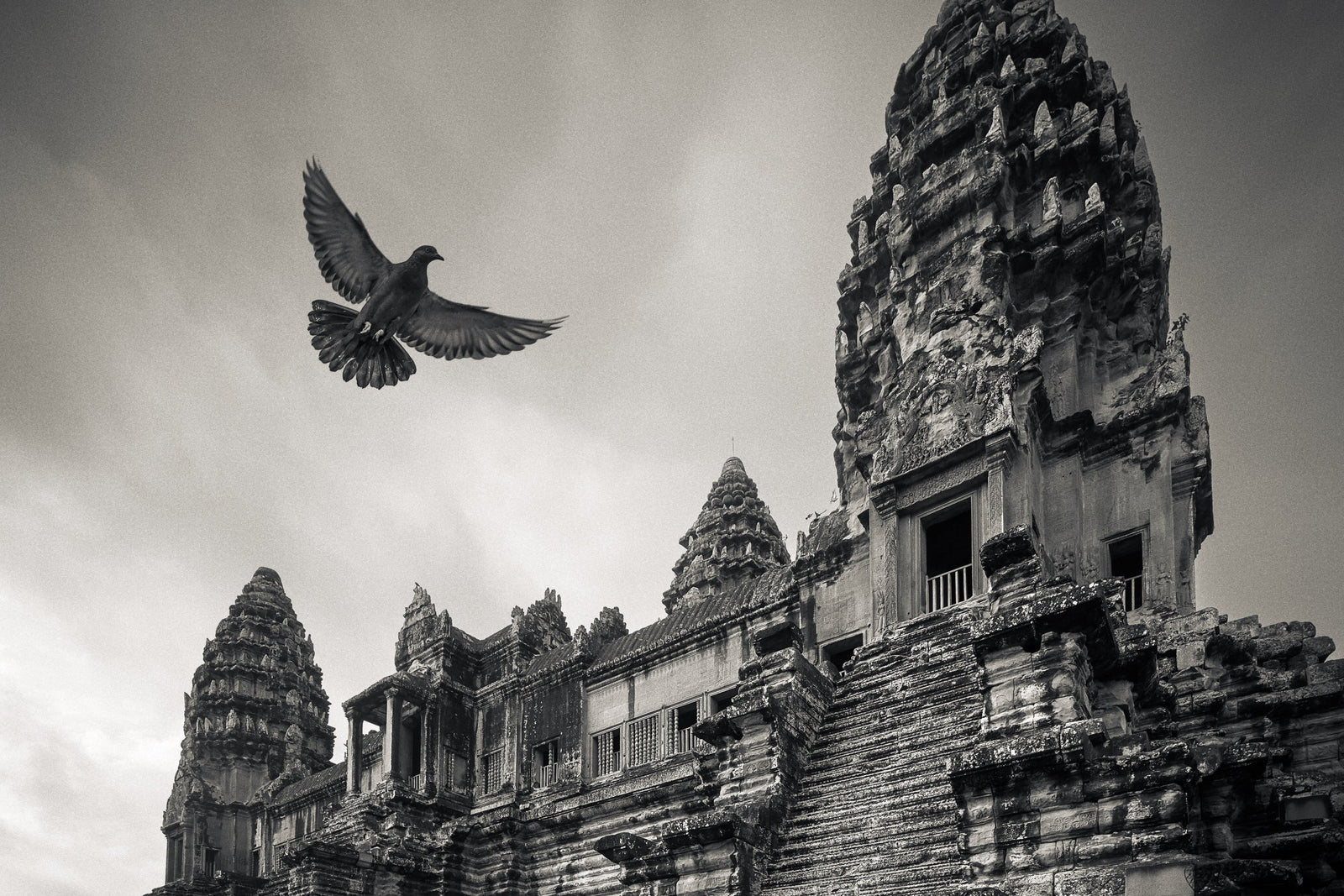
And then—without sound—a bird rose.
Its wings passed through the morning not as interruption, but as offering. Something in its arc over the steps felt inevitable, remembered. I stood still. The camera rested in my hands. The image was not taken. It arrived.
In my studio, I would return to that hour. I would coax the memory into form—layer by layer—toning the shadows by hand until the hush I had felt began to breathe again through silver and paper.
stone breathes in the rain—
a wing stirs what cannot speak,
the sky bows to stone
More from the Library

See Also
A concise and impartial dictionary of absence, promises, quarrels, ordinary objects, and the troublesome instability of words.

The City of Service
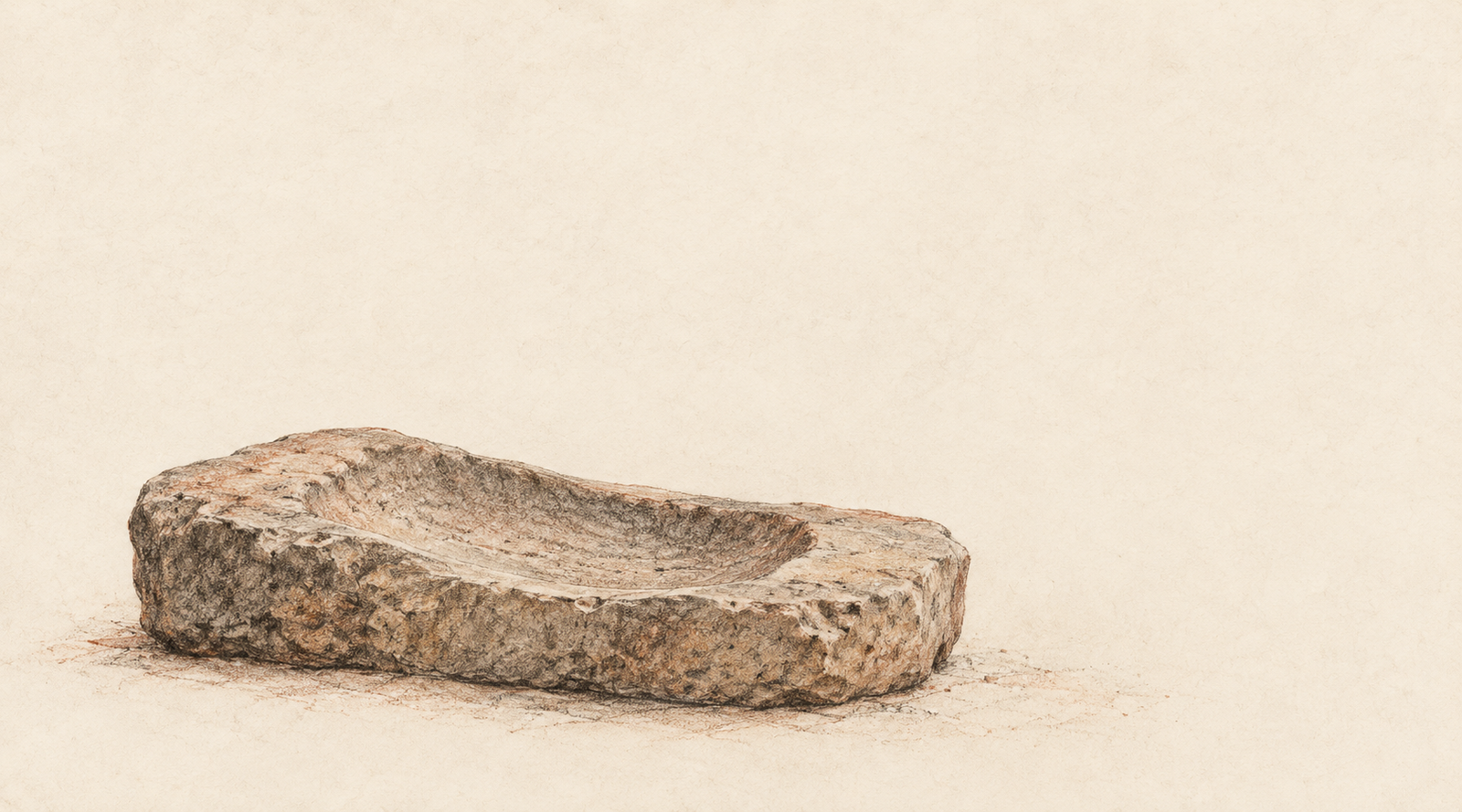
The temple we inherit is a building from which almost all necessity has been removed. Nothing must be brought for it to continue being what we call a temple. The sanctuary asks nothing of us. Stone is good at this kind of independence.
A living temple was otherwise.
Water had to come in. So did grain, cloth, oil, aromatic substances, fuel. The things required for worship arrived because someone carried them across a threshold.

Houses of Wood, Light, and Smoke
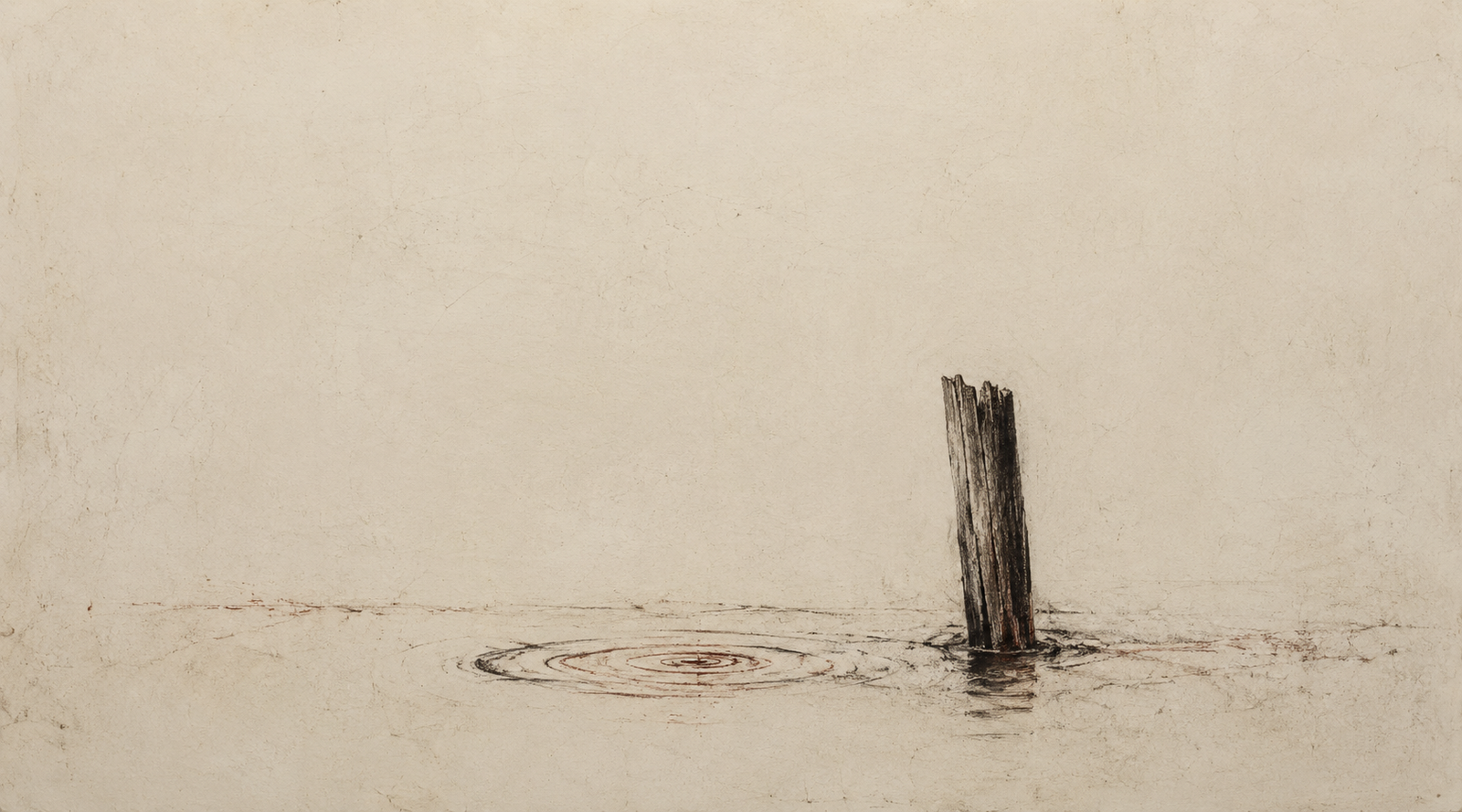
Some of Angkor’s most intimate ruins do not rise above the ground at all. They are postholes, low mounds, hearths and ponds: durable traces of a domestic city built largely from things that decay. To restore that city is to see Angkor not only as stone, but as wood, smoke, water, repair, and people living within calling distance.

$895
Angkor Wat Temple, Angkor, Cambodia — 2024
Limited Edition Archival Pigment Print
Edition
Strictly limited to 7 prints + 2 Artist’s Proofs
Edition Number
This listing is for the first numbered print from the Large Collector Edition: 1/7
Medium
Hand-toned black-and-white archival pigment print on Hahnemühle Bamboo — a museum-grade fine art paper chosen for its quiet tactility and reverent depth, echoing the spirit of the temples.
Signature & Numbering
Each print is individually signed and numbered by the artist on the border (recto)
Certificate of Authenticity
Accompanies every print
Image Size
28 x 28 inches (71.1 x 71.1 cm)
There is a silence that rises—not outward, but inward. Before the first light breaks across the sky, before the temple even stirs in silhouette, something ascends. It does not speak. It does not wait. It simply is.
The Silence That Ascends was captured in the second courtyard of Angkor Wat just after heavy monsoon rains had passed. The stone steps, slick with water, lead upward toward the temple’s five towers. A solitary bird lifts through the air, its wings tracing a quiet geometry above the sacred.
Lucas Varro stood alone in that moment, present with breath and lens. Shot on medium format black-and-white film, this image was not composed—it was received. In his studio, he sculpted its depth using classical chiaroscuro techniques, shaping the light with the same care a monk might offer incense. Each print is then hand-toned to mirror the reverent hush of the original moment.
This strictly limited edition of 25 + 2 Artist’s Proofs is printed on museum-grade Hahnemühle Bamboo paper, hand-signed and numbered by the artist. It is an invitation—one that arrives not with clarity, but with mystery.
A stillness is rising where your breath once paused.
To walk deeper into the silence, click here to enter the Artist’s Journal.