
The Library gathers the written works of Lucas Varro — journals of the temples, mythic retellings, contemplative essays, poems, and volumes shaped by shadow, silence, and wonder. Here, words stand beside images as offerings: field notes from Angkor, meditations on sacred stone, old stories rekindled, and reflections carried beyond the visible world.
Within these shelves you will find many rooms: Angkor journals, myth and legend, apsara meditations, contemplative essays, poems, children’s mythic wonder, literary retellings, and quieter devotions of the page. Wander chronologically, enter by theme, or pass through one of the dedicated publication houses now gathered within the wider Library.
For those who wish to follow these paths further, several of these writings continue on Substack and in dedicated archive blogs: The Lantern Chronicles , where myth, legend, contemplative essays, poetry, and other imaginative works are carried onward; The House of Cadmus , where Greek myth and tragedy are reopened through inheritance, violence, fate, and recurrence; The Mytharium , where myth, Tolkien, fairy stories, and old literature are read and retold with seriousness; The Alexander Series , where A. M. Sharp retells Greek myths for children who want to be trusted by stories; and The Hospitable Dark , where A. M. Sharp offers literary myth retellings shaped by darkness, shelter, endurance, and return.
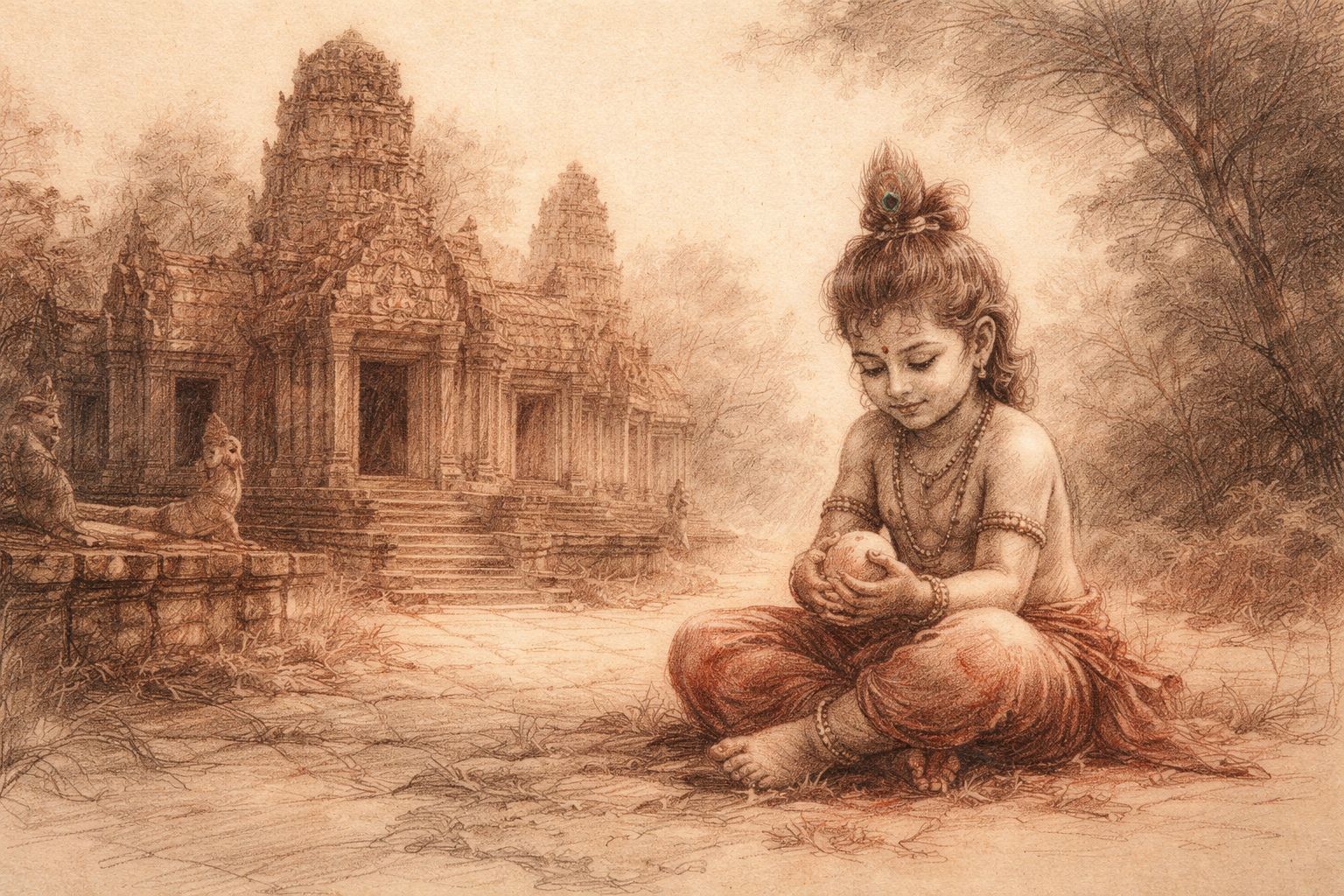

Krishna as Child — Play, Innocence, and Devotion at Angkor
At Banteay Samre, Krishna appears not as ruler or teacher, but as a child held within stone. The reliefs dwell on nearness and scale, on power that does not announce itself. Here devotion learns a different posture: not mastery, but care, and attention trained by smallness.
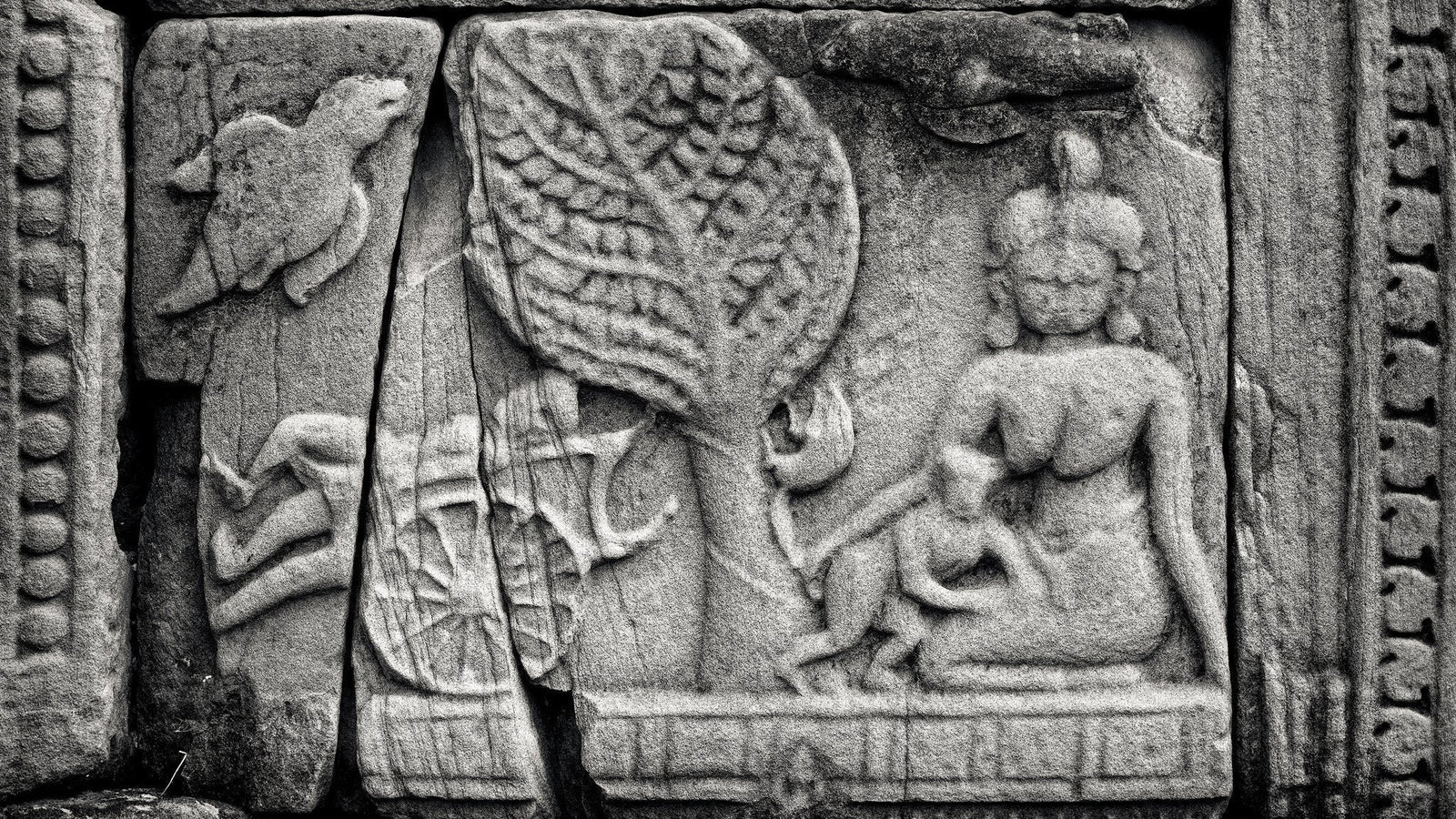

The Cart and the Whirlwind — Krishna’s Infancy at Baphuon
At Baphuon, the cart breaks and the wind collapses. The god-child does not confront danger; he outlasts it. What pretends to bear weight fails, and what relies on motion falls back to earth. The relief holds these stories in fragments, trusting restraint over certainty.
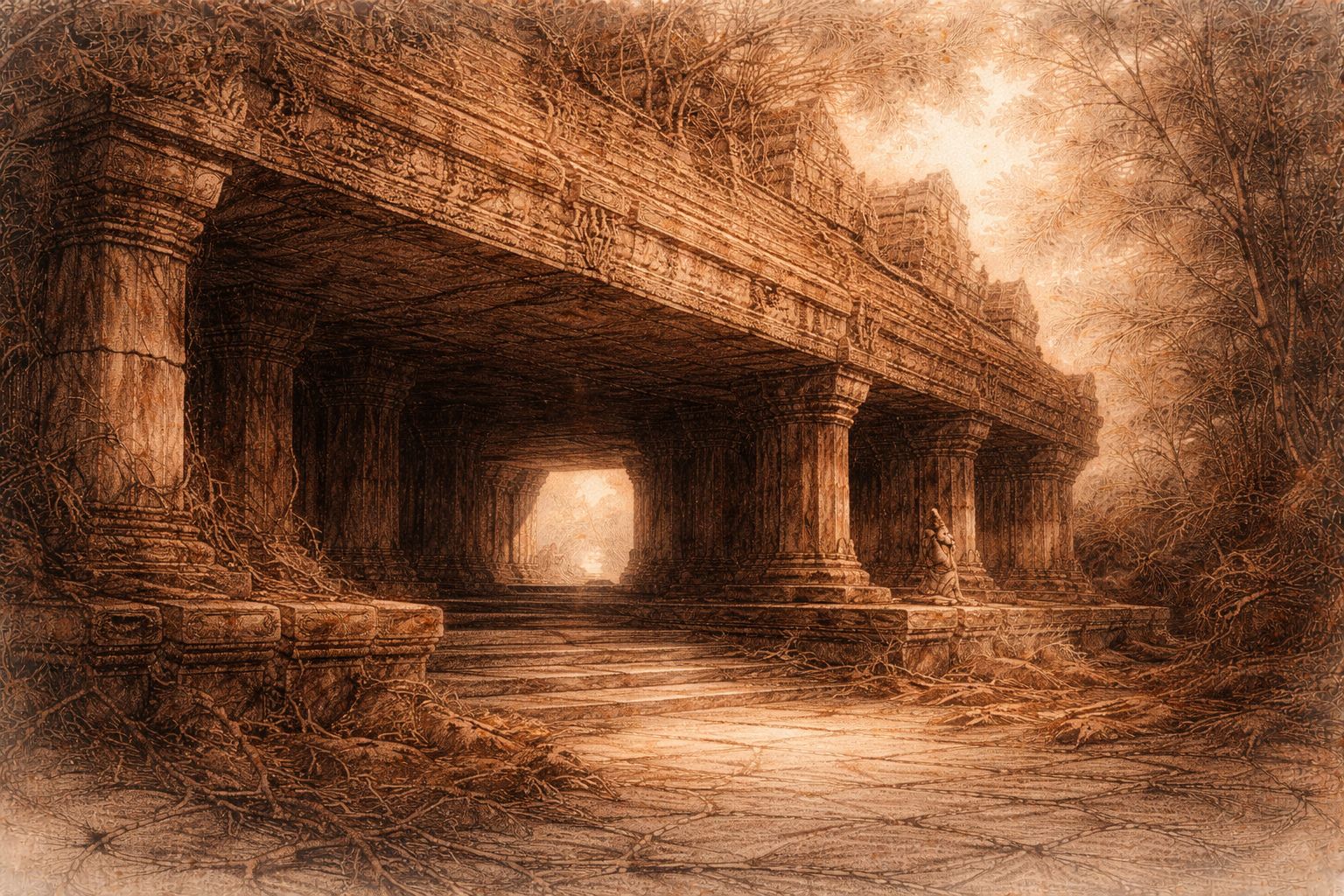

Krishna Govardhana — Shelter, Refusal, and Authority at Angkor
Across Angkor, Krishna stands holding a mountain, not in strain but in balance. The storm has already failed. What remains is a lesson in restraint: protection without dominance, power expressed as shelter. Stone preserves this pause, offering a model of authority that absorbs excess rather than unleashing it.
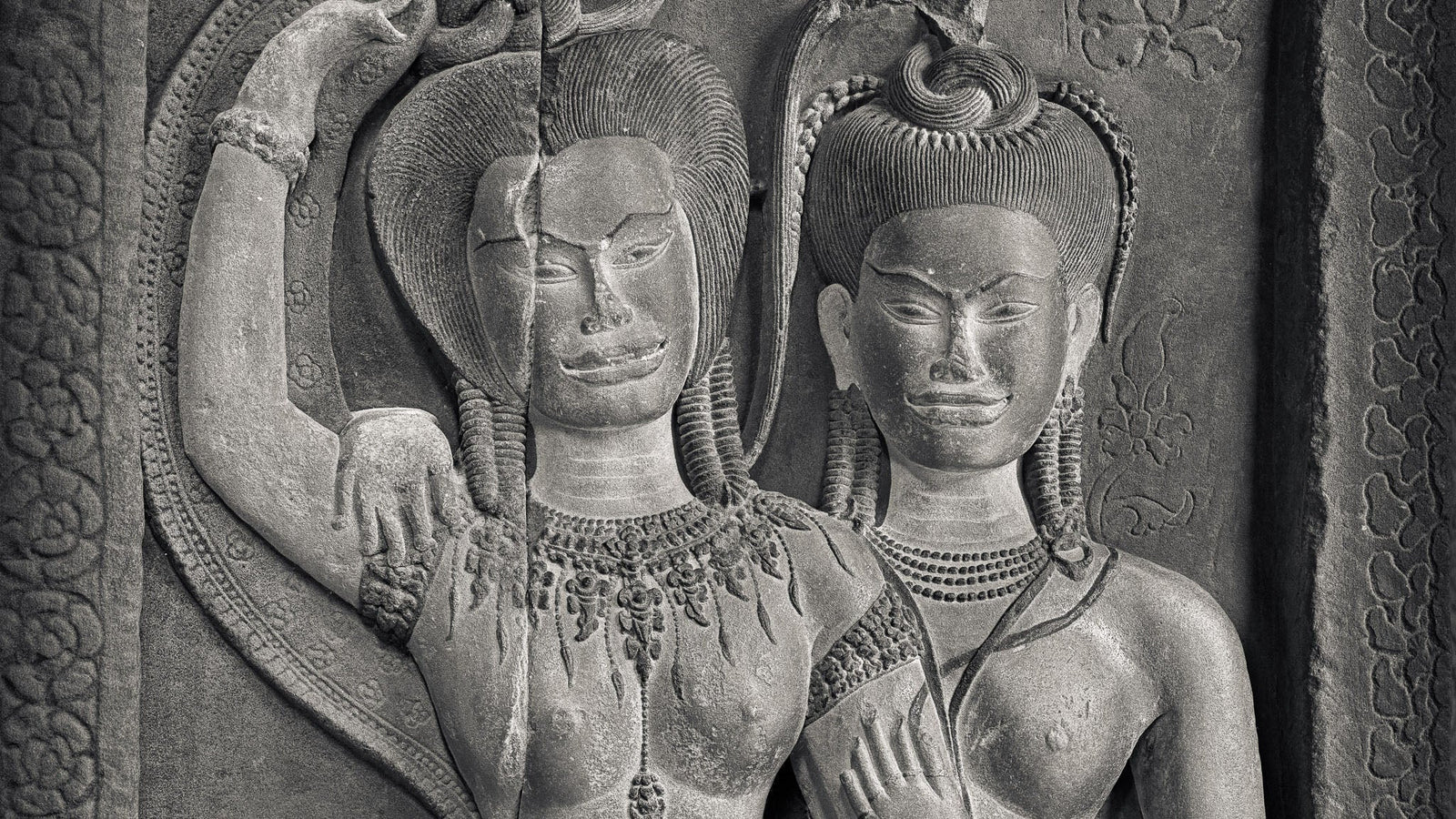

The Gaze and the Sacred Women of Angkor
To look at the apsaras of Angkor is to discover how deeply one’s own habits of seeing are trained. This essay examines the Western concept of the gaze, and how it collapses when brought before Khmer sacred art—where the female form is not an object, but a bearer of auspicious power and cosmological order.
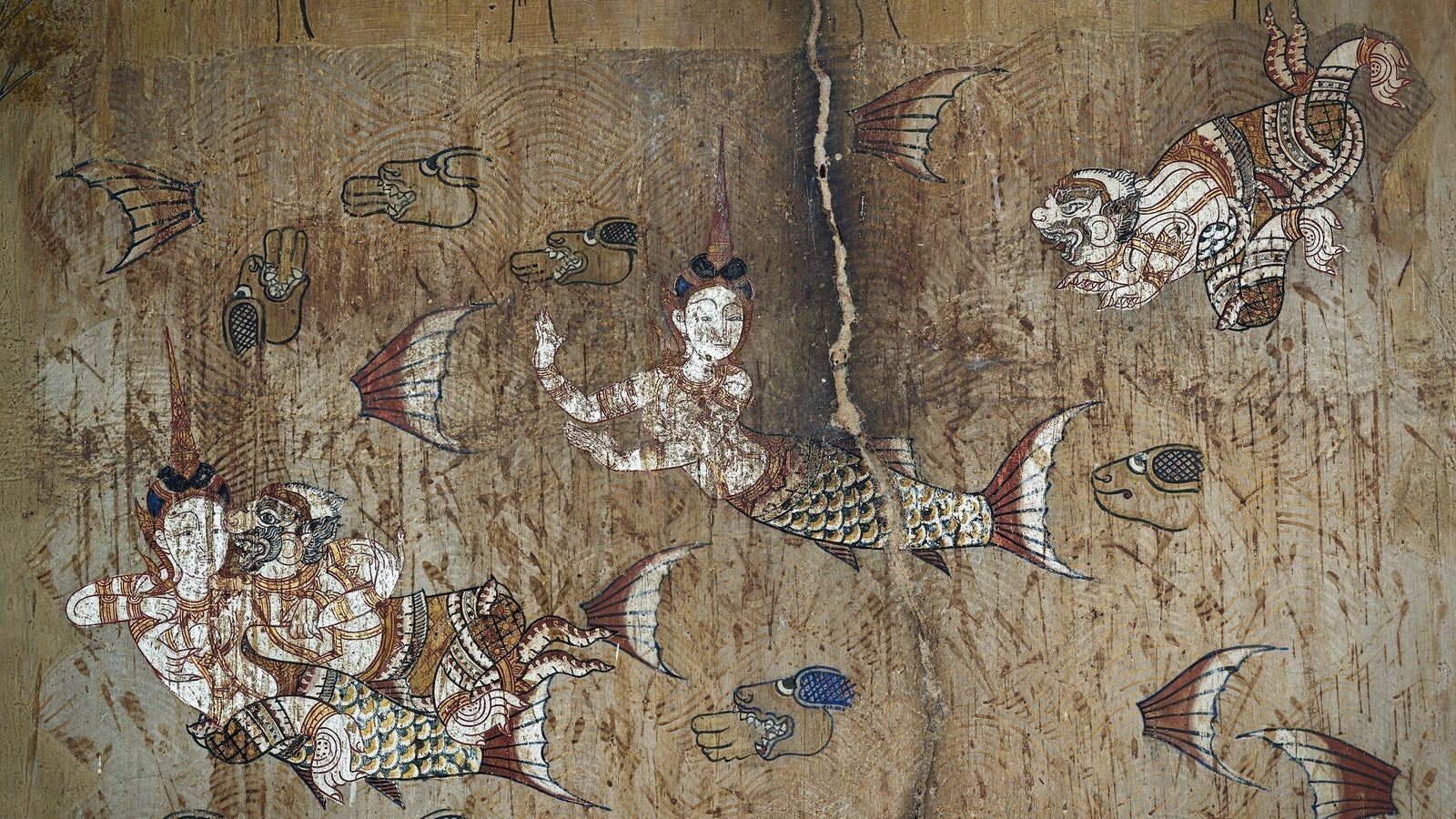

Hanuman and Sovann Maccha: Listening Beneath the Sea
Beneath the painted sea of Wat Bo, force gives way to attention. Hanuman’s strength falters, and listening begins. In the Reamker’s quiet divergence, opposition becomes relationship, and the causeway rises not through conquest, but through restraint, recognition, and care.