
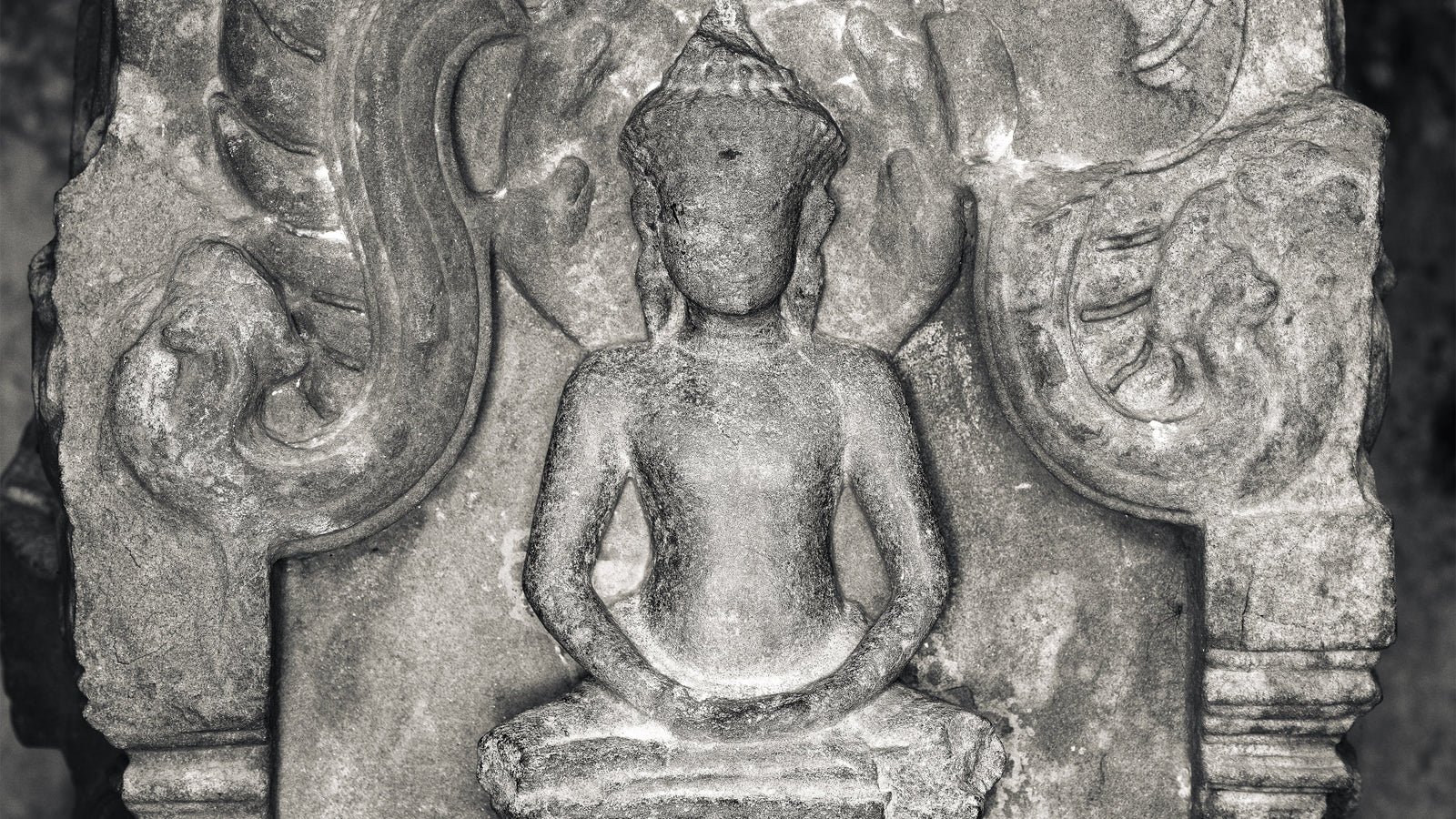

The Hush Before Vibration
The gallery does not speak; it listens. Dust hangs mid-air, undecided between settling and flight. I stand near the Buddha, carved and attentive, as first light drifts down the corridor like a slow exhalation. Nothing hastens. Silence thickens—not lack, but fullness waiting to reveal its own timbre.
Without thought the composition arranges itself. Exposure becomes prayer offered through stillness rather than gesture. In the latent silver of the negative, quiet gathers, coiling for a sound that will never break.
The corridor tires of echo,
night’s last shadow loosens from the lintel,
and a single ripple of light
rests on the naga’s brow—
as though silence has chosen a mouth
through which to breathe.Behind closed lids
an unmoving river turns;
each grain of stone repeats
its vow to cradle the world
without possessing it.
More from the Library

See Also
A concise and impartial dictionary of absence, promises, quarrels, ordinary objects, and the troublesome instability of words.
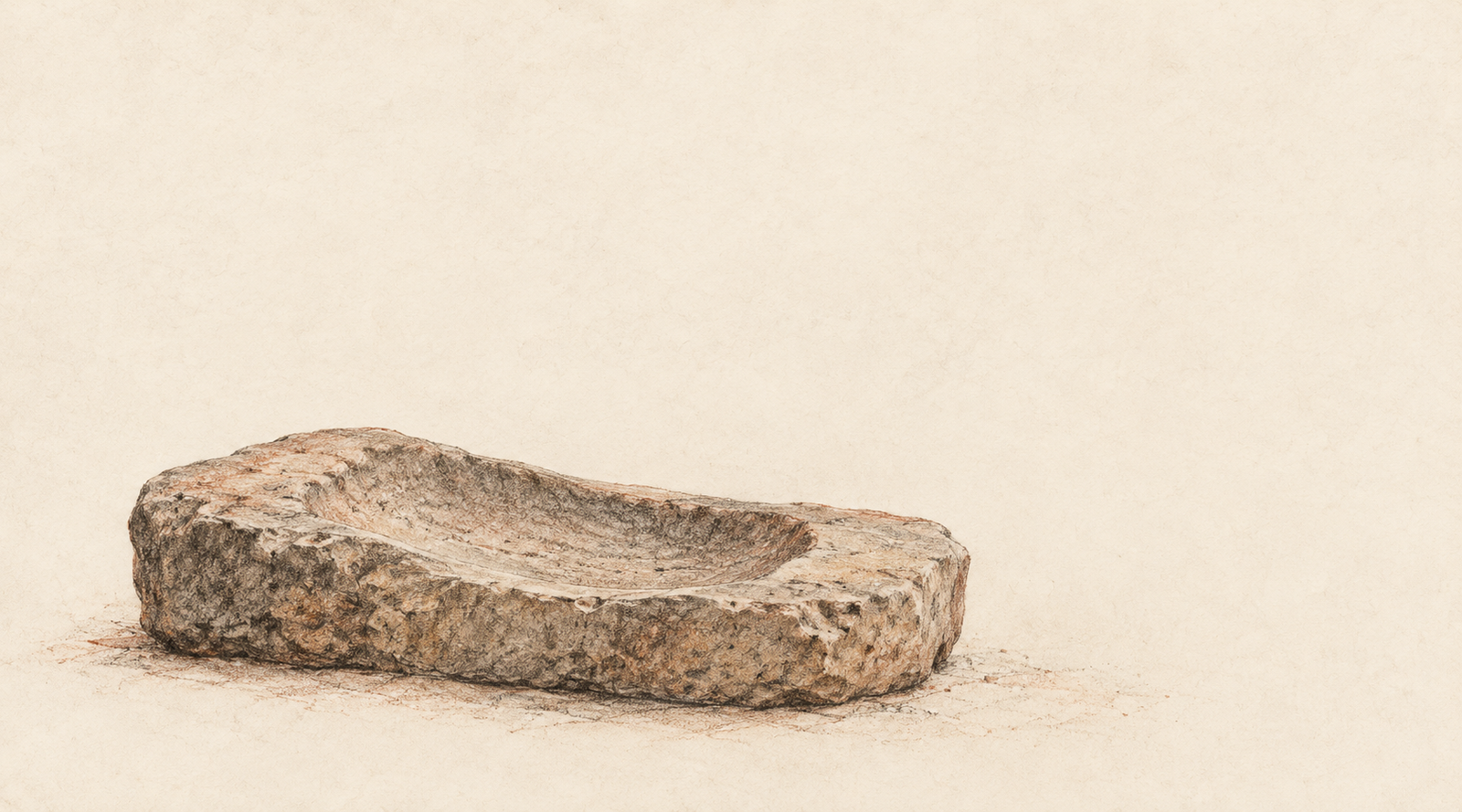

The City of Service
The temple we inherit is a building from which almost all necessity has been removed. Nothing must be brought for it to continue being what we call a temple. The sanctuary asks nothing of us. Stone is good at this kind of independence.
A living temple was otherwise.
Water had to come in. So did grain, cloth, oil, aromatic substances, fuel. The things required for worship arrived because someone carried them across a threshold.
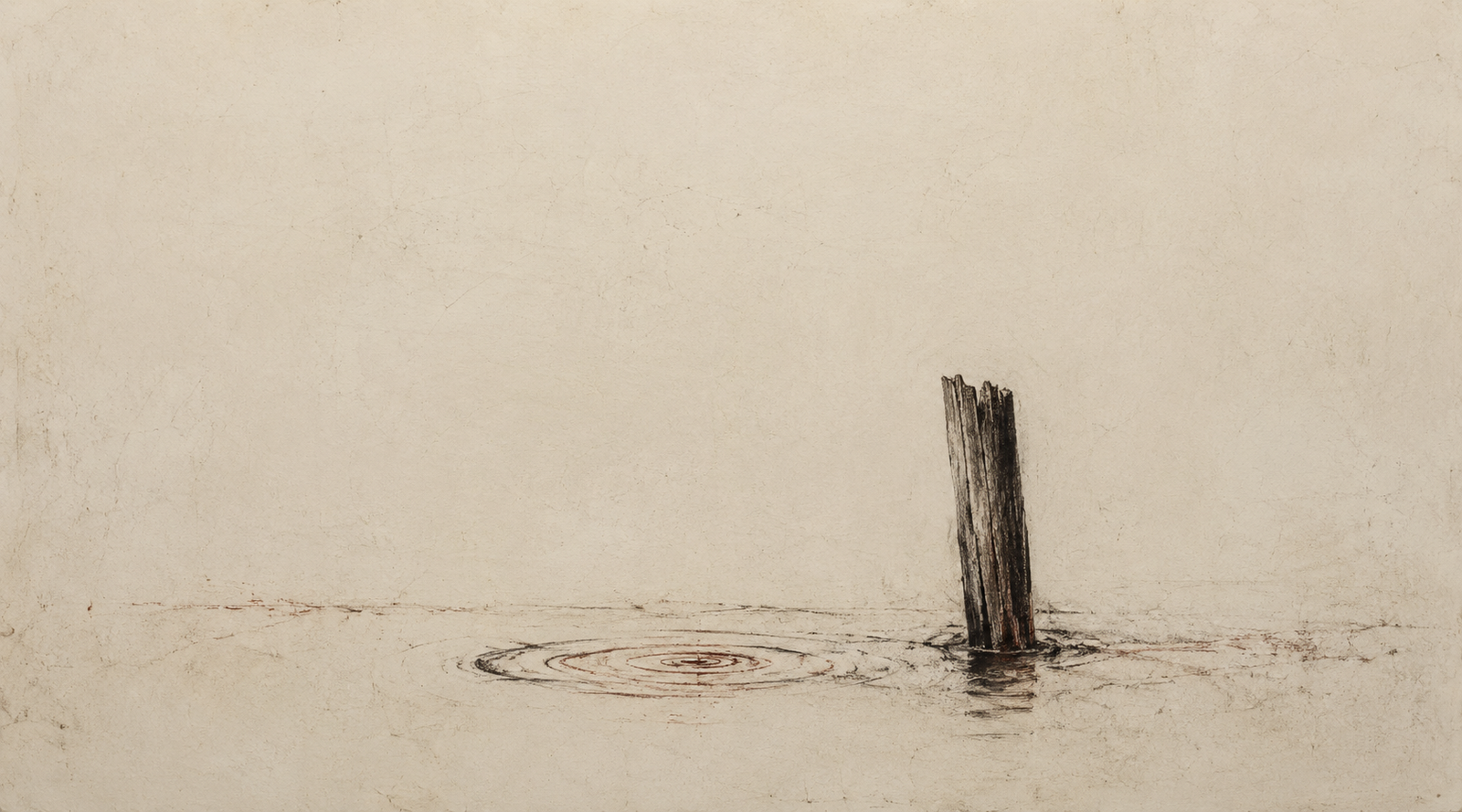

Houses of Wood, Light, and Smoke
Some of Angkor’s most intimate ruins do not rise above the ground at all. They are postholes, low mounds, hearths and ponds: durable traces of a domestic city built largely from things that decay. To restore that city is to see Angkor not only as stone, but as wood, smoke, water, repair, and people living within calling distance.

$895
"The unstruck sound"
Angkor Wat Temple, Cambodia — 2017
Limited Edition Archival Pigment Print
Edition
Strictly limited to 7 prints + 2 Artist’s Proofs
Edition Number
This listing is for the first numbered print from the Large Collector Edition: 1/7
Medium
Hand-toned black-and-white archival pigment print on Hahnemühle Bamboo — a museum-grade fine art paper chosen for its quiet tactility and reverent depth, echoing the spirit of the temples.
Signature & Numbering
Each print is individually signed and numbered by the artist on the border (recto)
Certificate of Authenticity
Accompanies every print
Image Size
28 x 28 inches (71.1 x 71.1 cm)
Dawn enters the cruciform gallery like a withheld breath—soft, soundless, reverent. In that shadowed hush, a naga coils skyward to shelter the meditating Buddha, their forms echoing a pact between storm and silence.
The air still tastes of long-faded incense. Light moves as remembrance, touching stone older than vision. Beneath the serpent’s hood, the Buddha’s eyes remain half-closed—not in sleep, but in radiant listening.
I exposed a single frame on medium-format black-and-white film, trusting the patience of long exposure to honour what the eye alone cannot keep. In the darkroom, chiaroscuro deepened the tonal hush; hand-toning later revealed the muted radiance lodged within shadow.
Each print rests on museum-grade Hahnemühle Bamboo paper, hand-toned, signed, and numbered within a strictly limited edition of 25 with 2 Artist’s Proofs.
Welcome this listening stillness as a threshold within your own walls.
Click here to enter the Artist’s Journal, where the unstruck sound quietly unfolds.
Previously titled ‘Buddha I, Angkor Wat Temple, Cambodia. 2017,’ this photograph has been renamed to better reflect its place in the series and its spiritual tone. The edition, provenance, and authenticity remain unchanged.