

The Sentinel of Impermanence
“Where stone pauses, time begins to listen.”
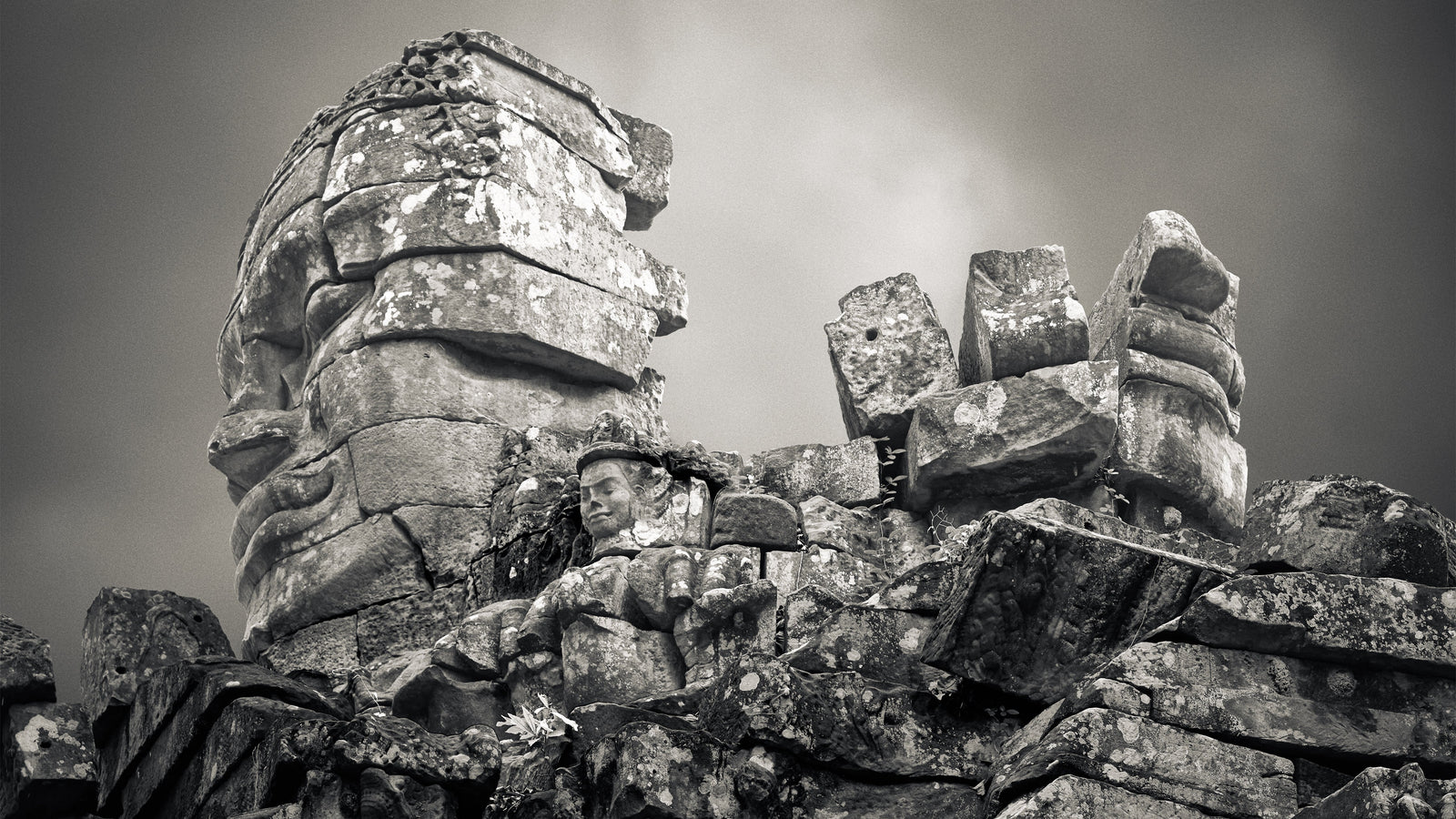
At the threshold of Banteay Kdei, a guardian leans skyward from a fractured tower. Its Bayon-style features, once crisp with compassion, have softened into sacred anonymity. Lichen, vines, and rain have worked slowly—not to destroy, but to return. What remains is not ruin, but witness.
Lucas Varro encountered this face under the hush of stormlight. His camera—a medium-format analogue body—waited as mist moved between stone and breath. The shutter remained open long enough to allow silence its say. Back in the studio, Varro shaped the image using classical chiaroscuro, inviting shadow to reveal what light alone could not. Each print was then hand-toned, a devotional gesture repeated quietly with each edition.
The resulting photograph, The Watcher in the Ruin, offers not resolution but reverence. Within the larger Spirit of Angkor series, it serves as a pivot: from the majesty of sacred geometry to the endurance of presence through erosion. The face does not ask. It remains.
Printed as a hand-toned archival pigment print on Hahnemühle Bamboo paper—chosen for its velvety tactility and sustainable grace—this edition is strictly limited to 25, with 2 Artist’s Proofs reserved. Each print is signed on the border recto and accompanied by a Certificate of Authenticity, Collector’s Folio Statement, and Display Sheet.
As with all of Varro’s work, this piece is not offered as an object, but as a presence—one that continues to keep vigil long after the walls around it have crumbled.
More from the Library


See Also
A concise and impartial dictionary of absence, promises, quarrels, ordinary objects, and the troublesome instability of words.

The City of Service
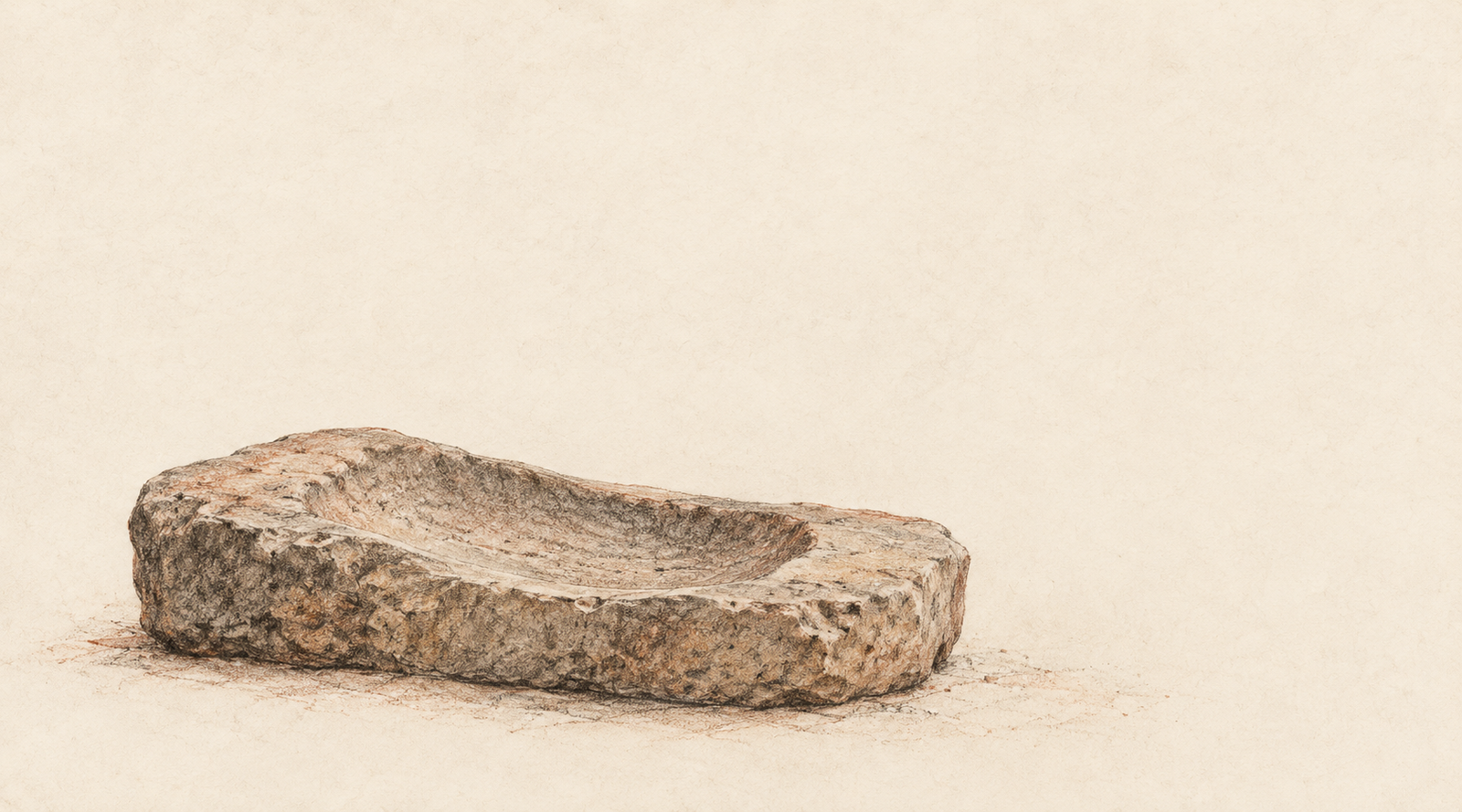
The temple we inherit is a building from which almost all necessity has been removed. Nothing must be brought for it to continue being what we call a temple. The sanctuary asks nothing of us. Stone is good at this kind of independence.
A living temple was otherwise.
Water had to come in. So did grain, cloth, oil, aromatic substances, fuel. The things required for worship arrived because someone carried them across a threshold.

Houses of Wood, Light, and Smoke
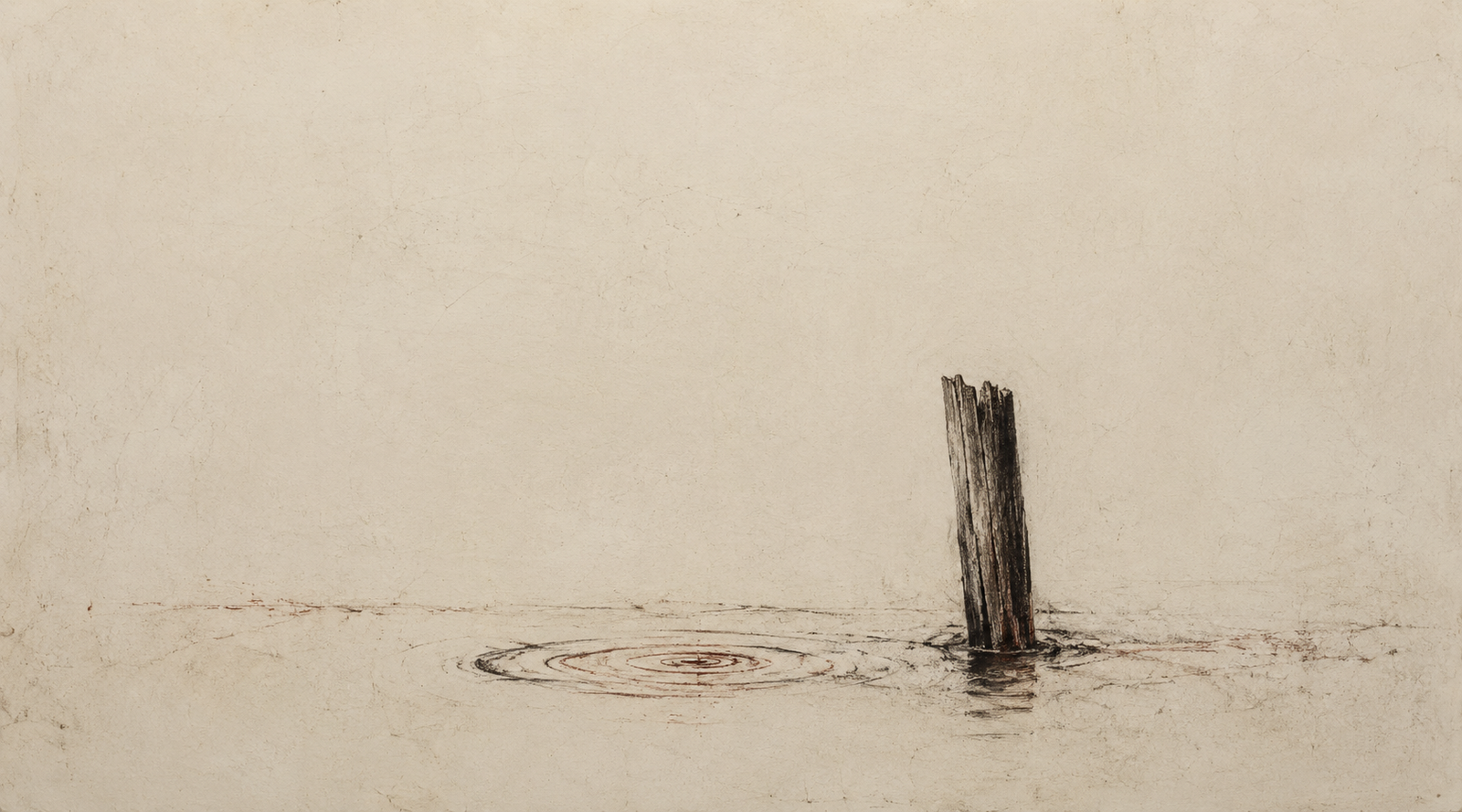
Some of Angkor’s most intimate ruins do not rise above the ground at all. They are postholes, low mounds, hearths and ponds: durable traces of a domestic city built largely from things that decay. To restore that city is to see Angkor not only as stone, but as wood, smoke, water, repair, and people living within calling distance.

$895
Banteay Kdei Temple, Angkor, Cambodia — 2020
Limited Edition Archival Pigment Print
Edition
Strictly limited to 7 prints + 2 Artist’s Proofs
Edition Number
This listing is for the first numbered print from the Large Collector Edition: 1/7
Medium
Hand-toned black-and-white archival pigment print on Hahnemühle Bamboo — a museum-grade fine art paper chosen for its quiet tactility and reverent depth, echoing the spirit of the temples.
Signature & Numbering
Each print is individually signed and numbered by the artist on the border (recto)
Certificate of Authenticity
Accompanies every print
Image Size
28 x 28 inches (71.1 x 71.1 cm)
Storm-heavy dawn cloaks the western gate of Banteay Kdei, where a fractured guardian face rises from a broken tower—its gaze turned not outward, but inward. Light moves across the ruin like breath through a reed, quiet and shaping. Moss clings to cracked lips. Vines trace their own soft sutras.
The silence is not absence—it is memory. A stillness that bears witness to centuries of devotion and decay. In this hush, the ruin becomes a kind of offering, neither whole nor lost, but entirely present.
I stood before it with the lens steady and my breath slower than the wind. The shutter opened long enough for storm and mist to thread their weight into the emulsion. Later, in the studio, I shaped the image with chiaroscuro, deepening shadows to reveal light’s edge. Each print is hand-toned—its warmth born not of color, but of reverence.
This limited edition of twenty-five archival pigment prints (with two Artist’s Proofs) is printed on museum-grade Hahnemühle Bamboo paper. The tactile quiet of the paper holds the image like an echo holds sound. Each print is signed and numbered on the border recto, accompanied by a Certificate of Authenticity.
Let this sentinel find its stillness within your own sacred threshold.
Previously titled ‘Face-Tower Ruin, Banteay Kdei Temple, Angkor, Cambodia. 2020,’ this photograph has been renamed to better reflect its place in the series and its spiritual tone. The edition, provenance, and authenticity remain unchanged.