
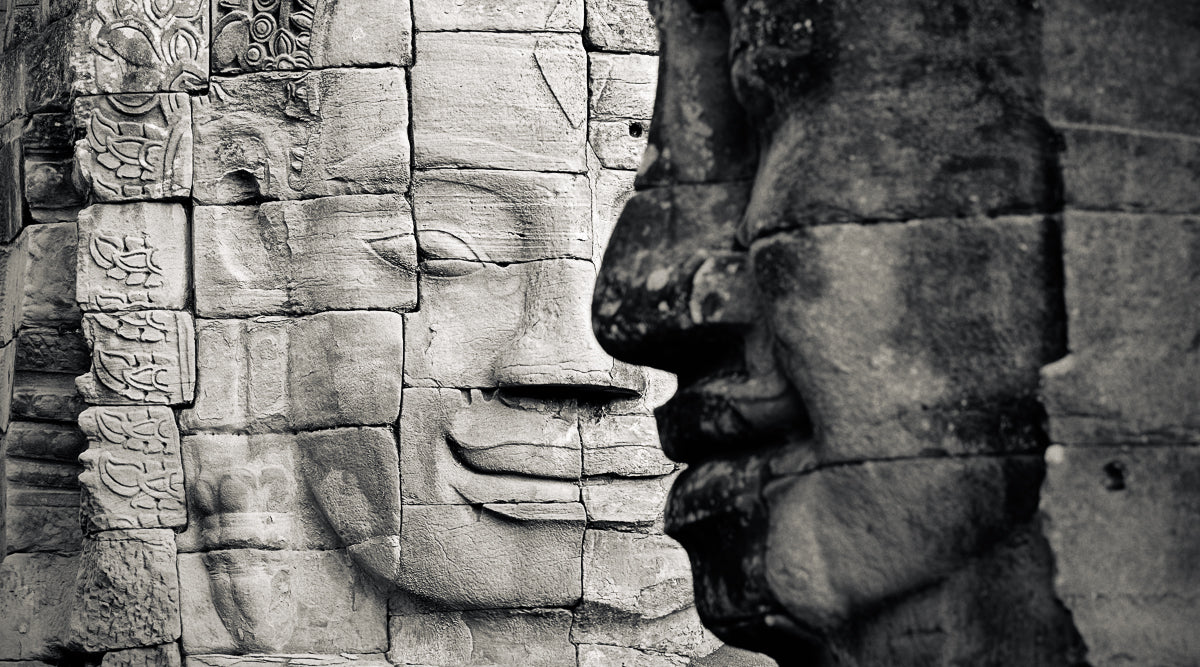

Where Stone Still Breathes - A Meditation on The Bayon
Meditation: The Stillness That Remains
Stone breathes in the light—
a silence older than sleep
watches us watching.
There are moments in Angkor when the veil between what is seen and what is felt grows thin. The stone does not merely reflect the morning light—it holds it, as if remembering something older than time.
I stood between two faces: one cloaked in shadow, the other aglow with the first breath of day. They were not ruins. They were witnesses—vast, unblinking presences that had outlasted kingdoms, monsoons, the sweep of empires and silence of centuries. In that hour, they were not monuments to the past, but thresholds into something holy and ongoing.
This image is not about what the eye can see. It is about what the soul can sense when it slows enough to listen. In the hush between these faces lives a kind of remembering—not of history, but of essence. A smile not fully formed, yet more enduring than speech. A gaze not directed outward, but inward, toward the eternal.
What remains in the end is not the sandstone, nor the architecture, but the stillness they carry. A stillness that does not fade, but deepens.
This photograph was made in that moment.
Not as a record,
but as a gesture of devotion.
Where Stone Still Breathes
Bayon, AngkorAt first light—
a face in shadow,
a face in grace.They do not speak.
They endure.Not carved,
but summoned
by centuries of silence—
lips softened by rain,
eyes closed beneath
the weight of vanished prayers.Here,
time does not pass.
It gathers.Stillness becomes
the final gesture,
the last word
never spoken.And the smile—
half-formed,
half-remembered—
remains.As if the stone
were still
becoming light.
Artist’s Field Journal
Bayon, Angkor — 2018
Early Morning Light | Medium Format | B&W Film
The temple awoke in whispers.
Before the sun breached the canopy, I stood in silence beneath the watchful stone. Two faces—one veiled in shadow, the other aglow with the pale breath of morning—met in quiet dialogue. Not carved, it seemed, but conjured from the ether of devotion and rain-worn centuries.
The nearer visage, steeped in time’s gentle erosion, bore the weight of countless dawns—its softened lips pressing toward speech, yet never breaking the vow of stillness. The farther face, radiant and eternal, hovered like a memory returning: serene, benevolent, impossibly alive.
Between them, a hush.
A space where breath once passed.
This was not architecture. It was apparition. A convergence of spirit and stone. I framed the moment not as a document, but as a prayer—an act of reverence for something that cannot be named without diminishing it.
Bayon does not offer itself to the impatient. She yields only to those who return, again and again, until the walls no longer appear as ruins but as thresholds—portals through which the sacred still flows.
In this frame: the stillness that watches us back.
In this light: the soul of Angkor, exhaled before vanishing again.
—
Receive the next work
Subscribe free to receive new work from the Lucas Varro Library by email.
More from the Library

Houses of Wood, Light, and Smoke
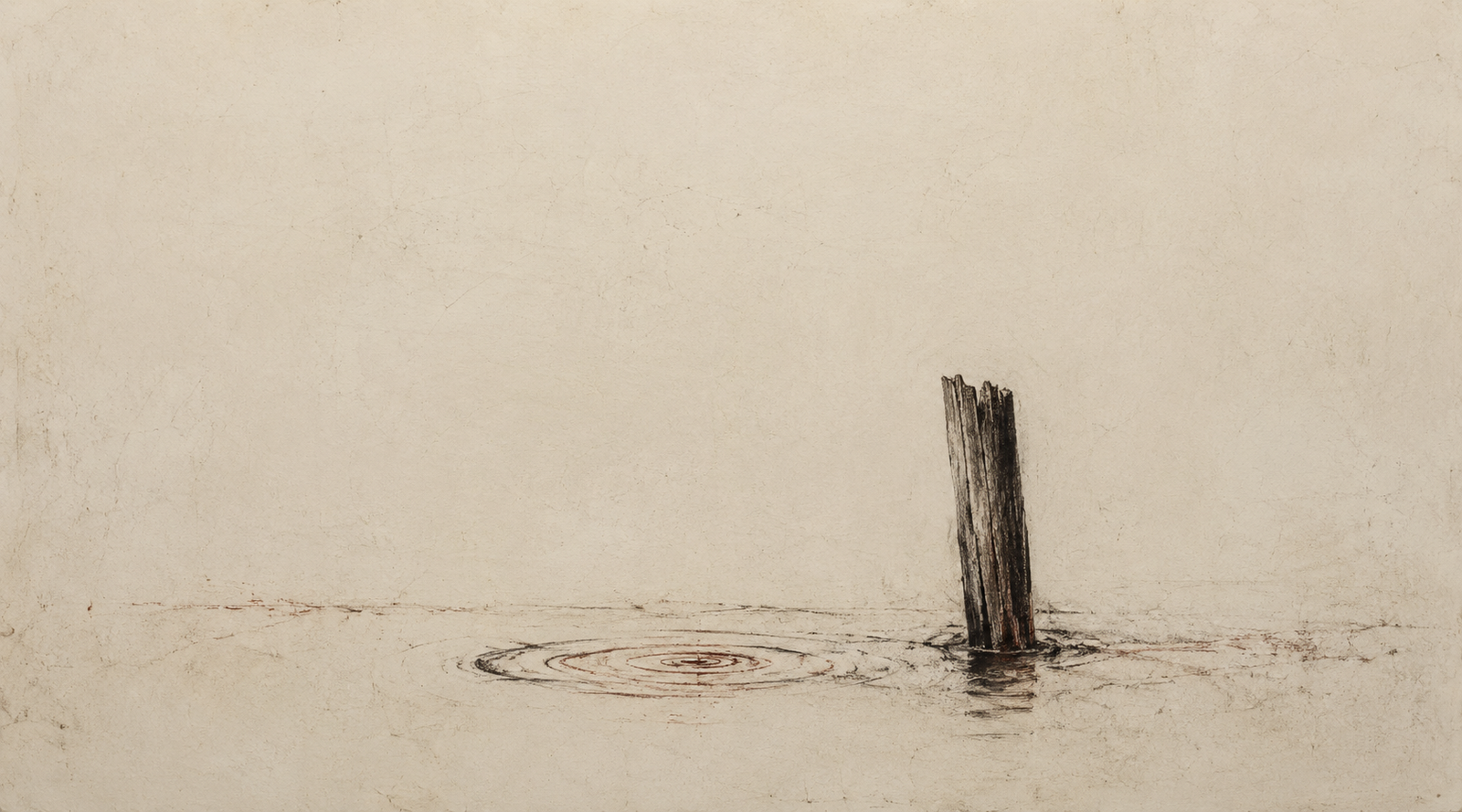
Some of Angkor’s most intimate ruins do not rise above the ground at all. They are postholes, low mounds, hearths and ponds: durable traces of a domestic city built largely from things that decay. To restore that city is to see Angkor not only as stone, but as wood, smoke, water, repair, and people living within calling distance.

What Stone Brings Forth
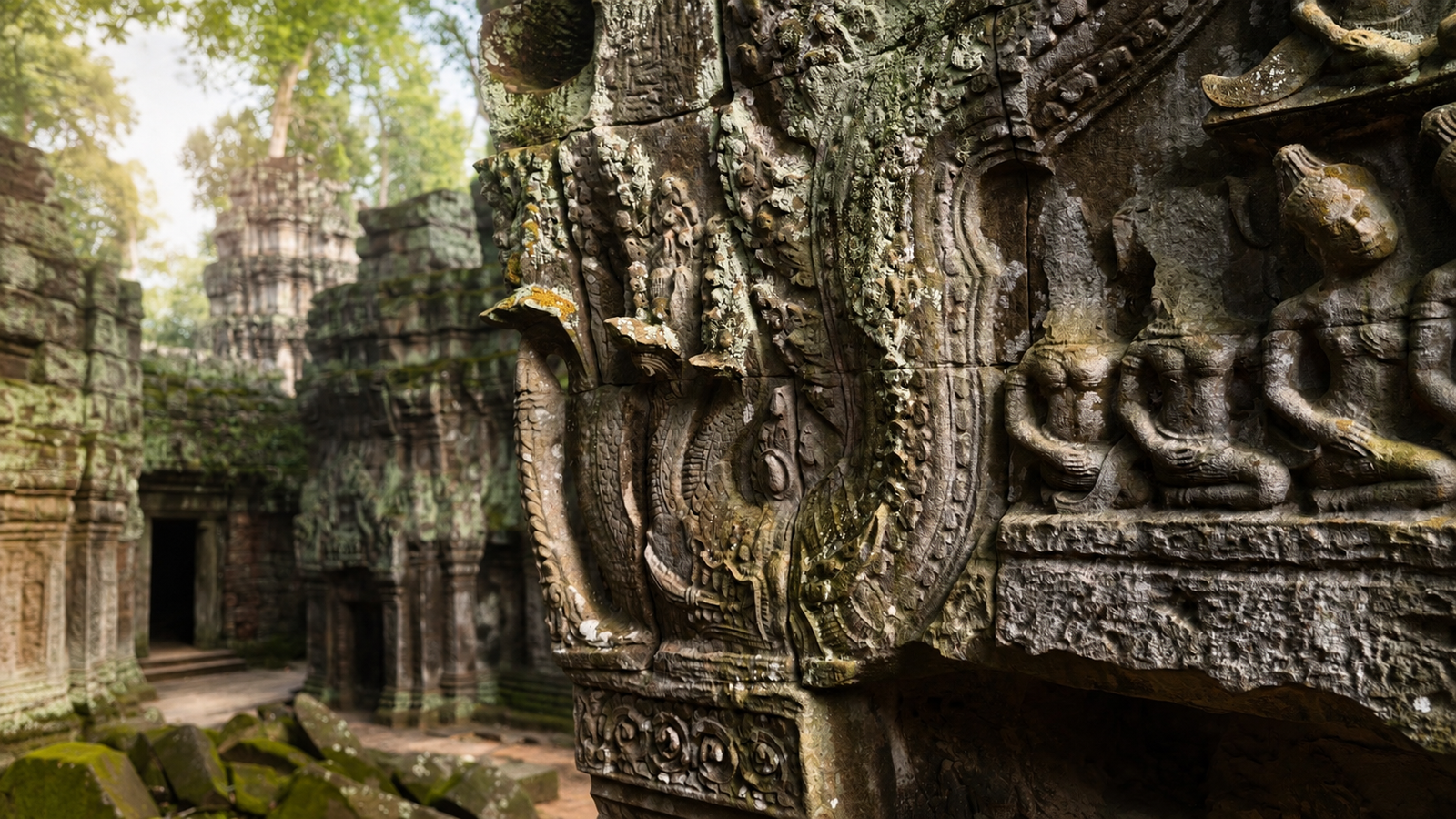
I had mistaken a gift for something being expelled.
Beneath the nāga's mouth, a stone garland descended bead by bead. Nearby, a makara opened its jaws and another form emerged. Looking closer, the whole temple began to change: serpent became ornament, ornament became architecture, architecture became foliage.
The forest did not introduce this language.
It answered it.


The Eighth Daughter
Seven daughters have already been taken by Yamata-no-Orochi when Susanoo reaches the River Hi. Only Kushinada-hime remains. The Eighth Daughter retells the Kojiki episode through a family’s waiting, a girl transformed into a comb, and the patient preparation for the serpent’s return.

$395
Bayon Temple, Angkor, Cambodia — 2018
Limited Edition Archival Pigment Print
Edition
Strictly limited to 15 prints + 2 Artist’s Proofs
Edition Number
This listing is for print 9/15 from the 12-inch Intimate Collector Edition.
Medium
Hand-toned black-and-white archival pigment print on Hahnemühle Bamboo — a museum-grade fine art paper chosen for its quiet tactility, warm natural tone, and reverent depth.
Signature & Numbering
Individually signed and numbered by the artist on the border (recto)
Certificate of Authenticity
Accompanies every print
Image Size
12 × 12 inches (30.5 × 30.5 cm)
Dawn gathers in Bayon’s corridors like water in a stone bowl, cool and unhurried. Two faces emerge from the worn architecture: one held in pale morning light, the other passing through shadow at the edge of sight. Their exchange feels less like carving than thought made visible — stone remembering itself in silence.
This intimate collector edition asks to be approached closely. At twelve inches square, the image does not command the room; it draws the body nearer. The viewer stands before the print almost face to face, close enough to enter the grain of weathered stone, the softness of worn lips, the dark hush between one profile and another. At this scale, Bayon becomes a quiet shrine of attention.
I pressed the shutter only when my breathing seemed to match the temple’s. Medium-format black-and-white film received the moment’s slow cadence; in the darkroom, shadow and glow were drawn into balance until the two faces seemed to hold one another across time. Hand-toning followed, giving each print its own quiet pulse.
Printed on Hahnemühle Bamboo, signed, numbered, and accompanied by a certificate of authenticity, this fifth numbered print from the 12-inch edition is prepared as a small threshold of reflection: a piece of Bayon’s dawn held close enough for silence to deepen.
May it find the wall where your own stillness waits.
Enter the Artist’s Journal to walk deeper into the hush behind this image.
Previously titled ‘Face Towers I, Bayon Temple, Angkor, Cambodia. 2018,’ this photograph has been renamed to better reflect its place in the series and its spiritual tone. The edition, provenance, and authenticity remain unchanged.