
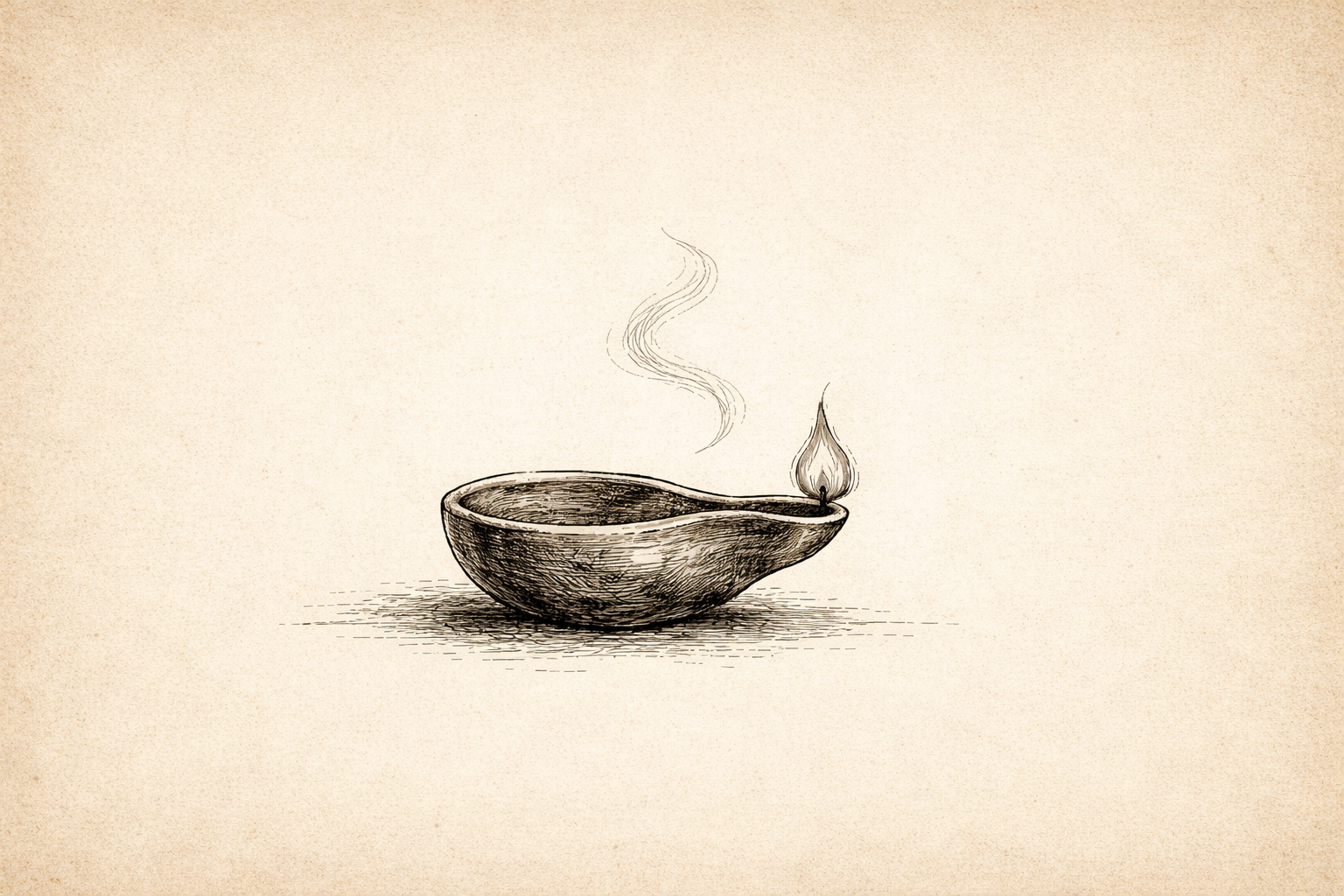

Fires of the Old World III — The Ocean-Rope
Fires of the Old World III — The Ocean-Rope enters the great churning of the Milk Sea: gods and demons, mountain and turtle, Vasuki made into a living rope, and the first terrible truth of the search for what lasts. Before jewel, blessing, or immortality, the sea gives up poison.
The oil in the little clay lamp was low, and the flame bent whenever the night breathed. Outside, wind moved through dry grass with a sound like cloth being folded. Your grandmother sat close enough that you could smell smoke in her hair, and the faint salt of sweat from the day. The fire clicked and settled. A kettle hissed once, then went quiet again.
She warmed your hands between her palms, as if testing how much fear you were carrying, and she said, “Listen. This is an old one. This is the ocean-rope.”
They tell it as a warning.
They tell it as comfort.
They tell it because it happened.
In the beginning of that beginning, the gods and the demons were tired in the same way: not tired of work, but tired of being unsteady.
The gods had light, but it slipped.
The demons had strength, but it spoiled.
Both felt time pulling at their ankles.
So they came to the shore where the world is always arriving, and they stood before the Milk Sea—pale as poured moonlight, cold as a held bowl. There was no throne there, no temple. Only salt-crust stone and the wide hush of water that does not care for names.
“Give us what lasts,” the gods said.
“Give us what cannot be stolen,” the demons said.
The sea did not answer. It only moved, and foam licked the rock like a tongue tasting a dish.
Then someone—no one agrees who—said the thing that turned the night.
“We will churn it.”
A few of the younger ones smiled, because the word sounded like butter and hearths. The older ones did not smile. They knew churning means pressure. It means heat. It means what comes loose.
You cannot churn without a stick.
You cannot churn without a rope.
You cannot churn without a bargain.
So they went for a mountain.
They found Mandara, heavy and proud, rooted into the world like a nail driven deep. The gods went first, because they were polite about taking. They bowed and asked the mountain to lend its spine.
Mandara answered by being what it was: weight, stone, silence.
The demons laughed.
“If you want it,” they said, “drag it.”
So gods and demons laid their hands to rock. Skin burned. Nails tore. Sand ground under palms. There was no glory in it, only the blunt stubbornness of bodies refusing to stop. Mandara shifted one inch, then another. The world gave a low groan, as if waking unwillingly.
“Hard,” your grandmother said softly. “It was always hard at the beginning.”
They hauled the mountain across plains and gullies, across places where beasts fled at the sound of approaching weight. They hauled until their breath came as one rough chant.
At last they reached the Milk Sea.
Mandara stood at the edge like a stranger, its shadow falling over pale water. The ocean did not retreat. It did not welcome. It waited.
Now they set the mountain into the sea.
Mandara sank.
Continue reading: Fires of the Old World III — The Ocean-Rope at The Lantern Chronicles on Substack.
Also in The Lantern Chronicles

The Mirror, the Ledger, and the Box
Three ordinary acts—tending a mirror, keeping a ledger, reading a page—draw three voices into the same unseen machinery. In this original flash-fiction triptych by Lucas Varro, hunger becomes debt, witness becomes participation, and attention itself acquires a price. Enter through Mirror Hunger, where one rule has always been enough: do not lean close.

What the Hand Knows
When does effort become interference? This contemplative essay from The Living Way explores wu wei, attention and the human compulsion to force—whether in work, conversation, ambition or the private demand that reality unfold according to plan.

The Beauty Time Is Allowed to Make
A literary-philosophical essay on wabi-sabi, handmade kozo paper, and the modern demand for seamlessness. Beginning with red chalk meeting a resistant surface, Lucas Varro asks whether value must arrive untouched—and whether care becomes destructive when it begins erasing the visible history of objects and human lives.
Continue Reading
If this piece found something in you, you may wish to continue the journey elsewhere.
On The Lantern Chronicles, I gather writings from Angkor, myth and legend, contemplative essays, and poetry — works shaped by silence, beauty, wonder, memory, and the deeper questions that follow us through the world.
It is a place for stone and story, reflection and vow, shadow and revelation.
You would be most welcome there.